Gifts for Jewelry Lovers

0

Jewelry lovers don’t just accessorize—they accumulate little biographies in metal and stone. 

Luckily, the North Bay is rich with makers who craft pieces meant to be worn, cherished and eventually fought over by future generations. These gifts let you put a little brilliance under the tree—no velvet box required.

Moonstruck Fine Jewelry, Mill Valley

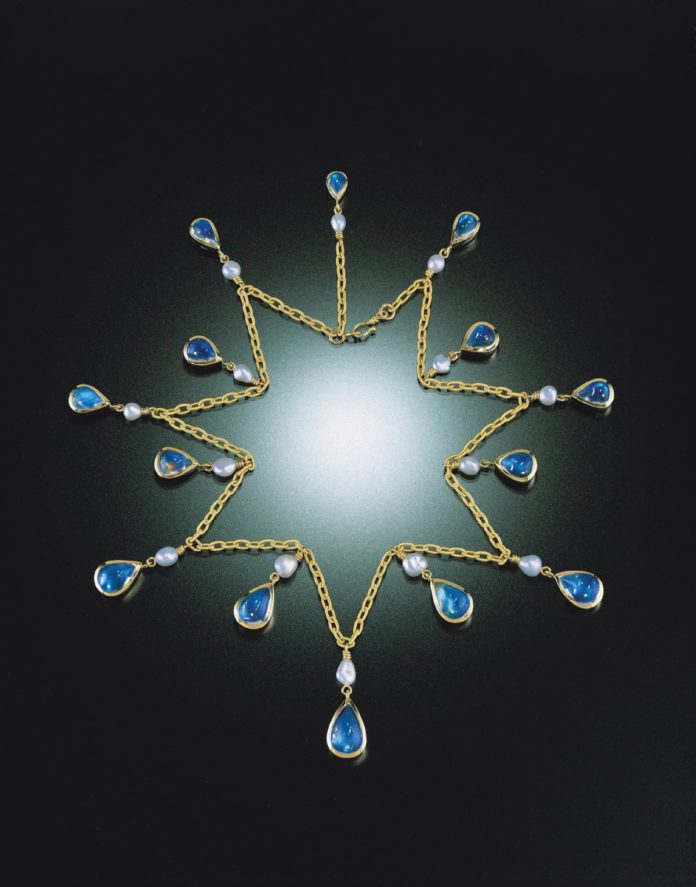
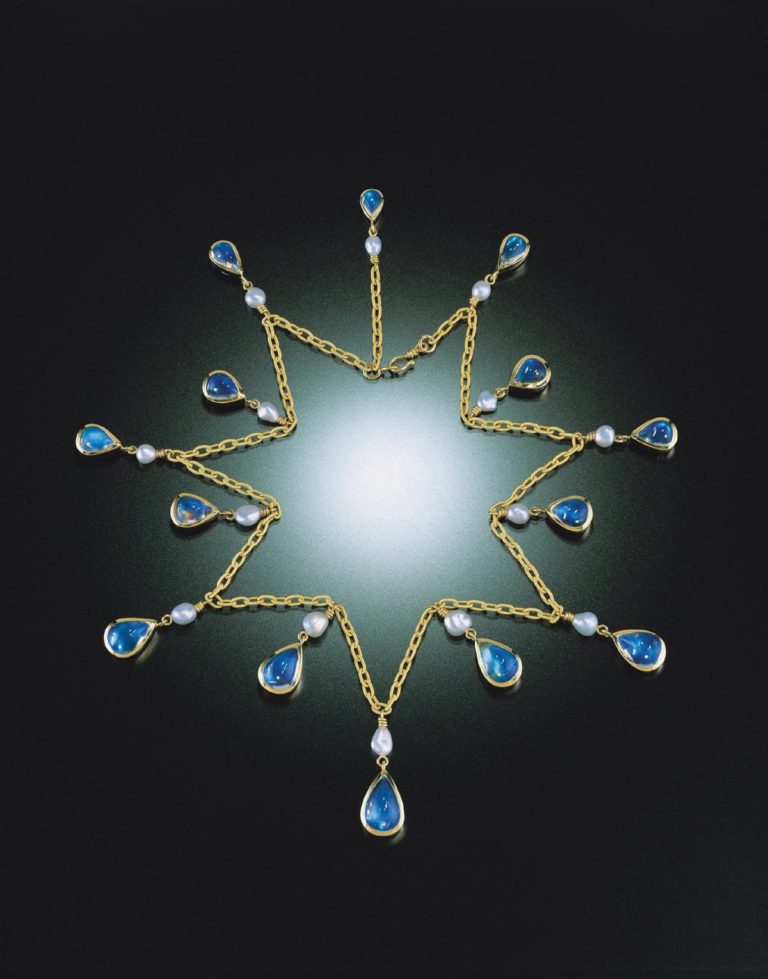
Moonstruck specializes in hand-fabricated jewelry made with old-world craftsmanship and contemporary design sensibility. Each piece feels like an heirloom in waiting: gold rings with sculptural lines, gemstone pendants that catch light like a secret and earrings that elevate any outfit. This is where you find gifts with both presence and soul—perfect for the jewelry lover who appreciates the artistry behind every cut, polish and setting.

85 Throckmorton Ave., Mill Valley. moonstruckfinejewelry.com

Lulu Designs, Mill Valley

Lulu Designs crafts jewelry using recycled metals and ethically sourced stones, blending bohemian sensibility with fine-jewelry craftsmanship. Their pieces are delicate but durable, perfect for daily wear while still special enough for gifting. Necklaces, rings and earrings each carry a kind of mindful beauty—ideal for the person who appreciates subtle sparkle without ostentation.

118 Throckmorton Ave., Mill Valley. luludesignsjewelry.com

Robindira Unsworth, Petaluma

Robindira Unsworth’s Petaluma studio produces jewelry imbued with a sense of wanderlust: delicate chains, bold gemstone clusters and shimmering statement pieces inspired by global textures and traditions. Crafted upstairs and sold below, the jewelry carries the rare magic of studio-to-hand immediacy. Gift this to someone who treats adornment as both art and autobiography.

110 Petaluma Blvd. N., Petaluma. robindira.com

Ann Marie Fine Jewelry

As Healdsburg-based designer Ann Marie Montecuollo remarks on her website for Ann Marie Fine Jewelry, “Inspired by the spectral palette of brilliant gems and precious metals, creating jewelry is as exciting for me now as when I began in 1976.” Montecuollo creates pieces that are refined, elegant and timeless in her Vine Street studio, which hosts visitors by appointment.

1207 Vine St., Suite E, Healdsburg. annmariefinejewelry.com.

Precariously Housed: Emergency Voucher Funding Ends Unexpectedly

The federal government’s funding turmoil has left scores of Marin individuals and families fearing they’ll be homeless—again—next year.

Ninety-four households received an Oct. 20 letter from the Marin Housing Authority (MHA) and were stunned to learn that the program paying a substantial subsidy for their housing will end in 2026, nine years early.

“The Emergency Housing Voucher (EHV) Program, under which you received your voucher, has been funded by HUD and was expected to continue until 2035. Unfortunately, due to unexpected increases in rental costs, HUD has informed MHA that the funding is now forecasted to end before the end of 2026,” the letter said.

Recipients feel scared. Some didn’t realize that they were part of a temporary program, believing they had permanent housing. The Pacific Sun reviewed paperwork held by one voucher recipient, and found it difficult to understand the parameters under which they were housed.

Aside from the potential for people to lose their homes, there’s another egregious problem here. The emergency housing voucher program began in May 2021. I’m no accountant, but it seems somebody in the federal government made a huge math error when projecting that the program could cover rent for 14 years, and instead the whole thing goes kaput in just over five years.

Where to cast blame for gross miscalculations, however, is the least of Alicia Owens’ worries. Owens, 42, a San Rafael resident, lived on the streets for three years before she received an emergency housing voucher in 2022. Since then, she’s found stable housing, landed a part-time job and gives back to the community as a Lived Experience Advisory Board member, helping the county make decisions on homelessness and housing policies.

“The only thing worse than being homeless is being homeless a second time,” Owens said.

Kimberly Carroll, executive director of the Marin Housing Authority, the local agency overseeing the program, told the Pacific Sun last week in an email that none of the 94 participating households will lose their homes due to the end of the funding. In fact, she guaranteed it.

Too bad that guarantee wasn’t in the letter to the emergency housing voucher holders. It might have prevented needless fear and insecurity. Instead, the letter announced that the participants’ names will go on a preferred waiting list for a different government subsidy, the Housing Choice Voucher Program, also known as Section 8.

“When vouchers are available to be issued, applicants will be pulled from the Housing Choice Voucher list in order by the highest number of preference points, and then by lottery,” according to the letter.

Inexplicably, the letter didn’t provide the same assurance that Carroll gave the Pacific Sun; hence, the confusion. Counting preference points and then a random drawing seems like an arbitrary method of allocating housing.

As if the process couldn’t become any more uncertain, yet another major factor will make or break the voucher distribution. Marin has experienced a severe shortage of Section 8 housing vouchers for the last 16 months. Since August 2024, the federal government has suspended issuing Section 8 vouchers to the county.

Now that the government shutdown has ended, it’s anyone’s guess as to whether the Section 8 shortfall terminates and issuing vouchers resumes. Will Marin even receive enough for all the households soon losing access to the emergency housing voucher program that’s circling the drain? Consider that last year Marin County placed a total of 80 individuals in permanent supportive housing. Now, it needs 94 vouchers pronto.

Section 8 is a beneficial program for those with housing insecurity. Under the program, participants pay 30% of their income for rent and utilities, with the federal government subsidizing the remainder of the rent directly to the landlord. Unlike the emergency housing voucher program, the Section 8 voucher remains in effect as long as the recipient stays eligible and complies with the rules.

At this point, funding exists to keep current Section 8 voucher holders housed under the ongoing program. It’s the issuance of new Section 8 vouchers that is up in the air, including ones that will transition the emergency voucher holders into a stable housing situation.

But using Section 8 housing vouchers to replace the 94 emergency vouchers creates a new backlog for Marin’s homeless population. Many of the 1,090 people tallied in the 2024 homeless point-in-time count are also waiting for Section 8 vouchers, with some remaining stuck in the county’s housing pipeline for years now.

Marin houses veterans first, with the most vulnerable next. People without a severe disability may remain perpetually at the end of the line, especially with 94 new households now ahead of them—those who were already housed once through the same system.

According to Gary Naja-Riese, Marin County’s homelessness division director, the county has experienced voucher shortfalls before and can weather the storm again by pivoting to other funding programs.

“Our system is prepared to be creative and responsive to client needs during this time,” Naja-Riese told the Pacific Sun. “Utilizing a variety of opportunities through grant and county funding to connect individuals to shelter and housing, we are in the process of sheltering an additional 108 individuals and providing temporary rent support for 84 individuals.”

Federal funding cuts and California’s stricter funding requirements certainly have squeezed the county. In the face of the new challenges, the county, some of the local cities and towns and nonprofit partners have stepped to the plate. But the bottom line is that there’s not enough money to house all those living on the streets or in temporary shelters.

During a presentation at the Oct. 14 Board of Supervisors meeting, Naja-Riese explained that resolving homelessness in the county is a zero sum game.

“Because of the high cost of housing, because of lack of employment availability, because of the high cost of medical and other care, individuals continue to enter homelessness at a rate that’s almost equal to the rate we’re exiting them,” he said.

Now, the county must backpedal to ensure that the residents of 94 households don’t slide once again into homelessness when the funding ends for the emergency housing voucher program.

Owens believes that allocating Section 8 housing vouchers to those program recipients, including herself, appears to be robbing Peter to pay Paul.

“I feel survivor’s guilt a little bit,” Owens said of the situation. “I’m scared for my friends that are still unhoused. There are so many things that are not working properly within the system on so many different levels. We need to get it figured out. Everybody deserves to have a fresh start.”

Sublime Mediocrity: Art is Where Ambition and Limitation Often Meet

Some artists carry the cultural burden of their genius and mounting legacy. Ahem—not I.

Having run through Elisabeth Kübler-Ross’ first four stages of grief as pertains to my career (denial, anger, bargaining, depression), I’ve finally come to acceptance: I’m clearly burdened by neither genius nor legacy. This revelation has freed me to embrace what I’ve come to call “sublime mediocrity”—that liminal space where one’s creative execution so consistently falls short of one’s vision that it becomes kind of “your thing.”

In my case, it’s chiefly the result of executing idiosyncratic visions without sufficient money or talent. The result seldom robs my audiences of their imagination of how it could’ve, would’ve or should’ve been better if it weren’t for the above. I like to think my limitations give the audience space to imagine the version they think I meant to make, or the one they would’ve done better (had they tried). And in that way, it’s almost collaborative.

In that gap between what I thought I was doing versus what I did, there becomes a haunted, shimmering negative space where the ghost of the “better” enjoys its meta half-life. This is the wellspring of sublime mediocrity. It’s the vertigo that occurs when we realize how far through the crack between our ambition and limitations we’ve fallen. And for some extra anxiety, do it in public.

We try; we fail. And yet, the sublime emerges not despite mediocrity but because of it.

As Voltaire advised, “Don’t let perfection be the enemy of the good,” to which I’ll add, “…or the good enough,” or really, the “simply done.” Like my spiritual forebears in the art-schlock racket, having a body of work—an incarnation of one’s vision, no matter how flabby or shabby—is better than carrying a bardo of disembodied ideas that never manifest at all. And taste, being the mercurial hellion that it is, means one never knows when one’s work may accidentally trip face first into favor.

There is a quiet liberation that comes when alleviated from the expectation of brilliance. Once it’s gone, a kind of inspired Zen sets in. I once watched a juggler drop a ball on the stage—he regarded it, raised an eyebrow and wryly appraised his effort as “perfect.” In art, intention can be retroactive; it’s the quantum loophole that makes sublime mediocrity not a failure but an aesthetic. The mistake is the message.

And here, where we’re too underfunded to soar and too weird to make something “normal,” we’re surrounded by local culture built on beautiful near-misses—films that screened and vanished, bands that almost broke, publications that might’ve changed the world had they been read beyond the county line. These are the sacred relics of the possible, the sublimely mediocre because the miracle here isn’t in our perfection but in our persistence. The masterpiece is the mess we dared to make.

Daedalus Howell is at dhowell.com.

3 Singular Sensations: Marin Shakes Continues Solo Show Series

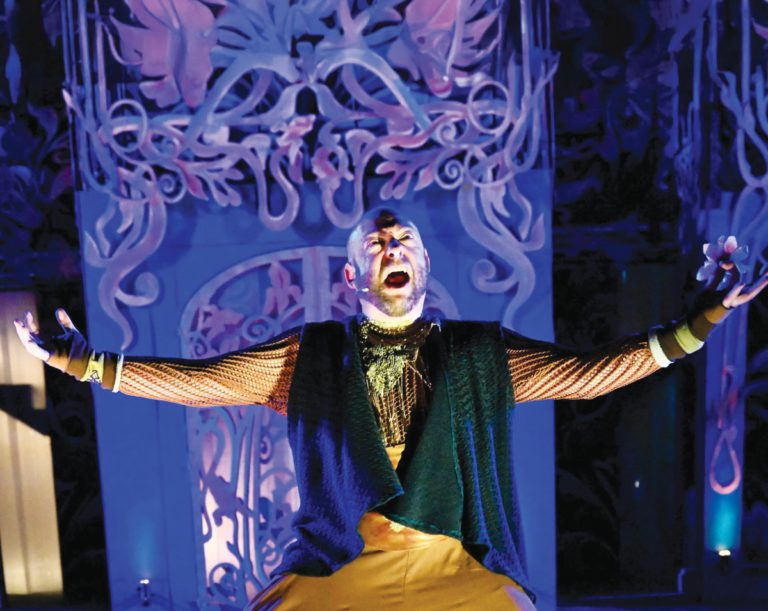
In Steinbeck’s final novel, The Winter of Our Discontent, he says, “A man who tells secrets or stories must think of who is hearing or reading, for a story has as many versions as it has readers.” It’s fitting that the book is titled after a Shakespearean line, as Shakespeare himself was prone to telling old stories in his own way. It’s doubly fitting as Marin Shakespeare Company presents the last two shows of the One For All Solo Series

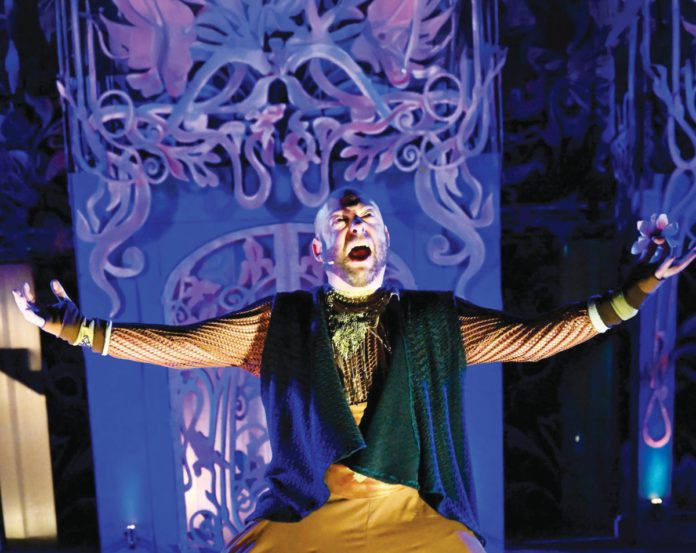
There are three shows in all—last month’s Tell-Tale Heart by Carlos Aguirre, Dan Hoyle’s Takes All Kinds and Brian Copeland’s Jewelry Box, a prequel to Not a Genuine Black Man

The shows seem like an odd mix. Heart is a rap musical mixing Poe’s themes of guilt with modern identity issues. All Kinds is a sometimes funny, sometimes challenging, always complex channeling of real American people as they navigate the times we are living in. Jewelry Box seems like the simple story of a young Black boy trying to buy his mother a gift. Except he has no money, so he embarks on a journey to find the $11 needed for a jewelry box.  

So what do they all have in common?

“Bravery,” says artistic director Jon Tracy. “Both the bravery and openness of the artist, but also the bravery of the audience,” he explains. “There is a joy,” continues Tracy, “when the audience realizes that it is not really a solo piece. It is something they are all participating in.”  

Tracy, who has been obsessed with the power of storytelling since childhood, is understandably proud of the work being brought to the Marin Shakes stage. 

“I want our theater to be a place where curiosity is rewarded,” he explains, “where folks of all backgrounds can find a space that is both quite familiar and wonderfully new. The weight of the world can be so consuming, but we don’t shy away from the challenges of being human. We also don’t fear the power of hope.”

In an echo of Steinbeck, Tracy muses that “one can always find their production of Twelfth Night.” Meaning that the job of a theater is not to prescribe. It is to present the stories and ask the questions.

It’s up to the audience to find what answers resonate for their lives.

The Marin Shakes ‘One for All’ Solo Series runs at their Center for Performing Arts, Education, and Social Justice at 514 Fourth St., San Rafael. Sat, Nov. 22, at 7:30pm; Sat, Dec. 20, at 7:30 pm. $15-$40. 415.388.5208. marinshakespeare.org.

A Coffee Crisis Averted: Peet’s Arrives at Sweetwater

For 39 years, 88 Throckmorton Ave. housed Peet’s Coffee. The coffee shop, located in downtown Mill Valley, opened in 1987 and was one of the longest-running businesses in the area. 

However, on Sunday, Nov. 2, this Mill Valley institution closed, leaving coffee-lovers and Peet’s regulars without their favorite coffee shop.  

Sweetwater Music Hall stepped in. When Maria Hoppe, Sweetwater’s executive director, heard the news of Peet’s closing, she was upset. 

“I was personally distressed when the news came out because I’m a Peet’s customer,” Hoppe said. “It’s so sad. We didn’t want Peet’s to be gone entirely.” 

Originally, Sweetwater had poured Equator Coffee in The Rock and Rye Cafe. But with the closing, Hoppe decided to make the switch to Peet’s. “It really started with just the intention of pouring Pete’s coffee with the restaurant,” said Hoppe. From there, Sweetwater discussed different pathways for their partnership and eventually decided on selling from Peet’s Classic Menu. 

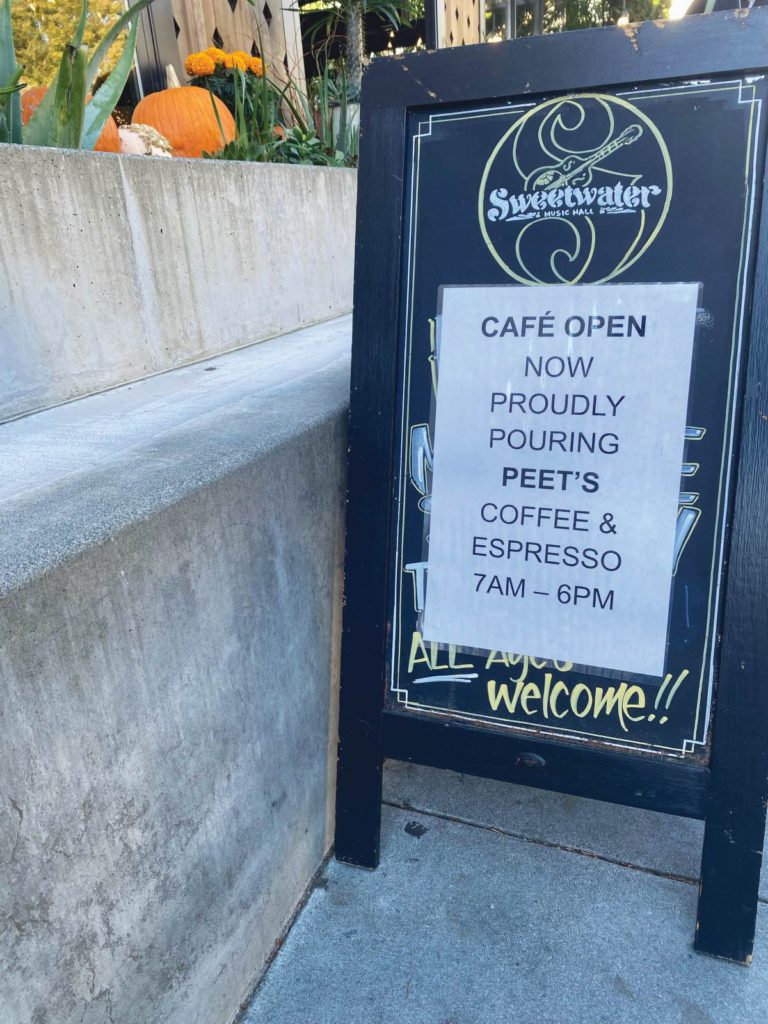
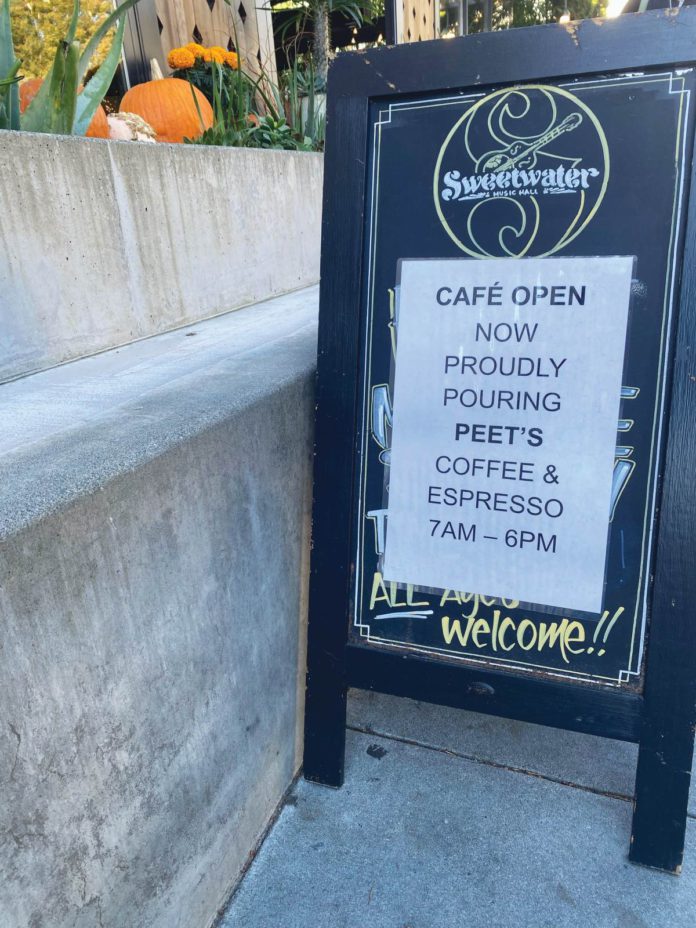
Customers heard of this partnership through a social media announcement from Sweetwater and Peet’s: “Calling all Mill Valley Peetniks! Don’t be sad—we are here for you! We are excited to share that starting this Monday, November 3rd at 7am, Sweetwater Music Hall’s café will be open and proudly pouring Peet’s Coffee.” 

Prior to this announcement, there was a lot of speculation about the future of Peet’s. Ken (a regular who preferred to go by his first name, which is also fixed to a sign on a chair that reads, “Ken’s Chair”) said, “Everyone you talk to has a different story.” 

Another longtime regular, who preferred anonymity, worried about what might happen to the shop. “Well, when you go to Peet’s on a daily basis, it’s just part of the gossip of what’s going to happen,” she said. “We kept hearing about all the options.” 

Peet’s did not cite an official reason for closing, although some customers speculated about competition with Equator Coffee or an increased rent. “We’re not, as clients, party to those discussions. We don’t have the facts,” said Ken. Regardless, the customers still can get their Peet’s at Sweetwater.

Since Nov. 7, Sweetwater’s café has been pouring Peet’s, and has added a different experience for longtime customers. The café space has indoor and outdoor seating, and is outfitted with a patio with a retractable roof in case of rain. Said Ken, “Crystal chandeliers. Comfortable lounge. More seating. What’s not to like?”

With the partnership in place, Sweetwater hopes that the new menu will entice younger customers and musicians to the café, as well as create a new opportunity for evening café culture. For most of Mill Valley’s coffee shops, closing is around six o’clock. However, for the music venue Sweetwater, closing times depend on shows. 

“If there’s a show, we’re going to be open for everyone. On the weekends, we’re open ’till midnight,” Hoppe said. These later times mean that customers can use the café later into the night, whether they are studying, doing work or brainstorming the lyrics to the next chart-topper. “The truth is, music and coffee houses have been hand-in-hand for years. Some of our greatest songwriters come from the coffee house environment,” noted Hoppe. “I want to bring that culture here.” 

Peet’s Coffee and Sweetwater’s partnership reflects the care that the music hall has for the community. This is evident in Sweetwater’s support of Peet’s and its customers; Hoppe even moved the “Ken’s Chair” sign from the coffee shop into Sweetwater’s café. 

“The people here really care about the community,” said Ken. “So [those] of us who love the Peet’s community experience really want this to succeed.”

Sweetwater Music Hall is located at 19 Corte Madera Ave., Mill Valley. sweetwatermusichall.org.

High Stakes for Shakes: Marin Shakespeare Co. fundraiser

0

Light, hope, community—and a few surprises. That’s what Marin Shakespeare Company is promising attendees at its upcoming gala fundraiser, “The Light We See,” enthusiastically brightening the holiday season on Sunday evening, Dec. 7. 

The year-ending benefit event takes its appropriately chosen title from Shakespeare’s Merchant of Venice, in which Portia notes how far a little candle can throw its beams, adding, “So shines a good deed in a naughty world.”

With this lyrical reminder of how far-reaching the shared light of creativity and art can be, Marin Shakespeare Company has planned an event its organizers say will do much more than just raise money for the organization’s numerous award-winning programs. 

As described on MTC’s website, “The Light We See” will stand as a celebration of the enduring radiance of live theater as a positivity-spreading artform, illuminating that message through live performances on the theater’s stage, music before and after, and a grand announcement of the shows and live events that will make up the company’s 2026 season.

“In a time when the world feels heavy with challenge, we choose to gather in light,” it states, “to celebrate what we’re fighting for—creativity, community and hope.”

Beginning with a casual 5:30pm gathering in the atrium space of the nonprofit’s Fourth Street theater, where attendees will be served wines from Frey Vineyards and “gourmet small plates,” Marin Shakespeare Company’s board, staff, artists and community partners will be present to meet and connect with local supporters and other Bay Area theater makers.

The main event, at 6:15pm, is a program designed to reflect MSC’s mission of “engaging hearts and minds, amplifying diverse voices, and creating theatre that matters.” The program, according to the event’s description, will include “special guests, unexpected moments, and a few surprises,” culminating in the big reveal of the company’s 2026 line-up, an assortment of shows artist director Jon Tracy describes as the company’s most ambitious season yet.

Finally, after a formal opportunity to pledge financial support, there will be an afterparty with live music, dancing and additional community connection and theatrical hobnobbing. 

Marin Shakespeare Company has just ended its 2025 season, a critically-praised run that featured two spectacular outdoor productions, beginning with Bridgette Loriaux’s mind-bending reinvention of A Midsummer Night’s Dream, and closing with M. Graham Smith’s magnificently epic delivery of The Tempest

In between, in collaboration with Play On Shakespeare, the company presented a three-week theater festival at its indoor theater, in a program titled Seeds of Time. Six teams of theater artists presented their own interpretation of theatrical classics. It’s going to be hard to beat that lineup of sheer entertainment and theatrical scope, but clearly, MTC is about to try. 

While 2025 was a verifiable success artistically, it was a tough year financially, as Marin Shakespeare Company faced some devastating news in May, when it learned that the National Endowment for the Arts had canceled two significant grants the company had already been awarded. One of those grants, worth $20,000, was intended to commission a brand new fairy-tale musical from Lauren Gunderson, adapted from Rebecca Solnit’s children’s book, Cinderella Liberator.

The second $20,000 grant would have funded the company’s Returned Citizens Theatre Troupe, which for several years now has been working with formerly incarcerated artists to create theatrical productions as a form of drama therapy. 

MSC has said it still plans to continue those projects, one way or another.

‘The Light We See’ begins at 5:30pm, Sunday, Dec. 7. Marin Shakespeare Company’s indoor theater is at 514 Fourth St., San Rafael. General admission is $105.99, and $315.99 for a VIP table for two, available on the MSC ticket page at MarinShakespeare.org

Uncommon Sense Woes: The Cost of Anti-Intellectualism

0

As a kid, my favorite part of grocery shopping wasn’t the snacks or the cereal aisle; it was the tabloids at the checkout. 

I’d devour headlines about Batboy sightings, Bigfoot vacations, royal scandals and the occasional presidential summit with extraterrestrials. These were absurdities printed with a straight face, and the comedy was half the fun.

I didn’t expect that, decades later, those supermarket fever dreams would feel less like parody and more like prophecy. The fantasies that once lived on cheap newsprint now pulse through mainstream culture. In the social media age, anything can be “true” if it flatters one’s bias or fuels their outrage. And with AI dissolving the already thin boundary between fact and fiction, we’ve entered an era where reality feels optional, truth feels negotiable and the most sensational lie travels at the speed of an algorithm.

In this environment, “common sense,” emotion and personal anecdote have muscled into spaces once reserved for evidence and expertise. But there’s nothing “common sense” about medicine, climate science, gender identity or any other complex system that shapes human life. Yet this appeal to “what feels right” has become the jet fuel of America’s culture war. It declares: If the issue seems simple to me, it should be simple to you. And if one disagrees, they’re elitist or part of a hidden agenda. This flattening of complexity has turned ignorance into authenticity and expertise into betrayal.

Through it all, a large portion of the country will deny what is right in front of them. Facts bounce off the force field of tribal loyalty. Experts are dismissed as elitists. Journalists are branded enemies. Anyone who insists on reality is accused of being part of a cabal determined to destroy America. It is the exact moment George Orwell warned about, when truth becomes whatever the powerful declares it to be. Once that line dissolves, democracy becomes fragile, fleeting and eventually non-existent.

Jared O. Bell is a former U.S. diplomat and scholar of human rights and transitional justice.

Tea Time: Kristina Tucker Puts the Kettle On

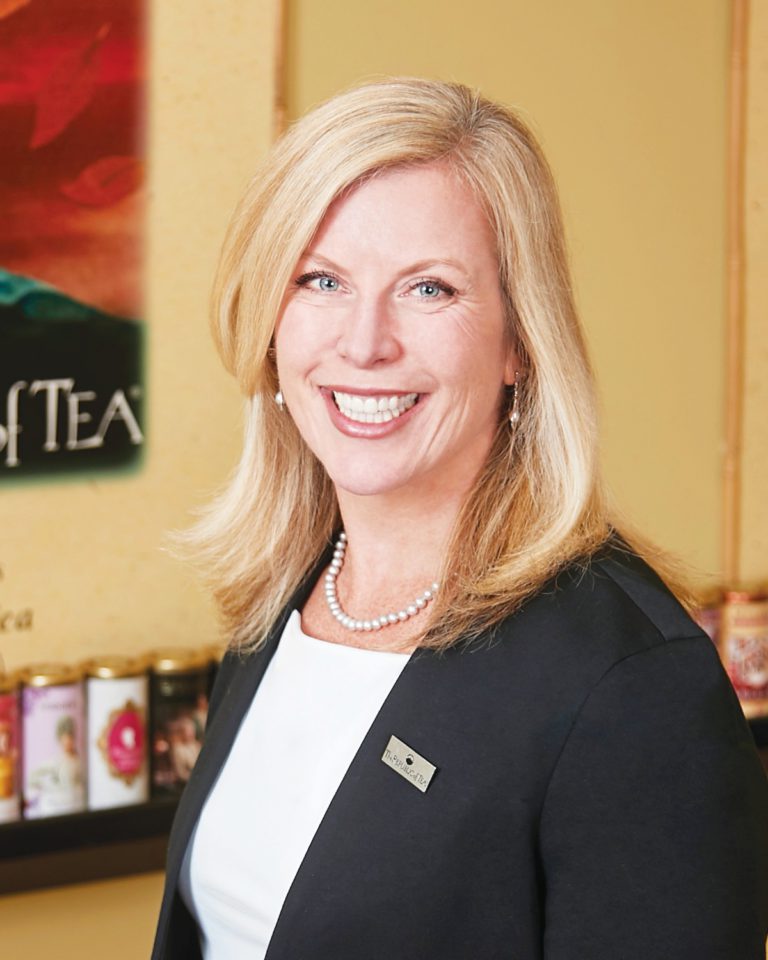
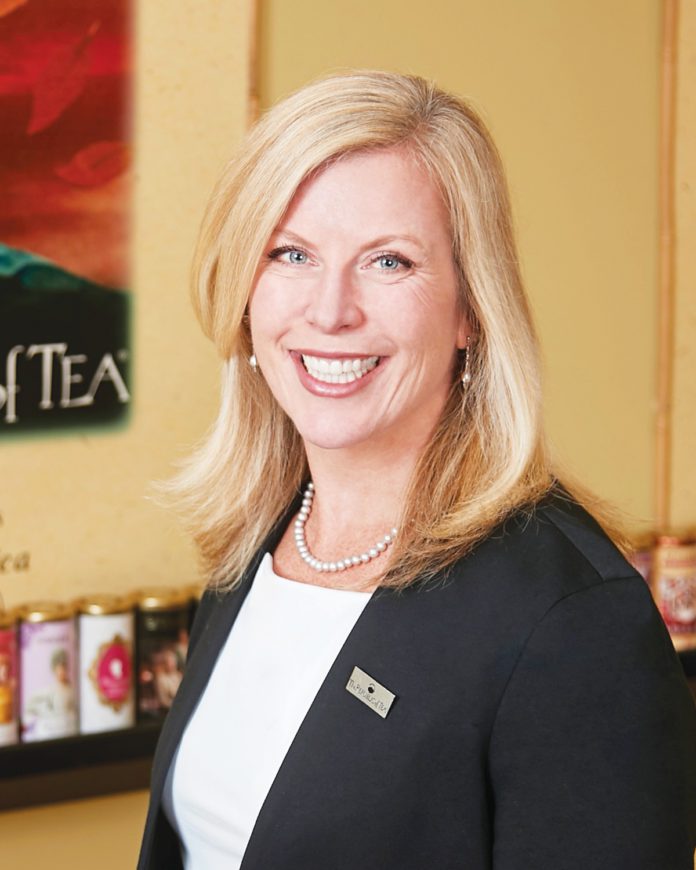
With minister of enlightenment as her job title, Kristina Tucker holds some powerful energy at Larkspur-based The Republic of Tea. 

But her journey to that position, which has been a 30-year career with the company that started in 1992, has involved many roles. Ultimately, she says that she “believes in the beauty and power of the leaf.” And her mission to “educate and inspire people throughout the world about tea, its varieties, origins, rituals and health benefits” remains central to her work.

Amber Turpin: How did you get into this work?

Kristina Tucker: I discovered tea over 30 years ago and began working with The Republic of Tea soon after. From the beginning, I was captivated by all the transformative properties of tea, and that fascination has only deepened with time. It has been a privilege to help enrich people’s lives through The Republic of Tea’s premium teas and herbs, and to share the ‘Sip-by-Sip’ rather than ‘Gulp-by-Gulp’ philosophy that celebrates mindfulness, health and well-being with such an incredible community.

Did you ever have an ‘aha’ moment with a certain beverage? If so, tell us about it.

The ‘aha’ moments are daily. The Republic of Tea has nearly 400 blends, and I rediscover new favorites all the time. I remember when we introduced our organic Double Green Matcha in 2007: the first matcha of its kind available in a single, easy-to-steep tea bag. It was a true breakthrough for tea lovers and reignited my passion for innovation and exploring new ways to experience tea.

What is your favorite thing to drink at home?

At home, I tend to reach for full leaf teas and herbs. My favorites are The Republic of Tea’s Silver Rain White Tea and Chamomile Lemon or Cardamon Cinnamon herb teas. I also love to prepare matcha, often whisking it with an electric whisk, though I still appreciate the ritual of using a traditional bamboo chasen from time to time.

Where do you like to go out for a drink?

Sushi Ran in Sausalito is a long-time favorite. Not only for its incredible food but for its lovely full-leaf teas, extensive assortment of sake and an outstanding chardonnay to pair with an unmatched Japanese dining experience. Another go-to is Picco in Larkspur, where the drinks are just as memorable, from refreshing bottled iced teas to inventive craft cocktails.

If you were stuck on a desert island, what would you want to be drinking (besides fresh water)?

Tea, of course … but which one is impossible to answer. May I never really have to pick one tea for a desert island.

The Republic of Tea, 900 Larkspur Landing Cir., Suite 275, Larkspur. 800.298.4TEA (4832). republicoftea.com.

Live Music with Film, Indigenous Food and Found Objects

0

St. Helena

Music Makes the Movie

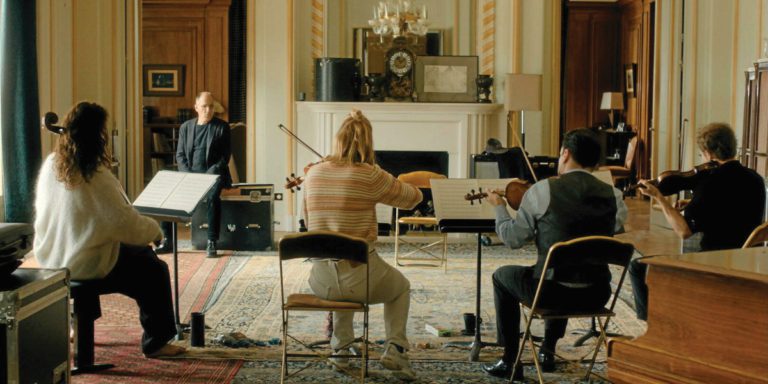
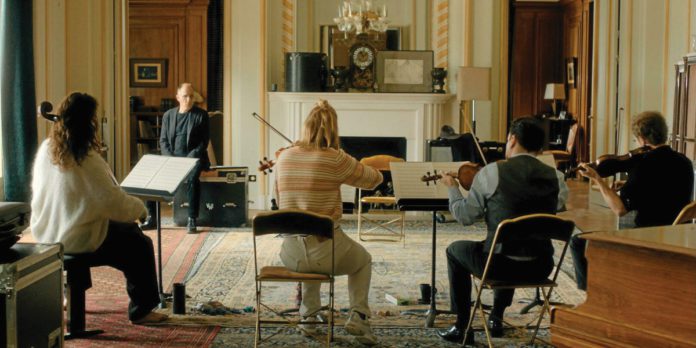
Festival Napa Valley and the historic Cameo Cinema launch a new “Music Makes the Movie” series, pairing live performance with film in an intimate, art-house setting. The debut evening features a set by Berkeley’s Classical Revolution Trio—led by Latin Grammy nominee Sascha Jacobsen—followed by a screening of Les Musiciens, Grégory Magne’s 2025 French comedy-drama about four virtuoso players struggling to find harmony with a priceless set of Stradivarius instruments. 6pm, Monday, Dec. 1, Cameo Cinema, 1340 Main St., St. Helena. $25. festivalnapavalley.org/calendar/les-musiciens.

Healdsburg

Indigenous Voices Series

As part of THE 222 Indigenous Voices Series, cookbook author Sara Calvosa Olson brings the flavors and foodways of her Chími Nu’am to Healdsburg—complete with samples. Olson reimagines some of California’s oldest Indigenous ingredients for the modern kitchen, sharing seasonal dishes that range from acorn crepes and wildflower spring rolls to blackberry-braised smoked salmon. Her talk also explores food sovereignty, traditional sourcing and the cultural importance of Native food practices. Olson’s book will be available for purchase. 7pm, Friday, Nov. 21, THE 222, 222 Healdsburg Ave., Healdsburg. $20.

San Rafael

Toni Childs Retrospective

Emmy winner and three-time Grammy nominee Toni Childs returns to the U.S. for a two-hour retrospective performance, bringing her unmistakable voice and presence to San Rafael’s Showcase Theatre. The show spans her biggest hits—”Don’t Walk Away, Stop Your Fussin’,” “I’ve Got to Go Now” and “Because You’re Beautiful”—plus bold new work from upcoming projects “It’s All a Beautiful Noise” and “Citizens of the Planet.” A strictly limited VIP package includes a front-row seat, a digital Greatest Hits set and a backstage drink with Childs herself. 7:30–9:30pm, Saturday, Nov. 22, Showcase Theatre, 10 Ave. of the Flags, San Rafael. $95; $194 VIP. Tickets at tickets.marincenter.org.

San Geronimo

Found Object Transformation

San Geronimo Valley Community Center presents “Looking Everywhere for Everything,” a month-long exhibition of new and selected works by Marin artist Richard Lang. Known for his multidisciplinary practice—painting, printmaking, assemblage, photography—and for the environmental art project One Beach Plastic with partner Judith Selby Lang, Richard Lang transforms found and often-forgotten materials into contemplative works about time, perception and human impact. The show runs through Nov. 30 at San Geronimo Valley Community Center, 6350 Sir Francis Drake Blvd. Free.

Your Letters, Nov. 19

Karma Club

“Lying.” “Disgusting.” “Scum.” “Slime.”
“Corrupt.” “Enemy of the people.”
OK, sure, these are some terms I have
heard to describe my family—with some
accuracy—but they are also the words
our president uses to reveal what he
thinks of journalists.
Up to now, he has done everything
he can to stop reporters from telling
the truth. Behind his shield of lies,
distortions, delusions, derangements,
exaggerations, and other outstanding
and determined forms of ignorance.
And those of his distinguished
patriots, who include Epstein, Miller,
Flynn, Giuliani, Navarro, Johnson,
Bannon, RFK Jr. and Graham.
The thing is that no one, not even
Nixon, escapes karma.

Craig J. Corsini
San Rafael

P-Town Traffic

Hey, Petaluma, I may have finally
found a traffic strategy that matches
our collective temperament. I call it
“Mutual Surrender”—all drivers just
need to STOP at once and work things
out between themselves.
Traditional traffic engineering has
clearly failed here. It’s time to lean into
our strengths: passive aggression and
the belief that everyone else is wrong.
Most Petalumans already drive like
they’re alone on earth. Traffic here runs
on spite and bad vibes—it’s time we
finally acknowledge that.

Cassady Caution
Petaluma

Gifts for Jewelry Lovers

Jewelry lovers don’t just accessorize—they accumulate little biographies in metal and stone.
Jewelry lovers don’t just accessorize—they accumulate little biographies in metal and stone.  Luckily, the North Bay is rich with makers who craft pieces meant to be worn, cherished and eventually fought over by future generations. These gifts let you put a little brilliance under the tree—no velvet box required. Moonstruck Fine Jewelry, Mill Valley Moonstruck specializes in hand-fabricated jewelry made with old-world...

Precariously Housed: Emergency Voucher Funding Ends Unexpectedly

The federal government’s funding turmoil has left scores of Marin individuals and families fearing they’ll be homeless—again—next year.
The federal government’s funding turmoil has left scores of Marin individuals and families fearing they’ll be homeless—again—next year. Ninety-four households received an Oct. 20 letter from the Marin Housing Authority (MHA) and were stunned to learn that the program paying a substantial subsidy for their housing will end in 2026, nine years early. “The Emergency Housing Voucher (EHV) Program, under which...

Sublime Mediocrity: Art is Where Ambition and Limitation Often Meet

Some artists carry the cultural burden of their genius and mounting legacy.
Some artists carry the cultural burden of their genius and mounting legacy. Ahem—not I. Having run through Elisabeth Kübler-Ross’ first four stages of grief as pertains to my career (denial, anger, bargaining, depression), I’ve finally come to acceptance: I’m clearly burdened by neither genius nor legacy. This revelation has freed me to embrace what I’ve come to call “sublime mediocrity”—that...

3 Singular Sensations: Marin Shakes Continues Solo Show Series

Marin Shakespeare Company continues its "One for All" Solo Series
In Steinbeck's final novel, The Winter of Our Discontent, he says, “A man who tells secrets or stories must think of who is hearing or reading, for a story has as many versions as it has readers.” It’s fitting that the book is titled after a Shakespearean line, as Shakespeare himself was prone to telling old stories in his...

A Coffee Crisis Averted: Peet’s Arrives at Sweetwater

Peet’s Coffee and Sweetwater’s partnership reflects the care that the music hall has for the community.
For 39 years, 88 Throckmorton Ave. housed Peet’s Coffee. The coffee shop, located in downtown Mill Valley, opened in 1987 and was one of the longest-running businesses in the area.  However, on Sunday, Nov. 2, this Mill Valley institution closed, leaving coffee-lovers and Peet’s regulars without their favorite coffee shop.   Sweetwater Music Hall stepped in. When Maria Hoppe, Sweetwater’s executive director,...

High Stakes for Shakes: Marin Shakespeare Co. fundraiser

Marin Shakespeare Company presents its gala fundraiser, “The Light We See,” on Dec. 7.
Light, hope, community—and a few surprises. That’s what Marin Shakespeare Company is promising attendees at its upcoming gala fundraiser, “The Light We See,” enthusiastically brightening the holiday season on Sunday evening, Dec. 7.  The year-ending benefit event takes its appropriately chosen title from Shakespeare’s Merchant of Venice, in which Portia notes how far a little candle can throw its beams,...

Uncommon Sense Woes: The Cost of Anti-Intellectualism

Daedalus Howell, editor of the Pacific Sun and the North Bay Bohemian. considers April Fool's Day a celebration of humanity.
As a kid, my favorite part of grocery shopping wasn’t the snacks or the cereal aisle; it was the tabloids at the checkout.  I’d devour headlines about Batboy sightings, Bigfoot vacations, royal scandals and the occasional presidential summit with extraterrestrials. These were absurdities printed with a straight face, and the comedy was half the fun. I didn’t expect that, decades later,...

Tea Time: Kristina Tucker Puts the Kettle On

Kristina Tucker discovered tea over 30 years ago and began working with The Republic of Tea soon after.
With minister of enlightenment as her job title, Kristina Tucker holds some powerful energy at Larkspur-based The Republic of Tea.  But her journey to that position, which has been a 30-year career with the company that started in 1992, has involved many roles. Ultimately, she says that she “believes in the beauty and power of the leaf.” And her mission...

Live Music with Film, Indigenous Food and Found Objects

Festival Napa Valley and the historic Cameo Cinema launch a new “Music Makes the Movie” series, pairing live performance with film in an intimate, art-house setting.
St. Helena Music Makes the Movie Festival Napa Valley and the historic Cameo Cinema launch a new “Music Makes the Movie” series, pairing live performance with film in an intimate, art-house setting. The debut evening features a set by Berkeley’s Classical Revolution Trio—led by Latin Grammy nominee Sascha Jacobsen—followed by a screening of Les Musiciens, Grégory Magne’s 2025 French comedy-drama about...

Your Letters, Nov. 19

Karma Club “Lying.” “Disgusting.” “Scum.” “Slime.”“Corrupt.” “Enemy of the people.”OK, sure, these are some terms I haveheard to describe my family—with someaccuracy—but they are also the wordsour president uses to reveal what hethinks of journalists.Up to now, he has done everythinghe can to stop reporters from tellingthe truth. Behind his shield of lies,distortions, delusions, derangements,exaggerations, and other outstandingand determined forms...
3,002FansLike
3,850FollowersFollow