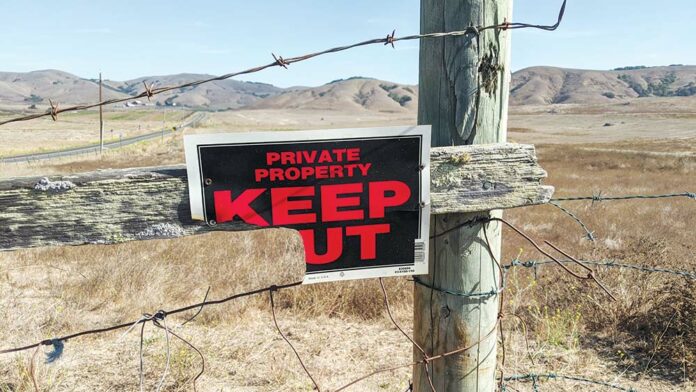
Anti-Semitism Strikes Marin

The Jewish community in the United States experienced more anti-Semitic incidents last year than in any other year since the Anti-Defamation League (ADL) began keeping records in 1979. In the last three years, there has been a sharp uptick in the number of anti-Semitic incidents.

Pristine Marin is not immune.

There were six reported anti-Semitic incidents in Marin from February 2019 to September 2020, according to the ADL. They include an emailed bomb threat to a Jewish community center and the disruption of a Jewish organization’s Zoom class by a white supremacist uttering an anti-Semitic tirade while displaying his swastika tattoo.

Those incidents, however, do not include recent activity on Instagram by a person or persons representing themselves as students at Redwood High School in Larkspur. One Instagram account, which appeared in late August or early September, featured a caricature of a bearded man wearing a yarmulke. The image looks like it could have come straight from Nazi propaganda literature. “Redwood students organized in anti semitism,” the profile’s description said. “We Currently compiling a google doc of Jews in the district. Hit us up if you want to help! Wehatej3ws.com.”

Jewish students in Marin reported the hate speech to Instagram. When the social media company removed the account, another was created to take its place. In total, at least three accounts with similar profiles were removed. The second had a more specific message: “doc naming all tam district jews.”

A posted photo showed a young male holding a bullet and wearing a helmet with a swastika. Some students believe they have identified him, although he donned a face covering, leaving only his eyes and the bridge of his nose exposed. The suspect has voiced anti-Semitic views in the past, they say.

Concerned parents and students began contacting the Tamalpais Union High School District (TUHSD) and Redwood officials on Sept. 2. Tara Taupier, superintendent of TUHSD, and Redwood Principal David Sondheim responded quickly, assuring parents the incident had been reported to the Central Marin Police Authority; however, they did not mention any planned direct action by the district.

Many were dissatisfied with the response. The Instagram profile’s reference to a list of Jewish students hearkens back to the 1930s and ’40s, when lists were used to identify Jewish citizens slated for deportment and extermination during the Nazi regime.

“We need to name it when we see anti-Semitism or experience it,” Rabbi Stacy Friedman, of Congregation Rodef Sholom in San Rafael, said during a recent public Zoom forum. “We need to call it out specifically. It helps our students to own their experience and it also makes people more aware of their specific words and deeds that may be damaging and harmful.”

Two Redwood High School seniors, Samantha Glickman and Lindsay Felder, led the charge in demanding tougher action from TUHSD by creating a change.org petition on Sept. 20. The petition, “Demanding action against antisemitism in the Tam District,” asserts anti-Semitism is often “swept under the rug by Redwood and the Tam District.” It also decried the insufficient response, which focused on community action, rather than a district plan.

The petition has currently collected more than 6,500 signatures. How were two 17-year-old Jewish students brave enough to co-author the compelling appeal?

“We are part of a class at Redwood High called leadership, with 15 kids from each grade,” Glickman said. “Lindsay and I stayed after class to talk about the incident with the teachers and we volunteered to write a letter to the district. Others were frustrated with how the district was handling it, so we thought it would have more impact to do a petition for the community.”

The seniors were also inspired to write the petition because of other anti-Semitic incidents at Redwood. Both have heard slurs in the hallway and noticed offensive symbols around campus.

Apparently, their petition has had an effect. On Sept. 29, Sondheim penned a strong letter denouncing anti-Semitism and announcing a countywide Zoom webinar, in partnership with the county office of education, ADL, Marin district attorney’s office and Jewish leaders. The Confronting Online Anti-Semitism webinar took place on Sept. 30.

Sondheim’s letter went on to say he is Jewish and understands the fear the social-media posts evoked. He is not alone.

“I think if we were in school in person, I would definitely be scared,” Felder said. “I would be a lot more scared. I am scared now.”

No child should go to school scared, yet the statistics surrounding anti-Semitism are frightening. Although there was a slight decrease in overall hate crimes in California in 2019, there was a 12 percent increase in hate crimes targeting Jews, according to a report by California Attorney General Xavier Becerra.

Do the Instagram posts meet the legal definition of a hate crime? We can’t rush to judgment, Marin County District Attorney Lori Frugoli said in the webinar.

Redwood High School is not held to the same standards as law enforcement. While the school has the responsibility to protect free speech, they also must ensure the safety of all students. The school has the liberty to discipline a student when there is significant unrest or disturbance or an unsafe environment, according to Sondheim.

“There is enough to take action as a school if it’s one of our students, and law enforcement is still investigating to see who is responsible,” Sondheim said.

While the investigation progresses, everyone agrees immediate action must be taken. Education is key.

“I see education as one of the strongest tools to combat anti-Semitism,” said Morgan Blum Schneider, director of the JFCS Holocaust center, a program of Jewish family and children’s services.

Today, the only Jewish education included in California public schools takes place in 10th grade, when students learn about the Holocaust in world history class.

San Rafael pediatrician Dr. Mike Harris volunteers with Stand With Us (SWU), an organization working to include Jewish-American studies in schools. The group lobbied to stop the passage of Assembly Bill 331, state legislation which laid out the curriculum for ethnic studies classes which will soon be required in all California high schools. Although SWU supports ethnic studies, they say the initial curriculum draft contained anti-Semitic and anti-Israel material. The final draft included recommended sources that were still problematic, according to Harris. It does not include Jewish-American coursework.

Last week, Gov. Gavin Newsom vetoed AB 331, despite the fact the State Board of Education is mandated by law to approve an ethnic studies curriculum by March under a 2016 law.

As the state continues to debate the content of the ethnic studies curriculum, last week Marin County unveiled educational programs for students, parents, teachers, administrators and community members. The Confronting Antisemitism Educational Workshop Series, led by the JFCS Holocaust Center in partnership with the ADL and Marin County Office of Education, will start this month.

Still, students and teachers are not required to attend the workshops, prompting some community members to say the program has no teeth.

“I believe it’s an important step in the process of making change,” Blum Schneider said. “The workshops will also help parents have difficult conversations at home with teens.”

Those teens are likely going to save us from the hatred in this world. With youth like Glickman and Felder representing this rising generation, students at Redwood High will be standing together to call out anti-Semitism wherever it rears its ugly head. To register for the Confronting Anti-Semitism workshop series, visit: https://holocaustcenter.jfcs.org/holocaust-events/confronting-online-antisemitism/

The Other Election

Cristóbal Dahm Moreno was born and raised in Chile. He lives and works in Sonoma County, and, while he’s worked up about the U.S. elections, he’s also worked up about the elections that will take place thousands of miles away in his homeland this October. The South American nation, which runs along a narrow strip of land between the Andes and the Pacific Ocean, faces a national plebiscite on Oct. 25, not long before Election Day in the States. At issue: a new constitution that would make the nation more democratic.

Over the last year, millions of Chileans have taken to the streets of the capital, Santiago, and to the streets of towns and cities all across the country, protesting the policies and actions of President Sebastian Pinera, a right-wing billionaire, who has a popular approval rating of about 10 percent.

Americans might take a special interest in Chile because the Central Intelligence Agency (CIA) engineered the overthrow of the democratically elected socialist government of Salvador Allende on 9/11 in 1973. Popular singer, songwriter and political activist, Victor Jara, was arrested and tortured by the military. Chilean poet Pablo Neruda, the 1971 Nobel Prize winner for literature, died under suspicious circumstances on Sept. 23, 1973. Following his death, thousands of Chileans disobeyed a curfew and gathered in the streets to honor Neruda and his work.

With U.S. help, General Augusto Pinochet was installed as dictator. Under his iron heel, tens of thousands of people were arrested, jailed and tortured. Thousands of Chileans were executed. Trade unions were banned, social security and state-owned enterprises were privatized, newspapers censored and a reign of terror imposed on the nation.

Thousands of Chileans fled. Some of them, including novelist Isabel Allende, who now lives in Marin, created new lives for themselves and helped focus the world’s attention on their homeland. This October, Cristóbal Dahm Moreno and his friends in Northern California will watch the outcome of the Chilean election. It seems likely that the country will reject its authoritarianism. If only that were the case in the United States.

Chile’s history suggests that while dictatorships take terrible tolls on their own citizens, they don’t last forever.

Jonah Raskin is the author of “Marijuanaland: Dispatches From an American War.”

Point Reyes Shame

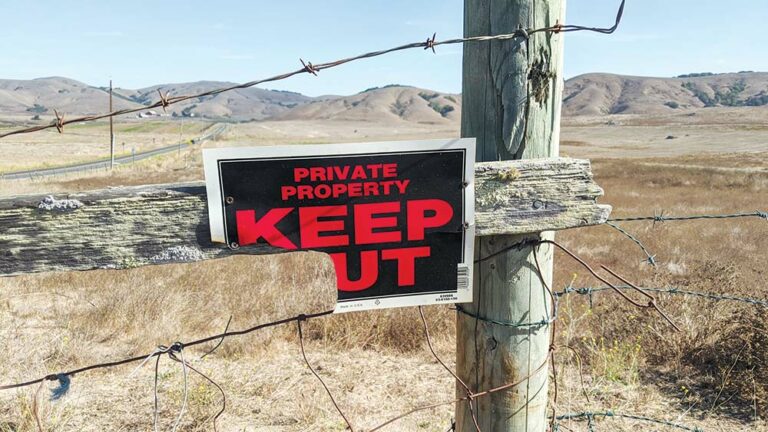
The updated “plan” for Pt. Reyes is a cynical way to give the 24 ranchers (who were paid for their land over 20 years ago) more latitude to graze even more livestock, to put slaughterhouses on federal land, and to kill native tule elk.

Don’t fall for the National Park Service’s calling these ranches our “cultural heritage,” any more than killing off native people and native species can be called “cultural heritage.” The cattle destroy coastal scrub habitat and pollute the limited water. Veal crates with babies taken from their mothers and piles of old tires are prime features of the dairies.

Please contact Woody Smeck (sm***@*ps.gov), our governor, state senators and Jared Huffman (who FAVORS this “plan”) and demand that this disgusting expansion of business rights be scrapped now. We made the oyster people leave. Now make the ranchers do the same.

Nancy Hair

Sebastopol

MALT Shame

So shameful (“MALTED Millions,” News, Sept. 30). I donated for years thinking my money was keeping open space for public use, not providing loan money for board members. I won’t donate further until changes are made.

Patminorcpa

Via Bohemian.com

Yes, shame on MALT for straying so far from the original intention(“MALTED Millions,” News, Sept. 30); saving these beautiful lands from developers—not enriching themselves! Especially disappointing to read they refused an easement to support an organic farming project.

Looking forward to reading about “the federal government paying millions of dollars to dairy ranchers who agreed to leave after 25 years, but as of yet are still there.” Thank you for the investigative reporting.

Leslie2

Via Bohemian.com

Mill Valley Director’s ‘The Book Makers’

There are many books about filmmakers, but not a lot of films about bookmakers—specifically art bookmakers. Filmmaker James Kennard’s feature documentary, The Book Makers, remedies this with aplomb.

Produced by Mill Valley’s InCA Productions, the hour-long love letter to the printed book is an official selection of this year’s Mill Valley Film Festival and also airs on PBS in the coming weeks. It also marks the feature documentary directorial debut of 31-year-old filmmaker James Kennard, whose film, in part, asks the question, “What should books become in the digital age?”

“They say, anytime a technology goes out of date, it just becomes art,” says Kennard, who studied history at Oxford University before returning to Marin County to join the family business (InCA Productions was founded in the ’80s by his father, lauded documentary filmmaker David Kennard).

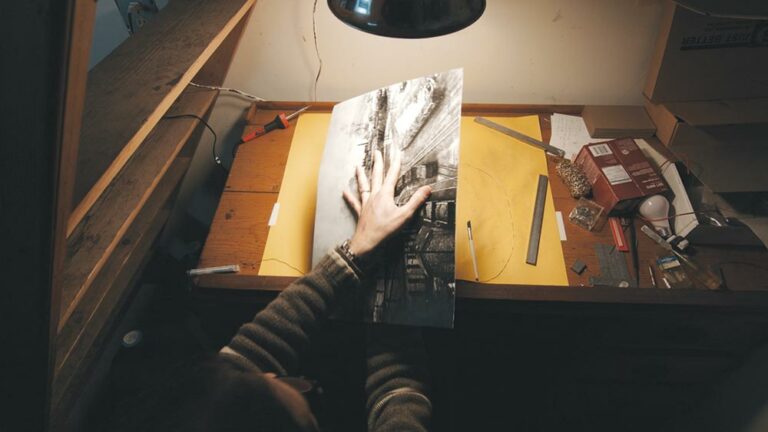
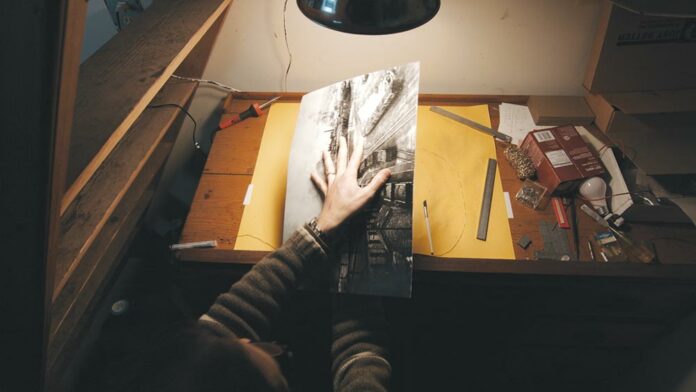
The filmmaker interviewed a raft of artists, authors, collectors and historians who are preserving both the artistry and craft of bookmaking. They include Bay Area luminaries Dave Eggers and Daniel Handler, a.k.a. Lemony Snicket. Also included are Berkeley-based artists fine-press printer Peter Koch—who made the 30-pound lead book pictured above—and artist Julie Chen, who re-invents the physical form of the book to enhance the reader’s tactile experience.

Another Bay Area personality who features prominently in The Book Makers  is Oakland’s Mark Sarigianis, who sets out to print a limited run of Charles Bukowski’s cult novel Ham on Rye using the traditional metal type process that leaves absolutely no room for error. The arc of his story is as beguiling as it is nerve-racking, and it begs the question as to whether or not book-making in the Digital Age is a quixotic undertaking. Spoiler alert: It isn’t.

The film proves that digital isn’t the death knell for books so much as a herald of their emancipation as mere content-delivery systems. Books aren’t just coexisting in harmony with a digital world, they’re actively redefining and re-imagining what books can be.

This is proved by the sheer variety of books showcased at the CODEX Book Fair in San Francisco—a moment in the film that neatly binds its various stories together. Kennard acknowledges the narrative device with a laugh and admits, “Oldest trick in the book.”

The Book Makers” airs at 8pm, Oct. 17 on Northern California Public Media (KPJK), and at 4pm, Oct. 27 on KQED WORLD and again at 8pm, Nov. 13 on KQED channel 9. The film will stream as part of the Mill Valley Film Festival October 9–18. thebookmakersfilm.com.

BJ Hughes’ Instagram cannabis success

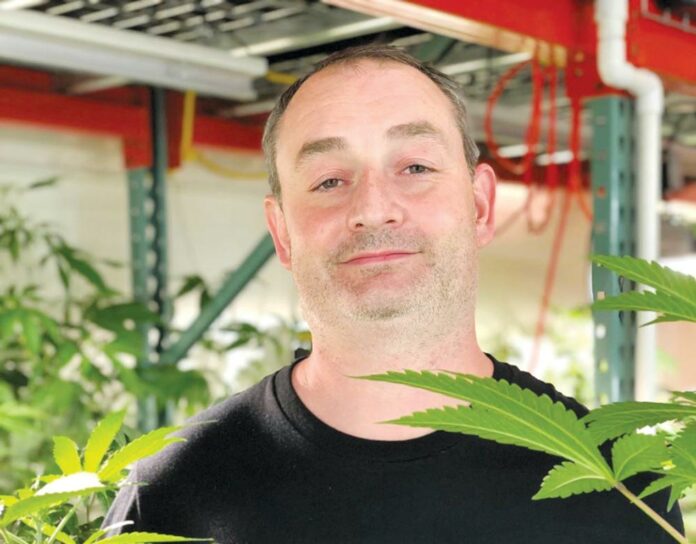
Bobby James Hughes III, known to friends as “BJ,” went online for the first time in 1991. Two years later, he built his first computer and joined early marijuana message boards like Overgrow.com and ICMag. In 2011, he posted on Instagram before it became popular. Find him now at @sogarmy on IG.

“It’s been crazy,” BJ tells me. “I’ve used Instagram in all aspects of my cannabiz: hiring employees, making friends, branding new products and sharing tips on various aspects of cultivation.”

Brand Recognition is essential for survival in a competitive marketplace.

BJ makes all of the materials for his Instagram account, which has over 22,000 followers, many of them local. With his iPhone, he goes live while working. Some of his videos are funny, with background music and eye-catching pop art. He posts regularly on his IG Storyline. Followers get the latest news and can pick up fresh products at dispensaries. BJ gets the most “likes” with high-resolution photos.

“We love Sonoma County and want to give back,” he says. He and his team serve food at the Guerneville Winter Shelter. As a member of the Sonoma County Growers Alliance and the Hessel Farmers Grange, he’s involved in the local community.

BJ’s love affair with the cannabis plant goes back even farther than his relationship to computers, email, the internet and Instagram. Born in Atlanta, Georgia, and raised in Birmingham, Alabama, he learned about growing food from his grandfather, Bobby Hughes I, who owned a small farm. His son, Bobby James Hughes II, ran an auto body shop, where BJ learned essential skills that helped make his business the success it is today.

As a teen, he tried weed with his peers, and learned about it from High Times and message-board friends around the world who are still part of the industry. In college, he studied network engineering, graduating with a degree in computer science. When voters approved Prop 215 and medical marijuana was legalized, he told himself, “California seems like the place to be.” He moved here in 2006.

 “SOG Cannabis” is the name of his company. SOG = “Sea of Green,” which is a tried-and-true method of growing primo weed. BJ’s company is licensed. It’s an indoor facility that features only one plant per square foot. A multiple High Times Cannabis Cup winner, BJ is known for his speciality products, including small-batch, high-end flower, pre-rolls and concentrates which are available at Organicann, Mercy Wellness and Harborside in Oakland.

“I’m a cannabis grower!” he tells me. “I love what I do, where I do it and I love sharing via Instagram!”

Jonah Raskin is the author of “Dark Past, Dark Future: A Tioga Vignetta Murder Mystery.”

Best Place to Meet at 4:20: The Louis Pasteur statue in front of San Rafael High School

Everyone knows 420 is a code word for cannabis, but few know why. I asked a friend who said, “I’ve heard a lot of stories—that it’s a police code for weed, that it has to do with the chemical compound or something?”

Others claim it’s Bob Marley’s birthday—which it isn’t—or Hitler’s birthday—which it is, but what’s that got to do with weed?

In fact, the true origin is a delightful tale of teenage stoners at San Rafael High School circa 1971. I love this story for how easily it could be mere myth and for its diligent documentation.

The group of boys—who only allowed their full names to be made public after cannabis became legal in California—were nicknamed “the Waldos,” because they were known to hang out against a wall.

According to Steve Capper, a friend’s brother was in the Coast Guard and had been growing some weed. He was afraid he would get busted by his commanding officer, so he told Capper and his friends they could pick it for free if they wanted it. He even provided them a treasure map.

Capper, on the podcast Criminal, explained, “We’re like, teenage boys. ‘Free weed? Are you kidding?’”

They agreed to meet at 4:20pm at the Louis Pasteur statue in front of San Rafael High School. They got high, piled into a Chevy Impala and ventured off in search of the rumored field of weed.

They didn’t find it that day, nor the next, nor weeks later, though they tried in earnest. The search became a joyful ritual in its own right. They would remind each other of the plan to meet, saying, “4:20 Louie” to each other. Eventually this was shortened to simply 4:20.

It seems implausible that a code word between high school buds could become recognized throughout the world—until you learn that Dave Reddix’s brother was friends with Grateful Dead–bassist Phil Lesch.

San Rafael and the Waldos were able to take official credit for their code word in 2017 when the Oxford English Dictionary added “420” to its lexicon.

Others claimed to know the true roots of 420, but only the Waldos produced evidence, including mentioning “420” in a 1974 San Rafael High School newspaper and a postmarked note that had accompanied some pot and described it as, “a little 420 for your weekend.”

Author’s note: It remains illegal to smoke pot on a high school campus, so this publication does not officially endorse meeting at Louie for that purpose.—CK

Best Reasons to Love the Marin Alliance for Medical Marijuana and Lynnette Shaw

Though there are cannabis delivery services in Marin, some legit and some fly-by-night, there is really only one bonafide dispensary in the county. It’s the Marin Alliance for Medical Marijuana (MAMM) in Fairfax, which accommodates both medical and recreational users and has more history than any other dispensary in the United States. Medical patients are required to show up with a note from a doctor and a valid driver’s license or another form of identification.

MAMM was founded 23 years ago by the legendary Lynnette Shaw, otherwise known as the “Green Queen” and the “Godmother of Medical Marijuana.” President Bill Clinton, who claimed that he smoked, but didn’t inhale, tried to put Shaw out of business. In 2011 the federal government finally shuttered her establishment, but with ample help from her dogged lawyers and from the courts, she bounced back and reopened in 2017 with a wham-bam party, complete with free food and free beverages.

I tried one of the free edibles—a chocolate brownie. Indeed, I ate the whole thing and was zonked instantly, but still able to drive safely, tripping the whole way, from Fairfax over the Golden Gate Bridge to the Mission District in San Francisco. It was a hairy ride, in the style of Hunter S. Thompson. I would not recommend it. Don’t eat the whole thing! I do recommend a visit to MAMM for all your cannabis needs.

Not long ago, I met a couple of Marin residents who told me they drove to Oakland, bought their weed from a dispensary in the East Bay, drove back to Marin and then got stoned. That made no sense to me. It still doesn’t. Liberal Marin tends to vote “Yes” on marijuana measures, but when entrepreneurs try to open dispensaries, the foes attend meetings and voice their opposition. “Not in my backyard” has been a rally cry all across Marin.

MAMM deserves support from the county that Shaw has helped for years with medical marijuana. A man who called himself Dan and who said he had been a marijuana smuggler back in the day and had been arrested and imprisoned, told me at the 2017 grand reopening, “Lynnette’s place has been good for the community. What she’s doing here will spread all over California.” Indeed, it has.—JR

MAMM, 6 School St. #210, Fairfax; 415.295.7633. Open seven days a week, 9 to 9.

MALT Board of Directors’ Conflicts of Interest Exposed as Legal Battle Unfolds

1

In January 2017, the Marin Agricultural Land Trust (MALT) paid $1.66 million to the family business of a member of its board of directors, Sam Dolcini.

The money bought a conservation easement on hundreds of acres of cattle-grazing land owned by Sam and his father, Earl Dolcini. Half of the purchase price came from a sales tax supporting Marin County Parks. The balance came from tax-deductible corporate and private donations made to MALT, a non-profit charity which the Internal Revenue Service terms a 501(c)3.

The county’s contribution to the Dolcini deal was approved without debate by the Marin County Board of Supervisors, which is closely connected to MALT. Supervisor Dennis Rodoni sat on the MALT board when the Dolcini deal was sealed, and Marin Board of Supervisors President Steve Kinsey was a MALT director from 1997 to 2016.

Years later, in May 2020, Parks suddenly ordered MALT to refund the county funds used to purchase the $1,666,500 Dolcini easement. The reason? When applying for the funding, MALT had failed to disclose the existence of an appraisal it had commissioned that valued the easement at half a million dollars less than the price paid by MALT and the county.

MALT immediately refunded $833,250 to the county using private donations. The Dolcinis did not return any of the money, said MALT spokesperson Isabel French. In June, executive director, Jamison Watts, resigned to “recalibrate my life-work balance.” As facts about the board’s historic conflicts of interest spill into view, MALT has lawyered up.

It turns out Sam Dolcini is not the first board member to sell an easement to the land trust. MALT has spent tens of millions of dollars in public and private funds buying easements from its own board members.

In early September, a law firm representing a resident of Ross named Kenneth Slayen demanded that District Attorney Inspector Jon Madarang and state authorities investigate MALT board members for multiple conflicts of interest. Burke, Williams & Sorensen LLP alleges that public records obtained from Marin county government reveal that MALT board members have improperly influenced the awarding of easement contracts to themselves.

In late August, MALT sued Marin County in Superior Court, trying to keep the county from releasing public records relevant to MALT’s activities. The land trust claims MALT’s business is a state secret even when it spends county funds. MALT is asking the court to order the return of hundreds of pages of public records already released to Slayen’s lawyers.

It’s too late; the Bohemian/Pacific Sun has the records. After initially supplying some factual data about easement purchases, French said MALT would not respond to further queries. “It appears that you are looking for information to confirm an ill-informed narrative that underpins your approach to this story,” she emailed. The records, however, speak for themselves.

How it all began

In the 1960s, a coterie of Marin leaders favored developing wild coastal beaches into Malibu and grassy, rolling hills into Beverly Hills. Their plan was to ram a freeway from Highway 101 to Point Reyes, despoiling thousands of acres of farmland, forests, streams, ponds and grasslands. Shopping centers, high-rises and beach-comber mansions would follow the bulldozers. The populace reacted definitively. The real-estate-investor-powered move toward rampant urbanization was stopped dead in its tracks by a canny coalition of environmentalists and politicians with massive public support.

The coalition created the Point Reyes National Seashore Park, with the federal government paying millions of dollars to dairy ranchers who agreed to leave after 25 years, but as of yet are still there (we report on that story in an upcoming issue of the Bohemian/Pacific Sun). Inland, the coalition passed stringent zoning laws that limited  West Marin lot size to 60 acres. And, in 1980, the coalition created the Marin Agricultural Land Trust to conserve thousands of acres of open spaces by paying ranchers to agree to easements prohibiting non-agricultural development forever. The price typically paid for an easement was one third to half the fair market value of the property to be protected from development.

In the beginning, the properties held lots of potential market value if they could be sold to commercial developers. MALT purchased easements strategically, creating a buffer of protected lands around the west county. Combined with strict zoning laws, the easements made residential subdivisions and commercial development effectively impossible. The speculative value of West Marin farmland plummeted. But the prices MALT paid for easements kept increasing, rising from a few hundred dollars an acre in the 1980s to as much as $10,000 an acre in 2014 for conserving board member Peter Martinelli’s Paradise Ranch in Bolinas.

Arguably, there was no need to keep buying easements after the first decade or so of locking the doorways to development. In his 1991 history of MALT, Farming on the Edge, Saving Family Farms in Marin County, California, John Hart observed, “In Marin, nearly all the urban-rural boundary has now been sealed with government-owned land … [using] easements to strip the development potential from lands in the buffer zone.”

But MALT continues to project the scary nightmare of Malibu North, claiming it must buy easements on every square inch of West Marin or Developer Armageddon will ensue. Who is benefiting?

An independent investigation by the Bohemian/Pacific Sun found that since 1980 more than 30 MALT board members have benefited from 38 easement sales totaling more than $49 million. Fifty-five percent of $90 million in easements bought over 40 years has benefited board members. A handful of families with multi-generational board members, including the Dolcinis, have received $37 million. Cash proceeds are used to capitalize commercial dairy operations, to buy land and to pay off bank loans.

Easement payouts are often accompanied by enormous property-tax reductions. For example, the county assessor recorded the aforementioned Dolcini property’s value at $3,411,089. Concurrent with approving the easement purchase, the board of supervisors granted the Dolcinis a Farmland Security Zone contract. The “FSZ” contracts drastically reduce property taxes in return for a promise to ranch commercially for 20 years. This FSZ reduced the taxable value of the 326-acre Dolcini ranch by nearly $3.2 million, or 93 percent. As of 2019, the Dolcini’s “grass-fed” cattle raising ranch was assessed at $249,903. The property tax was $2,499, a drop in tax from the previous year of $30,000. Nearly half of the Malted ranches are benefitting from similar property-tax reductions, adding up to millions of dollars lost to the general fund.

Anatomy of a conflict of interest

Sam Dolcini has been a member of the MALT board continuously since 1998, with the exception of two years around 2010. His father, Earl Dolcini, was a founding member in 1980. Members of the extended Dolcini family own thousands of acres of Malted dairy and beef land in West Marin. Family members have banked more than $7 million selling five easements to MALT while a family member was on the board. MALT money has financed the expansion of the family’s commercial enterprises and its bank loans, public records reveal.

In 2016 Sam Dolcini personally negotiated the sale to MALT of the $1.66 million easement benefiting himself and his father. Staffers and the board were informed that he was a part-owner of the ranch land and would benefit from the easement sale. Over a period of half a year, Dolcini ironed out the details of his easement deal with MALT staffers who were working under his governance with predictable results.

On Dec. 12, 2016, staffer Stephanie Tavares-Butler emailed a Parks colleague, “The Dolcinis are really pushing us to close their project before the end of the year for tax reasons. I’m wondering if we can get the check-writing process started while you do the final approvals of the [easement].”

Asked for comment, Sam Dolcini emailed the Bohemian/Pacific Sun, “I recused myself from all Board discussion and voting with regard to the acquisition of this easement, as was called for in MALT’s conflict of interest policy. Any allegations of a conflict of interest affecting this transaction are misguided. I have no further comment.” He did not return a further query for comment on the facts presented in this story.

Under MALT’s bylaws, as last amended in July 2018, a board member is allowed to accept millions of dollars in MALT’s “charity” as long as it’s “authorized by this corporation in good faith and without unjustified favoritism.” The bylaws say a board member may vote to approve another board member’s declared conflict of interest, and they, in turn, can vote to approve his conflicts, but neither can vote to approve their own conflicts. MALT declined to give the Bohemian/Pacific Sun the version of the bylaws that were in effect when the Dolcini deal was approved. Bylaws, by the way, are not necessarily legal, nor ethical. (See SIDEBAR “History Repeats Itself, Again”).

The flow of MALT’s charity toward the Dolcinis did not stop in 2016. In July 2018, MALT paid members of the Dolcini family $350,400 to amend an existing easement. MALT staff reported to the board that the Dolcinis “would like to amend their easement [to require the land only to be used for agriculture] so they can invest in ranch infrastructure to diversify their operation and pay down debts.” MALT could have bought these lands and preserved them for public use, instead, it chose another path, a trail fraught with conflicts of interest.

Inside MALT’s easement factory

As of 1996, Robert Becker’s play Defending the Caveman was the longest-running one-man show in the history of Broadway. After touring the world, he retired to Kentfield with his family. In 2005, Becker and his wife, Erin, paid $3 million for the Beltrametti ranch, across from the Marin French Cheese factory on the Petaluma–Point Reyes road. The cattle ranch had fallen into disuse. Intending to use the 326-acre property as a second home, the Beckers made a few improvements, but they are not farmers. They approached MALT about the possibility of selling it as an easement to support another organization’s organic farming project, but the land trust declined. In 2015, the Beckers put the ranch on the market for $4.5 million.

Intrigued by the prospect of living in a private estate with a multi-million dollar view, Ross-resident Kenneth Slayen conferred with MALT’s conservation director, Jeff Stump. He proposed that MALT agree to buy an easement from him if he bought the Becker property. He planned to use the cash from the easement to partially finance his acquisition of the ranch. Should the deal go through, he told Stump, he would donate the bulk of the conserved land surrounding the house to MALT, which declined the offer. Slayen was very disappointed.

On May 3, 2016, the Beckers sold the ranch to a Dolcini family partnership for $3.2 million.That same week, MALT initiated the process of purchasing an easement from the Dolcinis.

In a memo dated May 10, 2016, MALT board member, Peter Martinelli, reported that the Dolcini family had approached MALT in November 2015, six months before they bought the Becker property, inquiring about selling an easement in order to “facilitate an expansion of the family’s adjacent dairy operation …”  Martinelli, who had himself sold an easement to MALT in 2014 for $2.5 million, while sitting on the board of directors, moved to authorize an independent appraisal of the Dolcini easement. The motion passed, and MALT hired the first of two appraisers.

On June 9, MALT addressed a “Letter of Intent and Confirmation of Willing Seller” to Sam Dolcini. Earl Dolcini signed the letter that day, agreeing to sell an easement to MALT if and when the Dolcinis approved of the appraised value.

On June 10, 2016, Stump wrote to Parks requesting matching funds for the Dolcini easement. He wrote, “The Dolcini Family Partners purchased this land on May 6, 2016, with the intention of incorporating it into their larger agricultural operations. However, the Partners took out significant loans to purchase the Property and, the funding from the sale of an easement to MALT would improve the financial viability of the Property and provide capital to improve and expand the organic dairy operation.” MALT’s application declared the “appraised fair market value” of the easement at $1,666,500.

And here is where the timeline goes haywire.

The appraisal amount that was quoted in the May application was not submitted to MALT until Aug. 31, 2016. And that was the second appraisal of the easement.

The first appraisal, which was $1,135,000, appears to have been issued in July, but MALT has not disclosed that document, even to Parks.

MALT generally only requires one appraisal for valuing easements. Making an exception for the Dolcini deal, MALT staff decided that the first appraisal was not high enough, rejected it and hired another appraiser, John Bouyea & Associates. After touring the Dolcini property in August with Sam Dolcini, Bouyea valued the easement at $1,666,500, exactly the same amount MALT had declared as the appraised value in its application more than two months before it received the appraisal.

MALT later told the county, “Both appraisals were conducted by experienced and reputable independent third party appraisers.” Why such a huge discrepancy?

In a May 8, 2020 letter to Park’s General Manager Max Korten, MALT executive director Jamison Watts said the land trust was “surprised when the first draft appraisal we commissioned for the easement came in at $1,135,000 or 35% of the property value.” Note that MALT calls the first appraisal a “draft,” but, normally, independent appraisals are submitted to clients in final, not “draft,” form. And the “property value” is determined by the appraisal itself, not by the client’s conjecture. Clients are not allowed to negotiate a value with an appraiser before she submits it, said Amy Timmerman of the Appraisal Foundation, which sets the national standards for the profession. Was MALT appraisal shopping?

Korten said he does not know why the $1,666,500 was listed as the appraised value in MALT’s application before the property was appraised in that amount. MALT declined to comment.

As the Dolcini deal coasted towards completion, Stump caught a case of cold feet. On Nov. 7, 2016, he emailed MALT staffers and Sam Dolcini. He was concerned about the propriety of MALT negotiating a lease for the fire department to access water on the to-be-eased Dolcini property. Stump wrote, “To be frank, it makes me more than a bit uncomfortable to consider this for a property owned by a MALT Board Member when we have refused the same for others.”Stump left MALT last February.

In December, MALT’s closing instructions to the title company indicated that the easement cash was to be used to pay off loans that the Dolcinis had incurred to buy the property in May. After the deal closed, a MALT staffer emailed colleagues, “It has come to my attention that SAM and Brian Dolcini would not like to be mentioned by name in the press release [announcing the sale]. I have modified and attached a new document for circulation [that removes their names].”

The conflicts continue

The Measure A sales tax doubled MALT’s buying power. Since the regressive tax was approved by voters in 2012, MALT has purchased 15 easements for $32 million. More than half of those purchases are from board members, past and present. In 2017, MALT purchased a $3,285,000 easement from sitting board member Julie Evans Rossotti and her family. In 2018, MALT purchased a $3,594,000 easement from sitting board member John Taylor and his family.

Slayen’s attorneys singled out the Dolcini, Rossotti and Taylor conflicts of interest. They asked the district attorney to bring a civil lawsuit to recover misused public funds. Arguing that MALT is a publicly funded extension of county government, the firm’s leading expert in municipal law, Thomas B. Brown, pulled no punches.

“Our investigation has revealed that MALT has in the past failed, and continues to fail to comply with the Political Reform Act’s financial disclosure and conflict of interest requirements. As a result of these violations, certain of MALT’s Board members have been able to leverage MALT’s influence in directing County funds to enrich themselves and their family members at the public’s expense.” The firm has filed similar demands for investigations with the California Fair Political Practices Commission and the Marin County Counsel. MALT is funding a counter-attack by Shute, Mihaly & Weinberger LLP. The legal battle is on and every dollar that goes to the lawyers does not go toward environmental conservation and healing the heating planet.

SIDEBAR: History repeats itself, again

In May 2003, The Washington Post published an investigation of a multi-billion dollar land trust called The Nature Conservancy (TNC). The US-based nonprofit has protected more than 100 million acres around the world. The newspaper reported that the TNC was buying land and easements from its board members and their affiliates. Two years later, the US Senate Committee on Finance published an exhaustive investigation, finding that in a 10-year period, TNC had improperly conducted business with scores of its board members.

The Senate noted that a conflict does not disappear just because a board member does not vote on her own deal (as MALT claims). The Senate noted that transacting with a person who later joins a land trust board is disallowed (which has happened repeatedly at MALT).

The Senate report noted that finding patterns of insider transactions are cause for the IRS to revoke non-profit status. In response, the TNC changed its bylaws to forbid transactions with board members and their families. What will MALT do?

EDITOR’S NOTE: We clarified language in paragraphs 16 and 17 to make clear that members of the extended Dolcini family have received easements, not only Sam and Earl Dolcini.


Novel Puts Pot Farmer in Dystopia

Alison Stine’s new thriller takes place in a world racked by climate chaos. The main character, a woman named Wylodine (Wil to family and friends), cultivates cannabis and vegetables. She’s a valuable human being in an apocalyptic near-future in which she must fight to survive.

Road Out of Winter ought to be of special interest to pot farmers and dystopians, though one doesn’t have to be either to enjoy the narrative that takes Wil through a series of adventures and misadventures in Appalachia, a region the author knows well.

Stine grew up in a family of farmers. She lives now in Denver, Colorado, but she spent much of her adult life in Athens County in rural Southern Ohio, where there was poverty aplenty and music, food and community.

“The idea for my novel was a world in which spring never comes,” Stine explained during a phone conversation. “Road Out of Winter has been classified science fiction, but it doesn’t feel like that to me. We’re barrelling toward the world I’ve written about.”

Until recently, growing cannabis in Ohio was illegal and underground, with aspects of criminality.

“I have used cannabis,” Stine says. “For me it’s like drinking champagne. I think all plants are magic. The Earth can give us so much if we take care of it.”

Road Out of Winter is dark, but not depressing. Readers will probably identify with Wil and enjoy the other main characters, including an environmentalist named Dance, who seems as if he might have stepped out of the forests of Northern California.

“Everything’s fucking falling apart,” he says soon after he shows up in the pages of the novel.

Dance has some of the best lines, but so does Wil, who tells her  friend, Lisbeth, that cannabis “can do good things. It’s medicine and I believe it should be legal.” Dance is New Agey, but some of the other male characters are menacing and a threat to Wil.

Stine tells me: “I’m a single mom raising a 10-year-old son, which can be a challenging thing in a world in which many men often don’t show their feelings and vulnerabilities and express compassion.”

She’s completed another novel, titled Trashlands, in which plastic has taken over the Appalachians. It features a young mother who must choose between “love and survival.” Publication is fall 2021. “If the world is still here,” Stine says.

Her dream, she says, “is to live on a farm and grow things.” That’s ironic. “Having grown up on a farm, farming was the last thing I wanted to do.”

Jonah Raskin is the author of “Marijuanaland: Dispatches From an American War.”

On the Grange

In a recent article titled “Cannabis Growers Revive the Hessel Grange” (Rolling Papers; Sept. 23), it was erroneously mentioned that Community Alliance with Family Farmers (CAFF) “steers clear of anything that smells or smacks of cannabis and hemp.” Not true. While our organization does strive for a strong local food system, we promote any crop grown by family farms using practices rooted in healthy soils, ecological stewardship and equity. 

Diversity is what makes an agricultural community resilient. For the North Bay, that means working to ensure our farmland can sustain a myriad of food crops alongside more lucrative medicinal or recreational crops such as cannabis and wine grapes. Even better is when farmers can integrate holistically, rotating crops year-to-year, grazing sheep through vineyards, even subsidizing lower-profit carrots with higher-margin cannabis. Whether it’s dairy, hemp or wine, the question really ought to be how we grow, not just what we grow. 

Evan Wiig

Director of Membership & Communications

Community Alliance with Family Farmers

Tale of Two Centers

Read your article (“RH’s New Rooftop Restaurant,” Sept. 23), starting with “After months of construction at the North end of the Town Center of Corte Madera’s parking lot…” Only problem is you got the wrong shopping center! 

I drove twice around the Town Center of Corte Madera today, couldn’t find RH. Decided to check the internet and found RH is located in the Village at Corte Madera. The Town Center is on the west side of 101; the Village on the east side.

Have you been? Check them out. Two shopping centers with a somewhat different flavor. The Village caters to more upscale tastes, the Town Center more to practical needs.

Margaret Schlachter

Mill Valley

Anti-Semitism Strikes Marin

The Jewish community in the United States experienced more anti-Semitic incidents last year than in any other year since the Anti-Defamation League (ADL) began keeping records in 1979. In the last three years, there has been a sharp uptick in the number of anti-Semitic incidents. Pristine Marin is not immune. There were six reported anti-Semitic incidents in Marin from February 2019...

The Other Election

Cristóbal Dahm Moreno was born and raised in Chile. He lives and works in Sonoma County, and, while he’s worked up about the U.S. elections, he’s also worked up about the elections that will take place thousands of miles away in his homeland this October. The South American nation, which runs along a narrow strip of land between the...

Point Reyes Shame

The updated “plan” for Pt. Reyes is a cynical way to give the 24 ranchers (who were paid for their land over 20 years ago) more latitude to graze even more livestock, to put slaughterhouses on federal land, and to kill native tule elk. Don’t fall for the National Park Service’s calling these ranches our “cultural heritage,” any more than...

Mill Valley Director’s ‘The Book Makers’

There are many books about filmmakers, but not a lot of films about bookmakers—specifically art bookmakers. Filmmaker James Kennard’s feature documentary, The Book Makers, remedies this with aplomb. Produced by Mill Valley’s InCA Productions, the hour-long love letter to the printed book is an official selection of this year’s Mill Valley Film Festival and also airs on PBS in the...

BJ Hughes’ Instagram cannabis success

Bobby James Hughes III, known to friends as “BJ,” went online for the first time in 1991. Two years later, he built his first computer and joined early marijuana message boards like Overgrow.com and ICMag. In 2011, he posted on Instagram before it became popular. Find him now at @sogarmy on IG. “It’s been crazy,” BJ tells me. “I’ve used...

Best Place to Meet at 4:20: The Louis Pasteur statue in front of San Rafael High School

Everyone knows 420 is a code word for cannabis, but few know why. I asked a friend who said, “I’ve heard a lot of stories—that it’s a police code for weed, that it has to do with the chemical compound or something?” Others claim it’s Bob Marley’s birthday—which it isn’t—or Hitler’s birthday—which it is, but what’s that got to do...

Best Reasons to Love the Marin Alliance for Medical Marijuana and Lynnette Shaw

Though there are cannabis delivery services in Marin, some legit and some fly-by-night, there is really only one bonafide dispensary in the county. It’s the Marin Alliance for Medical Marijuana (MAMM) in Fairfax, which accommodates both medical and recreational users and has more history than any other dispensary in the United States. Medical patients are required to show up...

MALT Board of Directors’ Conflicts of Interest Exposed as Legal Battle Unfolds

In January 2017, the Marin Agricultural Land Trust (MALT) paid $1.66 million to the family business of a member of its board of directors, Sam Dolcini. The money bought a conservation easement on hundreds of acres of cattle-grazing land owned by Sam and his father, Earl Dolcini. Half of the purchase price came from a sales tax supporting Marin County...

Novel Puts Pot Farmer in Dystopia

Alison Stine’s new thriller takes place in a world racked by climate chaos. The main character, a woman named Wylodine (Wil to family and friends), cultivates cannabis and vegetables. She’s a valuable human being in an apocalyptic near-future in which she must fight to survive. Road Out of Winter ought to be of special interest to pot farmers and dystopians,...

On the Grange

In a recent article titled “Cannabis Growers Revive the Hessel Grange” (Rolling Papers; Sept. 23), it was erroneously mentioned that Community Alliance with Family Farmers (CAFF) “steers clear of anything that smells or smacks of cannabis and hemp.” Not true. While our organization does strive for a strong local food system, we promote any crop grown by family farms...
3,002FansLike
3,850FollowersFollow