Marin Housing Authority Releases Golden Gate Village ‘Demolition’ Report

[This is part two of an ongoing series about Golden Gate Village. Find part 1 here.]

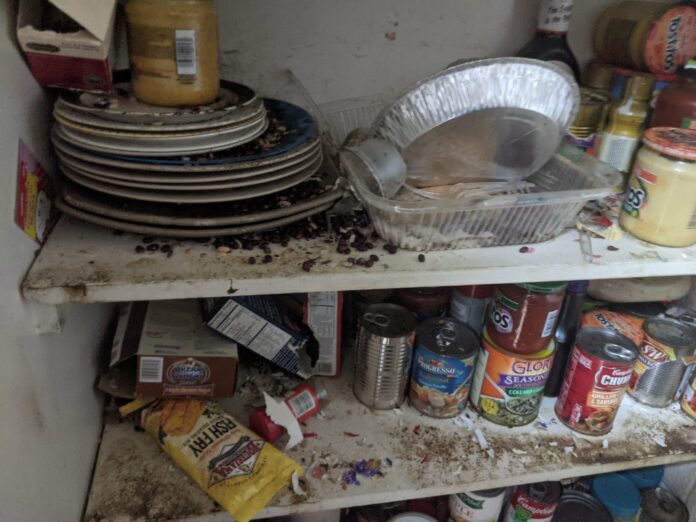
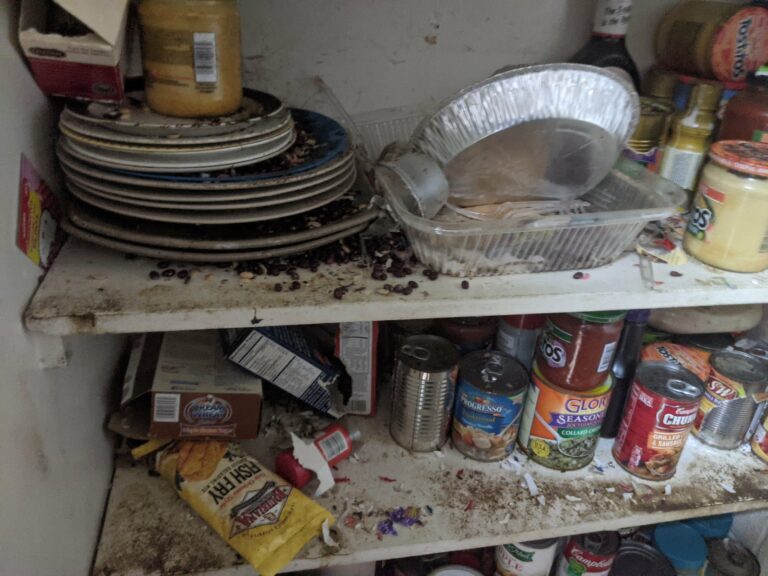
Once the award-winning jewel of public housing in America, Golden Gate Village in Marin City now suffers from major neglect, leaving many residents living in deplorable, unsafe conditions. 

Two dueling proposals aim to resolve the deferred maintenance issues at the historic 60-year-old property.

One involves a wrecking ball.

On Saturday, the Pacific Sun obtained a Marin Housing Authority (MHA) report titled “HUD Demolition/Disposition” for Golden Gate Village. The new physical needs assessment report, written by AEI Consultants, is dated March 8, 2021. Inexplicably, the MHA withheld it from Golden Gate Village residents for almost three months.

Critics of the MHA are concerned the new “demolition” report will serve as the basis to raze all 29 buildings on the 30-acre property. Though the MHA has repeatedly denied it, Golden Gate Village residents have asserted for years that the MHA is working toward a complete teardown of Golden Gate Village to enable the redevelopment of the prime real estate located just five miles from San Francisco.

The agency did not respond to a request for comment by the Pacific Sun’s print deadline.

MHA’s publicly stated plan, prior to the release of the “demolition” report, was to destroy only 16 of the 300 residences in the complex and to renovate the remaining units. Any renovations now appear to be in jeopardy.

The “demolition” report updates the 2020 “HUD Needs Assessment.” The new version corrects 28 errors, mostly financial irregularities, which were pointed out in a December letter by an attorney for the Golden Gate Village Resident Council.

Another major difference between the two reports is reflected in the statements regarding the overall condition of the property.

“Adequate funding has not been identified nor is it anticipated in future years to correct the extensive backlog of deferred maintenance requirements which will result in the property condition degrading from the current Fair status to Poor status,” the new report states.

This is a drastic departure from last year’s report, which said, “Assuming the level of maintenance currently being provided at the subject property is continued and deferred maintenance specified herein is corrected, the property should continue to retain its ability to perform and compete in the local market in the future.”

The MHA’s failure to perform maintenance may result in the demolition of Golden Gate Village and the displacement of 700 predominately Black residents, many of whom have lived there for generations.

Community gentrification and displacement rank among the residents’ worst fears, according to Royce McLemore, 78, president of the Golden Gate Village Resident Council. After all, they live in one of the most expensive, not to mention racially segregated, counties in the state. Where else in Marin could they afford to go?

“Given current housing trends in Marin it is unlikely that residents would be able to relocate in the County if Golden Gate Village is gone,” said a 2018 Marin County Grand Jury report on Golden Gate Village.

Most residents want to remain in their homes and have Golden Gate Village completely renovated, according to a recent petition they presented to the Marin Housing Authority. More than 61% said they do not support the MHA plan to demolish three buildings. They clearly would not endorse the complete demolition of the property.

Instead, the residents favor the Golden Gate Village Resident Council’s vision, including the deep green revitalization of all the buildings, job training, and a route to home ownership through a community land trust.

The job training aspect of the plan provides residents with the opportunity to work on Golden Gate Village’s deferred maintenance. A similar on-the-job training program took place during an earlier renovation of the complex, according to McLemore.

“They turned it into a training program in 1977 and 1978, when they did the first major renovation of Golden Gate Village,” McLemore said. “Residents developed skills and were actually trained as journeymen. And this is where a lot of people got their trade – working on Golden Gate Village. It can happen again.”

Another component of the Resident Council’s plan is establishing a community land trust (CLT) to enable affordable home ownership in perpetuity. In a CLT, the owner of the land is a nonprofit, community-based organization that provides renewable, long-term leases to homeowners. The homes are inheritable and the buildings are mortgageable.

With the assistance of a coalition of architects, lawyers, consultants and other influential community members, the council’s vision is taking shape. Golden Gate Village, which is on the National Register of Historic Places, qualifies for historic preservation grants. Local, state and federal funding is also available. Unfortunately, the MHA has not applied for these renovation funds.

A fundraising effort on behalf of the Golden Gate Village Resident Council is underway to pay for a green physical needs assessment, one which will consider the property’s historic designation and define the nuts and bolts of the renovation plan. The goal is to nail down the costs for the Council’s plan, because the renovation cost estimates outlined in MHA reports have varied substantially over the past two-and-a-half years.

The MHA has ignored the vision set forth by the Golden Gate Village Resident Council, opting instead to partner with a private developer based in New Jersey, The Michaels Organization. Interestingly, the contract between Michaels and the MHA expired in February 2020, yet they have continued to work together. Has the MHA avoided a new contract until they could justify razing Golden Gate Village?

“Discussions between MHA, Marin County, and the Michaels Organization are ongoing,” MHA Executive Director Lewis Jordan said in an email last week, prior to the release of the new “demolition” report. “Though we have no updates at this time, MHA’s goal in the GGV revitalization is, and has always been, to improve the living conditions and lives of the residents of Golden Gate Village. As MHA has done in the past, they will continue to be transparent and inclusive in their community engagement with the GGV Resident Council, the residents of GGV, and the public by sharing information and incorporating feedback as plans move forward.”

Unfortunately, Jordan’s rhetoric offers no insight into the future of Golden Gate Village. However, McLemore received an email from the MHA saying they want to discuss the “demolition” report at the upcoming Resident Council meeting on June 14.

“I was told a few years back, by one of the elders in our community who is now deceased, ‘everything has always been a fight for Black people in Marin County,’” McLemore said. “There’s going to come a time when the County wants this land, and you’ll have to be prepared to fight for it. Well, they came and now we’re fighting.”

Next up in the Golden Gate Village series: the history of the property and the controversy surrounding the MHA. Read part 1 of the series here.


Sausalito’s Floating Homes Tour Offers Online Gala and Auction This Month

For more than three decades, Sausalito’s colorful waterfront community of floating homes have drawn thousands of visitors in person to open house tours each summer.

Last year, like most in-person events, the annual Floating Homes Tour was canceled due to the Covid-19 pandemic. This summer, as health and safety uncertainty continues to affect the summer events schedule, the Floating Homes Association of Sausalito is moving to an online format for the 2021 Virtual Floating Homes Gala and Tour on Wednesday, June 9, at 6:30pm.

The virtual gala and tour, hosted by magician and comedian Jay Alexander, will give the public in Marin and beyond the opportunity to enjoy the color and diversity of Sausalito’s waterfront community from the comfort and safety of home.

Virtual attendees will also have the chance to participate in a live and silent auctions and be entertained by local bands during the evening. Proceeds from the gala will support the volunteer Floating Homes Association–which represents the owners and residents of the 400 Sausalito waterfront homes–as well as other local nonprofit groups like Performing Stars of Marin, the Friends of the Marin City Library, and the Bay Area Muscular Dystrophy Association

This year’s virtual gala will include looks inside historic waterfront landmarks, from Victorian arks to World War II-era surplus vessels. Among these landmarks is the Train Wreck, fashioned from an 1889 North Pacific Railway Pullman car; the Fairy Tale, a lifeboat built in 1943 for World War II and turned into a cozy home; and the Mirene, a still-navigable tugboat.

Attendees can also enjoy inside views of some of the dazzling houseboats and floating residences, learn the connections that these homes have to famous celebrities, and meet the owners of these eclectic vessels.

In addition to the view, the virtual event boasts entertainment from comic magician and floating home resident Jay Alexander–who serves as MC for the event–as well as local bands such as MYTHYX, The Hot Clams, Julie Courtney and Doug Nichols, and waterfront legends Joe Tate, Maggie Catfish and Slim.

State Senator Mike McGuire will act as auctioneer at the gala, and will conduct a spirited live auction of deluxe stay-and-play packages, such as a trip to the rainforest and beaches of Nicaragua. Along with the live virtual auction, a silent auction will feature arts and crafts by folks from the docks and other donated treasures.

Tickets to the 2021 Virtual Floating Homes Gala and Tour are on sale now, starting at $35.  For more information about the tour, go to floatinghomes.org.

Retired Marin Library Director Reaches Hall of Fame Status

California has a rich and fascinating history of librarianship, and the California Library Hall of Fame honors the historical significance and lifetime achievements of the many librarians, library workers and supporters who have helped promote and improve library services in the state. 

Now, Marin County Free Library’s recently retired Deputy Director Bonny White joins the ranks of these historical figures as one of three inductees into the 2021 California Library Hall of Fame.

“We couldn’t be more proud of Bonny and the incredible work she did with Marin’s underserved communities while at the Marin County Free Library,” states Gabriella Calicchio, Interim Library Director. “Her dedication, passion, and support of every Marin resident is so important and her induction into the California Library Hall of Fame is so well deserved.”

Starting her career at the Marin County Free Library as a contingent library worker, White eventually filled almost every position from library assistant to Deputy Director over two decades of service.

Now retired, White made a significant impact on the local, state and national library profession by creating and supporting library services to underserved communities, such as her ‘Reading on the Ranches’ summer reading and learning program for families in rural West Marin.

White was also a core member of the county’s Government Alliance on Race and Equity. Moreover, she was certified by the U.S. Department of Justice to provide first-level immigration services and support to undocumented people seeking a legal pathway to U.S. citizenship.

Marin County Free Library was actually one of the few libraries in the country certified by the DOJ to provide this service during the Trump administration and is now considered a national model for other libraries offering immigration services.  

In addition, White led the effort to abolish late fines at the Marin County Free Library, leading libraries across the country to contact her for advice as they followed suit.

The California Library Hall of Fame inducts no more than ten people in any given year, and White is one of only three inductees into the hall this year.

The other 2021 California Library Hall of Fame inductees are Michael Buckland, Professor emeritus and former Dean of the School Library and Information Studies at UC Berkeley; and Hiroshi Kashiwagi (1922-2019), a Japanese-American author, poet, actor, civil rights activist and librarian who developed the west coast’s largest collection of Japanese language materials at the Western Addition Branch of San Francisco Public Library. All three inductees will be honored at the CLA annual conference in June.

Marinlibrary.org

Summer outdoors in Sonoma and Marin

0

Getting out and about for outdoor activities and cultural adventures is what’s on the menu this summer as we all try to make up for the semi-lost summer of 2020, and there’s no better place than the North Bay to take advantage of our new, post-orange-tier freedom.

Many fun events, including small-group adventure options, are popping back up on local event calendars. From exploratory kayaking tours to vineyard hikes and live theater or music performances, here’s a taste of some of the adventures that are inspiring us to fill our calendars up early this summer in the North Bay.


Water Adventures

Tomales Bay Expeditions: There may not be a more gorgeous North Bay spot for paddling out into serene waters and communing with wildlife than the Tomales Bay. Like the idea of being led by an expert guide? Try a three-hour guided tour. They typically start in the morning—when paddling conditions are best—and are usually led by one of the owners—Cooper or Brett—both passionate experts on Tomales Bay and all of the plant and animal life found therein, as well as sea kayaking. You can also opt for a two-hour, four-hour or all-day kayak rental. tomalesbayexpeditions.com

Russian River Paddle Boards: If you’re looking for a great way to get out on the water while also working your core—and maybe working off that “Covid 15”—paddleboarding could be your new favorite watersport. Try a two-hour guided lesson and tour starting from Wohler Bridge, or opt to rent your own gear for a full day and choose your own entry point and route. Ask for suggestions and directions if you aren’t sure where to go. If you’re doing your own thing, versus taking a guided tour or lesson, pack a lunch and plan to stop along the way at secluded beaches to nosh and hang out. russianriverpaddleboards.com

Outdoor Food and Wine Tours

If you like cute farm animals, fresh-from-the-farm cheese, fresh-from-the-bay oysters and the great outdoors, you’ll love Food and Farm Tours “Flavors of Point Reyes” tour. This tour offers guests a peek—and taste—inside local farms and artisan food/drink producers’ unique businesses with stops at a creamery, organic veggie farm, oyster farm, meadery and more. foodandfarmtours.com/tours/flavors-of-point-reyes

Get a bird’s-eye-view on Bella Vineyard’s “Drive Through the Clouds” tour. Hop into a vintage Pinzgauer truck for a bumpy, but scenic, trip through dusty vineyards to the top of Lily Hill, where you’ll enjoy a tasting of limited-release wines among the vine-covered slopes. Offered at 10:30am daily by prepaid reservation for groups of two to six (subject to availability). This may be the coolest way to get your taste on in the Dry Creek Valley. bellawinery.com/Experience/ToursTastings


If you haven’t been on an Achadinha farm and cheese tour yet, what are you waiting for? The Pacheco family has farmed and cared for dairy animals for four generations, and made cheese at their Petaluma farm and creamery since 2000. Achadinha farm tours include a walk around the ranch and a peek into the cheese plant, milking parlor and loafing barn—where the goats and cows hang out—and are followed by a cheese tasting and the opportunity to purchase cheeses at better prices than you’ll see in stores. achadinhacheese.com/tours

*Insider Tip from Donna Pacheco, matriarch, cheesemaker extraordinaire and tour leader: “Do not wear your best shoes on this farm tour. It’s a farm.”

Adventures in the Trees

If speeding through the forest at high speeds on a zipline is your thing, or if you have a teenager who thinks everything is boring and who you’d like to prove wrong, head over to Sonoma Canopy Tours for their Treetops Tour—the fastest, longest, zipline option—or Forest Flight Tour. Savor breathtaking views of majestic redwood forests, while ziplining and rappelling your way through the treetops and then back down to base camp. sonomacanopytours.com/tree-tops-tour

Live Theater

Broadway Under the Stars: It’s back! Live musical theater is officially back on Sonoma County’s 2021 event calendar. While Transcendence Theatre Company’s entire season of events isn’t yet published, there are a few shows already up on their website. Dates for most shows begin in August. Performances begin before sundown, and a few of the August shows will be held at off-site locations—such as the Petaluma Fairgrounds, BR Cohn and Skyline Wilderness Park—in addition to the Kohler and Frohling winery ruins in Jack London State Historic Park. transcendencetheatre.org

Shakespeare Under the Stars at Buena Vista Winery is back for summer and fall 2021! Plays will be performed in Buena Vista’s beautiful fountain courtyard en plein air. Tickets are now available for their August performance—The Taming of the Shrew, which will run August 4–8 and 11–15—on sonomashakespeare.com.

Live Music

Join Adobe Road Winery for their concert series with wines and live music on Thursday evenings 4:30–7pm in the heart of downtown Petaluma. adoberoadwines.com/Events

Bella’s Live Music and Wood Oven Pizza Saturdays: Sway to the sounds of bluegrass as you picnic or nosh on wood-fired pizzas from Diavola and sip wine on the Bella Winery lawn this summer during their live music and pizza Saturdays. Music and tastings run from 11am to 4:30pm. Reservations are required and available each day at 11am, 1pm and 3pm.  bellawinery.com/Experience/Calendar

There is also live music at Balletto Vineyards near Sebastopol: Enjoy a glass or bottle of wine on the Balletto patio with live music Saturdays from 1–4 pm. ballettovineyards.com/events

Live Music Series at Hotel Healdsburg: Guests of Hotel Healdsburg’s Spirit Bar can enjoy live music from country folk singer/songwriter Dustin Saylor Fridays from 6–8pm, and jazz by various Northern California groups and musicians on Saturdays from 5–8pm. hotelhealdsburg.com/hotel-happenings

Brewster’s Pub hosts live bands every Thursday–Sunday in their open-air Petaluma restaurant. Their unique outdoor space features large heat lamps, a fire pit, a bocce court, a children’s play area and a live-music stage. brewstersbeergarden.com/calendar

Local Hiking Groups and Organizations

Local Meetup Groups: Join a Meetup Hiking Group! There are so many great outdoors- and hiking-focused Meetup groups in Sonoma and Marin Counties; there’s a group to suit everyone’s pace/style/needs. Are you up for 8–12 mile hikes at moderate levels of difficulty? Training for a long-distance endurance event? What about meeting a group of people who like to kayak and canoe? There are groups for all of these and more. Find a group at MeetUp.com.
Non-profit community conservation organization Landpaths hosts regular events focused on rooting youth in nature, growing community with nature, and education. Landpaths’ guided walks through nature, led by experts, offer fire-ecology education, opportunities to volunteer to help reestablish trails and more. Click on their calendar at landpaths.org.

Culture Crush: Virtual and Live Events in the North Bay This Week

This week, several North Bay groups are getting outdoors for distanced live events, while other organizations stay in for online offerings. Here’s a sample of what’s happening.

Virtual Lecture

Step outside anywhere in the North Bay, and local birds will be somewhere nearby, singing the soundtrack of spring with their calls and birdsongs. Yet, few understand how such little animals make so much noise, and why. Find out this week when the Corte Madera branch of the Marin County Free Library and Marin County Parks co-host an online illustrated lecture, “Spring Birdsong,” featuring Marin County Parks interpretive naturalist Shannon Burke, who offers examples of local bird songs and what they mean. The virtual talk takes place on Thursday, May 27, at 1:30pm. Free; registration required. Marinlibrary.org.

Virtual Reading

One of the most complex and fascinating webs of wildlife in the North Bay and beyond is the Oak tree, which houses animals like woodpeckers—who collect and store hundreds of acorns in the trees—and caterpillars who feed on the trees’ leaves. This week, author Doug Tallamy will introduce his new book, The Nature of Oaks, with a virtual presentation in cooperation with the Marin Art & Garden Center. The book reveals what is going on in the trees month by month, and Tallamy shares advice on caring for Oaks on Thursday, May 27, at 5pm. $10. Maringarden.org.

Live Event

Spud Point Marina, located in Bodega Bay, is one of Sonoma County’s busiest commercial and sport fishing hubs. This weekend, the public can get in on the fishy fun with “Feelin’ Crabby.” The immersive experience welcomes participants to the pier to learn about crabs, experiment with using crabbing nets and cages, and try a hand at catching some tasty crustaceans while enjoying the fresh sea air.  Participants can also take home the crabs they catch. This program is popular and spots will fill quickly, so register now. Saturday, May 29, at 11am. $20. Parks.sonomacounty.ca.gov.

Live Event

First introduced in 1978 by artist and gay rights activist Gilbert Baker, the rainbow flag is now the most iconic symbol of LGBTQ pride. With Pride month (June) approaching, the North Bay is preparing for several online and safely distanced live events, and Sonoma County Pride opens its month of activity with its Pride Flag Raising. Members of the community come together to raise the Pride Flag on top of the Rosenberg Building on Tuesday, June 1, at 11am. Mendocino Avenue and Fourth Street, Santa Rosa. Free. The event will also stream live online at Facebook.com/SonomaCountyPride.

Virtual Reading

Fifty years ago, Alice Waters opened Chez Panisse, the Berkeley restaurant that would make “farm to table” a household phrase. Since then, she’s advocated for simple and organic cooking that’s become known as the Slow Food movement. Now, Waters makes her case for radically changing the way we cook in her new book, We Are What We Eat: A Slow Food Manifesto. Waters talks about the book and the slow food movement when she appears online in conversation with author and foodie Michael Pollan (The Omnivore’s Dilemma, In Defense of Food: An Eater’s Manifesto), presented by Point Reyes Books, Bookshop Santa Cruz and Book Passage on Tuesday, June 1, at 6pm. Tickets are $34 and include a signed copy of We are What We Eat. Ptreyesbooks.com / Bookpassage.com.

The Mother Hips Mark 30 Trips Around the Sun in 2021

From their college days to midlife, Tim Bluhm and Greg Loiacono have remained connected at the hip—the Mother Hips, that is.

Since 1991, the two guitarists and singer-songwriters have blazed a trail of West Coast rock-and-roll that put them on the map locally and nationally.

This year, the Mother Hips mark 30 years together, and the group’s label, Blue Rose Music, celebrates with a special, limited-number vinyl reissue of all 10 of the band’s studio albums leading up to the release of a brand-new, still-untitled record in late 2021.

The band is also hitting the road this summer for the first time since Covid-19 canceled live music more than a year ago. The Mother Hips make their next North Bay appearance in a special Cookout Concert on Sunday, July 11, at HopMonk Tavern in Novato.

Bluhm and Loiacono co-formed the Mother Hips while attending college in Chico, and the band was signed to Rick Rubin’s American Recordings before they graduated from school.

“I think about how much music we played all the time,” Loiacono says about college. “Every molecule and minute was spent on the music, and I loved it.”

“I’m recalling those days and reviving those memories now more than I normally would,” Bluhm says. “It’s a good feeling; I enjoy talking about those times, but they were just regular old times, like any other time if you break it down. We were just doing what was in front of us, same as we are now.”

While the band’s lineup and self-described “California Soul” sound shifted around over the last three decades, Bluhm and Loiacono remained the constant core of the Mother Hips.

“We really like making music with each other and the band, and I think it’s as easy as that,” Loiacono says.

Bluhm and Loiacono are taking a trip down memory lane by reissuing their studio albums on vinyl with Blue Rose Music. Many of these albums are being released on vinyl for the first time, and the artists worked with the label to include extra liner notes and photos for the releases.

“It was an exciting undertaking,” Loiacono says. “We are fortunate that Blue Rose—and [label owner] Joe Poletto in particular—not only came up with the idea, but saw it through.”

After spending most of 2020 in social isolation, the Mother Hips worked quickly to record their upcoming studio album, slated for release in November 2021, and they are excited to see fans once again at their often sold-out shows.

“At 30 years, there’s a lot of good vibes going around, a lot of love and support, and that’s probably the main thing that keeps us going,” Loiacono says.

“This band has been a huge part of our lives,” Bluhm says. “So much of my life is written in those Mother Hips songs, and those songs are a part of other people’s lives. Now, someone will walk past me and say, ‘Oh! Mother Hips guy!’ That’s part of my life, I’m Mother Hips guy.”

Motherhips.com / Bluerosemusic.com

Open Mic: What I’ve Learned

By David Bickart

We are all in sales, but my advice: never take a sales class. Be knowledgeable, be honest and be yourself. Never underestimate the average person’s bullshit meter.

Take care of the basics. Not flossing doesn’t make you a badass. Pay your bills, check your tires, sleep well—that’s your base.

Running cross country in high school I learned that when you pass someone, do it decisively; make them believe at that moment that they are behind you for good.

I found out that I had prostate cancer. I went through disbelief, denial, tears and finally action. I discovered that it all comes down to wanting to be alive for the ones you love.

Travel is a requirement. How can you have any perspective on the way you live if you’ve never stepped outside the boundaries to look back?

The key to being rich is in controlling what you want, not what you have.

Watching your son grow up to be a good man is like winning the lottery, times 100.

You think you know who you are and then some of your brain cells stop producing dopamine and you don’t recognize that person in the mirror.

My worst day is a cakewalk compared with how many suffer in life. That calls for waking up every morning with gratitude and compassion.

To be truly exceptional at any endeavor one must be unencumbered by the requirement to be good at it.

If you love the smell of garlic and onions sautéing in extra virgin olive oil, then we at least have a shot.

Humor is a great deodorant.

To be alive when our understanding of the universe—from the sub-atomic to the inter-galactic—has increased a billion-fold, I just find it so damn exciting.

Take responsibility for your choices. If you can raise a steer, shoot it between the eyes, butcher it, then enjoy your T-bone—otherwise, they make a great ratatouille down the street.

Your legacy is also what you don’t leave behind. Try not to litter.

David Bickart lives in Marin County. We welcome your contribution. To have your topical essay of 350 words considered for publication, write le*****@********un.com.

Letters to the Editor: Pt Reyes Ranching and Pianos

Pt. Reyes Ranching

Theresa Harlan’s story (News, May 5) of government betrayal of Indians at Pt. Reyes and Tomales Bay is only part of the shameful Pt Reyes story. Jared Huffman’s statement about ranching on the coast being “part of our DNA” is a disgrace on many levels.

Huffman and other politicians worked quietly to again extend the sweetheart leases of the 24 white ranchers and their 5000+ cows whose legacy has been polluted water and air, destruction of native plants, birds and mammals (including tule elk) in OUR iconic National Park.

Over 90% of the public has made it clear for the past 30 years that we don’t want private businesses at Pt. Reyes. A much lower impact oyster operation was closed down a couple of years ago, but not the dairies. How do we get to Deb Haaland to shut down this cow-shXX show once and for all?

Nancy Hair, Sebastopol

Pianos, Yeah!

Charlie Swanson’s story, “Pianos, Man” (Arts & Ideas, May 12), about the 45 “Pianos of Petaluma,” was fun, inspiring and uplifting—in a kinda “Keep Petaluma Weird” sort of way. I only wish the exhibit could have been started before the Trumpvirus hit so that more visitors could enjoy and buy the pianos, especially to help the trestle come back to life!

How cool would it be if one fine summer or fall evening some of those pianos were lined up, say on Water Street, and a Flash Mob of pianists (including Petaluma Pete, of course) were to take their place at the keyboards and play. Singers and other instruments welcome.

I think that would meet with universal approval with art/music lovers, unlike the hideous, 20-legged “A Fine Balance” bathtub monstrosity the Petaluma Arts Committee is trying to litter Water Street with.

Bob Canning, Petaluma

Write to us at le*****@********un.com.

Gallery Route One Exhibits More Student Art in West Marin

Earlier this month, Point Reyes Station landmark Gallery Route One shared artwork from several local art students in the exhibit “Tomales High School Artist Showcase 2021,” featuring paintings, drawings, photography and mixed media works.

Now, the gallery once again presents art from Marin students in its Annual Artists in the Schools’ Exhibition, “The Seed, Cycles of Life,” featuring work by over 300 students from the Shoreline School District, on display at Toby’s Gallery in Point Reyes Station, June 3–22.

Gallery Route One’s ‘Artists in the Schools’ program was founded in 1993 as an elective art program that began collaborating with teachers in 1996. This continues to the present day, and the program now reaches all the schools in the Shoreline School District. ‘Artists in the Schools’ offers local students the chance to learn art practice, art history and the applied arts.

For the first time in the program’s history, ‘Artists in the Schools’ projects were available online as a series of free video workshops.

By holding its classes online, the program found a way to bring the voices and perspectives of teaching artists and educators from outside the Bay Area, a benefit that Gallery Route One hopes to continue and expand in the coming year. This year, the program was taught by more than ten different teaching artists living in Marin, the Bay Area, Portland, and Mexico.

This year’s ‘Artists in the Schools’ projects explored the theme of The Seed through botanical illustration, seed architecture, and drawing outdoors in nature.

Other teaching artists have chosen to explore the Cycle of Life by asking students to explore their own identities and personal growth through writing poetry about their transformation during the pandemic, or by creating self-portraits.

The exhibit includes artwork by K-12 students from Bodega Bay School, Inverness School, Tomales Elementary School, Tomales High School and West Marin School.

The exhibit includes projects by teaching artists Genevieve Busby, Hailey Malaika Clarke, Rob Corder, Mela Delgado, Annie Duncan, Joe Fox, Brian Kirven, Shannon O’Neill Creighton, Maunel Ruelas, Vickisa, and Sandra Wolfson. These projects were organized by Gabriella Giuliani, Program Director of ‘Artists in the Schools.’

“The Seed, Cycles of Life” displays at Toby’s Gallery, 11250 Highway One, Point Reyes Station. The show opens with an in-person reception on Sunday, June 6, at 1pm. Toby’s Gallery is open to visitors Monday to Saturday, 9am-5pm; Sunday, 10am-5pm. Get details at galleryrouteone.org.

Historic Marin City Housing Complex in Dangerous Disrepair

A Marin landlord won’t fix apartments rife with mold, rodents, plumbing leaks, broken heating, faulty wiring and fire hazards, according to residents.

We should run the bum right out of the county.

Too bad we can’t, because this landlord is the County of Marin. The Marin Housing Authority (MHA), to be specific.

For years, residents of Golden Gate Village, a 60-year-old public housing development in Marin City, say they have been forced to live in deplorable conditions. Rather than perform critical repairs now to the 300 deteriorated units, which house about 700 predominantly Black residents, the MHA developed a plan that will continue to postpone maintenance for many years.

The proposal includes hiring a private developer based in New Jersey, The Michaels Organization, to demolish 16 existing units at Golden Gate Village and replace them with two new high-rise towers containing 156 units. Although it’s not yet clear what income brackets the units will serve, the high density of the proposed development will no doubt change the fabric of the community.

After the new construction is complete, renovations will then begin on the existing Golden Gate Village apartments. Not surprisingly, the MHA is having a difficult time selling its plan to residents.

“You’re going to have residents waiting forever until they get their units renovated,” said Royce McLemore, president of the Golden Gate Village Resident Council. “That’s ridiculous. We need our deferred maintenance done now.”

Residents and other opponents of the MHA scheme say it could take five to 10 years to complete the planning, approval and construction process of the new buildings. Because Golden Gate Village is listed on the National Historic Registry, the project is subject to special reviews. Aaron Green, a protégé of Frank Lloyd Wright, designed the unique complex, and renowned landscape architect Lawrence Halprin planned the outdoor spaces.

Why has the MHA decided to let the historically significant site deteriorate and leave residents living in squalor? Theories abound—from a lack of funding to systemic racism to a nefarious plan to defer maintenance until the buildings are no longer salvageable. Razing Golden Gate Village would lead the way for further gentrification of Marin City and the possible displacement of low-income Black residents, many of whom have lived there for generations.

“Their whole goal is demolition by neglect,” McLemore said.

Regardless of the motivation, residents say the Board of Commissioners governing the MHA should stop this ill-conceived scheme in its tracks and insist renovations begin immediately on the existing units in Golden Gate Village. So far, the commissioners refuse, even though grants are available to help pay for the costs.

Perhaps the residents should circumvent the commissioners, and state their case directly to the Marin County Board of Supervisors? Unfortunately, that strategy won’t work.

All five county supervisors sit on the MHA Board of Commissioners, along with two public housing tenants. Ironically, though Golden Gate Village is by far the largest public housing complex in Marin, it does not have a resident on the commission.

Obviously, the next step is legal action. Done. In August, Golden Gate Village residents filed a lawsuit against the county seeking an injunction against the MHA plan and an order requiring timely repairs.

As the wheels of justice turn slowly, the residents still have no relief in sight. Since January, a federal court judge has been mulling over a motion from the county to dismiss the case.

Meanwhile, a group of concerned citizens, which includes architects, lawyers, a real estate developer and a certified public accountant, are working on behalf of the residents. They scrutinized the proposal from The Michaels Organization and the MHA, and found alarming financial discrepancies and irregularities.

Even a layperson can determine the project’s price tag is out of whack. Let’s examine the overall estimated renovation cost released in November by The Michaels Organization and the MHA.

The estimate came in at $282.3 million to renovate 300 units. That’s a whopping $941,000 per unit, which sounds mighty high when the MHA and its consultants say the foundations, cores, shells and roofs of the buildings are in good condition.

The amount becomes even more absurd considering that just two years earlier, the MHA released an estimate of $63 million for the renovation project. How in the world did the amount increase by 348% in a couple of years?

Diane Hanna, pro bono attorney for the Golden Gate Village Resident Council, outlined some of the specific issues with the ballooning costs in a nine-page letter sent to the MHA in December.

It appears the project’s soft costs, which are fees other than labor and materials, do not align with industry norms.

“At over $172 million, the soft costs account for a shocking 61% of the $282.3 million budget,” Hanna wrote. “Most experienced developers would utilize a soft cost rate of 15–25% of the overall budget.”

The estimated hard costs also are out of line, increasing 120% in two years. A 2018 estimate of $50 million for labor and materials swelled to $110 million, which far outpaces reasonable cost increases, according to Hanna.

“I understand the Housing Authority has been working on a revised report to address those concerns,” Marin County Supervisor Stephanie Moulton-Peters said. “The board has not received it yet.”

By now, the residents are used to waiting, but they haven’t been sitting idly. In 2013, the Golden Gate Village Residents Council developed a deep green revitalization plan for the complex and a path to home ownership for residents. They’ve been refining it ever since.

Though the MHA and Marin County Board of Supervisors have ignored the residents’ revitalization plan, the tenants recently partnered with a diverse group of advocates. After the murder of George Floyd and the resurgence of the Black Lives Matter movement, white people began offering their time, professional expertise and funding to the residents’ cause.

“As word of what happens gets out into the community, we get more and more support,” volunteer Barbara Bogard said. “We have the support of the Sierra Club, The Redwoods in Mill Valley, Rodef Sholom and the First Presbyterian Church in San Anselmo.”

While the residents may have been at the mercy of the MHA for years, they now have a growing watchdog group looking out for their interests. Still, unless the MHA decides to become a responsible landlord or a jury forces them to act, 700 residents in one of the wealthiest counties in the United States must contend with major—and dangerous—disrepair in their homes.

This is part one in a series on Golden Gate Village. Next up, the rich history of Golden Gate Village and the residents’ revitalization plan versus the MHA proposal.

Marin Housing Authority Releases Golden Gate Village ‘Demolition’ Report

Marin Housing Authority, California
Once the award-winning jewel of public housing in America, Golden Gate Village in Marin City now suffers from major neglect.

Sausalito’s Floating Homes Tour Offers Online Gala and Auction This Month

For more than three decades, Sausalito’s colorful waterfront community of floating homes have drawn thousands of visitors in person to open house tours each summer. Last year, like most in-person events, the annual Floating Homes Tour was canceled due to the Covid-19 pandemic. This summer, as health and safety uncertainty continues to affect the summer events schedule, the Floating Homes...

Retired Marin Library Director Reaches Hall of Fame Status

California has a rich and fascinating history of librarianship, and the California Library Hall of Fame honors the historical significance and lifetime achievements of the many librarians, library workers and supporters who have helped promote and improve library services in the state.  Now, Marin County Free Library’s recently retired Deputy Director Bonny White joins the ranks of these historical figures...

Summer outdoors in Sonoma and Marin

Getting out and about for outdoor activities and cultural adventures is what’s on the menu this summer as we all try to make up for the semi-lost summer of 2020, and there’s no better place than the North Bay to take advantage of our new, post-orange-tier freedom. Many fun events, including small-group adventure options, are popping back up on local...

Culture Crush: Virtual and Live Events in the North Bay This Week

This week, several North Bay groups are getting outdoors for distanced live events, while other organizations stay in for online offerings. Here's a sample of what's happening. Virtual Lecture Step outside anywhere in the North Bay, and local birds will be somewhere nearby, singing the soundtrack of spring with their calls and birdsongs. Yet, few understand how such little animals make...

The Mother Hips Mark 30 Trips Around the Sun in 2021

From their college days to midlife, Tim Bluhm and Greg Loiacono have remained connected at the hip—the Mother Hips, that is. Since 1991, the two guitarists and singer-songwriters have blazed a trail of West Coast rock-and-roll that put them on the map locally and nationally. This year, the Mother Hips mark 30 years together, and the group’s label, Blue Rose Music,...

Open Mic: What I’ve Learned

By David Bickart We are all in sales, but my advice: never take a sales class. Be knowledgeable, be honest and be yourself. Never underestimate the average person’s bullshit meter. Take care of the basics. Not flossing doesn’t make you a badass. Pay your bills, check your tires, sleep well—that’s your base. Running cross country in high school I learned that when...

Letters to the Editor: Pt Reyes Ranching and Pianos

Pt. Reyes Ranching Theresa Harlan’s story (News, May 5) of government betrayal of Indians at Pt. Reyes and Tomales Bay is only part of the shameful Pt Reyes story. Jared Huffman’s statement about ranching on the coast being “part of our DNA” is a disgrace on many levels. Huffman and other politicians worked quietly to again extend the sweetheart leases of...

Gallery Route One Exhibits More Student Art in West Marin

Earlier this month, Point Reyes Station landmark Gallery Route One shared artwork from several local art students in the exhibit “Tomales High School Artist Showcase 2021,” featuring paintings, drawings, photography and mixed media works. Now, the gallery once again presents art from Marin students in its Annual Artists in the Schools’ Exhibition, “The Seed, Cycles of Life,” featuring work by...

Historic Marin City Housing Complex in Dangerous Disrepair

Golden Gate Village - Marin County, California
Marin Housing Authority's development plan would leave Golden Gate Village residents waiting for repairs.
3,002FansLike
3,850FollowersFollow