Best Tostone Sandwich With Mango Limeade After Picking up a Jellyfish on Stinson Beach

You’ve been out to Stinson Beach—driven along the inimitable Hwy 1, past marshes, lounging seals and late morning fog. You’ve spent the day in sun and surf, watching the creamy waves cresting, and marveling at the myriad jellyfish that wash up to shore like uncovered oceanic gemstones. You’ve picked one up, not been stung, but found yourself in that excellent space between revulsion and satisfaction at the gelatinous texture. Dogs—perhaps your own—have frolicked around you. Children have dug elaborate sandcastles, undaunted by the mercurial tide. You’re hungry, and waiting just an hour north of you is the best tostone sandwich of your life. Sol Food, San Rafael waits for you with a Veggie Deluxe including avocado, melted jack cheese and a pique sauce that lights a fire in your blood. Pair with an iced Ponche—mango iced tea plus limeade—and prepare for a festival of taste. You’re welcome! www.solfoodrestaurant.com

West Marin World Music Star Fires Up New Album in August

Best known musically for his heartfelt renditions and upbeat adaptations of classic Kirtans, West Marin world music artist Jai Uttal is renowned worldwide for his mixture of instrumental and spiritual offerings.

The son of a record company executive, Uttal grew up in New York and moved to the Bay Area in 1969 to study sarode and voice with Khan at the Ali Akbar School of Music.

Over the course of his career, Uttal has released over 20 albums that blend elements of reggae, jazz, Indian, samba and rock ’n’ roll.

Last year, Uttal continued to create music while dealing with the challenges of Covid-19, the intense wildfires that affected Marin County and the entire state of California, and political and social strife.

This summer, the 70-year-old Uttal releases his 21st studio album, Let Me Burn, on August 4 and plans his return to live shows for the first time in more than 15 months.

Let Me Burn is a showcase of Uttal’s signature vocals, devotional mantras, eclectic instrumentation and gorgeous production, created as a “balm for pandemic stress.”

The album’s opening track “Campfire Sri Ram” is a sweet, country-esque tune that’s been a favorite from the livestreams and online camps Uttal hosted while unable to tour. 

Uttal employs one of his favorite instruments, the banjo, on the album’s second track, “Ladder of Longing.” The song offers inspiration to climb higher on the devotional path. 

The epic title track “Let Me Burn” features acclaimed bansuri flutist Manose and multicultural music education organization the Chicago Children’s Choir. The song was written previously for a planned opera of the ancient Hindu epic, The Ramayana.

The album’s fourth track, “Asotoma,” is a song of the Pavamana Mantra, which was composed around 700 BCE.

Finally, “After The Burn (Shiva’s Lullaby)” completes the album with dreamy, meditative devotional Om Namah Shivaya, the ultimate reverence to Lord Shiva. 

“After The Burn (Shiva’s Lullaby)” was actually the first single from the forthcoming album, released in June as Uttal celebrated his 70th birthday and performed virtually as part of the successful Chant For India event that raised over $100,000 for Covid relief in that country.

That charity event was one of several ways that the West Marin musician raised awareness for those affected by the pandemic and other hardships over the last year.

Last summer, Uttal recorded and released the single “Behind the Walls.” The song addressed the Covid-19 outbreak at San Quentin State Prison, where he works with inmates in an interfaith program.

“2020 was a year full of challenges, but it has also been a year of deep healing, personal growth and more intimate family interaction,” Uttal says in a statement. “The recent loosening of restrictions and the recent opportunity to give back to India, a country that has given me so much, has given me hope that 2021 will be a vast improvement over last year.”

On August 4, Uttal performs a virtual album-release concert. Uttal and guest artist Lucia Lilikoi will play the album as well as other songs written during the last year.

Next, on August 21, Uttal performs live with an evening of Kirtan outdoors at Subud Hall in Sebastopol. Tickets for both shows and links to pre-order Let Me Burn are available at jaiuttal.com.

Marin Art and Garden Center Highlights Cool California Landscape Designers

Founded in 1945 by leaders in the Marin County conservation movement , the 11-acre Marin Art and Garden Center in Ross engages with the public in a variety of exhibitions, lectures, workshops and family programs that celebrate local nature and creativity.

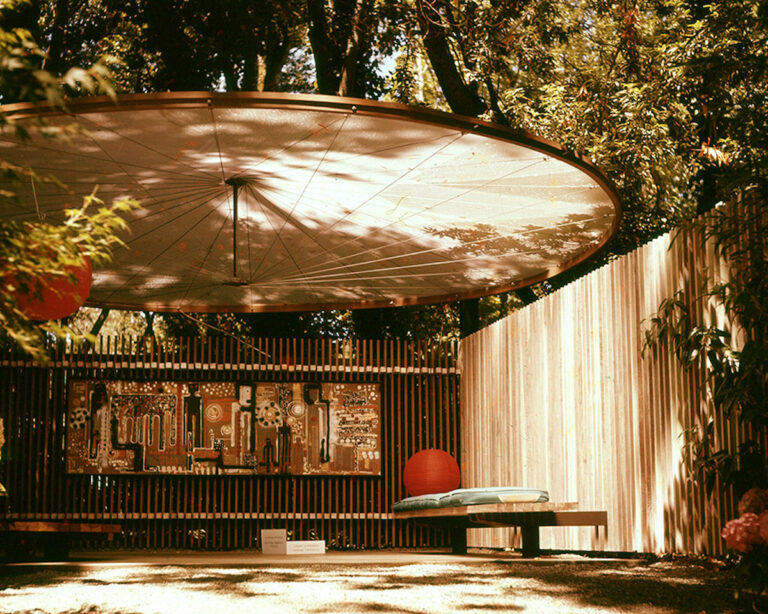
This summer, the center is putting a spotlight on its own heritage and doing its part to keep things “cool” with the season-long exhibition, “Cool Outside: California’s Mid-Century Landscape.”

The exhibit–running now through August 22–features several artifacts that speak to the region’s approach to the design of outdoor space and garden furnishings as they developed across California in the 1950s and early 1960s.

Photographs and drawings, as well as models of now iconic mid-century gardens and landscapes drawn from the collections of the University of California Berkeley College of Environmental Design Archives, are on display and emphasized by film, garden furniture, pottery, and art from the same period.

This week, the center also speaks on the landscape design movement with a panel discussion, “Mid-Century Landscape Design: Roots and Legacies.” The in-person event gathers on Wednesday, July 28, for an engaging conversation led by Bay Area design editor Zahid Sardar.

Sarder will moderate a panel that includes designers Roderick Wyllie and James Lord of San Francisco-based firm Surfacedesign and landscape architect Andrea Cochran. These featured speakers will examine the impact of mid-century design on the California landscape and how it manifests itself in their own contemporary works.

All of these sought-after landscape designers have created large and small spaces that are inspired in part by mid-century masters like Garrett Eckbo (regarded as the father of modern landscape architecture), Robert Royston (designer of Mitchell Park in Palo Alto), Thomas Church (creator of The Donnell Garden) and Gardner Dailey; all of whom worked on the Marin Art and Garden Center’s 1945 reincarnation as a public space.

The center’s collection of offerings in its “Cool Outside” exhibit are curated by landscape architect, writer, and educator JC Miller. He is a partner at Vallier Design Associates, a Bay Area landscape architecture and planning practice.

In an article on the center’s website, Miller compares the mid-century landscape design movement to the period’s revolutions in music and art spurred by post-Word War II boom.

“There are reciprocal influences within creative circles, and through these the ‘Cool’ moves beyond the realm of musicians, writers, and painters to be picked up and explored by other mid-century creatives, including graphic designers, architects, and landscape architects,” Miller writes. “In this transition, the ‘Cool,’ with its fundamental embrace of experimentalism, becomes linked to other ideas prevalent in design thinking at the time, including architectural modernism, innovation in materials, and cross-disciplinary collaboration. The ‘Cool’ was an emerging concept ideally suited to the changing, experimental, and rapidly expanding built environment in postwar California.”

The Marin Art and Garden Center is open to the public free of charge from dawn to dusk, seven days a week. The “Mid-Century Landscape Design: Roots and Legacies” event takes place on Wednesday, July 28, at the center’s studio, 30 Sir Francis Drake Blvd., Ross. 5pm. $25. Maringarden.org.

The Days Between: Several Bay Area Bands Honor Jerry Garcia in Concert

Counter-culture icon and Grateful Dead co-founder Jerry Garcia was born on August 1, 1942, in San Francisco and died on August 9, 1995, at a treatment center in Marin County.

Since Garcia’s death, Deadheads across the globe call the nine days in August between his birthday and his passing “The Days Between,” which is seen as a time to honor and celebrate the memory and the music of Garcia and the Grateful Dead.

This summer, “The Days Between” is also a two-day music festival set in Northern California on Friday and Saturday, Aug. 6–7, that features performances from Dark Star Orchestra, plus North Bay and Bay Area favorites like David Nelson Band, Stu Allen and friends, Full Moonalice and others.

Presented by Shooting Star Events, The Days Between takes place at the beautiful Black Oak Ranch in Laytonville, where oak woodlands and majestic meadows provide a magical setting to gather and enjoy music, camping, food and craft vendors and community.

“In this very unique year, we are pleased to have the opportunity to safely reunite with friends and family,” write organizers on the event website.

The Days Between festival will follow all Covid-19 event safety guidelines as designated by the state. Proof of a Covid-19 vaccine at least two weeks from final dose or proof of a negative Covid-19 test within 72 hours of arrival are required for everyone over age 12. Masks will be encouraged for all attendees.

Performing to critical acclaim for over 20 years and over 2800 shows, Dark Star Orchestra headlines both nights of The Days Between.

On any given night, Dark Star Orchestra will perform a show based on a set list from the Grateful Dead’s 30-plus years of extensive touring or, the band will use the Dead’s wide-ranging catalog to program a unique set list for the show.

The rest of the two-day festival’s lineup features several familiar North Bay bands and artists like the David Nelson Band, performing on Aug. 7. Nelson’s friendship with Garcia dates back to pre-Grateful Dead days when the two played in The Wildwood Boys in the early ‘60s.

Best known as one of the original members of psychedelic country rock band the New Riders of the Purple Sage, Nelson has led his namesake band since 1994, mixing roots-rock and psychedelic country-rock at shows that feel like family reunions.

Some of the members of the David Nelson Band are also in the eclectic collective Full Moonalice, performing on Aug. 6. In addition to the five core members who make up the original Moonalice group– the new Full Moonalice ensemble features the harmonizing folk siblings, the T Sisters, and the father-son soul team of Lester and Dylan Chambers.

Other bands appearing at The Days Between include Los Angeles-based Jerry Garcia Band tribute act Jerry’s Middle Finger; Santa Cruz and Bay Area string band Grateful Bluegrass Boys; musician, radio host and author David Gans; guitarist and Deadhead aficionado Stu Allen; North Bay band Tumbleweed Soul; and the Whiskey Family Band, fronted by Poor Man’s Whiskey co-founder and songwriter Jason Beard.

Black Oak Ranch has a rich history of hosting unforgettable festivals and events. The Electric on the Eel event, featuring the Jerry Garcia Band, moved to the ranch in 1992, renamed as Electric off the Eel. That event then evolved into The Hog Farm Pignic, which ran until 2001. After Garcia’s death in 1995, Deadheads gathered at The Pignic to collectively celebrate his life and mourn the loss. Black Oak Ranch is also the home of Wavy Gravy’s Camp Winnarainbow, a circus and performing arts camp for kids and adults.

Two-day tickets to The Days Between festival include camping options ranging from car camping, RV camping, walk-in camping, ADA camping, family camping and luxury camping; all of which are centralized with no camp being too far away from the action. Carpooling is highly recommended, as each vehicle will need a vehicle or RV pass. Get more info and tickets at daysbetweenfest.com.

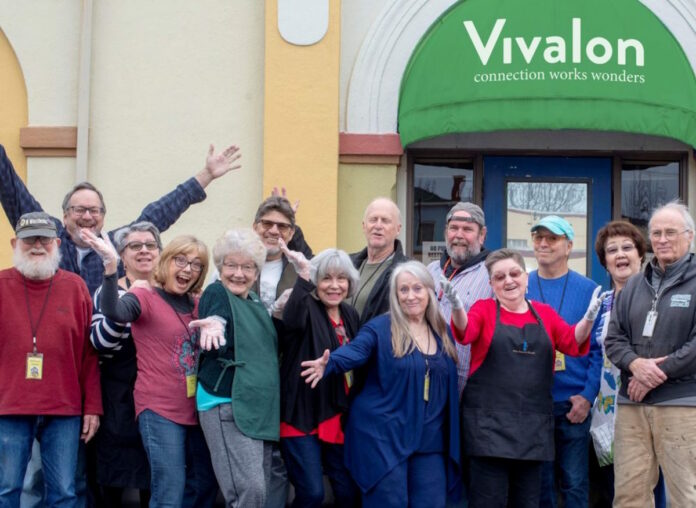
Vivalon Launches In-Person Program on Healthy Aging

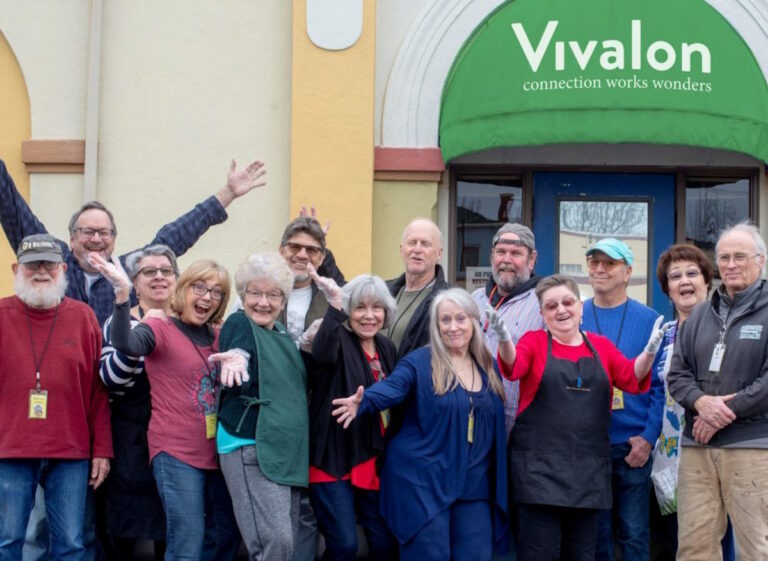
Vivalon, formerly known as Whistlestop, is Marin largest resource to older adults and people living with disabilities. The nonprofit has served the community for more than 60 years, and it continued to offer those services-including socially distant food delivery and social check-ins–amid a pandemic last year and well into this year.

With the recent reopening of Vivalon’s Healthy Aging Center, the nonprofit is creating a new healthy aging program in partnership with Dominican University to help older adults in Marin be proactive and improve overall health.

Kicking off this week, Vitality@Vivalon is a free eight-week program offering in-person opportunities to gain practical tools, information and support designed to promote healthy aging.

The in-person group sessions will take place at Vivalon’s Healthy Aging Center in San Rafael and will be facilitated by qualified Dominican University educators. The weekly topics include “Understanding Your Health,” “Social Engagement,” “Falls and Physical Activity,” “Cognition and Intellectual Activities,” “Diet and Nutrition,” “Sleep and Stress Management,” “Spirituality” and “Planning for the Future.”

“It is never too late to learn about our health, plan for the future, and become better equipped to take on any health challenges that might arise,” says Vivalon CEO Anne Grey in a statement. “We are living longer, so staying healthy is an important priority. Our new Vitality@Vivalon Healthy Aging Program encompasses so many of the elements that impact our health. It also takes advantage of the rich resources Vivalon offers through our array of regular programming.”

The program has the added advantage of integrating closely with many of Vivalon’s classes and services. Additionally, the program will also provide check-in visits for participants at three and six months following the completion of the eight weekly group sessions. The check-in visits are intended to support continued commitment to developing healthier habits and aging well.

Lucy Chen, an occupational therapy graduate student at the university who contributed to the effort, will facilitate the first eight-week program beginning July 22. 

In addition to the group program, participants will have the opportunity to receive individual occupational therapy services to integrate what they are learning into their daily lives. 

“It has been a thrill working with the Vivalon team to create this new healthy aging program,” says Chen in a statement. “I truly feel this is an innovative program, unique in its integrated and collaborative approach to healthy aging.”

Weekly sessions will be held in-person each Thursday starting July 22, 2021, at Vivalon’s Healthy Aging Center, from 10am to Noon.

At this time, participants must be fully vaccinated to attend. To register, or for more information, contact Jenn Mangosong-Shankle at jm********@*****on.org or call 415.456.9062.

Vivalon recently announced the reopening of its Healthy Aging Center and Jackson Café. For more details on Vivalon’s reopening and safety guidelines, or for information about Vivalon services, programs, and volunteer opportunities, visit Vivalon.org.

Marin’s Homeless Face Severe Lack of Shelter Beds, Supportive Housing

Across the United States, communities large and small face a homelessness crisis. An estimated 580,000 people were homeless during a count on a night in January 2020, according to a report released early this year by the U.S. Department of Housing and Urban Development (HUD).

California bears the brunt of the impact, with 161,548 homeless people. More than half of the homeless in America live in four states, with the Golden State accounting for 28% of the nation’s total homeless population.

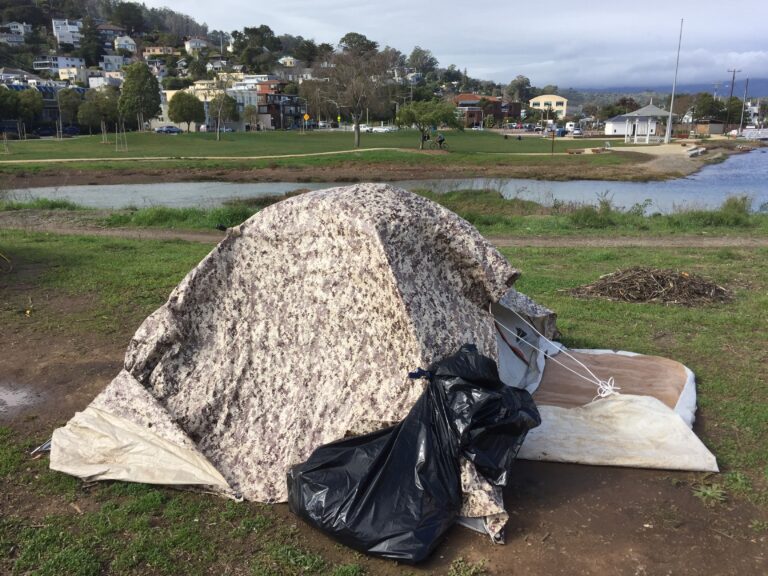
The most recent count, conducted in early 2019, found an estimated 1,034 homeless people residing in Marin, one of the wealthiest counties in the country. The most visible homeless people in Marin live in three tent encampments located in Sausalito, San Rafael and Novato. About 100 men, women and children inhabit the tents in or near the downtown areas of the three cities.

However, these folks make up a small percentage of Marin’s total homeless population. In fact, only 15% of Marin’s homeless population live in encampments, according to the county’s 2019 count.

The current supply of emergency shelter beds in Marin is woefully inadequate, with just 154 for the more than 1,000 homeless people in the county. The shelters are perpetually at capacity, making it nearly impossible for people to stabilize and break the cycle of homelessness. The waitlist for permanent supportive housing hovers around 500.

To make matters worse, many suspect the number of homeless people increased during the pandemic. The federal government requires the county to perform a point-in-time count every two years of people experiencing homelessness. Due to the pandemic, the 2021 count was canceled, although a tally of people living in vehicles was taken in February.

Marin County saw the number jump from 254 to 486 people from 2019 to 2021, a 91% increase in the number of people living in cars and recreational vehicles. The statistic is a worrying forecast because, upon becoming homeless, people often move into their vehicles before living on the streets.

The homeless in Marin also reside in encampments in less conspicuous areas, such as one near the skate park in Novato. Some sleep in parks, business doorways or public parking garages. Others stay hidden in the hills.

The shortage of emergency shelter space in Marin further restricts municipalities as they attempt to comply with Martin v. Boise, a 9th Circuit Court of Appeals ruling affirming homeless people cannot be punished for sleeping outside on public property when a city cannot offer them an adequate shelter option.

“There is more demand than we have emergency shelter beds,” said Carrie Sager, a homelessness program coordinator with Marin Health and Human Services (HHS).

The bottom line: because the county does not have enough shelter beds, those experiencing homelessness in Marin County are by law permitted to sleep on public property. However, a jurisdiction can place reasonable limitations on camping by the homeless to prevent interference with city business, or for public health and safety. For instance, cities can bar people from staying on railroad tracks or in front of a hospital, said Anthony Prince, general counsel for the California Homeless Union.

“An emergency shelter is a place someone goes to stay until they get outside [permanent] housing,” Sager said. “Any length-of-stay requirements were taken away during the pandemic.”

The county’s 154 shelter beds are located at six different emergency shelters run by nonprofit organizations, according to Sager. During the pandemic, the number of available beds was reduced due to safety guidelines.

The Center for Domestic Peace provides 30 beds at an undisclosed location for people impacted by domestic violence; Homeward Bound Family Center in San Rafael provides 20 beds for homeless families; the Kerner Street shelter in San Rafael offers 43 beds for homeless adults; Homeward Bound Transition to Wellness in Novato accommodates six homeless individuals who have just been released from the hospital; Homeward Bound Voyager Program is a mental health shelter in San Rafael with five beds for homeless people; and Homeward Bound New Beginnings Center in Novato offers 50 beds for homeless adults.

An additional 40 emergency shelter beds at Motel 6 in San Rafael became available during the pandemic through Project Roomkey, a state-funded program providing temporary shelter for homeless persons who are most medically vulnerable for Covid-19. The Project Roomkey funds will likely expire at the end of the year.

The county pays for the majority of the cost for the Homeward Bound shelter beds, Sager said. In addition, the county provides permanent housing and support services for the homeless, using federal and state aid allocated for those purposes.

Marin recently received 115 housing vouchers from the federal government for the chronically homeless, who HUD defines, in part, as homeless individuals with disabilities. Often, a chronically homeless person requires long-term support services, which include an assigned case manager visiting the household regularly to assist with life skills and connect the resident with education, job programs and mental health treatment, depending upon the individual’s needs. Unfortunately, the county currently lacks the staff necessary to provide long-term support services for the new voucher recipients.

“Primarily, the vouchers are going to people who don’t need long-term case management,” Sager said. “People who are vulnerable, but with lower service needs.”

The county is in the process of hiring additional case managers and hopes to have them on board by early August. Several cities in Marin contributed to a fund to help pay for the new hires.

With affordable rental properties in short supply, finding property owners to accept the housing vouchers is another challenge. Housing locators working for the county are in the process of trying to find units.

On Monday, Gov. Newsom signed a funding package for $12 billion over two years to tackle California’s homelessness crisis. The bill includes funding for 42,000 new housing units and demands “greater accountability and more urgency from local governments.” Newsom has said he wants to end homelessness in five years. However, the state spent $13 billion on homelessness during the last three years, so it remains to be seen whether the governor has budgeted enough money—or whether the current system is up to the challenge.

Funding earmarked for the homeless is already trickling down to Marin from the state and federal government. The county doesn’t plan to leave any of it on the table.

“We recognize that this is a really difficult time, but we’re energized to see these new resources becoming available,” Sager said. “The goal is to get people off the street and into housing.”

Inventing a Cure for the Seasonal Blues

Who says there’s no cure for the summertime blues? I mean, besides Eddie Cochran … and, okay, fine, Brian Setzer. But besides those guys? No one. Because there are plenty of cures for the summertime blues. Among my favorites is the Dictionary of Obscure Sorrows—a compendium of invented words written by video editor John Koenig. Per his website: “Each original definition aims to fill a hole in the language—to give a name to emotions we all might experience but don’t yet have a word for.”

This aligns well with my extrapolation of Jacques Lacan’s thesis that the unconscious is “structured like a language.” Or, as I like to say, “If you name it, you can blame it.”

Ergo, I blame “midding” for my behavior at summertime get-togethers:

MIDDING

v. intr. feeling the tranquil pleasure of being near a gathering but not quite in it—hovering on the perimeter of a campfire, chatting outside a party while others dance inside, resting your head in the backseat of a car listening to your friends chatting up front—feeling blissfully invisible yet still fully included, safe in the knowledge that everyone is together and everyone is okay, with all the thrill of being there without the burden of having to be.

The Dictionary of Obscure Sorrows

For many of us, the definition above is our MO at backyard barbecues and birthday parties. At my brother’s recent celebration, I found a shady recess in his backyard where I spent quality time quietly midding with some redwoods. Then, my similarly weird friends joined me to do the same, thus mooting my midding.

Sorrows of Summer

You’ve heard of SAD (Seasonal Affective Disorder) that often afflicts sufferers in winter—or anytime in Seattle? Perhaps the next version of the Diagnostic and Statistical Manual of Mental Disorders will include SUN (Summer Unsociability Neurosis), for those who find sunshine and blue skies reasons to avoid people. As of yet, there is no cure, but there are often appetizers and beer, which can help. I even called my congressman and he said, quote: “I would like to help ya, son, but you’re too young to vote.” So, yeah, maybe there ain’t no cure for the summertime blues.

Daedalus Howell is at DaedalusHowell.com.

Invest In Your Chest

The head is the locus of thinking and intelligence, while the heart is the center of feeling and emotion, right?

Not necessarily. For, just as there is a distinction between exoteric religious ceremonies and esoteric spiritual knowledge, so there is the usual distinction between heart and mind, and a secret doctrine found in traditional wisdom.

As we examined in our last “Spirit” column, the ancients viewed reality as having two distinct dimensions. To the world of Becoming belongs the ever-changing realm of nature and civilization, while the world of Being governs higher metaphysical principles. It would thus seem obvious that the heart should be the organ of fluctuating emotions in the realm of Becoming, while the mind, with its grasp of abstract principles, represents the realm of Being. But on the path trod by us spirit-seekers, these two polarities can be reversed in order to reveal a deeper, hidden meaning.

The faculty of reason is customarily viewed as synonymous with intelligence, when in fact reason is merely a tool of a much greater power. Reason is what mathematicians use to solve equations, or what mechanics use to diagnose engine trouble. But real intelligence—what we mean when we say there is intelligent life on earth—is the divine gift inside us. It is much more mysterious than pure reason, closer to what we’d call imagination or the power of creation, and its center is held to be the heart.

Consider that an embryo heart develops before the brain, and that most information flows upwards along the nervous system from heart to brain, rather than downwards. And just as it is the heart that wisdom teaches us belongs to the realm of Being and eternity, it is in fact the mind that is subject to everything fleeting and transitory in the world of Becoming, diverging from thought to thought like a monkey leaping from branch to branch, in the famous simian simile from the Far East. And so the Buddha is often depicted with a glowing aura emanating from the heart, and Jesus is shown with a burning flame in the center of his chest.

So, the next time you pause on a bench and drift into quiet contemplation, focus not on trying to still racing thoughts in your mind—instead seek to activate the “Being feeling” that comes in subtle waves from the chest, eventually wrapping the whole body in a field of vibrating energy. If you can then go on to live your life in this state, no matter what chaos ensues in the world of Becoming that surrounds you, then you are on your way.

Christian Chensvold blogs about the world’s wisdom traditions at trad-man.com.

Hot Unboxing

When the package arrived at my front door, I opened it immediately and thought, “Pandora’s box.” There were more cannabis products than I could reasonably consume in two or three months. A nifty problem.

In case you don’t remember, in Greek mythology Pandora opens a strange parcel and releases a slew of curses upon humanity. I felt cursed to try everything in the package I received. There were drops, joints, gummies, vaporizers and gels in all kinds of flavors—from “huckleberry basil” to “wedding cake,” “peach chamomile” and “gelato.”

At first, I thought I might give away some of the gummies to the homeless on the street where I live. But I didn’t want to be responsible for them, so I nixed that idea. I knew I had to make a dent in the samples, and chose the pen with a cartridge. One puff and 30 seconds later I was stoned. Three hours later I was still stoned.

Before I got into bed, I ate a gummie, went to sleep and woke several times in the night feeling pleasantly stoned. I also hallucinated. The colors were trippy. By morning the cannabinoids had worn off and I was back to normal.

Care By Design and other manufacturers of cannabis products aim to target all the many different demographic groups. There’s something for everyone. Experiment on yourself and find what you like and what works best for your own internal chemistry. Cure yourself, patient. You’re the Doc.

The label for the Care By Design gummies reads, “onset time varies per individual so please consume accordingly.” The website urges users to figure out by trial and error what ratio of CBD to THC is most effective. It could be 40:1—which is 40 parts CBD to one part THC—or 1:1—which is equal parts CBD and THC. The combination of the two is recommended for optimal effect.

Whatever package or packages you purchase, forget about Pandora and the curses and think instead of help for insomnia, loss of appetite, stress and also aid in focusing on a hobby or a project.

What I don’t like about some of the new products on the market, including the gummies, is that they contain sugars. I’m diabetic and don’t need them. The products also have calories. The containers are childproof, which means that some adults, like me, have trouble opening them.

At a Fourth of July party in Marin, I met a woman who had cancer and was undergoing chemotherapy. I gave her a dozen gummies with THC and CBD. “Bless you, sir,” she said. “Bless you.” I felt like a good samaritan, and, since it was Independence Day, an American patriot. 

Jonah Raskin is the author of “Marijuanaland: Dispatches from an American War.”

California Salmon Suffer In Drought

So many salmon once spawned each year in the Central Valley that humans all but lived on them, and chemical traces of the fish are still detectable in the soil, where the scavenged carcasses fertilized riparian vegetation.

“It was a salmon-based ecosystem,” said Peter Drekmeier, the policy director of the group Tuolumne River Trust.

All that has changed. California’s Chinook population has collapsed. The fish compete against agriculture, urban growth and climate change, and with their inland habitat mostly gone and the cold water they need to spawn a scarcer and scarcer resource, wild Chinook, especially in the San Joaquin River, face extinction. So do several other fish species, whose estuary habitat has been destroyed or drained dry by agricultural diversions. Reduced flows and higher water temperatures also cause frequent blooms of toxin-producing algae and cyanobacteria in the Sacramento–San Joaquin Delta—events that turn the water an electric green and which scientists consider serious threats to public health.

Environmentalists say the San Joaquin watershed needs more water. So do state officials, who in 2018 ordered water users to give a large share of water back to the San Joaquin and its tributaries, notably the Tuolumne.

But the fight to restore this ailing ecosystem has turned political, and environmentalists leading the effort are facing an unlikely foe—the water service provider for one of the most liberal cities in the country. The San Francisco Public Utilities Commission owns and operates O’Shaughnessy Dam, the cement wall built across Yosemite’s Hetch Hetchy Valley in the early 1920s. The dam gave birth to Hetch Hetchy Reservoir, the main water supply bank for 2.8 million people in San Francisco, the Peninsula and the South Bay. While the State Water Resources Control Board’s plan requires the utilities commission, as well as irrigation districts, to leave 40% of the San Joaquin River watershed’s total, or unimpaired, flow in the river for the benefit of fish, wildlife and water quality, the water users aren’t cooperating.

They refused to abide by the order when it was issued in late 2018, and in May, the City of San Francisco and the PUC sued the state to squash their river revival plan. The May 13 lawsuit argued that “there is little evidence that the flow conditions [called for by the state] will, in fact, materially protect native fish and wildlife”—a claim that biologists and environmentalists are quick to challenge.

The plaintiffs also took an unlikely political stance by embracing a recent change to the Clean Water Act initiated by the Trump Administration, which stripped state governments of much of their power to protect watersheds from energy development projects. President Biden is considering reversing the new rule, which weakened the State Water Board’s ability to oversee management of Hetch Hetchy.

Most scientists studying the watershed, its vanishing fishes and its plague of algal blooms say the system needs more water. They say current conditions have turned the Delta into a warm-water ecosystem in which species like introduced catfish and black bass will thrive but from which salmon, Delta smelt and green sturgeon will dwindle or disappear.

“[The San Joaquin River] cannot regain its ecological integrity and provide sustainable salmon fisheries without more flow,” the Department of Fish and Wildlife’s Water Branch Chief Scott Cantrell wrote in a 2013 letter urging the Water Board to increase the river volume to 60% of its unimpaired flow. Years of negotiations ensued, and in 2018, the Water Board settled on a compromise of 40%, within a 30% to 50% range.

But even the 40% compromise is more than water users want to swallow. Steven Ritchie, the SFPUC’s assistant general manager for water, says that for all practical purposes, there is not enough water in the Tuolumne watershed to meet the state’s requirements without unfairly impacting the PUC’s customers. San Franciscans already use relatively little water, and Ritchie says they would need to reduce current water use by half or more in order to provide the Tuolumne with 40% of its unimpaired flow.

Michael Cooke, a water policy expert with the Turlock Irrigation District—which along with the Modesto Irrigation District shares rights to the Tuolumne’s water with the SFPUC—says impacts to farmers “would be severe” if water users met the Water Board’s requirement.

Cooke and Ritchie say they and their agencies are willing and ready to help restore the river, and to this end they’ve offered up their own measures—part of a larger, basin-wide process called the “Voluntary Agreements” resolution. This program would ostensibly restore the Central Valley’s aquatic ecosystems, but environmentalists have widely criticized the Voluntary Agreements for lacking rigor, direction and a basic timeline for completion.

They also, generally speaking, lack water. The proposed actions of this alternative plan lean on habitat improvement measures, with just a relatively small amount of flow added back to depleted rivers.

“River flow is not the only variable,” Cooke said. “There’s also habitat, predators, Delta conditions, ocean conditions … . That’s why we’re looking at other strategies than just pouring more water into the system.”

The water districts have argued for culling populations of nonnative predator fish to help salmon, though an independent scientific review, ordered by the National Marine Fisheries Service, concluded this would be less beneficial for salmon than allowing more water down the river.

The districts have also offered to restore small parcels of floodplain where juvenile salmon find food and shelter. Research shows that access to inundated floodplains significantly increases the odds of a young Central Valley salmon surviving its migration to the ocean. But the total proposed floodplain habitat is almost negligibly sparse—80 scattered acres along a 50-mile section of river.

There is also some question whether these restored acres will even flood.

“You can restore floodplains, but if there isn’t water to activate them, they won’t work,” Drekmeier said.

Jon Rosenfield, a senior scientist with the environmental watchdog group San Francisco Baykeeper, said water flow in a river is “the master variable” that ultimately determines how effective other measures, like habitat improvements and predator control, can be.

“Nothing can substitute for flow,” Rosenfield said.

To the frustration of Tuolumne’s advocates, the SFPUC and the communities it serves have given feeble pursuit of alternative water sources. A recycling plant now under construction will produce between 2 and 4 million gallons of water per day—a scant fraction of the commission’s daily demand of about 200 million gallons. A few other recycling projects are in development, but significant inputs of recycled water are many years away. By contrast, the Orange County Water District is nearing completion on a plant that will produce more than 100 million gallons per day.

For the SFPUC, this means that giving water back to the Tuolumne River would cut directly into the urban supply. According to Ritchie, the state’s water quality plan would require the SFPUC to forfeit 93 million gallons every day to the river.

The SFPUC’s Voluntary Agreement proposal, he said, would be much easier on customers’ taps; it would mean giving up about 15 million gallons per day on average. This water would be released into the lower Tuolumne in the form of so-called “pulse flows”—water freed from dams in strategic bursts intended to give out-migrating salmon smolts a boost.

“We think that’s a more effective approach,” Ritchie said.

The water would be recaptured again and diverted to farmers before entering the San Joaquin—a curious add-on to the plan that environmentalists say ignores the needs of downstream users, and the fact that the out-migrating salmon are trying to reach the ocean, not just the San Joaquin River.

The pulse flow strategy relies on predicting when Chinook salmon smolts are leaving the river system—something Rosenfield said cannot be done reliably. The Central Valley’s Chinook, he said, evolved to utilize a widely diversified array of behavioral traits—among them migration timing. What this means is, schools of young salmon are swimming downstream almost constantly for several months in the spring. Short pulse flows, by design, would miss most of the fish.

“Once the pulse ends, those fish that didn’t get out of the river at the ‘right’ time are sunk,” Rosenfield said. “And, as it turns out, you can’t serve enough fish with any one short pulse to provide an adequate bump in survival—we’ve done the math on this.”

From February through June 21 of this year, the Tuolumne River in Modesto ran at an average 13% of the watershed’s unimpaired flow. Greg Reis, a hydrologist with The Bay institute, said such numbers are typical for the wet months, when nearly all rainfall and snowmelt is captured in reservoirs. The percentage of runoff in the river rises in the summer months, but only because total water volume in the watershed declines. The Tuolumne is now flowing at a trickle, and elsewhere in the Central Valley, river levels are dropping and temperatures rising. Salmon will soon be spawning, and experts, watching temperature forecasts, predict massive egg kills.

Historical hydrology graphs show a close link between river flows and fish numbers. In 1985, 40,000 Chinook salmon spawned in a single year in the Tuolumne, and in 2000, 18,000 salmon returned. Each of these Matterhorn-like spawning spikes came one three-year Chinook life cycle after extremely rainy winters, when rivers flowed high. On the flipside, extreme droughts have been followed by sharp dips in salmon abundance. In 1980, 559 salmon returned to the Tuolumne, 77 spawned in 1991 and 113 came back in 2015.

That fish need water is an inconvenient truth for California’s agriculture industry. For years, farming interests have argued that the Central Valley’s beleaguered river ecosystems need improved habitat, pollution and predator controls, and better fishery management in the ocean—basically everything except significant increases in water flow, even for rivers that have been pumped nearly dry.

But a wealth of research from state and federal agencies, universities, organizations and even irrigation districts, which find themselves bound by law at times to conduct environmental studies, shows otherwise—especially that juvenile salmon survival increases as river flows are elevated in combination with habitat improvements, and that predator control efforts are relatively ineffective unless higher water flow is incorporated. One 2013 “Predation Study” commissioned by the Turlock and Modesto irrigation districts—the SFPUC’s Tuolumne partners—found that large increases in the Tuolumne’s flow, as high as 2,100 cubic feet per second, dramatically increased the odds that tagged salmon released upstream would pass hydrophone stations lower in the river. At flows between 280 and 415 cubic feet per second, relatively few of the fish were detected and were presumed eaten by predators.

“They didn’t like the results, so they downplayed it,” said Chris Shutes, a water policy specialist with the California Sportfishing Protection Alliance.

He said that water users have repeatedly extracted favorable data from such studies which give the impression that adding water to depleted rivers is either insignificant or harmful. In fact, closeup views of the numbers can show that. The same study found that increasing the river’s flow within the lower end of the range led to slightly reduced survival of young salmon—possibly because very small fish can be swept downstream, and often past predator ambush points, by higher flows if there are no inundated floodplains to utilize. Shutes said that floodplains along the Tuolumne become inundated at about 1,700 cubic feet per second, meaning that flow increases beneath that threshold can be detrimental. In mid-June, the Tuolumne River flowed at barely above 100 cubic feet per second.

Barry Nelson, a Berkeley environmentalist who has fought to protect the ecosystems of the Central Valley and San Francisco Bay for three decades, said San Francisco’s water provider is twisting data to meet its own interests and, in doing so, helping drive “a wave of extinctions in San Francisco Bay.”

“The SFPUC is denying science in the same way the tobacco and the oil industries denied the science about cancer and climate change,” he said.

Federal law mandates salmon recovery. The Central Valley Project Improvement Act of 1992 includes a requirement for agencies to rebuild salmon and steelhead runs to something resembling their historic abundance. The Water Board’s flow requirements—and, ostensibly, the Voluntary Agreements—are intended to meet this goal. For the Tuolumne River, the target is to produce 38,000 adult fish in the ocean. Roughly half those salmon might eventually swim upriver and spawn, completing their legendary life cycle—still just a fraction of historic highs.

“It’s very doable,” Rosenfield said.

His organization, meanwhile, is not just thinking about fish. Along with the Stockton environmental justice group Restore the Delta, Baykeeper tracks harmful algal blooms. These episodes have grown more frequent in the past decade. Globally, they present a phenomenal mystery, almost certainly related to warming trends, and a challenge for waterway managers and health officials.

In the Delta, upstream diversions are probably fueling the HABs, as they’re often called, since lower flows often mean higher temperatures and nutrient concentrations. The blooms can turn water neon-green and produce toxins that linger and spread, even migrating into saltwater after the HABs subside. Rosenfield says cyanotoxins traced to Delta blooms have been found in San Francisco Bay, and emerging evidence shows the same toxins can go airborne and even harm human health through unexpected pathways—notably by tainting food crops grown with polluted irrigation water. The Delta is the water supply hub for tens of millions of people, and it is feasible that the toxins could find their way into municipal water supply systems. New research shows a strong link between certain algal toxins and liver cancer, and possible associations with Parkinson’s and Alzheimer’s diseases.

In the Delta, harmful algal blooms are a nuisance and a menace to swimmers, boaters, pets and, in general, all 330,000 people in the City of Stockton.

“I was just at the Stockton waterfront, and there is a bloom spreading right now,” said Barbara Barrigan-Parrilla, executive director of Restore the Delta, in mid-June. For years, she says, her group has encouraged state agencies as well as the SFPUC to increase reservoir releases to improve water quality in the Delta, as well as to protect the water supply that is pumped to Los Angeles.

“They’ve heard from us, they’ve read our letters, they know we’re concerned—but they just don’t think protecting Delta communities from harmful algal blooms is a worthy cause,” she said.  

When asked whether such downstream consequences of the commission’s water withdrawals merit more conservation on the PUC’s customers’ part, Ritchie said no.

“Asking our customers to put more water in the system so that people in Southern California and other places have improved water quality doesn’t seem like an equitable solution to us,” Ritchie said.

San Francisco residents have shown themselves willing and eager to conserve water to help the environment. During the last drought, the city’s residents cut their water use by billions of gallons. However, these conservation efforts didn’t help the Tuolumne River or communities downstream at all. With less water flowing from city taps, more water remained in Hetch Hetchy Reservoir, where the SFPUC kept it. While San Francisco residents left their toilets yellow and their lawns brown, and while thousands of residential wells ran dry in the San Joaquin Valley, the commission hoarded its surplus water many miles upstream from the river’s salmon habitat.    

“The PUC didn’t share any of the water with the environment,” Nelson said. “San Franciscans conserved during the drought, but it had zero benefit for the environment.”

By the end of the drought, after salmon experienced near-total spawning failures in the Central Valley, the SFPUC had a reservoir filled with water. Only when the wet winter of 2017 drenched the state with torrential rains and flooding did the PUC open the gates and flood the river.

Drekmeier remembers that winter.

“The Tuolumne was beautiful,” he said.

Now, as drought wrings the state dry, ecological needs have fallen last in line for water. 

“They starve the river in dry years,” Drekmeier said.

Best Tostone Sandwich With Mango Limeade After Picking up a Jellyfish on Stinson Beach

You’ve been out to Stinson Beach—driven along the inimitable Hwy 1, past marshes, lounging seals and late morning fog. You’ve spent the day in sun and surf, watching the creamy waves cresting, and marveling at the myriad jellyfish that wash up to shore like uncovered oceanic gemstones. You’ve picked one up, not been stung, but found yourself in that...

West Marin World Music Star Fires Up New Album in August

Best known musically for his heartfelt renditions and upbeat adaptations of classic Kirtans, West Marin world music artist Jai Uttal is renowned worldwide for his mixture of instrumental and spiritual offerings. The son of a record company executive, Uttal grew up in New York and moved to the Bay Area in 1969 to study sarode and voice with Khan at the Ali...

Marin Art and Garden Center Highlights Cool California Landscape Designers

Founded in 1945 by leaders in the Marin County conservation movement , the 11-acre Marin Art and Garden Center in Ross engages with the public in a variety of exhibitions, lectures, workshops and family programs that celebrate local nature and creativity. This summer, the center is putting a spotlight on its own heritage and doing its part to keep things "cool"...

The Days Between: Several Bay Area Bands Honor Jerry Garcia in Concert

Counter-culture icon and Grateful Dead co-founder Jerry Garcia was born on August 1, 1942, in San Francisco and died on August 9, 1995, at a treatment center in Marin County. Since Garcia’s death, Deadheads across the globe call the nine days in August between his birthday and his passing “The Days Between,” which is seen as a time to honor...

Vivalon Launches In-Person Program on Healthy Aging

Vivalon, formerly known as Whistlestop, is Marin largest resource to older adults and people living with disabilities. The nonprofit has served the community for more than 60 years, and it continued to offer those services-including socially distant food delivery and social check-ins–amid a pandemic last year and well into this year. With the recent reopening of Vivalon’s Healthy Aging Center, the...

Marin’s Homeless Face Severe Lack of Shelter Beds, Supportive Housing

Tent - Marin County, California
Across the United States, communities large and small face a homelessness crisis. An estimated 580,000 people were homeless during a count on a night in January 2020, according to a report released early this year by the U.S. Department of Housing and Urban Development (HUD). California bears the brunt of the impact, with 161,548 homeless people. More than half of...

Inventing a Cure for the Seasonal Blues

Who says there’s no cure for the summertime blues? I mean, besides Eddie Cochran … and, okay, fine, Brian Setzer. But besides those guys? No one. Because there are plenty of cures for the summertime blues. Among my favorites is the Dictionary of Obscure Sorrows—a compendium of invented words written by video editor John Koenig. Per his website: “Each...

Invest In Your Chest

The head is the locus of thinking and intelligence, while the heart is the center of feeling and emotion, right? Not necessarily. For, just as there is a distinction between exoteric religious ceremonies and esoteric spiritual knowledge, so there is the usual distinction between heart and mind, and a secret doctrine found in traditional wisdom. As we examined in our last...

Hot Unboxing

When the package arrived at my front door, I opened it immediately and thought, “Pandora’s box.” There were more cannabis products than I could reasonably consume in two or three months. A nifty problem. In case you don’t remember, in Greek mythology Pandora opens a strange parcel and releases a slew of curses upon humanity. I felt cursed to try...

California Salmon Suffer In Drought

So many salmon once spawned each year in the Central Valley that humans all but lived on them, and chemical traces of the fish are still detectable in the soil, where the scavenged carcasses fertilized riparian vegetation. “It was a salmon-based ecosystem,” said Peter Drekmeier, the policy director of the group Tuolumne River Trust. All that has changed. California’s Chinook population...
3,002FansLike
3,850FollowersFollow