Tech on Spec – Protect intellectual property for growth

America can’t outcompete low-wage countries when it comes to manufacturing cheap, mass-produced widgets.

But we can—and historically have—outcompeted every other nation when it comes to creating superior technology. Unfortunately, this advantage is disappearing. Our leaders are actively weakening the patents, trademarks, copyrights and other intellectual property protections that incentivize companies to make investments in new technologies. 

Until recently, the U.S. patent system was the global “gold standard.” It was imitated by other nations, particularly archrival China. In recent years, China has upgraded its system to the point that, in many respects, it now surpasses our own. Patents are more rapidly granted, remedies to prevent IP theft are more common, and the laws are modernized almost annually.

Meanwhile, the United States has been weakening its patent system. In 2011, Congress over-reacted to exaggerated complaints by Big Tech companies about “patent trolls” and instituted a powerful tribunal inside the U.S. Patent and Trademark Office that usually invalidates patents challenged there.

The Supreme Court has also made challenging patents easier, made injunctions to stop infringement generally unavailable, and shrank the scope of inventions eligible for patenting. Today, many important inventions held ineligible for patenting here are eligible throughout Europe and in China.    

This represents a huge failure of U.S. leadership.

Fortunately, leaders are emerging in the U.S. Senate who are endeavoring to make more inventions eligible for patenting. There are also proposals to increase federal funding for technology by sponsoring the American Innovation and Competition Act. 

This effort is vital to U.S. recovery in economy and technology because public funding, which helps spur private sector innovation, has been shrinking for decades—as has private investment. Venture capital firms insist on their clients obtaining ownership rights before committing the needed funds. So, prospects for our future prosperity rise or fall in line with the strength of IP protections.

However, Big Tech has convinced many of their colleagues to leave matters alone. Their legions of lobbyists swarm Capitol Hill, suggesting that patent revival is not necessary.

Economic progress requires fixing our ailing patent system.  And we must do so soon—before China replaces us as the world’s leader in the advanced technologies that will dominate the 21st century. 

— Paul R. Michel, former chief judge of the United States Court of Appeals for the Federal Circuit

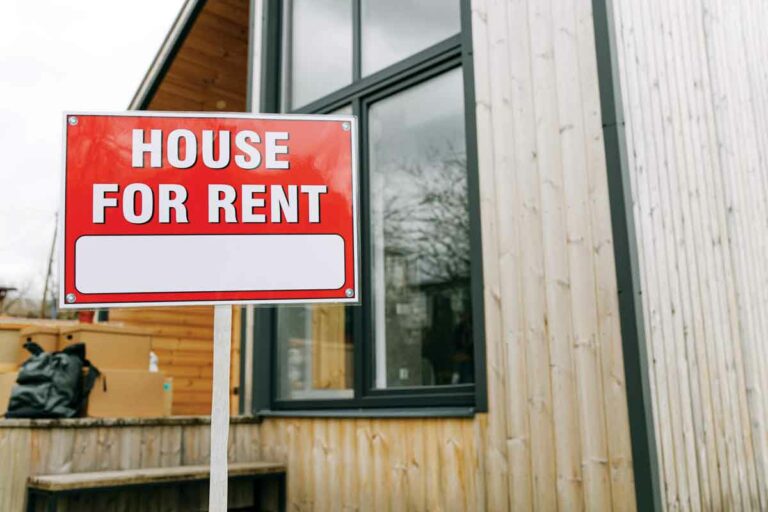
San Anselmo Town Council Considers Rent Control

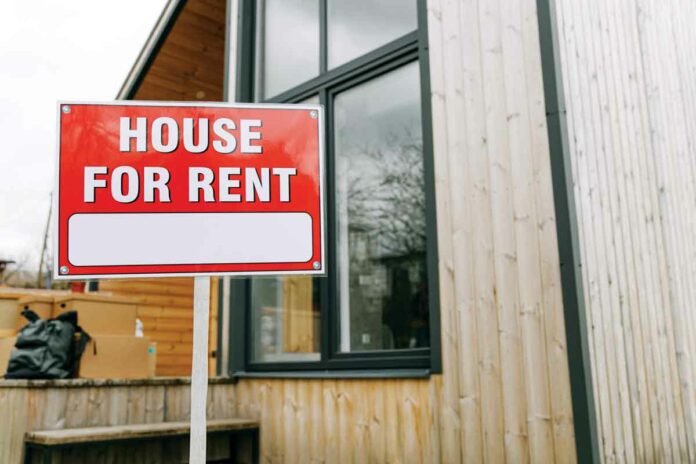
With the price of homes and rents skyrocketing, more people are making the difficult decision to leave Marin for cheaper pasture. In January, the Apartment List, an online apartment listing service, found Marin County rents were up more than 16% since last January.

Sadly, increasing rents and unjust evictions in one of the most expensive housing markets in the United States are annihilating the diversity of the community. It’s obvious that Marin must act, but solutions often prove divisive, as a recent meeting of the San Anselmo Town Council made apparent.

Since last October, organizers with the Marin Democratic Socialists of America have been urging local cities to pass rent control policies. They argue that rent control is a simple solution to end the mass exodus of Marin’s youth, seniors and essential workers, such as teachers, firefighters and store clerks. Right next door in San Francisco, rent control and just cause eviction protections have shielded many tenants from price increases and evictions for decades.

Under a rent control ordinance, the amount a landlord can increase the rent each year is capped, often at a rate tied to the increase in cost of living. Tenants can’t be evicted on the whim of a landlord. Just cause evictions are permitted for tenant lease violations and specific situations, such as the landlord moving into the building or the demolition of the building.

Even the State of California jumped on the rent control train when lawmakers passed AB 1482, the California Tenant Protection Act of 2019. It offers renters some protections; however, not enough, according to rent control advocates. One criticism of AB 1482 is that it is difficult to enforce.

Under AB 1482, rents could rise up to 10% annually based on the Consumer Price Index. And, thanks to a previous state law, none of the rental protections apply to the rentals of single-family homes, condos or buildings built after 1995.

Every weekend for six months, supporters of the Marin DSA’s campaign have gone door-to-door or set up tables in front of grocery stores in San Anselmo, Fairfax and other parts of Marin to discuss the issue with neighbors and gather petition signatures.

The campaigners have collected 1,500 signatures countywide in support of rent control and just cause evictions, more than 450 from Fairfax residents and 350 from San Anselmo folks. The results have been shared with the town councils in Fairfax and San Anselmo.

Fairfax council members agreed to hear a presentation from rent control supporters a few weeks ago. After the presentation, the council directed town staff to draft a report on rent stabilization ordinance. The Fairfax staff report, which is on the May 4 town council meeting agenda, contains three options and recommends a rent stabilization ordinance.

Twice in April, the rent control supporters attempted to solicit a similar outcome with the San Anselmo town council. People shared their personal experiences and those of friends and family who were forced to leave San Anselmo. Young people starting out in their careers, elderly residents on fixed incomes and low-income earners are most affected by rising rents and are the first to leave their community.

A case in point is Curt Ries, who grew up in San Anselmo and met his wife, Kyle Marie, at the local high school. The couple graduated and moved away due to cost-prohibitive rents. After a decade of working, the couple was finally able to return home to live in San Anselmo. Ries, who is now employed by San Anselmo’s public works department, is aware that his family’s living accommodations are precarious without the adoption of rent control and just cause eviction protections. That’s one of the reasons Ries and Kyle Marie are active members of the Marin Democratic Socialists of America.

“More than one-quarter of the town’s population are renters,” Ries said in an interview. “We feel a constant sense of anxiety and stress about being able to keep up with rent increases. And there are no just cause eviction protections. It’s hard to report black mold, poor maintenance and insects, when you can be asked to leave.”

In the April 12 council meeting, the supporters’ request to place rent control on a future agenda was shot down. During a meeting on April 26, open public comment took approximately an hour, with the majority of commenters asking for rent control to be placed on a future meeting agenda.

A discussion made it clear that San Anselmo’s five council members are divided on the issue. Mayor Alexis Fineman and Vice Mayor Steve Burdo said they were moved by the speakers’ stories and agreed to place rent control on an upcoming agenda. Neither Fineman or Burdo are landlords.

Councilmember Ford Greene also agreed. Councilmembers Brian Colbert and Eileen Burke refused.

However, it was the remarks made by Green, Colbert and Burke, all landlords according to recent economic disclosure forms, that disappointed rent control supporters.

Colbert admitted he had “heard a lot of stories tonight” and received email, but that he hadn’t heard any stories of people’s rent being raised in an egregious manner.

Perhaps Colbert missed Donna Nicoletti’s story about a landlord doubling her rent, or maybe he doesn’t consider a 100% increase egregious. Burke said she agreed with Colbert.

But it was Greene’s response that surprised some. Anyone familiar with the slogans on Greene’s website, including “Fighting for freedom of speech since 1952” and “Restore Public Trust. Respect the People’s Choice,” couldn’t understand why he chose to criticize a display of  local democracy—citizens speaking out about an issue impacting them.

“Simply because I’m willing to have the discussion shouldn’t be interpreted that I’m going to agree or support,” Greene said. “Yes, there’s community outpouring; that’s one way to look at it. Another way to look at it is that it’s pretty coercive. We’re almost an hour and a quarter into our meeting, and we haven’t even gotten past public time. It’s very clear to me that if this isn’t agendized, every meeting we can expect what happened last meeting and this time. So, there is a certain coercive quality to that. I think the proponents ought to be aware that there is a certain coercion to it. Oftentimes that can backfire. But I’m not going to agree that necessarily there is going to be any sort of rent control in San Anselmo. I am willing to discuss it and talk about it. I don’t want in the future to have our meetings taken up with an hour and a quarter, an hour and a half worth of public comment forcing the issue.”

Apparently, a citizen exercising their right to speak at a council meeting can be perceived as a threat. Ries aptly summed up the likely reason for Colbert, Burke and Greene’s odd comments on the governmental process, rent control and just cause evictions.

“I will say anecdotally, through my experience canvassing, the only dedicated demographic that opposes rent control is landlords,” Ries said.

In the end, a vote of 3-2, with Fineman, Burdo and Greene assenting, has ensured that rent control will be on the future agenda of the San Anselmo Town Council.

Artist Alejandro Salazar

0

By Jane Vick

Good morning, darlings! Happiest of Wednesdays, as ever. Anything exciting to report? I’ve actually been in my new Oakland home for a whole entire week—it’s been some kind of tremendous weather here, my gosh. No shade on San Francisco—no pun intended—but Oakland certainly does seem to be blue skied, even when it’s a gray fogscape over the Golden Gate. A girl could get used to these days! And it seems like it’s almost swimsuit season…cute!

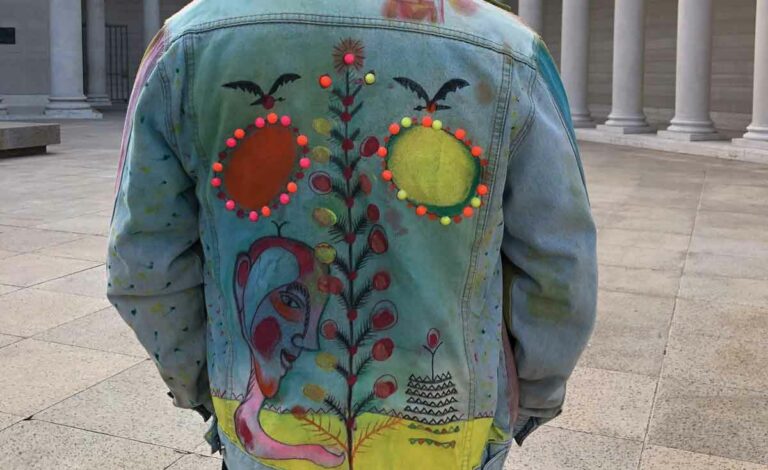
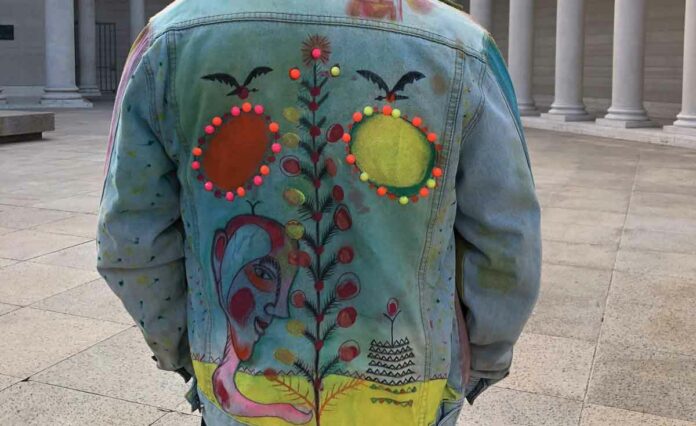
To this week’s “Look,” then! Alejandro Salazar. Originally from Colima, Mexico, Salazar, a somewhat prolific artist, has a wide diversity of work, including painting, ceramics, and lately, clothing. His wearable work was actually featured on the cover of last week’s Bohemian, being modeled by Cincinnatus Hibbard for the upcoming North Bay Fashion Ball, where yes, Salazar’s clothing work will be debuted. The NBFB’s goal of showcasing local talent has not been in vain—I’m consistently amazed at how many incredible artists and designers we have in the area.

Salazar didn’t go to art school. In his words: “I took a few art classes, but most of my learning happens in the studio, kitchen table, looking, asking, failing and fixing, reading, observing, analyzing and focusing on the artists that interested me.”

He began painting later in life, after a career as an engineer, and says that in his art—which is reminiscent of the Mexican Muralists and the Surrealists, with his own inimitable flair—he seeks to connect with people, and to dialogue with mystery. Putting his imagery onto clothing came naturally to him, he said.

“I am not transitioning away from anything—for me it is just another media. In the end, it’s all fabric. During Covid, I would wear my art, and people connected and reacted, so I just kept doing it.”

Salazar’s wearable art is super stylish, and I can’t recommend it more. The sentiment of his image on clothing produces something that’s truly a statement. Salazar’s work can be viewed at Calabi Gallery in Santa Rosa, and his wearable pieces can be found for sale at Gallery 300 in The Barlow. He also welcomes visitors to his home studio. Email him at a.*************@***il.com for an invitation!

Looking phenomenal, everyone.

See you next week!

Love,

Jane

Jane Vick is an artist and writer currently based in Oakland. She splits her time between Europe, New York and New Mexico. View her work and contact her at janevick.com.

On the Wild Side: WildCare cares for the wildlife

Community brings to mind the image of family, friends and of people hurrying through their day-to-day lives around us.

But, to WildCare, community includes the natural wildlife that shares the dynamic landscapes of Marin County.  WildCare, located in San Rafael, strives tirelessly to ensure all species can coexist, not just by treating over 3,500 sick or injured animals a year, but also by offering programs to educate children and adults to foster an understanding and appreciation for local wildlife.

By sharing knowledge and instructions on living peacefully with the animals who cohabit this scenic county alongside humans, and by advocating for better protection of wildlife and the remaining local open spaces, WildCare advocates for the animals of this community and acts as a voice for the creatures that cannot speak up for themselves.

“The two primary sides of our facilities here are the hospital and the educational programs,” said Alison Hermance, director of communications at WildCare. “I love that the programs we offer help people to have a better understanding of the boundaries between wildlife and people. All of the programs work together with that goal in mind.”

Upon entering the WildCare facility, one is immediately greeted by the level stare of a red-tailed hawk, a curious quail named Calli, and the intense scrutiny of Vladimir, the turkey vulture.

“In the summer, we have kids come and make treat-filled toys for Vladimir,” said Hermance. “We tried to release Vlad, and he wanted nothing to do with it or the other turkey vultures.”

Further in the facility, a pool with a pair of pelicans, Baja and Marshall, offers a playful dynamic. The older, brown pelican mostly minds his business, while the young American white pelican causes mischief and nibbles at his companion’s feet when passing by.

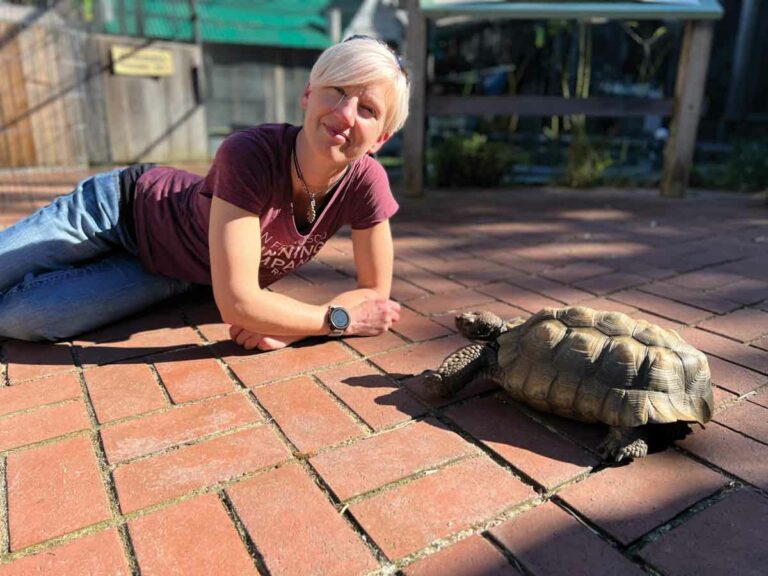
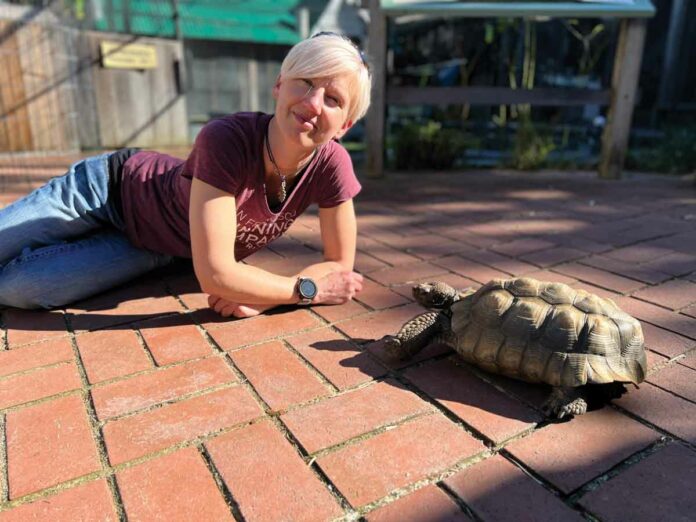
Mohave, the desert tortoise, rests in a bath and will soon be indulged in some of his favorite snacks, including dandelions, jícama, rose petals, watermelon and cucumber. Trill, a western screech owl, rests on Dr. Ryane Logsdon’s gloved hand.

Contrary to the name of her species, Trill does not screech so much as let out pleasant coos and trills. She suffered neurological damage that effectively left her blind and unable to survive in the wild. These animals, fondly dubbed “animal ambassadors” by WildCare, are local wildlife that were too injured or domesticated to return to the wild. While healing and rehabilitation are the primary goals of WildCare, they also provide a sanctuary to animals such as these, who would not survive if released back into their natural habitats. Instead, the animal ambassadors live on premises, receive top-of-the-line care, and act as living links to nature, for visitors to stop by and appreciate.

“We do as many reunites, returning animals to their natural homes and families, as we can,” said Hermance. “We had a really great reunite of a baby squirrel to its mother a couple of days ago. She picked him up and carried him right back up the tree and into the nest.”

While the front of WildCare is dedicated to the noble cause of educating and connecting visitors through the animal ambassadors, the back of the premises plays host to an extensive array of sick and injured animals in various stages of healing and recovery. There, they nurse everything from baby squirrels and raccoons to birds, to the occasional coyote, fawn, and, currently, a whole slew of opossums.

“We’re having a bit of an opossum apocalypse—an ‘opocalypse,’ really,” joked Hermance.

WildCare offers assistance to mammals, birds, reptiles and amphibians in need, in their wildlife hospital. Alongside the intensive care veterinary unit, led by veterinarian Dr. Juliana Sorem, where they attend to animals in a triage fashion, the back consists of winding hallways that lead to rooms specially designed for the care of the animals inhabiting them. One such room offers hospice to a baby squirrel that is hand-fed formula through the day.

Another room, warmer than the rest, houses countless birds at various stages of development, all of whom are hand-fed mealworms on a structured, quite literally timer-based, schedule by hospital manager in the birdroom, Lucy Stevenot. As her colleague Hermance admits, “I’m a total ‘bird nerd.'”

As WildCare is the only wildlife hospital in Marin County, they accept patients from other Bay Area counties, especially San Francisco, and have never turned away a patient in distress. The people at WildCare use the touching stories of their patients to educate people as to the impact they and their actions have on the local wildlife. Their director of animal care is Melanie Piazza.

“About 90% of the patients we receive come in because of negative interactions with humans,” said Hermance. “They have been orphaned or injured by people or their pets, not by natural causes.”

WildCare was notably featured in a National Geographic article, which served to highlight the number of animals killed annually by domestic house cats. In just one year, 232 animals died, and the bodies were kept as an effort to illustrate just how much damage is done by outdoor cats per year.

“We did a project in 2019 and collected and froze the bodies of every wildlife patient that was killed by a cat—the bodies were saved and photographed,” said Hermance. She provides her own felines with a “catio,” a fully enclosed outdoor extension, which allows her pets to live a full, enriched life, with access to the outdoors and without risking their lives or the lives of the wildlife around them in the process.

“Our message is really getting out,” said Hermance.

Nearly 200 WildCare volunteers give four-plus hours a week of their time, to help the wild animal patients and teach Bay Area schoolchildren and adults how to live well with wildlife through a complete cycle of respectful, practical and humane programs in wildlife rehabilitation and environmental education. Volunteers also provide the majority of the day-to-day care of the injured and orphaned wildlife patients in the wildlife hospital.

“This organization just attracts the most amazing people,” said Hermance. “It’s the best thing in the world because every day is different, every patient is different, and it’s just a fabulous place. I believe so strongly that we do incredible work here and make that boundary between people and wildlife more apparent.”

WildCare’s 2022 budget is $2.75 million. They receive no ongoing support from governmental agencies, but rely on memberships, donations, fundraising and volunteer hours to serve the community.

“I, like many people that moved up to Marin, wanted something to get involved with, and a boyfriend at the time said I should consider working at WildCare,” explained Hermance. “So, I became a part-time volunteer coordinator. I grew up in a place without a wildlife hospital, and the value of having one in the community is incomparable, indescribable, really. The relief I feel, to this day, in knowing an animal will get the best care and be released is incredible. I always loved animals, and the feeling of complete helplessness when you can’t save one was what made me want to contribute to WildCare.”

WildCare is working on plans to build a new facility at their current location in San Rafael, though it will take some time and a lot of planning to take the first steps in that direction.

“WildCare has been a community institute for years and years,” Hermance explained. “The value of this place as a fun and free place to bring kids, plus the animal hospital, makes WildCare a true community fixture. It’s such a huge community that cares about animals and that the relationship between humans and animals is harmonious.”

The Courtyard, where guests may come and view the animal ambassadors, is open daily from 9am to 5pm while the museum inside remains closed to the public. WildCare offers a round-the-clock call center, where people can phone in their animal-related emergencies and request help with ill, injured or orphaned wildlife. For the daytime line, call (415) 456-7283 and, for nighttime wildlife emergencies after 5pm, call (415) 300-6359. The WildCare premises is located at 76 Albert Park Lane in San Rafael.


Two Chicks Jerky Cofounder Starts LGBTQIA+ Publishing Venture

0

Open Air Press manifested on a drive.

On her way out to a Brandi Carlile show at the Red Rocks amphitheater, Shannon Ronan found herself driving through Laramie, WY and reflecting on the Matthew Shepard incident in 1998.

In 1998, Shepard, a 21-year-old gay man, was beaten, tied to a fence and left for dead in Laramie.  As a gay woman who had grown up in a small, rural town, the incident was particularly jarring for Ronan. It had happened only a few months after she herself had come out. Years later, driving through Wyoming, the thought suddenly occurred to her to do something impactful for the LGBTQIA+ community—tell the coming out stories.

Ronan and her wife—Breelyn MacDonald, whose art is now the cover for the collection of coming out stories—are major Carlile fans, and during the pandemic became members of a fan group known as the Bramily, a Brandi Carlile Fan Alliance, made up of an inclusive community of members dedicated to change and equity as much as they are to Carlile’s music.

“So many of the people we’ve met in the Bramily have these incredible coming out stories.” said Ronan. “And it struck me that these can go out into the wider world—help to show people still going through it that it’s not so bad, or that it will get better. This is the book I wish I had growing up. ”

Ronan came home from her road trip and set straight to work, creating Open Air Press Publishing without knowing the first thing about publishing.

“I really didn’t know what I was doing—I mean my wife and I do own a business, so I had some experience there, but I was able to bring on a mentor, who I found through a series [1] of synchronicities, who is really helping me learn the ropes. And he’s the production agent—he’s going to take care of the layout, design, editing, all those things.”

The business Ronan is referring to might already be familiar—Two Chicks Jerky is a popular national brand that also partially germinated on the road.

Ronan and MacDonald had saved up money to quit their jobs to go on a five-month road trip across the country, where they ate, drank, hiked and camped. Ronan had been making jerky already while back home, and received positive feedback. When she and MacDonald came back, they started a kickstarter campaign and spent the first two years working out of their Honda, growing slowly and organically. After the first few years, they partnered with Zoe Meats in Petaluma, which took over their distribution, and things really took off. They’re now in over 400 stores nationwide, and bring a refreshing tone to the jerky world, being a women and LQBTQIA+-owned business.

The mentor Ronan is referring to might also be familiar to some—Laurence Tjernell is the mastermind behind Longship Press, a small publishing company in Marin County dedicated to providing an ongoing voice to poets. Longship publishes Nostos, a literary journal dedicated to poetry, fiction and art, once a year, in the fall.

It’s a pretty symbiotic collaboration. Tjernell’s goal of amplifying the creative voice is echoed in Ronan’s goal to illuminate marginalized voices in contemporary society.

“The whole idea behind the publishing company is to do publishing with a purpose,” said Ronan. “Sharing these stories is an act of empowerment for marginalized communities.”

Once she had the idea in place and support from Tjernell, Ronan put out a call for submissions on social media, printed flyers, and went on foot all over San Francisco, inviting people to share their coming out stories. She sees this as the launch point—the first in a series of memoir-style books built to empower. Ronan wants to help share the stories of previously-incarcerated communities, black and brown communities, and so on.

Open Air is also donating a portion of their proceeds to the Looking Out Foundation, a nonprofit founded by Brandi Carlile, along with Tim and Phil Hanseroth, that seeks and supports causes from arts to health to human and civil rights, perpetually on the lookout for under-represented issues. Another portion will be donated to the Matthew Shepard Foundation, empowering individuals to embrace their identities and diversity with dignity. 

Ronan is still accepting submissions for the memoir, the release date of which is yet to be announced, pending both stories and funding. As of today, the Kickstarter goal of $10,000 is at $3,105.

Once they reach a larger fraction of the goal, Open Air Press will be able to pinpoint a release date, and start planning open mic nights, story nights and author readings. 

For more information and to submit, visit www.openairpress.com.

I believe the word series was intended here.

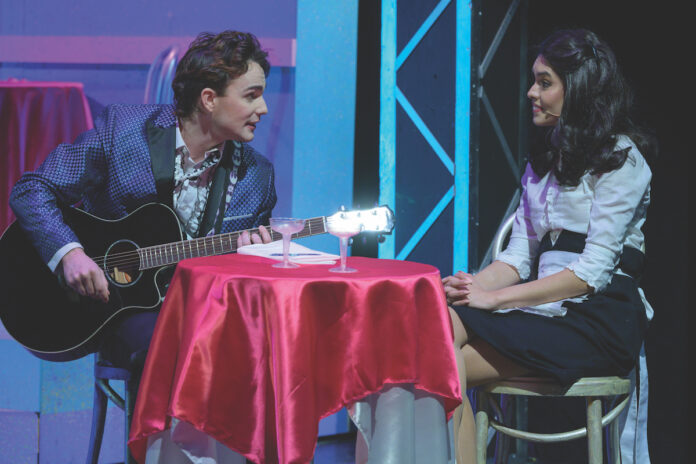
‘Wedding’ Jitters – Sandler movie becomes a musical

0

To some in the theatre world, the sourcing of an Adam Sandler movie as the basis for a musical was the Fifth Horseman of the Apocalypse. Needless to say, American musical theatre did not come to an end with the arrival of The Wedding Singer on Broadway.

The show managed to snag five Tony nominations, including Best Musical, and a semi-respectable Broadway run. The SRJC Theatre Arts Department production of the musical adaptation of the 1998 film runs through May 8.

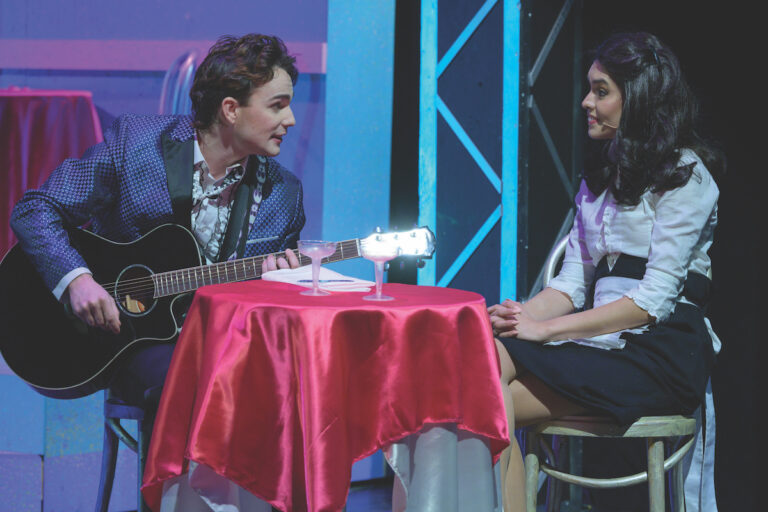
The book of the show is pretty much the same as the film. Wedding singer Robbie Hart (Max Bohlke-Slater) gets dumped at the altar and soon finds himself pining for Julia (Ileene Christianson-Torres), a server at what is apparently the only wedding reception venue in 1980’s New Jersey. Julia’s engaged to a Wall Street lug (Calvin Sandeen), who Robbie knows will be nothing but bad news for her. When he finds out they’re eloping to Vegas, he jets west and with the assistance of a Billy Idol impersonator (among others), saves the day.

Oklahoma! it ain’t, but it doesn’t foolishly aspire to that level. It’s a perfectly serviceable musical that in the right hands provides a colorful evening’s entertainment. Director Reed Martin has an energetic cast at work here, and Bohlke-Slater and Christianson-Torres click in the lead roles. Good comedic support is provided by Aubrey Alexander as Julia’s cousin Holly and Samuel J. Gleason as bandmate Sam. Sandeen is appropriately loutish.

The ensemble work is very good, particularly in the large Alyce Finwall-choreographed musical numbers.

Costuming by Maryanne Scozzari, lighting by Robin DeLuca and scenic design by Peter Crompton all add to the color.

Music director Janis Dunson Wilson has an eight-piece orchestra handling the ’80s-sounding score. I often have issues with orchestras drowning out the vocals, but that was not the case here. If anything, the orchestra sounded a bit muffled.

Most audiences know what they’re going to get with a show like The Wedding Singer. As long as it’s done well, they won’t be disappointed. I wasn’t, and yes, you’ll still get the rappin’ granny.

The Wedding Singer’ runs Thurs–Sun through May 8 in Santa Rosa Junior College’s Burbank Auditorium Main Theatre, 1501 Mendocino Ave., Santa Rosa. Thurs–Sat, 7:30pm; Sat & Sun, 2pm. $15–$25. Proof of vaccination and masking required to attend. 707.527.4307. theatrearts.santarosa.edu

See vs. Know – A look within

0

Before the modern age, when people turned their backs on the immortals, who turned their backs on us in turn, gods and men were believed to form a community together.

From Norse mythology to the Vedic texts of India, earthlings and deities were thought to share a common destiny according to the unity between microcosm and macrocosm, which is neatly expressed in the Hermetic saying, “As above, so below.”

Now let’s call you Juna, after Arjuna, hero of the 500 BC text the Bhagavad Gita, and give you his same divine companion, Krishna, who is always happy to call a human his friend. It’s a lovely spring day, and the two of you have taken a chariot driven by white horses to the coast. You walk along the cliffs and pick a spot at the highest peak, in order to be closer to enlightenment. You sit down cross-legged, while Krisha assumes the so-called pose of royal ease.

“Juna, tell me what you see,” the deity says.

“I see blue sky, golden sun and pounding surf, flowers in bloom and birds in flight.”

“And how do you know that this is what you see?” Krishna asks.

“I know,” you say after a pause, “because I know.”

“So there are two faculties within you?” says Krishna. “One that sees, and another that knows it sees? And which would you say is greater, Juna?”

“I know it is I who see,” you respond, “but I cannot for certain say what within me that knows that I see.”

“Then you have learned something today,” Krishna says with a smile. “And according to the Upanishads, it is the greatest thing one can know. ‘Not anything the eye can see, but that by which the eye can see, know that to be Brahman, the Spirit, and not what men here adore.’”

And so the two of you—man and god, human and divine—spend the rest of the afternoon together unraveling the mysteries of creation amid the beauty of sun and sea. Krishna explains that just as wood contains fire hidden inside of it, which can be drawn out by friction, so is there a sacred flame hidden inside of you. The Spirit is the divine spark that animates body and soul; it is the apex of consciousness, a higher, supra-human dimension of being that knows you better than you know yourself.

When you feel trapped in fear and sorrow and unable to escape, the Spirit remembers your greatest victories, for it has been there all along, watching everything from inside you, ever guiding you towards the light.

Fab Dabs – Cannabis concentrates

Back in the early ’90s, I bought some Amsterdam “space cake” and learned that mighty lesson—never eat hash.

Except I didn’t learn, because, despite wandering the street with my girl for hours not knowing what city we were in, desperate to acquire a doner kebab just to re-establish some grounding for reality, I ate space cake again a couple of years later.

Just like before, it was among the strongest drug experiences in my life. And that takes some doing. This time we puked in the canal and fell into our sleeping bags on the sidewalk in the rain. I guess it had to be done.

It is easy to forget how uncontrolled cannabis dosing was until very recently. For years, I bought my weed from the same guy. I never asked what it was, never knew when it might be the same I’d bought last visit or when it would change.

“Dosing” wasn’t even in the vocabulary. I’ve written about microdosing before, a practice more and more common among long term (read “old”) cannabis consumers who have realized that a little bit is probably enough.

Not surprisingly, the youth of today have the opposite idea. As aging hippies used to complain about the too-high concentration of Gen X chronic, so now we pioneers of hip-hop and punk can now complain about 90% vapes and dabs. I’ve had the vapes, but not yet have I dabbed. I wonder what such a massive hit would do to me.

Dear reader, on 4/20 I put my body on the line for you.

After hacking from a dab professionally administered at the Barbary Coast smoking lounge in San Francisco, the only use-cases I can connect dabbing to are those shared with opiates.

If a 2.5mg mint can replace a second cup of coffee, a 90% dab-hit administered by a whooping hash-scientist with a name tag that reads “Jerry Garcia” is the intoxication equivalent of almost-too-much smack. It’s like that first time taking that extra vicodin, the one you regretted. The first time at least, but then … TA-DA!! … you have your own personal opioid epidemic.

And maybe that’s the thing. Because as soon as this type of gung-ho use became available, plenty of people and products went straight for the all-the-way-f’d use-case.

Given the dangers of opiate-happy doctors and fentanyl-cut street drugs, maybe dabbing has its place as a safer alternative to opiates.

“Just not this place,” say these lungs.

Art Smarts – Where to send your PR

0

By Daedalus Howell

Self-help gurus sometimes coach artists to “stay in your own lane,” which is a wonderful affirmation of the infinite, individual pathways to success. 

Except, of course, that it’s difficult to stay in one’s own lane when everyone else’s lanes are going to vastly better places. The “lane” for many artists is a dead end. Or at least it’s strewn with road blocks. “Speed bumps,” some booster might encourage with a wink, but that’s the kind of “everybody gets a trophy” sentiment that raises expectations to lethal heights when the artist inevitably falls short. And by “short,” we generally mean “short on cash.” There’s a reason there’s a “road less taken,” and trust me, it will “make all the difference.”

It’s not one’s talent but another’s taste that determines an artist’s commercial success in our capitalist society. These days, a succes d’estime rates little more than a humblebrag on social media. (“So grateful to waste a graduate degree on this under-appreciated expression of my withering sense of self.”)

I had a chat with an artist source on background (to protect their brand and the windows of their glass house). I asked, “What’s a starving artist to do? Sell out?”

“Ha! Most artists couldn’t sell out if they tried. There’s a devastating lack of market savvy on one side and an equally devastating lack of self-awareness about what’s actually marketable about them on the other,” this famously successful sell out said while sipping a wine that costs as much as your car. “Also, most people can’t afford what artists do—at least in a manner sustaining to the artist—and competition is at all time high since everyone and their ex-brother-in-law is also an artist.”

A rather jaundiced point of view, I thought, but there are some salient points for those artists still hate-reading this satire. A) Know what differentiates your work from your ex-brother-in-law and double-down on that. B) Aim for a higher market and price your work accordingly. (Those who can afford to be real collectors have benefitted from a system that has disenfranchised you—so take their damn money.) C) Create false scarcity, be aloof and exclusive. Sell to Peter just to piss off Paul.

And most importantly, D) Gin up market awareness by getting and keeping your name in the media. “How?” you ask. “You don’t even have an arts editor.” True. But you got me, and I believe in you and your artsy ideals. Carpool in my lane for a bit—the ride might be a little bumpy sometimes, but we’re going places.

Send properly formatted press releases (Google it) and your high-resolution images (300 dpi at least) to dh*****@*****ys.com.

On Reading Obits

0

PQ

Let’s be honest…we DO compare ourselves to our peer group and others, and I might argue that’s not a bad thing.

On Reading Obits

I know. What am I thinking? With all the strife, murder and acts of incomprehensible callousness…I search for something more.

And by golly, it’s right there. Waiting to be discovered, by you and me. Knocking on 60, I’m not exactly looking for my classmates in this part of the paper…yet. Or, will it be they who view me? Folly to contemplate. It’s honestly immaterial.

The value I get from reading about the lives I may have had some oblique brush with (Anthony Compagno from Redwood High School…one of those people I saw on campus, didn’t really interact with too much but knew he was a teacher…), or had no knowledge of at all, is actually refreshing. These people who immigrated, married, worked and have multi faceted stories to tell…so much life to understand. It’s kind of like admitting I don’t know anything and getting to learn the things someone I never knew prioritized in their life, what mattered to them…and then putting my own “high powered”* reflection on that same “life well lived”…and the juicy question: “How am I doing?”

Let’s be honest…we DO compare ourselves to our peer group and others, and I might argue that’s not a bad thing. A rising tide raises all boats, so behavior which all helps us zero in on the correct direction on our personal compass…? Valuable. So to the families: it’s a kind gesture to share one tenth of a micron of “who” they were, to you, to others…it’s a gift and reminder. What do we do with the time we have been given? Sometimes the dead speak to the living, imparting wisdom, and it couldn’t be more beautiful.

Nice to listen.

— Joseph Brooke

*I make fun of my own egocentric place here now…

To share a tribute about a departed loved one with our readership, email li**********@*****ys.com

Tech on Spec – Protect intellectual property for growth

America can't outcompete low-wage countries when it comes to manufacturing cheap, mass-produced widgets. But we can—and historically have—outcompeted every other nation when it comes to creating superior technology. Unfortunately, this advantage is disappearing. Our leaders are actively weakening the patents, trademarks, copyrights and other intellectual property protections that incentivize companies to make investments in new technologies.  Until recently, the U.S. patent...

San Anselmo Town Council Considers Rent Control

With the price of homes and rents skyrocketing, more people are making the difficult decision to leave Marin for cheaper pasture. In January, the Apartment List, an online apartment listing service, found Marin County rents were up more than 16% since last January. Sadly, increasing rents and unjust evictions in one of the most expensive housing markets in the United...

Artist Alejandro Salazar

By Jane Vick Good morning, darlings! Happiest of Wednesdays, as ever. Anything exciting to report? I’ve actually been in my new Oakland home for a whole entire week—it’s been some kind of tremendous weather here, my gosh. No shade on San Francisco—no pun intended—but Oakland certainly does seem to be blue skied, even when it’s a gray fogscape over the...

On the Wild Side: WildCare cares for the wildlife

Community brings to mind the image of family, friends and of people hurrying through their day-to-day lives around us. But, to WildCare, community includes the natural wildlife that shares the dynamic landscapes of Marin County.  WildCare, located in San Rafael, strives tirelessly to ensure all species can coexist, not just by treating over 3,500 sick or injured animals a year,...

Two Chicks Jerky Cofounder Starts LGBTQIA+ Publishing Venture

Open Air Press manifested on a drive. On her way out to a Brandi Carlile show at the Red Rocks amphitheater, Shannon Ronan found herself driving through Laramie, WY and reflecting on the Matthew Shepard incident in 1998. In 1998, Shepard, a 21-year-old gay man, was beaten, tied to a fence and left for dead in Laramie.  As a gay woman...

‘Wedding’ Jitters – Sandler movie becomes a musical

To some in the theatre world, the sourcing of an Adam Sandler movie as the basis for a musical was the Fifth Horseman of the Apocalypse. Needless to say, American musical theatre did not come to an end with the arrival of The Wedding Singer on Broadway. The show managed to snag five Tony nominations, including Best Musical, and a...

See vs. Know – A look within

Before the modern age, when people turned their backs on the immortals, who turned their backs on us in turn, gods and men were believed to form a community together. From Norse mythology to the Vedic texts of India, earthlings and deities were thought to share a common destiny according to the unity between microcosm and macrocosm, which is neatly...

Fab Dabs – Cannabis concentrates

Back in the early ’90s, I bought some Amsterdam “space cake” and learned that mighty lesson—never eat hash. Except I didn’t learn, because, despite wandering the street with my girl for hours not knowing what city we were in, desperate to acquire a doner kebab just to re-establish some grounding for reality, I ate space cake again a couple of...

Art Smarts – Where to send your PR

By Daedalus Howell Self-help gurus sometimes coach artists to "stay in your own lane," which is a wonderful affirmation of the infinite, individual pathways to success.  Except, of course, that it's difficult to stay in one's own lane when everyone else's lanes are going to vastly better places. The “lane” for many artists is a dead end. Or at least it's...

On Reading Obits

PQ Let's be honest...we DO compare ourselves to our peer group and others, and I might argue that's not a bad thing. On Reading Obits I know. What am I thinking? With all the strife, murder and acts of incomprehensible callousness...I search for something more. And by golly, it's right there. Waiting to be discovered, by you and me. Knocking on 60, I'm...
3,002FansLike
3,850FollowersFollow