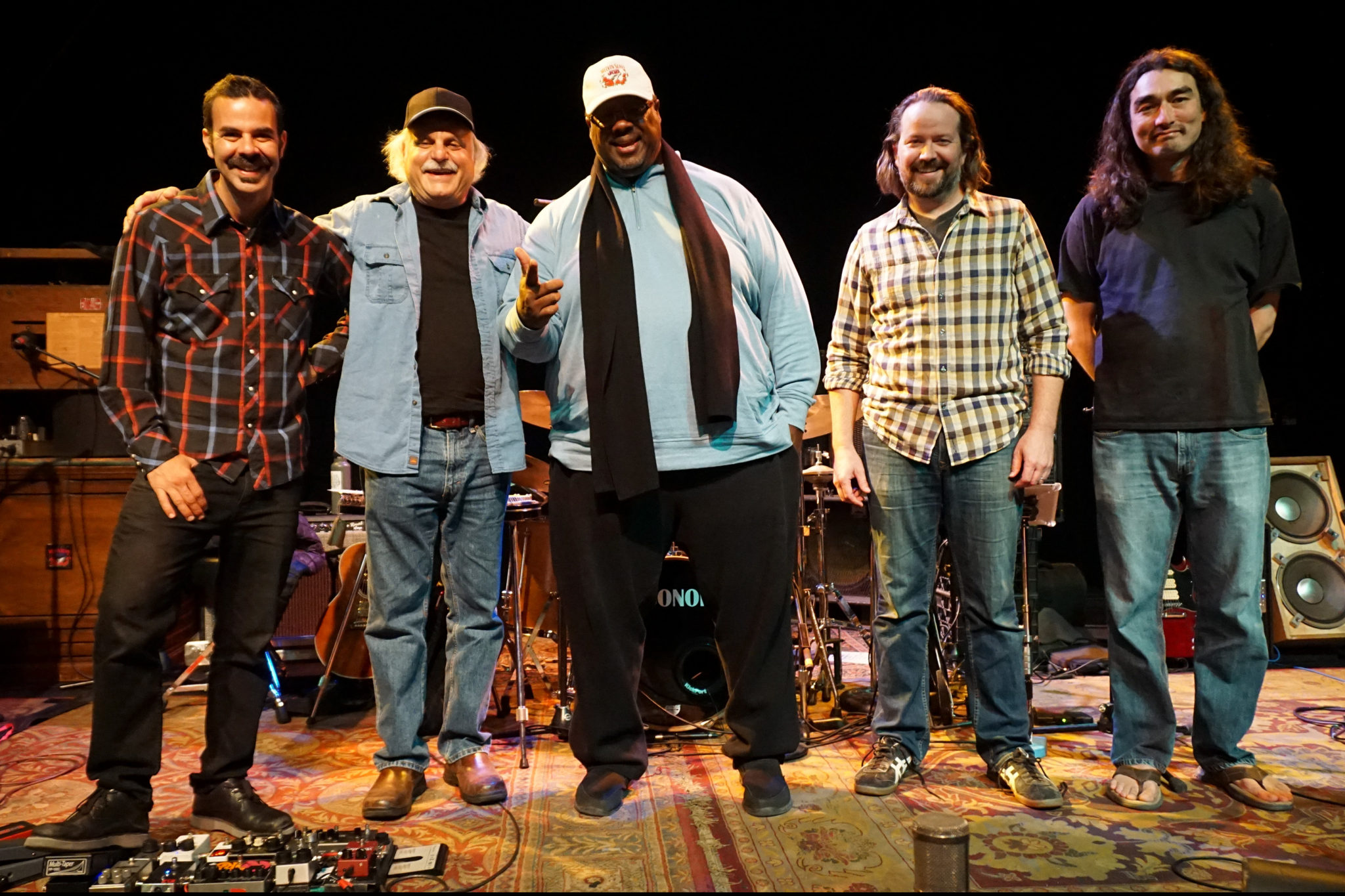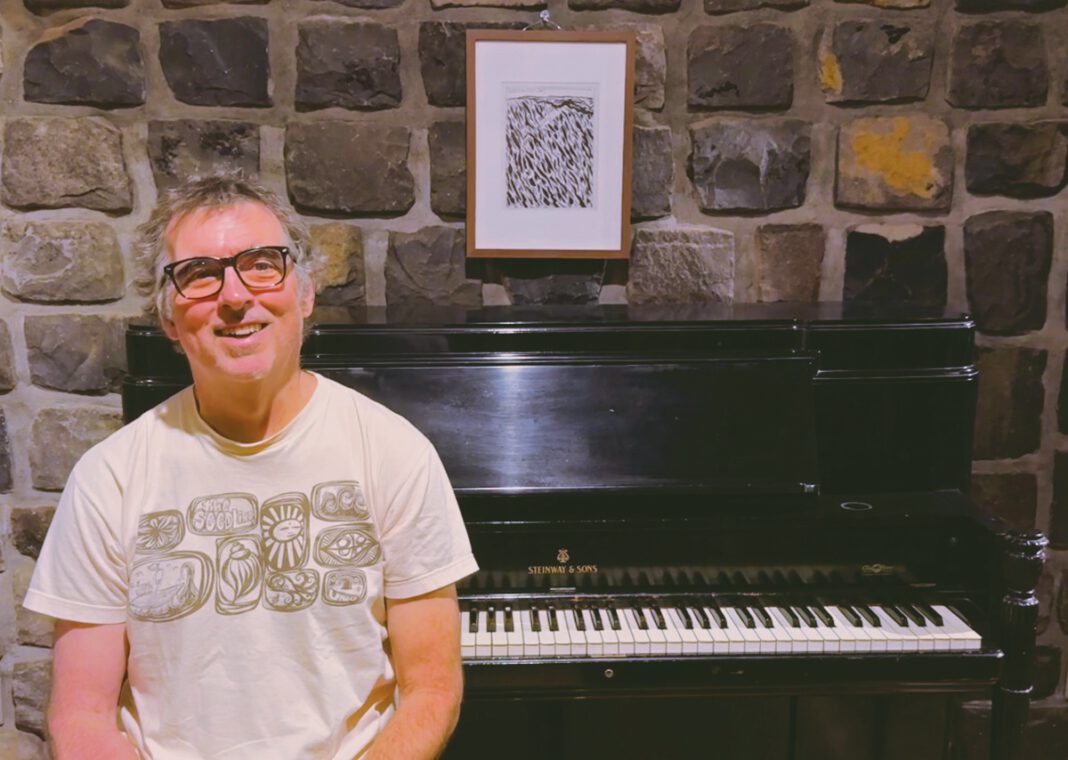
John Baccigaluppi lives in San Rafael. But his journey to get there, as well as his road to becoming a music producer and publisher of Tape Op magazine, are indeed long and winding ones.
Bacciagaluppi’s interviews with other music producers, some famous, such as Brian Eno, some not-so-much outside of the music industry, such as BJ Burton, are included in the new book, Making Music: Conversations with Record Producers, which came out Sept. 1.
Baccigaluppi will present the work, in conversation with singer-songwriter SASAMI, on Oct. 3, at Book Passage in Corte Madera.
The book also features interviews done by a multitude of other people, including Tape Op founder Larry Crane. Tape Op is celebrating its 30th anniversary as an independent print publication.
In a wide-ranging phone interview, Bacciagaluppi spoke about both his physical and artistic journeys, as well as providing an insider’s guide to what music producers once did, now do and may do in the future.
A Sacramento native, he started out in high school rock bands. “Then I realized I was not going to be a rock star,” he confessed. He was always the guy who set up the band’s PA system, recorded their “cassette albums” for sale at their gigs, and he saw he had a knack for the technical side of the business. He moved to Olympia, Washington, to attend The Evergreen State College, which at the time had six recording studios, providing practical, hands-on education in music engineering.
This era was also the beginning of the indie music scene, said Bacciagaluppi. He spent some time at Stanford, in its computer music lab, before returning to Sacramento and 10 years as both an engineer, and now, producer. “The path to producing is different for everyone,” he said, something Making Music illuminates as well. “In the current state of music production, the lines and boundaries have been all but erased and record producers’ skill sets continue to vary widely,” the book’s intro explains.
Asked how producers decide if they are the right fit for a musician or band, he emphasized again that this varies greatly. “I’ll hear something, and it’s amazing. Sometimes you have to chase the project down,” he noted. He cited the band Sea of Bees, for whom he produced three albums, The Bee Eee Pee, Song for the Ravens and Orangefarben. “If I can’t be a huge fan, I will pass,” he said.
In the book’s interview with Steve Lillywhite (U2, Peter Gabriel, Phish, The Killers), Lillywhite echoes this: “…if I don’t hear a voice I like, I won’t listen to it enough to like the song. If it’s a good artist, I want to be in their world.”
Iconic producer Eno offers an insightful take on why he takes the projects he does, stating, “Am I likely to go someplace with this that I haven’t been before? Or, am I likely to take the little bundle of ideas that I nurture and plop them like seeds into some other soil and see them flourish in new ways?”
Producer Glyn Johns (The Rolling Stones, The Who, The Kinks, The Clash, Belly, Midnight Oil) notes in his interview: “I think the most difficult choice any artist ever makes is picking the right producer.”
One of the biggest challenges producers face is “keeping everything running smoothly,” Bacciagaluppi said. “If I’m frustrated, I can’t let that frustration show.” Perhaps even more important, he added, is convincing artists to keep in “mistakes.” Many of the producers in Making Music comment on this in various ways.
“Life is not perfect. Life has mistakes, and it’s flawed. Your music should have all of that,” says Susan Rogers (Prince) in her interview.
“You can fix anything now,” said Bacciagaluppi. “[It might be ‘perfect’] but super boring.”
The book’s second interview, with Jim Dickinson (The Replacements, Toots & the Maytals, Mudhoney) produced this interchange:
“…the problem with a lot of modern records—you can see the production,” Bacciagaluppi observed.
“Well, that’s because it’s not production. It’s overarranging,” replied Dickinson.
Bacciagaluppi recalled recording an album in Morro Bay where the band hadn’t played all the songs together before but managed to record 9 or 10 lead vocals in one day. The singer wanted to re-record the first vocal, to “edit out the mistakes,” but Bacciagaluppi convinced him to use the first take. Part of the process, he said, “is learning when to stop.”
The book’s interviews did not spark major surprises, he said, but more of an affirmation that most producers, working in a creative art, have to be both technically adept and able to improvise. And sometimes they have to admit it might be back to the drawing board on a project. Tony Visconti (David Bowie, T.Rex, Thin Lizzy, The Moody Blues) is quoted as saying: “Somebody’s got to pull the plug on this, because it’s not going to happen. And it’s going to be me, and I’m going to make them feel bad.”
The conversation segues into the inevitable topic: AI, and its likely impact on producing. Here Bacciagaluppi has an unexpected take. He doesn’t, he said, give it a thought. “AI will not change the root of what I do—human beings making things together,” he said. His role remains creating a mood, capturing the artist’s vision.
And, scientifically, each human hears sound differently. Each ear hears sound differently. And, as the blog on hearing, Mimi, explains, “One song can be transmitted to 10,000 radio listeners, but no two of these listeners will hear the song in the same way.” This is determined by DNA. Music will arouse, or not arouse, an empathetic response in individual listeners. Producers, said Bacciagaluppi, understand this, acknowledging that some music will resonate with large groups of people, and other music, with much smaller groups.
As to whom, beyond music industry professionals, is the reader for Making Music, Bacciagaluppi emphasized that the book wasn’t created for the industry. “It was created for music listeners,” he explained. “We don’t see [Tape Op] as overly technical.” He’s discovered new artists through working on the magazine and believes readers will make discoveries in the book, not just from established producers, who also include Jack Antonoff, Mark Ronson and Finneas O’Connell, but also genre-bending figures such as SASAMI.
In her interview, SASAMI says, “Now my goal is less to impress the 5 percent of people in the room who know what’s happening, and more just trying to create an emotional experience for everyone.”
John Baccigaluppi presents ‘Making Music,’ in conversation with SASAMI, at 11am, Saturday, Oct. 3, at Book Passage, 51 Tamal Vista Blvd., Corte Madera.