
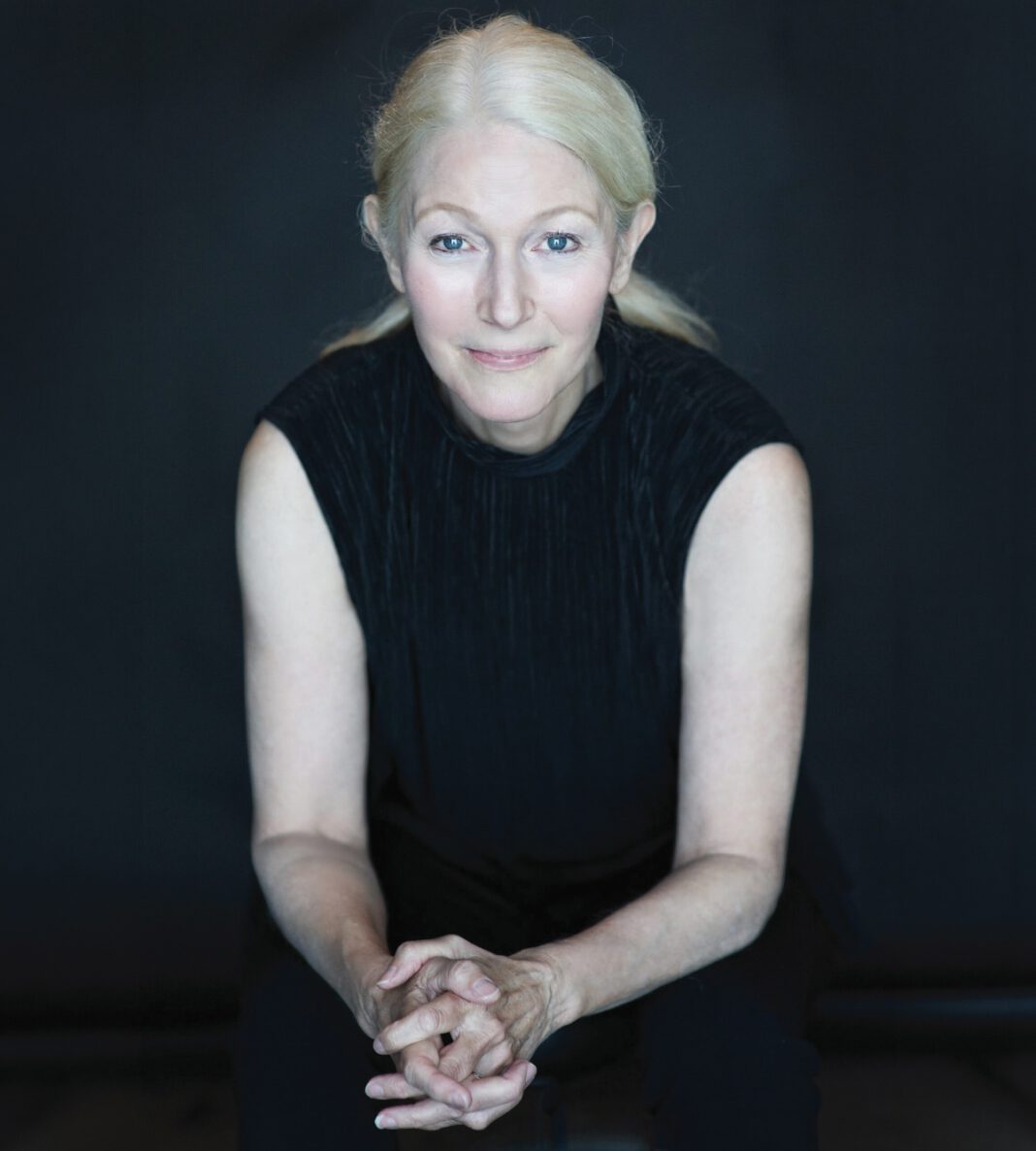
The River, in San Anselmo author Nina Schuyler’s new novel, Open the Floodgates, is on trial to determine if it actually qualifies for “personhood.”
Existing uncomfortably in the dark confines of the courtroom, surrounded by “man-stink,” the River listens as well-intentioned defenders tell stories of their memories of it, when it was clear and freeflowing. When enormous amounts of trash and industrial waste hadn’t yet been dumped into it. When there were many fish, and they were healthy. When all the cottonwoods still stood on its banks.
Open the Floodgates takes place in “an unidentified California town.” Imagine the River to be the San Anselmo Creek, when the Coast Miwok lived beside it. Before it had to contend with dry cleaning solvent being dumped into it, before sewage spills, before urban runoff. Imagine if the Creek was a person.
In Open the Floodgates, the River tries to revise part of its statement to the court: “Defining Person (per-son) 3. (for now) dusty, crackling land / a deep cut in the earth / no rushing water no bubbling, no babbling / no gushing whirling streaming gurgling / no, none, nothing.”
But to begin at the beginning: Open the Floodgates is a stunningly written, captivating environmental fable. It features characters such as Larry Skolnick, “The Judge” or, as the River thinks of him, “Crow Man”; 9-year-old George, called as a witness for the River; Ed Jacobs, whose First People family has lived by the River for generations; Willard, who dreams he is a seahorse but hates the River; and perhaps most indelibly, along with the River, Hazel.
Retired schoolteacher Hazel, 75, who now owns a beauty salon, ardently supports the River during the trial’s opening. She refuses to be curtailed in her testimony by The Judge. “Hazel is like an old-growth tree,” the River says. “… Ring after ring of life: wisdom with each ring sunny years rainy years a couple of tornadoes years of hardship and struggle and death she turns around the sun like the gloriousness she is.”
Yet even Hazel has second thoughts when, later in the story, the River floods her home and the whole town during days of torrential rain. She has third thoughts even later.
The Author
Hazel, Schuyler revealed in a telephone interview, is one of her favorite characters. Schuyler grew up next to the Deschutes River, which flows north from the Cascade Range through Central Oregon. “We hiked along it. I learned how to fly fish there. I loved the sound of the river, the birds,” she said.
Today, she lives alongside the San Anselmo Creek. “The town sits almost on top of the creek, which floods periodically. Sirens go off, and the streets are flooded,” Schuyler said. “One year, the whole town flooded. We were worried about our house.” Memories of that time are evoked by the River’s wild, primal power in its flood: “Churning burning a force unbridled / more than spilling / what it can do / I’ll show you.”
Schuyler said, “I am immersed in nature.”
She actively participates in environmental causes, including Children for Change in public schools, where kids choose their own projects such as a clean-up day or writing to ask Amazon to recycle its boxes, and Santa Rosa’s The Climate Center, which she describes as “a very effective advocate for renewable energy.”
Open the Floodgates is her fourth novel. She has also published a book of short stories and two books on writing, which draw on her experience teaching multiple creative writing courses through Stanford’s Continuing Education department.
This novel, with its unique formatting, multiple points of view and successful pairing of magical realism with courtroom drama, reflects many of her own literary inspirations. In the book’s acknowledgements, she cites Ursula K. Le Guin alongside Virginia Woolf, writing that Woolf’s stream-of-consciousness style helped her evolve a “river-of-consciousness style, swishing between characters, because at the heart of things, we all have little rivers inside.”
Asked about the possible influences of other writers, such as Donald Barthelme, especially his short story “A Shower of Gold,” she agreed that his writing and hers share both humor and the sense of unexpected combinations of things. George Saunders’ Booker Prize-winning Lincoln in the Bardo came up, as did Claire Oshetsky’s Poor Deer, The Friend by Sigrid Nunez and especially Max Porter’s Grief Is the Thing with Feathers, with its trickster, Crow.
The reader for Open the Floodgates, Schuyler suggested, is “someone who wants to experience the world from the point of view of a river, of pigeons, [of many other beings], while being immersed in a courtroom drama.”
As she points out in the book’s introduction, in 2008 Ecuador “became the first country to enshrine the rights of nature into its constitution.” In 2017 New Zealand granted personhood to the Whanganui River, and since then rivers in Columbia, Canada and Bangladesh have been given personhood.
“A forest in Quebec has been given personhood,” Schuyler added. More and more people accept that “sentient beings” includes more than just humans, she said. Climate catastrophes are making people aware that things need to change. “Artificial intelligence is now being used to decode the languages of bees and plants,” she said, citing Karen Bakker’s The Sounds of Life. “I am in awe that we are on the cusp of [major] discovery.”
The Publisher
Santa Cruz-based Reverberations Books published Open the Floodgates. Founder Gregory Graalfs graduated from UCSC in 1976 with a degree in “The Art of the Book.” After a career in commercial printing, print production and design management, he met Seattle’s Chin Music Press founder Bruce Rutledge, who agreed to accept Reverberations as an imprint, launching it in 2020.
In a phone interview, Graalfs said he was well aware of how difficult starting a new book-publishing firm would be. “But publishing was a way I could address my environmental concerns,” he said, citing events such as the United States’ refusal to join the 1997 Kyoto Protocol.
Open the Floodgates is a step further for Reverberations. “I didn’t know about the ‘rights of nature’ movement” before receiving the novel’s submission, Graalfs said. But he found the book enthralling. “It presents its stories in a way that gives people some hope,” he added, “[encouraging them] to think about things in a constructive way.”
Graalfs’ assessment of this aligns with its author’s goal: “to balance hope with the truth.”
All of the characters in Open the Floodgates navigate their hopes and what they perceive as the truth. In the end the River, having been on trial, in wild and destructive flood, and in jail, is now back inside its banks, when an egret alights and the two greet each other: “swishing over to the / glowing white feathers / whirling and burbling / ripple gurgle whoosh / (hello) long black legs.”
Nina Schuyler will be in conversation with Vanessa Hua, author of ‘Coyoteland,’ at 6pm, Sept. 16, at Napa Bookmine, 1625 Second St., Napa; and with Holly Lynn Payne, author of ‘Rose Girl,’ at 6:30pm, Sept. 28, at Mill Valley Library, Creekside Room, 375 Throckmorton Ave., Mill Valley. Schuyler is available for Zoom bookclub meetings. Contact her via ninaschuyler.com.