Everyone dreads spending hours in the bathroom the night before a colonoscopy. But what if one doesn’t have access to a toilet?
An unhoused Marin man in his 70s faced that problem. His health care provider had ordered the test but couldn’t help him with the logistics.
“He hadn’t had a colonoscopy in 15 years,” Kieawnie Clar said. “He was scheduled for one, but he said, ‘They won’t do it unless I have a toilet, because I have to do the prep.’”
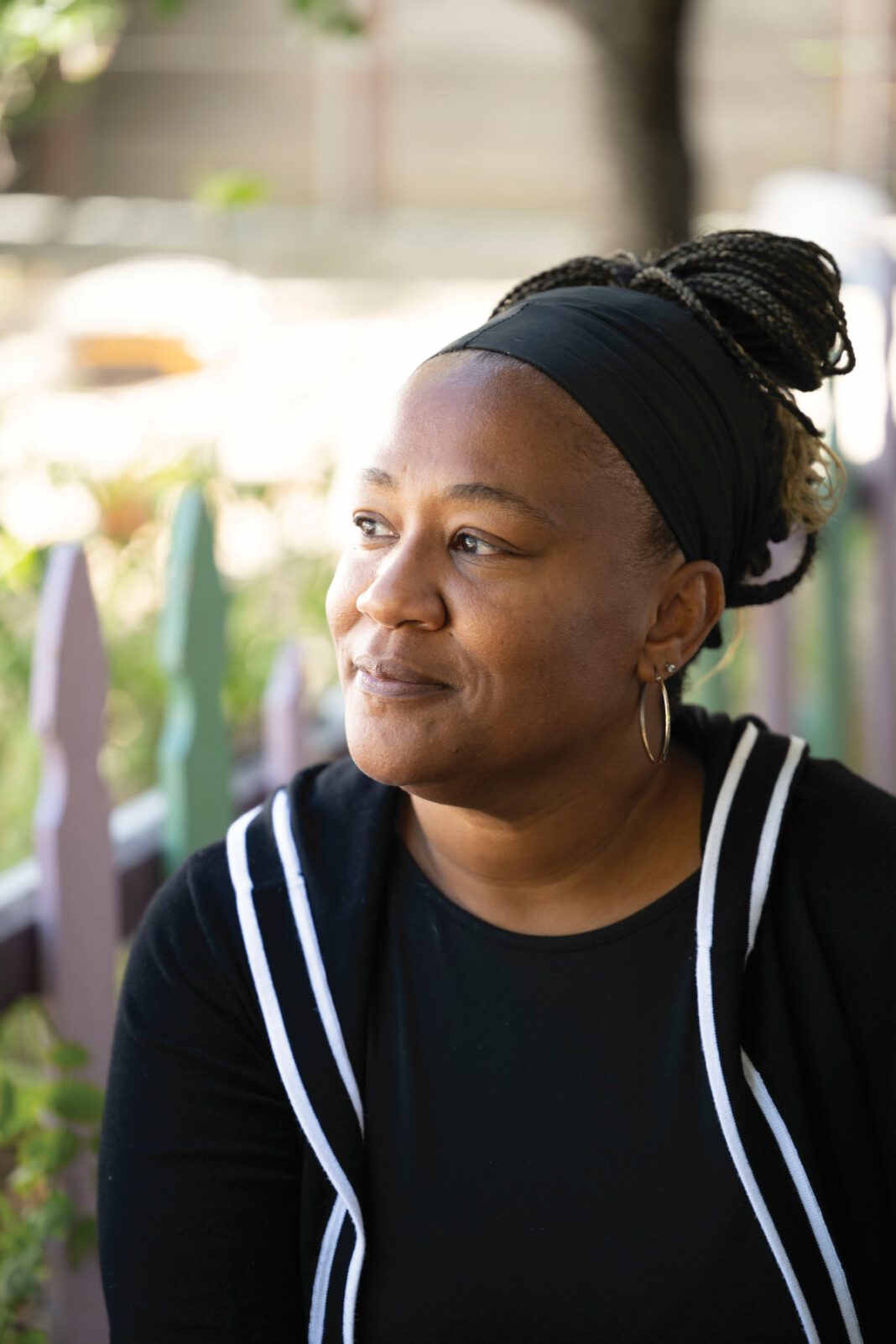
Clar, 50, a pastor and director of the Street Chaplaincy in San Rafael, found a way to help him pay for a motel room, a private place to prepare for his procedure. This was the first time he’d been indoors in years, Clar said.
Another person came to Clar after running out of gas. They lived in their car and needed to move it before it was towed. A gallon of fuel became the difference between having a place to sleep and losing their home.
A few weeks ago, a woman showed up at the Street Chaplaincy’s Tuesday dinner, where about 60 people gather to break bread. The crowd includes unhoused and formerly unhoused residents, people with food insecurity and neighbors.
Only this woman hadn’t come for the meal.
Discharged from the hospital that morning, a cab had dropped her off in downtown San Rafael at 6:30am with a walker and a few bags. She had no phone. After battling sepsis that had spread to her heart, she still felt terrible. A friend recognized her on the street and drove her to the Street Chaplaincy.
“She had no place to go,” Clar said. “It was just like she was supposed to figure it out.”
Clar’s job often begins where the hospital’s work ends.
“Yes, we do the meals and we do the Thanksgiving stuff,” Clar said. “That’s the pretty side, I think, of the Street Chaplaincy, the one that everyone likes to talk about. But there’s also the deep, dark stuff that’s happening.”
For years, Clar watched nonprofits connect people to medical and behavioral health care. But she noticed something was missing. She calls it “the whole person.”
“Nobody was talking about somebody’s inner strength,” Clar said. “Where do they get that strength from to keep moving forward when everything is falling apart?”
In January 2025, Clar launched The Bethany Project at Hamilton Community Church in Novato. On Thursdays, about 30 to 50 people come for a home-cooked meal or to pick up supplies from the food pantry.
Some stay to talk with peer counselors, people who have experienced homelessness themselves. Showers and laundry are provided in a large trailer, courtesy of Santa Rosa’s Redwood Gospel Missions. People drop off a bag of laundry and pick it up later, washed and folded.
Clar’s path to The Bethany Project began years earlier.
After graduating from Marin Catholic High School, Clar earned a psychology degree. She went into case management, working with homeless single mothers and their children, as well as single adults. Seminary, ordination and the Street Chaplaincy followed.
“I’m glad that my eyes are open,” Clar said. “I didn’t always see.”
She remembers running into a homeless man she knew, on a hot day. He stood in the cold-food aisle at Safeway, trying to cool off. A store employee told him to leave. Clar told him about The Bethany Project, describing it as a place where he could “just be.”
The Bethany Project aims to restore people’s dignity and help them reenter the community. Clar believes nobody can heal alone.
Liz regularly joins the folks at The Bethany Project.
“When you come here, oh, you get the smiles,” she said. “‘Oh, how you doing?’ And then you’re like, ‘OK, yeah, I’m doing all right.’”
Recently, Liz went to a Marin restaurant, sat down in a booth and ordered a sandwich. With money in her pocket to pay the tab, she expected a nice lunch and a few minutes to relax.
“The chef came to the table and said, ‘Ma’am, I made the sandwich for you—to go. Leave my restaurant now,’” Liz recalled.
He gave her the sandwich free of charge, but the chef’s words still stung.
Marin County has 1,090 homeless residents, according to the 2024 point-in-time count. Only 35 people exited to permanent supportive housing since September 2025, a considerable decrease from the same period in previous years.
There’s no single explanation for how someone ends up unhoused. A rent hike, job loss, a disability, untreated mental health issues or addiction can push a person into homelessness.
Life on the street can create trauma. Homeless people are frequently the victims of violence and discrimination, and over time they lose their sense of belonging.
“It’s not that easy just to pull yourself up from your bootstraps, as people would say, right?” Clar asked.
Junior, 52, knows the struggle firsthand. A Navy veteran, he’s lived in a tent near Hamilton Marsh since last August and said he’s within days of moving into veteran housing.
“I want to go back to school,” he said. “And I want to change my life.”
For Junior, The Bethany Project has been a lifeline.
“I don’t know what I’d do without these resources,” Junior said. “With the help that we get here, there’s a chance that we get back on our feet.”
Clar points to Junior as an example of why her work goes beyond housing. At the Street Chaplaincy and The Bethany Project, she helps people rebuild their lives.
“They need people that are willing to walk alongside them, to walk with them,” Clar said. “And that are willing to listen with an open mind and an open heart and help in the spaces that they can.”
People often ask why she does this work. Although she’s never been homeless, Clar and her husband have experienced hardship, loss and grief.
“I got to see things from a different side than just a normal, middle-class Marin person,” Clar said. “And I have fallen in love with a homeless single adult, with a homeless single mom and her kids, and that’s why I do what I do. The homeless population helped me find my purpose.”