
After a fire ravaged a sanctioned Novato homeless encampment two years ago, a local woman stepped in to lend a hand. That help has evolved into neighbors and campers breaking bread together at weekly dinners.
Heidi Merchen, a long-time Novato resident, came up with the idea for community dinners in 2024, when the 15 people displaced by the blaze at the Lee Gerner Park camp temporarily moved to the Days Inn, miles from a grocery store and other services.
“I wanted to let them know that they were still our neighbors, that we still cared about them and loved them,” Merchen said. “Bringing them food showed the support.”
The City of Novato decided not to rebuild the Lee Gerner Park encampment, and funding for the motel stay ended within weeks of the fire. Some of the campers moved back to the area, pitching tents next to the public library, but city officials evicted them in April 2025.
As the campers were forced to relocate again and again, Merchen’s meals became more meaningful to them. They have grown to rely on the sense of community she provides.
“We have Heidi showing up every Sunday,” camper Michael Guidry said. “Me and her, we’re good friends. Good friends, good friends.”
For the past 13 months, several former Lee Gerner campers have lived in tents next to the Novato Skate Park in the Hamilton neighborhood. Merchen still rises early every Sunday morning to prepare a nutritious meal for them and about two dozen homeless people from the nearby Hamilton Marsh encampment. Often a few housed individuals with food insecurity join them.
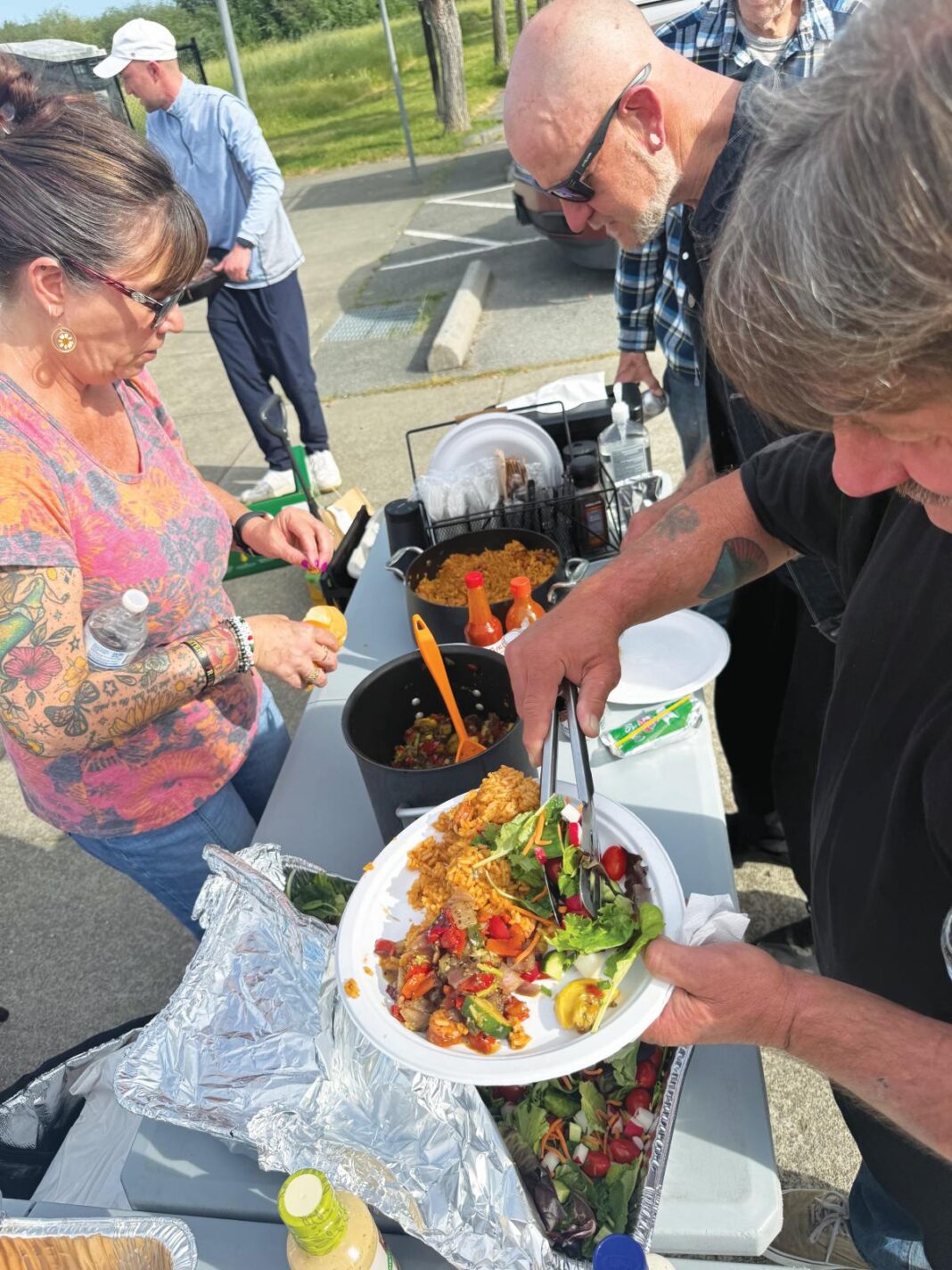
In the early evening, Merchen arrives at the field adjacent to the skate park to deliver and serve the home-cooked dinner, consisting of a main entrée, such as chili; a side dish; fresh salad; sliced fruit; and dessert. The campers greet her with big smiles and kind words.
“I think Heidi understands that people—we’re all the same,” said Geno Meyer, who lived at Lee Gerner Park and currently resides next to the skate park. “And these dinners are really nice, you know. Preparing meals around the camp is hard. We’re not allowed to have open fires, so we can’t cook. We’re not even allowed to have a barbecue or a Coleman stove.”
While a few neighbors regularly sit down to dine with the homeless community, Meyer notes that others living nearby haven’t been as welcoming. He says it’s separation that leads to misperceptions. When folks eat together, barriers break down.
“It’s the human connection, even more importantly than a meal,” Meyer said. “People talk and get comfortable with each other.”
These days, the campers connect with the housed community for dinner twice a week. Other individuals and local organizations have followed Merchen’s lead, providing meals for 30 unhoused people from the two Hamilton camps.
Rotating sponsors on Wednesdays include Novato residents Debra Butler and Maria Messina. The Presbyterian Church of Novato, Indivisible Novato and Indivisible Marin round out the month. All deliver the food to the camp, and everyone eats together.
Both Butler and Messina were familiar with the Lee Gerner Park encampment and became concerned when the residents were displaced. The two women teamed up after Messina created a post on the social media website Nextdoor that listed items the campers needed. Then they learned from a homeless advocate, Jason Sarris, about the positive impact of community dinners. Soon Butler and Messina were planning their menus.
“Having a safe, stable camp where there is food security at least a couple of nights a week, and camp residents don’t always have to be in survival mode, is really essential,” said Sarris, who was homeless for more than a decade and once lived in the Lee Gerner Park encampment.
The Presbyterian Church of Novato became involved with the Lee Gerner campers in 2021, when the City of Novato first authorized the encampment. Hilary Kinney volunteered as the church’s faith ambassador to the camp, visiting on Sundays with other congregants to serve coffee and donuts.
“It really was to build that relationship with people,” Kinney said. “We provided our compassion, literally just our compassion, so they could see that they had neighbors who cared.”
Once the campers relocated to Hamilton last year, Kinney reached out to homeless advocates to find out how the Presbyterian Church of Novato could be of service. They told her about the success of the community dinners. Since then, congregants have been preparing meals every month.
Kinney says the food has been a hit with the campers. Around St. Patrick’s Day, they served corned beef and cabbage and potatoes. The previous month, it was ham, cheese scalloped potatoes and fruit salad.
“These are the most vulnerable people in our community, and somehow we can’t find them proper care and shelter,” Kinney said. “The minimum we can do, giving them a hot meal, is so rewarding.”
Two local chapters of Indivisible, a nationwide progressive movement to effect political change, take action by sharing dinners with the Hamilton campers. The first Wednesday of the month belongs to Indivisible Novato, while Indivisible Marin serves meals every fourth and fifth Wednesday.
Indivisible Novato committed to the dinners almost a year ago, when member Rachel Klein heard that some Hamilton residents were unhappy that the Lee Gerner campers had moved to the neighborhood. Supporting the campers by dining together could aid in changing perceptions and strengthening the community.
“For me, it’s not just about helping the campers, but it’s also a real learning opportunity for young people, children and other community members—getting to know people experiencing these life circumstances and understanding what that means,” Klein said.
The members of Indivisible Novato serve a three-course potluck meal and dessert, and they also bring much needed resources to Hamilton’s homeless community. Batteries, socks, hats, dog supplies, rolls of quarters for laundry and even food to go. During the meal, they set up a speaker and take music requests from the diners.
Newcomers to the community dinners, Indivisible Marin’s steering committee decided to support the Hamilton campers when they became aware that an encampment’s location dictates the level of need. For example, in San Rafael, unhoused people have access to free daily hot meals at the St. Vincent de Paul Society. However, there is nothing similar for folks in Novato.
Indivisible Marin’s founder, Susan Morgan, always takes time at the dinners to have conversations with the campers, which she finds gratifying. The experience is also beneficial to the campers.
“It’s clear that knowing that other community members care about their well-being gives them hope and inspiration,” she said.
Camp residents Guidry and Meyer agree. Guidry says that the people supporting them “offset the buttheads” who aren’t accepting of the unhoused community. And Meyer believes the volunteers put their hearts into preparing the meals and socializing with the campers.
Kinney, of the Presbyterian Church of Novato, wrapped up the sentiment that everyone involved in providing the community dinners has expressed about their homeless neighbors.
“We feed them food; they feed our soul,” she said.
For more information or to support the individuals and organizations providing dinners to Hamilton’s homeless community, contact Heidi Merchen at ma**********************@***il.com; Debra Butler and Maria Messina at ki*************@***il.com; Presbyterian Church of Novato at pcnovato.org; Indivisible Novato at indivisiblenovato.org; and Indivisible Marin at indivisiblemarin.org.








Heidi is a rockstar.