Sara McEvoy has experienced some tough times, including homelessness. When she and her daughter moved into an apartment, she finally had a place to live but not a true home.
A table without chairs. No bed for her daughter. The kitchen lacked many essentials.
“We didn’t even have a couch,” McEvoy said. “If my daughter wanted to have her friends over, it’s kind of embarrassing because it’d be like, ‘Oh, well, where do you sleep? You don’t have a bed?’”
Today, the mother and daughter reside in the home they’ve always dreamed of. The nonprofit Make It Home provided a complete collection of furniture, accessories and décor for every room. Volunteer interior designers ensured that McEvoy’s home is functional and aesthetically pleasing.
“Once my place got furnished, I didn’t have to be ashamed having people over,” McEvoy said. “This past Christmas, I had all my family over, and we had Christmas in our home.”
For McEvoy and thousands of other people transitioning into homes, Make It Home has helped them feel confident and secure in their new surroundings. Stability reduces the chance that people return to the streets.
Interior designer Carolyn Flannery founded Make It Home in 2020, after she saw a way to solve a logistics problem. As a volunteer providing respite care for foster families, she discovered that when teens aged out of the system, they might get a place to live yet they had no furniture.
“I was receiving furniture constantly from clients or from vendors,” Flannery said. “So, I’ve got a ton of furniture on one hand, but then there’s a bunch of people who don’t have any. I started giving foster kids and foster families furniture pieces that I had in excess. And it blew up from there.”
Flannery soon retired from interior design to run Make It Home full-time. A primary goal is to end furniture poverty, which has serious social consequences. Life’s activities become exceedingly difficult for adults and children when they’re facing a dearth of home necessities.
“Imagine that you don’t have a bed to sleep in,” Flannery said. “It’s hard to get adequate rest or recovery. If you have a medical condition, it makes it harder to heal or to function. You’re doing your homework without adequate lighting and eating dinner on the floor. Those are your clothes, all kept in garbage bags.”
People who don’t have furniture are more reticent to have case managers into their home, she said. They could miss out on vital benefits.
Make It Home’s impressive statistics prove that Flannery indeed found a need that wasn’t being adequately addressed in the Bay Area. Last year, the organization furnished more than 700 households with 1,400 residents, including nearly 550 children.
In Marin, Make It Home transformed 160 households last year, including 40 units at Eden Housing’s Casa Canal in San Rafael, a permanent supportive housing project for people exiting homelessness or those at risk.
At Sonoma’s Hanna Center, Make It Home worked their magic on 20 units and common space areas for foster youth. Another 90 households were furnished in Sonoma County.
It’s not only formerly homeless people and foster youth who benefit from Make It Home’s services. The organization also supplies furnishings to veterans, refugees, people with disabilities and domestic violence survivors.
Most referrals to Make It Home come from case managers at 150 Bay Area social service agencies, including St. Vincent de Paul Society, Ritter Center and Marin Foster Care Association.
As a furniture bank that collects gently used furniture and household goods from the community, Make it Home does double duty. In addition to ending furniture poverty, it has diverted millions of pounds of furnishings from going into landfills over the last several years. In 2025, that equated to almost 750 tons.
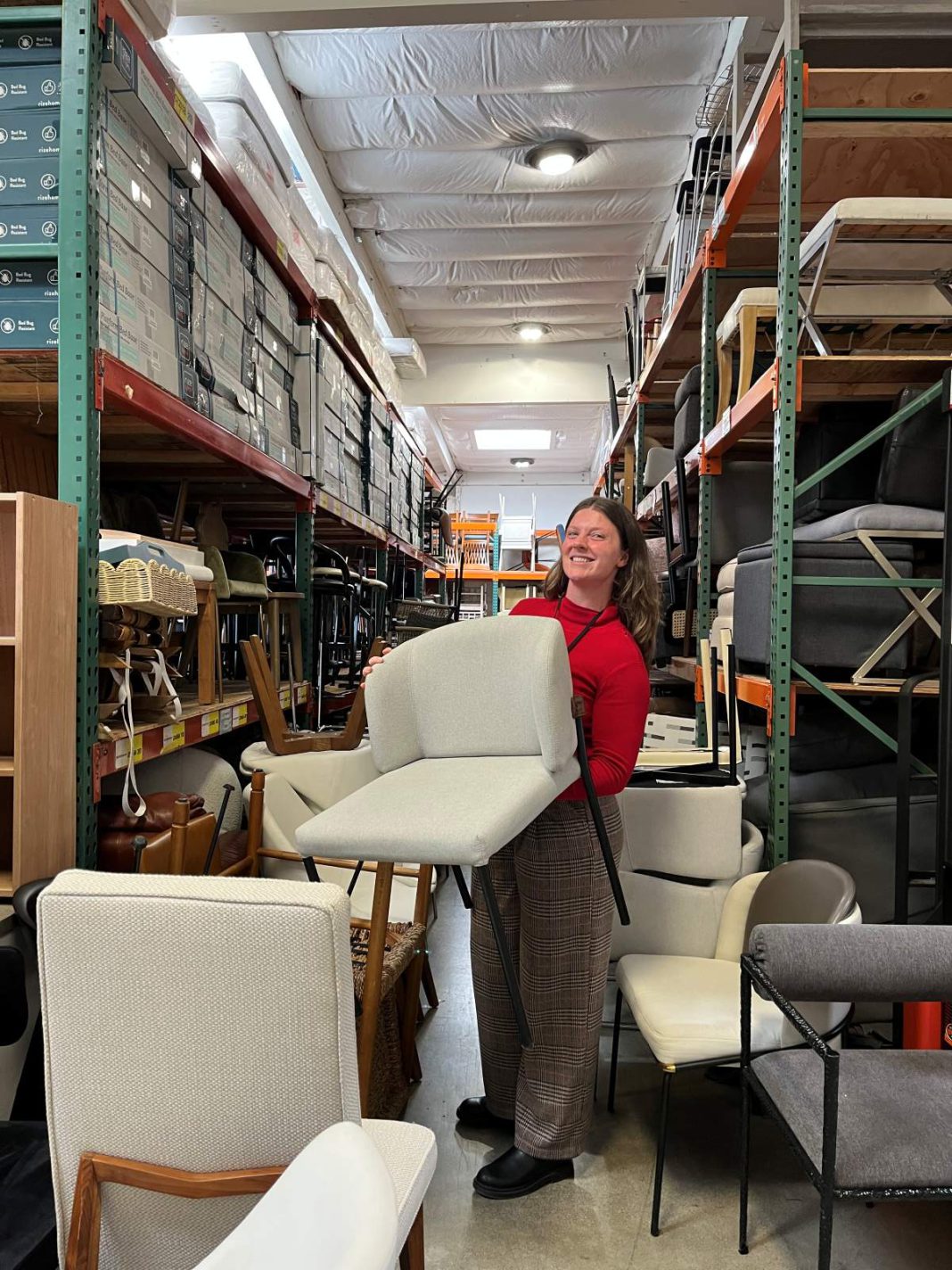
Even more remarkable, Flannery accomplishes Make It Home’s important mission with only a dozen employees. About 150 volunteers support the effort in an 11,000 square foot Novato warehouse that opened in November.
Donations arrive throughout the week, with some coming from individuals, while others are sourced from industry partners such as Pottery Barn, staging companies and junk haulers. Once the goods enter the warehouse, they move to the triage department, where volunteers assess the condition of each item.
“It’s not life or death, but sometimes furniture needs to go to the emergency room,” Flannery said.
Make It Home’s warehouse operation is abuzz with activity as volunteers restore pieces in specialized departments. They clean couch and cushion covers. A lamp workstation overflows with bases, shades and harps.
Woodworking shop volunteers repair, refinish and paint furniture. Make It Home’s upholstery studio breathes new life into furnishings with luxurious fabric remnants donated by high-end companies and designers.
“Everything needs to be in tip-top shape because once the furniture lands in a person’s home, it belongs to them forever,” said Zoë Neil, Make It Home’s chief community impact officer.
Vast sections of the warehouse are dedicated to storage. Think Home Depot, with aisles and aisles of tall racks. Instead of tools and construction materials, Make It Home’s shelves are filled with chairs, area rugs, bedding, throw pillows, dishes, kitchen utensils, towels, vases and artwork.
Boxes of beds also occupy the racks. While most furnishings are donated, Make It Home supplies each person with a new mattress, frame and pillow.
In staging areas, volunteer designers curate living spaces, dining areas and bedrooms based on the size of the unit, number of people living there, favorite colors and requests. This process, with the extra steps and attention to detail, makes all the difference to the people who receive Make It Home’s assistance.
McEvoy, whose home was furnished by Make It Home a year ago, said the designers incorporated the colors and styles that she likes, and everything matched. Her nine-year-old daughter loves her pink towels and bathroom accessories.
“Everything I got was amazing quality,” McEvoy said. “I feel like when people utilize services, it’s you get what you get and that’s what it is, but with Make It Home, I got what I wanted.”
That’s the reason Allison Bainbridge has volunteered at Make It Home for six years. She spoke to the Pacific Sun as she carefully examined furniture just delivered to the triage area.
“The community we volunteer with is very special,” Bainbridge said. “We’re helping people have a home where they can heal and live comfortably. Make It Home is not just furniture.”
Flannery, the nonprofit’s founder, agrees.
“A furnished space offers not only the physical benefits and practicality of it, but also the dignity that goes along with living to a standard that is socially acceptable,” Flannery said. “The dignity of a home.”
Make It Home’s fundraiser, Furnish Hope, features a live design competition inspired by the HGTV show ‘Design Star.’ The event takes place from 6-9pm on April 26 at the Make It Home warehouse in Novato. For tickets and more information, visit makeithomebayarea.org.