Rivertown Revival Comes to Your Living Room

0

During the past 10 years, Petaluma’s Rivertown Revival has become one of the North Bay’s most beloved annual events of the summer.

Dubbed “the Greatest Slough on Earth,” and held on the Petaluma River to benefit the conservation and education organization Friends of the Petaluma River, the one-day festival annually attracts thousands of attendees to the river to enjoy live music, art, kid-friendly entertainment and even weddings, all done up with avant-garde revivalist flair and boasting communal creativity.

The organizers of the planned 11th annual Rivertown Revival were just beginning to map out the details of the event in early April, when Sonoma County went into shelter-in-place mode meant to stop the spread of Covid-19. Given the current pandemic’s uncertain timeline, Rivertown Revival—like many other popular summer offerings—was forced to cancel the show this year in the name of public health and safety.

“It was going to be awesome,” says Rivertown Revival music director Josh Windmiller. “Every year, it always is a mind-blowing event.”

Windmiller, who also organizes the annual Railroad Square Music Festival in Santa Rosa, not only laments the loss of the Rivertown Revival’s festivities this summer, he realizes how much funding the Friends of the Petaluma River will fail to receive as a result of the cancellation.

“I’m sure so many people can relate to how devastating this is, not just in terms of having parties, but in terms of fundraising,” he says. “It’s kind of a bleak summer for a lot of people. So, we thought, ‘What could we do?’”

To answer that question, Windmiller and the other festival organizers asked themselves, what is Rivertown Revival besides that one-day festival each summer?

“It’s about celebrating the arts, celebrating the community and supporting our natural resources, our environment, through raising awareness and funds,” Windmiller says.

With those goals in mind, Rivertown Revival and Friends of the Petaluma River are teaming up for a new, free online venture, Living Room Live, which will present all of the best parts of the festival in a streaming weekly showcase.

Living Room Live kicks off at 7pm this Saturday, May 23, and will run for four weeks, with new performers and new surprises each week. Windmiller will play Johnny Carson for the show, hosting and interviewing musicians, artists and others from the comfort of his living-room couch.

The streaming production will feature three to four musical performances each week, starting with May 23’s lineup featuring rock ’n’ roll giant John Courage, spirited singer-songwriter Sebastian St. James (Highway Poets) and melodic indie-folk performer Ismay.

Each week, kid-friendly musician, artist and author Gio Benedetti will lead a family-oriented segment, “My Town Is Magical,” that will be a show-within-a-show, and Living Room Live will also feature videos from visual artists, comedy segments and even a mass vow-renewal for stay-at-home married couples who may or may not have tied the knot at a previous Rivertown Revival.

“Basically, it will be a mix between a variety show and late-night talk show,” Windmiller says. “We’re trying to fit in what people love about Rivertown into something we can get right into their living rooms.”

Living Room Live will stream for free on the Rivertown Revival Facebook page and YouTube page, and audiences are encouraged to engage in the show through the online chat that will be available.

Windmiller hopes folks will also hit the donate button that will accompany the stream to support the Friends of the Petaluma River, which connects the community to the Petaluma watershed through hands-on educational activities as well as artistic events like Rivertown Revival.

“Stuff like Rivertown, it’s these crossroads, these meeting points, where you get to encounter your own community, and we still want to be that,” Windmiller says. “I’m really happy, and Rivertown is really happy, to provide another place where people and the artists can meet and build something stronger. That’s what the event has always been, so this is the same thing. A different time, different conditions, but the same thing.”

Rivertown Revival and Friends of the Petaluma River present Living Room Live Saturdays, May 23, May 30, June 6 and June 13, on Rivertown Revival’s Facebook page and YouTube page. 7pm. Free, donations welcome.

All That Jazz

0

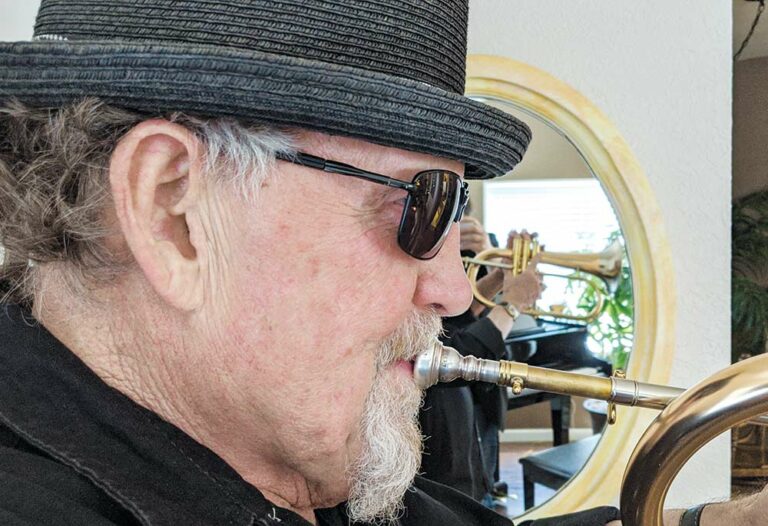
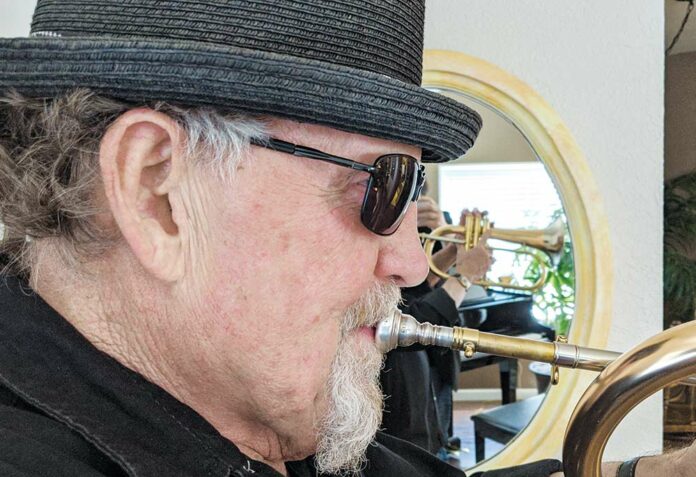
Musician, arranger, bandleader and soon-to-be-professor Peter Welker spent more than 50 years embodying the spirit of jazz in the Bay Area.

Schooled in tradition and musically evolving since the early ’60s, Welker’s eclectic tastes helped carve the San Francisco, East Bay and North Bay jazz scenes for many years. But he’s not long for the region, as he’s soon moving to Arizona to begin a new career (at nearly age 78) as a university-level music instructor.

Before he goes, Welker looks back on a half-century of jazz in the Bay Area.

Welker is actually an East Coast native, born to musical parents. His mother, who was born blind, was an acclaimed jazz pianist and vocalist, and his father was a bandleader in New York City. Welker first picked up his primary instrument, the trumpet, at age nine. When he graduated from the prestigious Berklee College of Music in Boston in 1962, he set his sights not on New York or London, where many of his classmates were headed, but on San Francisco.

“You know, I was intimidated by the thought of either going to Europe or New York,” Welker says. “And I would see some of the football games in October and November with the 49ers. I would be freezing in Boston and see them playing at the old Kezar Stadium on Stanyan Street, and I’d go, ‘Man, look at the sunshine, they’re in their shirtsleeves.’ So that was partly it.”

Welker adds that he also thought he would have a better shot at making it in the Bay Area as opposed to the highly competitive New York City scene. With that intent, he hopped on a Greyhound bus and arrived in San Francisco’s Haight-Ashbury district in 1962.

Shortly after arriving in town, he assembled a sextet, three horns and three rhythm players, and quickly established the group as the house band at the Jazz Workshop in the city’s North Beach neighborhood.

“What you would do back then, there were all these jazz clubs on Haight Street and Divisadero, and the first five people that made up a reasonable band that showed up every night, that would be the band,” Welker says. “So I made sure I’d get there early and then we’d split the door at the end of the night. Back then, you’d end up with 10 bucks a night each, but I was living in a rooming house in the Haight that was 40 bucks a month. I was living large, and there were a lot of good players back then.”

Welker’s musical life took a massive turn in 1967 when he discovered rock ’n’ roll and broadened his musical vistas to fuse jazz and rock together with funk, Latin and more.

“Probably ’68, I hooked up with a great horn band, and I was playing at a club in Jack London Square, and we were alternating with Tower of Power, who hadn’t been signed by Bill Graham yet, but they sure sounded great,” Welker says.

It was at one of these gigs that guitarist Marvin Holmes heard Welker play. Holmes, regarded as one of the Oakland funk scene’s founding fathers, recruited Welker to lead a horn section on a short-lived project named Rush that also featured players including trombonist Steve Turee and trumpet-player Tom Harrell.

In 1969, Welker received his first big break when he auditioned for and was hired to play in the touring Glenn Miller Orchestra. After that, he returned to the Bay Area and performed with Cesar’s Latin Band, again in North Beach, and played four nights a week with musicians including Latin Jazz percussion legends Pete and Coke Escovedo and Victor Pantoja.

“We had a 12-piece band, it was incredible,” Welker says. “We sold out that club every night for four years.”

Welker then joined East Bay R&B legends Cold Blood, booking the gig after a two-day audition while he recovered from pneumonia. From there, he just got busier and busier.

During the last five decades, Welker toured and recorded with other eclectic artists such as Buddy Miles, Van Morrison, Dr John, Narada Michael Walden, Deborah Winters, Merl Saunders and Jerry Garcia.

“Jerry was great, I got to record on the Not for Kids Only album he did with David Grisman,” Welker says. The 1993 album, which featured children’s songs performed in stringband and other old-timey traditions, was dedicated to Welker’s son Jacob, who died that same year at the age of five after a four-year battle with leukemia.

“Jerry knew him, and David knew him too,” Welker says. “It was really sweet of them.”

Other musicians who knew Jacob, including Pete Escovedo, Norton Buffalo and organist Dave K. Mathews, also joined Welker on his own 1997 album, Para Peachy, which marked his return to music after his son’s passing.

Welker has lived in Petaluma since the mid-’70s, and most recently, has co-led the instrumental sextet Sidemen. Welker cofounded the group with drummer Todd Tribble and hand-picked players including bassist Cliff Hugo, guitarist Morris Acevedo and saxophonist Steve Steinberg, with a rotating keyboard player to mix it up.

“Every one of the guys in the band has played with every big name you can think of, that’s why we came up with the name Sidemen,” Welker says.

Sidemen recently released their debut, self-titled album—which features several guest stars performing on the album’s 11 tracks—online.

“We have six multi-Grammy winners on the album, which is unheard of,” Welker says. “We have the core band and 24 musicians on the project.”

Album guests include bassist Tony Levin (King Crimson, Peter Gabriel), guitarist Steve Morse ( Dixie Dregs, Deep Purple) and singer Bill Champlin (Chicago, Sons of Champlin). Welker co-produced the album with Tribble at Mesa Recording in Sonoma County with Grammy-winning engineer Jim Stern (Van Morrison, McCoy Tyner). Welker wrote or co-wrote the album’s seven original tunes and all the arrangements. The album is available to listen to on the band’s website.

“I pulled together all of my favorite genres of music; jazz, funk and Latin, and the band has all those influences going on,” Welker says. “I have seven albums out under my name, and they were all jazz, but I’ve never done anything like this and I’m so excited about it.”

Despite the excitement of performing with Sidemen, Welker soon departs the Bay Area for the drier Arizona climate. Once he gets there, he will interview with five Phoenix-area universities and hopes to settle into a teaching position at one of them.

Though he’s never taught music before, Welker calls himself a “Road Scholar.” He has amassed fifty thousand hours of music composition and arrangement in addition to building a touring resume that is a million miles long; meaning he should have no trouble getting a position once he relocates.

In fact, Welker was already scheduled to have conducted the interviews and sold his Petaluma home, but the Covid-19 outbreak put those plans on hold. He hopes to be in Arizona by the start of the Fall 2020 semester.

“I would love to be able to share all the stuff I‘ve learned over the years and pass it on to the young folk and hopefully brighten their life a bit,” Welker says. “I’ve taught a little bit privately, and I’ve seen the joy it brings a student to learn new stuff that they can add to their tool belt. I just want to keep passing this music along.”

Peterwelker.com/sidemenmusic.com

Looking ahead to the most uncertain season ever

Unfortunately, the upcoming summer season is going to be anything but social, as many large California and the North Bay events have already announced postponements or cancellations in the face of the pandemic.

Some major events, such as BottleRock Napa Valley, have been delayed until fall. Other long-running summer specials, including Marin’s century-old Mountain Play, have outright canceled their planned productions as they look ahead to next season. Other performance organizations are going the online route with virtual versions of their summer spectacles.

One such group is Sonoma County–based Transcendence Theatre Company,  best known for their summer-long Broadway Under the Stars series of live, outdoor theater productions at Jack London State Park.

Forced to cancel its live 2020 season of shows, Transcendence Theatre Company will instead present “The Best Night Ever Goes Online,” a virtual compilation of the last eight seasons of Broadway Under the Stars concerts with never-before-seen footage featuring hundreds of Broadway artists.

The virtual season will stream online Fridays, Saturdays and Sundays, July 10 through Sept. 13, with evening and matinee presentations. The virtual season includes four different concert offerings. “Don’t Stop Believin’” opens the series with uplifting music July 10-19, the beloved “Fantastical Family Night” presents kid-friendly numbers July 24-26, “I Hope You Dance” brings the most moving shows to the stage Aug. 14–23 and a retrospective of the annual “Gala Celebration” caps the season Sept. 11–13. Tickets can be found at bestnightever.org.

Also in Sonoma County, the Valley of the Moon Music Festival is moving from in-person to online concerts for the 2020 season. The festival presents a wide range of classical, romantic and other chamber music concerts to local audiences, and this year was meant to mark the 250th birthday of Ludwig van Beethoven. The online season is still committed to celebrating Beethoven and 2020 with live-streamed and socially distant ensembles scheduled to perform later this summer. Details are coming soon to valleyofthemoonmusicfestival.org.

Chamber music fans can also look forward to Napa Valley’s Music in the Vineyards virtual festival in August. The annual concert series is postponed as planned, though the virtual fest hopes to bring its high-quality music to the public in a new online format. Details are forthcoming at musicinthevineyards.org.

Several other Napa Valley events remain hopeful about operating this summer, especially given that the Napa County Public Health Officer highlighted the county’s low rates of Covid-19 cases and high levels of preparedness in a May 14 report. One event, the popular Napa Porchfest, is scheduled to take place on several porches and lawns throughout downtown Napa on July 26. The neighborhood event is also one of the best for possible social distancing, as crowds wander from house to house to see a wide range of local bands and musicians. With proper face coverings and separation, the show could potentially go on. Details can be found at napaporchfest.org.

Art is a large part of Marin County’s summer, though many events, such as the Novato Festival of Art, Wine & Music and the Sausalito Art Festival, have already been put on pause. Still, art lovers have a few things to look forward to, beginning with the annual MarinScapes fine-art exhibit and sale that benefits recovery agency Buckelew Programs. Often held in June, the fundraiser debuts online this year May 28–31, capping Mental Health Month and marking Buckelew Programs’s 50th anniversary. Buckelew Programs serves North Bay individuals and families dealing with mental health and related behavioral health challenges. View and bid on art and other items online while supporting mental health in a time of crisis at buckelew.org/events/marinscapes.

Also in Marin, the “Lost Coast” exhibit brings local visions to life online via the Marin Museum of Contemporary Art, opening with a virtual reception on June 6 at 5pm at marinmoca.org.

One Day More

Like always, just when I think things cannot get any weirder (worse?) and I’m ready to jump ship, letters to the editor (May 13) make me want to live another day.

Thank you Mr. Allen for setting me straight on the eating of meat, the tragic downfall of the Bohemian and the Pacific Sun and most importantly: THE BIG LIE. I had no idea just how lame I am.

I also want to give a shout-out to the letter writer from West Marin; I have met the enemy and I can say with no uncertainty, Daedalus Howell it is not. Mr. Howell can meander about my neighborhood any dang time he wants. Mask, no mask, sober or …, just as long as he brings me lunch in a brown bag.

Thank you for giving me one more day.

David Dale

Sonoma Valley

Less Is More

Hear, hear (“Diet & Covid-19,” Open Mic, May 6). Other benefits of less meat eating are land preservation and methane reduction. Hopefully a lot of other things will change, too, like healthcare, labor rights and fossil fuel dependency.

Leslie

via bohemian.com

Art Critic

I am an art salesman. I have never seen such stuck-up, slimy folks as these art galleries, selling fu-fu art to jerks (“Ailing Arts,” April 29). Crap for outrageous prices. Only a fool would buy art here unless they were bathing in cash waiting to have their a– kissed … kissed to buy something. I have NO sympathy for these galleries. You want crap? For LOTS of money? Go to Marin.

Johnny Nevola

Via PacificSun.com

How staying at home is helping the planet

0

This is what a climate strike will look like. Because it’s not humans that are warming the planet. It’s human activity.

We all know that fossil fuels are the problem. What if we all just picked a day and significantly didn’t use any?

We can’t depend on “leaders” to fix it. Just as Chamberlain famously placated Hitler to preserve “peace in our time” for a war-weary England, our “leaders” are well aware that it is political suicide to disrupt a prosperity that is predicated on fossil fuels—and a prosperity predicated on fossil fuels is almost all that any living First World citizen has ever known.

Trump has said, significantly, when asked about a fracking ban, “I’m not leaving all that wealth in the ground.”

And there’s the crux of it. That’s the beauty of that guy. He lies a lot, but to his handlers’ and his sponsors’ dismay, at the most inopportune moments he sometimes suddenly tells the truth. What’s the expression? “Born with a silver foot in his mouth”?

What will be required is a relative generational asceticism. To use fossil fuels less prodigally we need to change, not our policy, but our behavior. Much of the world still observes the religious practice of fasting—why can’t we, for example, observe a fossil-fuels Sabbath? Just behave as you are now once a week, for starters. That would theoretically cut our consumption by one-seventh, and send a stark message to leaders who are not lodestars, as they should be, but weathervanes. Let’s get them spun around and pointed in the right direction.

The environmental benefits of this enforced global calming are already clearly visible by satellite.

So if you’ve been cooped up in your house all day, for weeks, and you step outside to howl about it at 8, pat yourself on the back at the same time for demonstrating the abnegation that reversing climate change, our War—the mother of all heroic struggles come ’round at last—is going to require.

The remedy for global warming is Global Calming.

Lito Brindle lives in Sausalito.

Bogart That Joint, My Friends

Mr. Gonzo himself, Dr. Hunter S. Thompson, famously observed, “When the going gets weird, the weird turn pro.” These days are definitely weird, and not surprisingly, many weirdos have reinvented themselves as professionals, though they might not like to be called either weird or professional.

The nasty plague that’s upending our world has forced many cannabis consumers to surrender old habits and embrace new ones in order to stay healthy and avoid sickness and death while hooked up to hospital machines.

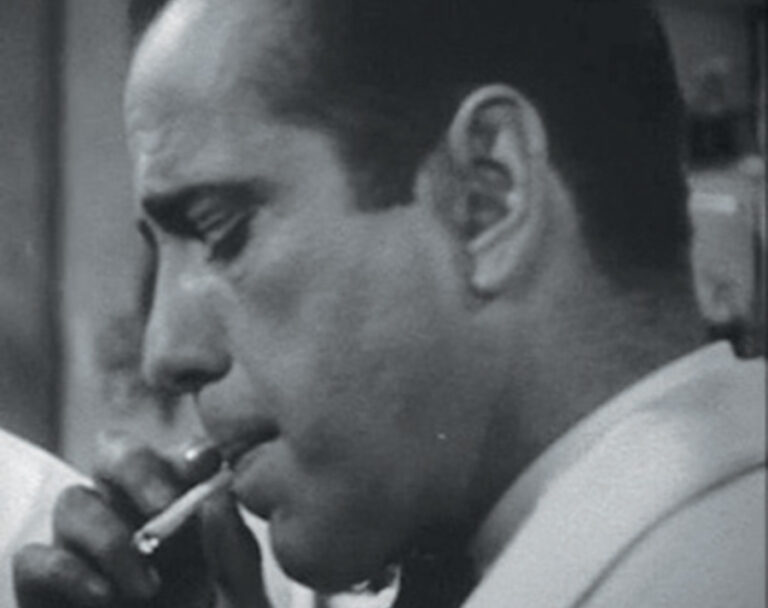
No doubt some of the weirdos—and their not-so-weird buddies—will remember the hit 1968 song first recorded by Fraternity of Man, later covered by Little Feat and the theme song for the movie Easy Rider, “Don’t Bogart Me,” with its famous lyrics: “Don’t Bogart that joint my friend / Pass it over to me.”

Now, for the first time ever, health professionals are urging Americans to Bogart joints and not pass them to friends if they want to reduce the risk of getting Covid-19.

There are also people, such as Sonoma County’s Sarah Shrader, who rarely—if ever—shared a joint, even in the best of times. The president of the local chapter of the mega cannabis organization Americans for Safe Access (ASA), Shrader has attended the annual get-togethers every year since 2008. This year, for the first time, she didn’t go to Washington, D.C., to rendezvous with other activists. Instead, she and dozens of dedicated ASA members did the virtual thing and came up with an eight-point program meant to enable medical and recreational users to stay healthy, without giving up their beloved weed.

Things have changed so fast that some recommendations are now obsolete, including this one: “order ahead of time from a dispensary so you don’t waste time inside.” These days no consumer gets inside.

Another ASA recommendation is to buy enough weed to last two to four weeks. That’s been happening big time. I have enough for the next 10 days, provided I’m prudent.

“It’s like sex,” Shrader told me, in a recent phone conversation. “You can’t tell people to abstain and expect them to do it. Similarly, you can’t simply tell folks to say ‘No’ to smoking a joint, pipe or bong and expect they’ll do it, especially if they’ve been in the habit for years. But you can reasonably urge them to adopt safe practices, like not using the same roach or bong without first using disinfectants.”

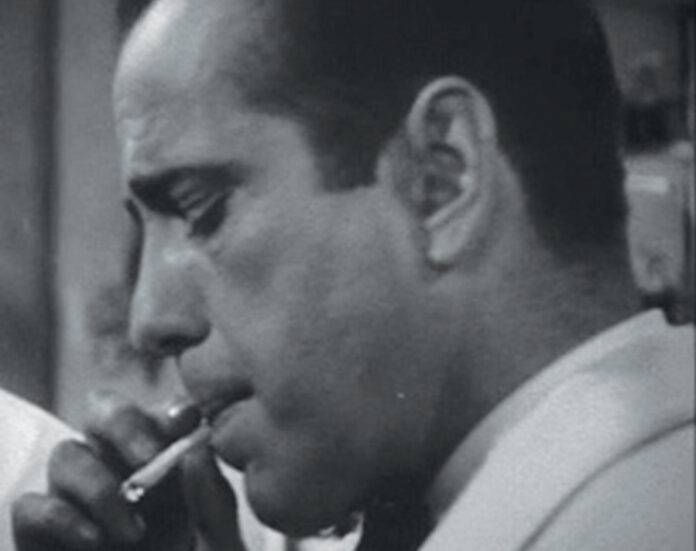
Hey, it’s a matter of health for all of us. Hollywood heartthrob, Humphrey Bogart, who gave rise to the Bogarting-joints expression, would understand. He might also defend the rights of those who smoke joints, even now. In fact, some of my best friends do.

Jonah Raskin is the author of “Marijuanaland: Dispatches from An American War.”

Sheltering in Place Has Improved Bay Area’s Air Quality—But How Long Will It Last?

0

By Amani Hamed

Amidst the dreariness of life under quarantine, San Jose State professor Eugene Cordero has found a silver lining in the Bay Area’s clear blue skies.

Cordero, a professor in San Jose State’s department of meteorology and climate science, has been measuring Bay Area air quality from the roof of the university’s Duncan Hall. His recent findings on the concentrations of black carbon aerosol, a type of emission that comes from cars and factories, offer an encouraging picture of how shelter-in-place has benefited the local environment.

“It’s more than a 50 percent reduction, so that’s pretty significant,” Cordero said.

Granted, Bay Area air quality is often in flux, he added, so such a drastic reduction in particulate matter can also happen when a poor-air-quality day precedes rain. However, in this case, Cordero said he sees a connection between the clearing of the roads and the clearing of the skies. “This is not unprecedented,” he said in a recent interview, “but certainly the reduction in traffic is unprecedented.”

As sheltering in place has forced many regular commuters to work from home, roads and freeways have opened up, drastically reducing traffic even during the Bay Area’s typically congested morning and evening rush hours.

Dr. Thomas Dailey, chief of pulmonary medicine at Kaiser Permanente in Santa Clara, said the dramatically improved air quality has had many positive ramifications for cardiovascular health among his patient population.

“What we’re seeing is far less particulate matter, far less ozone, less nitrogen dioxide, less carbon monoxide, less sulphur dioxide and it appears to have potentially very positive health benefits,” he said.

Dailey also served for nine years as chair of the hearing board for the Bay Area Air Quality Management District (BAAQMD).

Air quality in the North Bay tends to be better than the rest of the Bay Area but levels of dangerous fine particulate matter spiked in November 2018 due to the Camp Fire, according to numbers published by BAAQMD.

The most immediate benefits can be seen in people who normally experience pulmonary and cardiovascular symptoms due to preexisting conditions such as asthma and emphysema. Dailey also stated that children—who are normally at higher risk for pulmonary complications when air quality is bad—will also fare better now that the air quality has improved.

“We know when there are air quality problems, when there are fires, when we have ‘Spare-the-Air’ days, there’s increased admissions in hospitals for asthma, there’s increased heart attacks and strokes, increased exacerbations with patients with emphysema and COPD,” Dailey said.

As long as people can maintain social distancing, Dailey said, the cleaner air presents an opportunity for all people, but especially for those with lung conditions. He encourages people to get outside and take advantage of the fresh air, stressing the importance of exercise to pulmonary health. “Exercise is a key component of the management of asthma emphysema, COPD,” he said.

Masks—now required in most Bay Area counties—can also help mitigate the effects of pollen for allergy sufferers who wish to take advantage of the clean air, he added.

Though the newly clear air is a positive side effect of quarantine, when the slowdown is over and traffic gridlock returns, so too will the smog.

“I think a lot of what we’re seeing locally with air quality would have to be due to transportation, to reducing just the miles driven,” said Patrick Brown, a professor in SJSU’s department of meteorology and climate science.

While many would like to think this change in the air quality will also affect our total carbon footprint and our impact on global warming, Brown said that this is a drop in the bucket compared to global carbon emissions.

The improved air quality will not have any lasting impact on global warming or the well-mixed greenhouse gasses that accumulate in the atmosphere, Brown said. But this moment does present an opportunity for the Bay Area to confront the main cause of local pollution and change the way the region commutes.

“That kind of shows us what it would look like if we had a transportation system that was more electric vehicles,” he said. “That would be one takeaway, that if we could change our transportation fleet from internal combustion engine cars that burn gasoline towards electric vehicles then we could have this type of air quality all the time essentially.”

Since the Bay Area’s energy grid uses wind and solar to generate energy, most of the region’s emissions come from transportation. This creates a unique opportunity for the nine-county vicinity.

Unlike areas of the Central Valley where most emissions are due to agricultural practices, the Bay Area has the potential to change transportation, either by improving mass transit or by moving towards electric vehicles, either of which could be fueled by renewable energy.

“This is actually good evidence, showing how we reduce or minimize things that we do daily that make an impact,” said SJSU professor Sen Chiao, who chairs the Department of Meteorology and Climate Science at San Jose State University.

“Everyone understands weather,” he said. “Today’s weather is tomorrow’s climate.”

Chiao’s maxim that “today’s weather is tomorrow’s climate” explains his strategy for analyzing, interpreting and educating about global warming and climate change.

“‘Global warming’ and ‘climate change’ do not necessarily have a one-to-one relationship,” he explained.

Global warming, while understood to be a scientific descriptor, is something that citizens in general do not often see on a daily basis. Climate change, however, can be seen and measured even on a local scale.

During the first several weeks of shelter-in-place, while Cordero was seeing a drastic reduction in emissions from cars, Chiao saw evidence of a spike in a certain pollutant that is specifically generated by burning wood.

While quarantined at home, though Bay Area citizens were not driving emissions into the atmosphere by commuting, they were using wood-burning fireplaces or fire pits. Wood-burning fires are illegal in several cities and counties in the Bay.

“People just need to buy in,” Chiao said.

Cordero said he has been “exploring education as a mitigation strategy” in terms of carbon emissions. A study Cordero performed years ago involving San Jose State students showed that education can lead to a long-term reduction in carbon emissions.

“When there are big changes in our society, those are times when we are more open to changes,” said Cordero.

He also said he would like to see more funding devoted to transportation and education, as well as increased investment in finding solutions to the livability of Bay Area cities and housing and homelessness.

“I think that mostly, though, we’re going to be focused on trying to grow our economy again,” he said. “But maybe we can grow it with some awareness that just growing the economy is not the only piece we should be focused on.”

PG&E Bankruptcy Deal Nears Crucial Deadline

By Jean Tepperman

The Pacific Gas and Electric Company faces a crucial deadline: Before June 30, it must get both the state of California and a federal judge to approve its plan for getting out of bankruptcy. If it doesn’t meet the deadline, it won’t be eligible for help from the state Wildfire Fund—help that is needed to make the plan work.

The company entered a Chapter 11 bankruptcy process in January 2019 because it couldn’t pay an estimated $30 billion in legal claims from 2017 and 2018 wildfires, which killed more than 100 people, destroyed tens of thousands of buildings and burned vast areas of forest. In March, Gov. Gavin Newsom announced he and the company had agreed on a proposed plan that would mean “the end of business as usual for PG&E.”

The plan outlines complicated financial strategies for “reorganizing” the debt, issuing new debt and stock, and paying specific amounts from shareholders’ dividends and assets. It also would make major changes in PG&E management and give state regulators more “accountability tools,” Newsom said. And the deal provides for a state takeover of the utility if PG&E doesn’t meet its financial, safety and reliability obligations.

Many fire victims, insurers and creditors have signed off on the plan. But at the May 7 meeting of the California Public Utilities Commission, which oversees PG&E, there was “a big show of activists against the deal,” said Mari Rose Taruc of the Reclaim Our Power Utility Justice Campaign, a coalition of many of the states’ major environmental and social-justice organizations.

Critics say the deal shortchanges fire victims, fails to ensure safety, lacks strong enough accountability measures and would result in higher rates for customers. Reclaim Our Power is planning a pandemic-appropriate protest in San Francisco, with a car caravan, street art and more on May 20, the day before the commission is scheduled to vote on the proposal. The commission’s approval is required for the plan to go forward.

Some critics are calling for specific changes in the plan, especially tighter rules for state oversight of financial decisions and safety improvements. Reclaim Our Power wants to take it further.

“PG&E is not going to change to the point where we can be confident that the utility and the government will protect us during the upcoming wildfire season from getting burned up or having our power shut off,” Taruc said.

Her coalition wants the state to transfer control of the utility from PG&E and Wall Street to democratic decision-making by frontline communities and workers.

The proposed settlement would give $13.5 billion to people who lost homes, businesses or loved ones in the 2017–18 fires. By some estimates that’s less than half of what they are due, and half of that amount is to be paid in PG&E stock rather than in cash. But in a vote held May 15, the deal won overwhelming support from fire-victim plaintiffs.

Some fire victims remain critical.

“There should be immediate payment in cash directly to survivors and impacted communities, not a split of stocks and cash,” said Gabriela Orantes of Sonoma County’s North Bay Organizing Project.

Her organization is part of the Justice Recovery Partnership, a group of “grassroots organizations that have been on the ground in communities that have experienced fires and power shutoffs.” They don’t think it’s fair to ask fire victims to share in the risk of PG&E’s volatile stock price, especially when the plan also calls for payment in cash to the other claimants—insurance companies and local governments.

Orantes added that some of the payment won’t come until 2021 or 2022 and is contingent on the success of particular financial maneuvers. A group called Survivors of the PG&E Fires reported that fire victims were subject to a high-pressure campaign to get them to vote “Yes,” including by some of the lawyers representing them.

In addition to the fires, last summer’s power shutoffs created serious problems, especially for people with disabilities.

“They affect us in many ways differently from people without disabilities,” said Jay Shalizar, of the Disability Justice Culture Club. Some people need ventilators and other equipment to survive, or medication that requires refrigeration, she said.

During last year’s power shutoffs, Shalizar asked a friend who uses a ventilator what she would do if she lost electricity.

“She said, ‘Lie here and die,’” Shalizar said. Shalizar said she and others “had to pool resources, get extra batteries for her ventilator and her wheelchair. Then we bought her a generator.”

The group also mobilized to protect people with heart and lung problems and chemical sensitivities from the effects of wildfire smoke.

“People got really sick because of how polluted the air was,” she said. “We ended up going to people’s houses, did DIY air purifying, sealed doors and windows, pooled resources to pay for hotels.”

PG&E has committed to cutting the duration of power shutoffs in half, but Shalizar said the reorganization proposal doesn’t include “anything to help people stay alive” during future power shutoffs. Disability-rights activists have joined in protests against PG&E, including a blockade of its headquarters last December, which also included Reclaim Our Power, youth climate activists and others.

Of course, a main goal of any plan for PG&E is to prevent future wildfires. The proposed deal calls for a Wildfire Mitigation Plan, but the specifics are not yet determined. Governor Newsom’s current proposed budget would add more staff to the Public Utilities Commission’s Wildfire Safety Division, which must approve PG&E’s annual wildfire safety plans. But Taruc said these measures don’t reassure her.

“These plans might be in place,“ she said, “but PG&E is in charge of implementing the plans. That’s a huge oversight issue.”

She is skeptical about whether the Public Utilities Commission has the ability or the will to provide effective oversight. That’s a central issue running through criticisms of the proposed plan. Critics are not convinced that the restructuring and accountability provisions are strong enough to fulfill the plan’s goals.

PG&E has committed to restructuring its management to provide more accountability. Fifty percent of board members will be California residents, with state oversight of board appointments. The board’s Safety and Nuclear Oversight Committee will be appointed in consultation with the state and will get new powers. The company will appoint an “executive-level” Chief Risk Officer and Chief Safety Officer, consulting with the state about who is appointed and spelling out plans for them to report to the board and the Public Utilities Commission. The company also will create an Independent Safety Advisor position and a six-step oversight process that would kick in if there’s another big problem like a major wildfire.

These plans don’t sound strong enough to the plan’s critics.

“Generally, we want enhanced oversight,” said Mindy Spatt, of The Utility Reform Network.

Her organization is calling for some specific changes. Instead of a PG&E safety advisor, they want an Independent Safety Monitor appointed immediately by the Public Utilities Commission. They’re also calling for a more-streamlined process to address safety problems and a mandate for board members to prioritize safety.

A brief filed by three statewide environmental-justice organizations adds that the safety monitor should report to the legislature and the public as well as to the Public Utilities Commission. Spatt commented that her organization has “often had concerns that the CPUC is not hard enough on PG&E. It’s not just a question of whether they have the tools, it’s whether they have the will to get this company under control”

The environmental-justice brief also calls for at least half the board members to be not just California residents, but specifically residents of PG&E’s service area, from communities affected by wildfire, gas pipeline, or other safety issues, or representing utility workers. It calls for more power for PG&E’s Disadvantaged Communities Advisory Group, including their say in key appointments, and for special measures to mitigate the effects of wildfires and power shutoffs in vulnerable communities. And it argues that the proposed plan, while commiting PG&E to continuing current efforts to move toward renewable energy, doesn’t do enough to advance California’s climate and environmental goals. For example, the brief calls for an aggressive plan to close polluting gas-fired power plants in low-income communities.

Critics also charge that the plan, although required by law to be “neutral on average” for ratepayers, will actually result in customers paying for PG&E’s misdeeds. Under the plan, PG&E, which went into bankruptcy with a little more than $22 billion in debt, would exit bankruptcy with a debt of almost $44 billion, according to a letter signed last November by 23 mayors. The plan proposes extremely complex financial maneuvers, such as paying off higher-cost debt with lower-cost debt, raising money by issuing more stock and selling debt to investors who also hold PG&E stock.

“It’s confusing because it’s supposed to be,” said John Geesman, a lawyer who represents the Alliance for Nuclear Responsibility, as he tried to explain the intricacies of the plan.

“PG&E is expected to pay over a billion dollars to the attorneys and financial analysts who have worked out the complex details of this latest bankruptcy plan,” said Spatt, of The Utility Reform Network. “Those may be hard to follow, but the money isn’t. Wall Street is agog over the plan, which was the whole point all along.”

Geesman said that, despite PG&E’s assurances, customers will end up paying some of the costs of its debts. For example, the PG&E corporate structure has two levels: the utility and a holding company that owns the utility. This structure is a holdover from the 1990s deregulation. The current reorganization plan calls for the holding company to raise money by selling “junk bonds,” for which the utility will not be responsible. But the plan allows charges to pay off the bonds to be added to customers’ bills.

In addition, Spatt said, customers have to pay insurance premiums that are extra costly because of PG&E’s past problems. Environmental organizations worry that some of the cost will also be passed on to community-choice electricity agencies, which pay exit fees to PG&E.

And the state’s new Wildfire Fund, the money PG&E is counting on for its bankruptcy plan, will be funded by contributions from PG&E and the state’s other electricity companies. Each company’s contribution is to come half from shareholders and half from customers.

Taruc, of Reclaim Our Power, said, “This plan is built on such rickety finances that kicking the can down the road will only open everyone up—the state, the fire survivors, the investors—to another possible bankruptcy that we all would end up paying for.”

In addition, according to a recent letter signed by five mayors including Oakland’s Libby Schaaf, PG&E will need to make “tens of billions of dollars” in safety improvements to prevent future wildfires. Spatt said it’s not clear how much of this expense will be passed on to customers. Her organization frequently argues before the Public Utilities Commission about PG&E requests to charge customers for expenditures TURN sees as unjustified or ineffective.

The mayors’ letter rejects the financial plans outlined in PG&E’s proposal, saying, “The sixteen million Californians already imperiled by the company’s serious lack of safety, financial stability and reliability … cannot place their homes, their livelihoods and their futures on the prospects of a company that issues junk bond debt.” The letter said the company should raise more of the money by issuing stock and less by increasing debt.

An earlier letter, signed last November by 22 mayors, initiated by Mayor Sam Liccardi of San Jose and signed by Schaaf, Berkeley’s Jesse Arreguin and Richmond’s Tom Butt, called for the state to take over PG&E and convert it to a “mutual benefit corporation” owned by its customers—a consumer cooperative. It argued that a cooperative could borrow the money needed for safety improvements more easily and at lower rates, would be exempt from federal taxes, and would not have to pay dividends to shareholders. In addition, giving the public a role in decision-making would restore confidence.

The mayors’ May letter stopped short of calling for a public takeover, saying only that if PG&E “cannot emerge as a financially viable, reliable utility, then the Commission should pursue another path.” PG&E and the International Brotherhood of Electrical Workers, which represents 12,000 PG&E employees, both oppose a public takeover.

But the Reclaim Our Power coalition continues to press for replacing PG&E with an electric utility controlled by the public. One of its organizations, the Local Clean Energy Alliance, points to PG&E’s conviction for manslaughter in the 2010 San Bruno fire and guilty pleas in recent wildfire deaths. Although The Utility Reform Network has not called for a public takeover, Spatt agreed that “We basically have a career criminal in charge of our electric system.” Taruc of Reclaim Our Power said California should “use this [crisis] as opportunity to reimagine and rebuild” a clean, decentralized energy system that’s democratically controlled.

A public system taking over from PG&E would still have massive financial burdens: paying off the debt and investing in major safety improvements. But a public entity would have the advantages outlined in the November mayors’ letter, and “there are more equitable ways to spread the costs,” Geesman said.

Michael Wara, a lawyer and expert on climate and energy policy at Stanford Law School, said he shares some concerns about PG&E’s proposal. He said he doesn’t approve of paying wildfire survivors’ claims half in stock while other creditors get cash, and agrees that the survivors are not fully compensated. The proposal is “transferring risk from the company to the fire victims, probably also to the state and ratepayers.”

But Wara favors accepting the deal because it would be “enormously disruptive” if the bankruptcy plan is not completed by the June 30 deadline. Liabilities from the upcoming fire season would throw PG&E’s finances into even worse shape, and fire survivors could end up with a lot less. It’s not justice, he said, but “the bankruptcy process is not designed to produce justice, but to maximize claims of creditors.”

Wara pointed out that Governor Newsom’s preference is for the utility to remain a private company. In addition, he said, there isn’t enough time before the June 30 deadline to create a blueprint for a public takeover, which would be a long and controversial process.

Taruc responded, “There was active discussion of all kinds of restructuring proposals—we analyzed a dozen of them. What shut all that down was Newsom’s cave-in to PG&E’s plan in March. Newsom holds responsibility for this predicament.” She said the state should not be pressured to accept a plan that “looks very much like the same PG&E that caused the wildfires and the shutoffs.” Instead, it should reopen the discussion of alternative proposals, extending the June 30 deadline if necessary, “to give us a chance to open up those other possibilities and have a safe, reliable, climate-resilient, worker- and community-controlled electricity system.”


State Funding for Undocumented Community Now Available

0

On Monday, Catholic Charities of California started accepting applications from Marin County residents for the statewide Coronavirus (Covid-19) Disaster Relief Assistance for Immigrants program.

Announced by Gov. Gavin Newsom in mid-April, the $75 million statewide program will provide roughly 150,000 undocumented adults with a one-time payment of $500 per adult or $1,000 per household to help them deal with the Covid-19 pandemic.

The program is meant to serve as a safety net for some of the state’s estimated 2.3 million undocumented residents who may not qualify for help from the $2.2 trillion Coronavirus Aid, Relief and Economic Security (CARES) Act.

The one-time payments will be distributed through 12 regional nonprofits around the state.

In 2013, there were an estimated 17,500 undocumented immigrants in Marin County, according to the Public Policy Institute of California.

To qualify, a person must provide information proving they are undocumented, did not qualify for CARES act funding and have experienced hardship due to Covid-19.

Funds will be distributed on a first-come, first-served basis.

To apply, call (866) 490-3899 or visit www.catholiccharitiessf.org.

For information about the Covid-19 Disaster Relief Assistance for Immigrants program visit https://bit.ly/2LDsVIl.

Local Bookstores Keep the Conversation Going Online

Before Marin County’s shelter-in-place orders went into effect in March, Corte Madera’s Book Passage boasted a nearly daily schedule of live events with authors reading and talking about their latest literary works.

Many other North Bay booksellers did the same, bringing renowned writers to their intimate venues. Though the doors remain closed at shops around the region, the events are moving online.

Book Passage’s “Conversations with Authors” is a live online series of free sessions with top writers and thinkers that are less of a formal reading and more of an insightful discussion. Registration guarantees you a spot in every upcoming event, and the audience participants will have the chance to ask questions and engage in the conversation themselves.

Book Passage’s schedule of conversations includes a talk between award-winning journalist and author Joan Ryan and scholarly writer Phil Cousineau on Saturday, May 23, at 4pm. Ryan‘s fascinating new book, Intangibles: Unlocking the Science and Soul of Team Chemistry explores how sports teams bond and work together to achieve a singular goal.

The next day, Sunday, May 24, novelist Julia Alvarez and essayist Jaquira Diaz engage in a conversation centered around Alvarez‘s timely new novel, Afterlife. On Wednesday, May 27, bestselling author John Grisham joins the conversation series, talking with Book Passage founder Elaine Petrocelli about his new novel, Camino Winds. Join the conversations at bookpassage.com.

With nine locations in the North Bay, Copperfield’s Books has become a community hub in three counties, where authors gathered to share their literary works. As the current shelter-in-place that looms over the North Bay during the coronavirus outbreak keeps Copperfield’s closed for in-stire events, the company is hitting the web with their own web events.

On Thursday, May 21, Berkeley-based author Adam Hochschild appears via Zoom to talk about his new nonfiction work, Rebel Cinderella, about early 20th century social activist and feminist icon Rose Pastor Stokes.

The next week, on Thursday, May 28, authors Veronica Roth and Charlie Jane Anders come together for an engaging discussion on the theme of “Kill Your Darlings: Why Writers Imperil Their Heroes.” Roth is best known for her popular young adult books like the Divergent series and her new novel, Chosen Ones. Anders is the former editor-in-chief of io9.com, the popular site devoted to science fiction and fantasy, and she is the author of the highly acclaimed science fiction novel, City in the Middle of the Night.

The next day, May 29, longtime sports columnist Lowell Cohn revisists 40 years of covering Bay Area sports in his new memoir Gloves Off. On Wednesday, June 3, an assembly of poets read their works on the theme of “Poems for a Dark Time.” All of these events are free to attend, and all begin at 7pm. Visit copperfieldsbooks.com or register through Eventbrite to receive your Zoom invite through email.

Other local bookstores going online include Point Reyes Books, which hosts Jazmina Barrera, author of On Lighthouses, and Philip Hoare, author of In Search of the Soul of the Sea, in a conversation about lighthouses, the ocean, and more as a benefit event for the Point Reyes National Seashore Association on Saturday, May 23, at 7pm.

Point Reyes Books also hosts writer and biologist Merlin Sheldrake and bestselling author Helen Macdonald in a conversation about Sheldrake’s book Entangled Life, which shows the reader the world from a fungal point of view, on Friday, June 5, at Noon. Visit ptreyesbooks.com or register on Eventbrite to attend these virtual events.

Napa Bookmine is another bookshop that is temporarily closed to the public due to Covid-19, but the store is still accepting online orders, and now it gets into the virtual realm for author events and online book clubs.

On Wednesday, May 27, Napa Bookmine’s monthly Feminist Book Club, which meets to discuss books exploring feminist issues, will be held virtually on Zoom. This month’s book is Octavia E Butler’s Parable of the Sower. The book club meets at 6:30pm.

The next day, May 28, Lowell Cohn talks Gloves Off with Napa Bookmine and the Napa Library in a virtual author event at 7pm. Following that, on Friday, May 29, at 6pm, author Katie M Flynn appears in a virtual conversation with writer Kara Vernor.  That talk will be focused on Flynn’s book The Companions, an insanely timely novel that deals with a highly contagious virus, uploaded consciousnesses, and a chain of events that that sweeps from San Francisco to Siberia to the very tip of South America. 

Napa Bookmine’s online schedule also includes a Virtual Resilience Book Club, in partnership with the Cope Family Center and Resilient Napa, that will discuss the book How to Talk so Little Kids Will Listen: A Survival Guide to Life with Children Ages 2-7, led by Cope’s Director of Programs, Julie Murphy on Sunday, May 31, at 4pm. Visit napabookmine.com to register for these and other virtual events.

Rivertown Revival Comes to Your Living Room

During the past 10 years, Petaluma’s Rivertown Revival has become one of the North Bay’s most beloved annual events of the summer. Dubbed “the Greatest Slough on Earth,” and held on the Petaluma River to benefit the conservation and education organization Friends of the Petaluma River, the one-day festival annually attracts thousands of attendees to the river to enjoy live...

All That Jazz

Musician, arranger, bandleader and soon-to-be-professor Peter Welker spent more than 50 years embodying the spirit of jazz in the Bay Area. Schooled in tradition and musically evolving since the early ’60s, Welker’s eclectic tastes helped carve the San Francisco, East Bay and North Bay jazz scenes for many years. But he’s not long for the region, as he’s soon moving...

Looking ahead to the most uncertain season ever

Unfortunately, the upcoming summer season is going to be anything but social, as many large California and the North Bay events have already announced postponements or cancellations in the face of the pandemic. Some major events, such as BottleRock Napa Valley, have been delayed until fall. Other long-running summer specials, including Marin’s century-old Mountain Play, have outright canceled their planned...

One Day More

Like always, just when I think things cannot get any weirder (worse?) and I’m ready to jump ship, letters to the editor (May 13) make me want to live another day. Thank you Mr. Allen for setting me straight on the eating of meat, the tragic downfall of the Bohemian and the Pacific Sun and most importantly: THE BIG LIE....

How staying at home is helping the planet

This is what a climate strike will look like. Because it’s not humans that are warming the planet. It’s human activity. We all know that fossil fuels are the problem. What if we all just picked a day and significantly didn’t use any? We can’t depend on “leaders” to fix it. Just as Chamberlain famously placated Hitler to preserve “peace in...

Bogart That Joint, My Friends

Mr. Gonzo himself, Dr. Hunter S. Thompson, famously observed, “When the going gets weird, the weird turn pro.” These days are definitely weird, and not surprisingly, many weirdos have reinvented themselves as professionals, though they might not like to be called either weird or professional. The nasty plague that’s upending our world has forced many cannabis consumers to surrender old...

Sheltering in Place Has Improved Bay Area’s Air Quality—But How Long Will It Last?

By Amani Hamed Amidst the dreariness of life under quarantine, San Jose State professor Eugene Cordero has found a silver lining in the Bay Area’s clear blue skies. Cordero, a professor in San Jose State’s department of meteorology and climate science, has been measuring Bay Area air quality from the roof of the university’s Duncan Hall. His recent findings on the...

PG&E Bankruptcy Deal Nears Crucial Deadline

By Jean Tepperman The Pacific Gas and Electric Company faces a crucial deadline: Before June 30, it must get both the state of California and a federal judge to approve its plan for getting out of bankruptcy. If it doesn’t meet the deadline, it won’t be eligible for help from the state Wildfire Fund—help that is needed to make the...

State Funding for Undocumented Community Now Available

On Monday, Catholic Charities of California started accepting applications from Marin County residents for the statewide Coronavirus (Covid-19) Disaster Relief Assistance for Immigrants program. Announced by Gov. Gavin Newsom in mid-April, the $75 million statewide program will provide roughly 150,000 undocumented adults with a one-time payment of $500 per adult or $1,000 per household to help them deal with the...

Local Bookstores Keep the Conversation Going Online

Before Marin County’s shelter-in-place orders went into effect in March, Corte Madera’s Book Passage boasted a nearly daily schedule of live events with authors reading and talking about their latest literary works. Many other North Bay booksellers did the same, bringing renowned writers to their intimate venues. Though the doors remain closed at shops around the region, the events...
3,002FansLike
3,850FollowersFollow