Rethinking Public Safety As Protests Continue

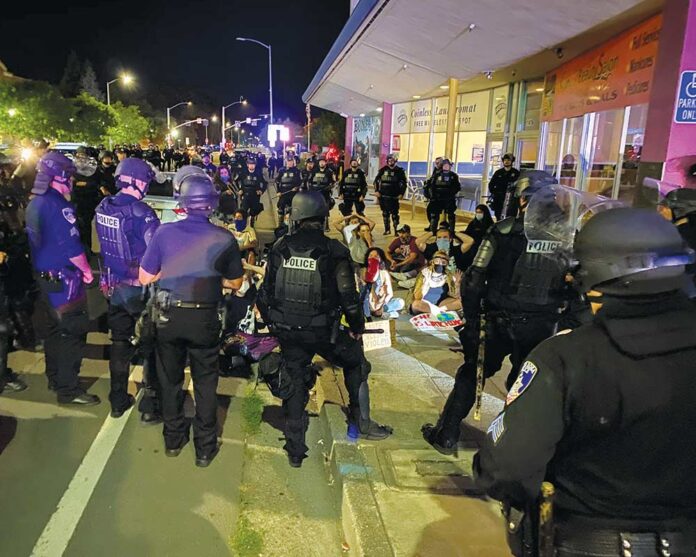
Over the past three weeks, conversations around policing in America have shifted drastically. Suddenly, defunding law enforcement has become a regular part of the public conversation, just ahead of meetings in which many governing bodies will review proposed budgets for the fiscal year, which runs July 1 to June 30 throughout California.

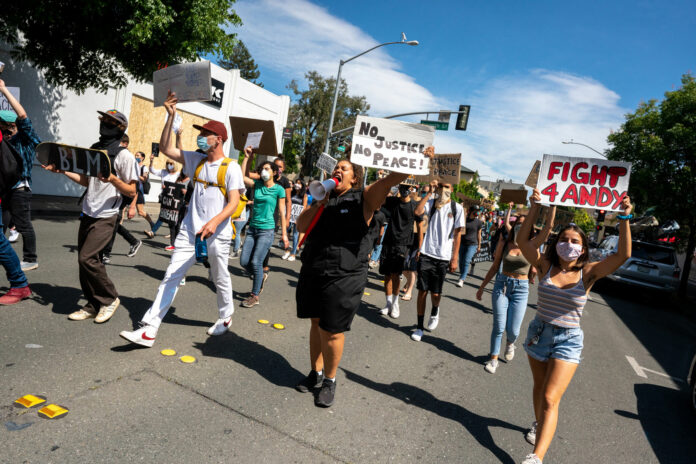
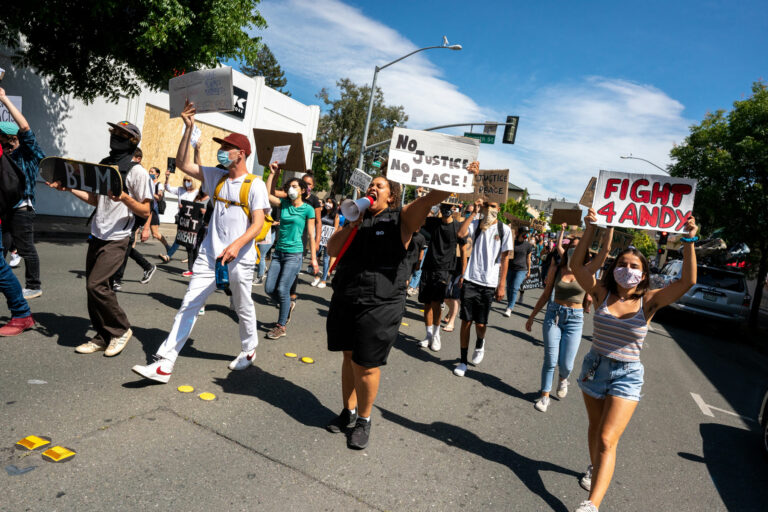
The issue came to prominence following widespread protests against police brutality and racism that started in Minneapolis after videos of a police officer killing George Floyd, a middle-aged Black man, went viral online. Since then, those conversations have become local in cities throughout the country.

While there aren’t yet answers regarding what reforms or structural changes will be enacted in the weeks and months to come, it’s worth giving some context to the current conversation.

Reform vs. Defund vs. Abolition

The logic behind reforming and defunding is very different. Reform means that the larger system is left largely unchanged, while defunding—or abolition—means that the money goes elsewhere, potentially leading to increased funding for social services.

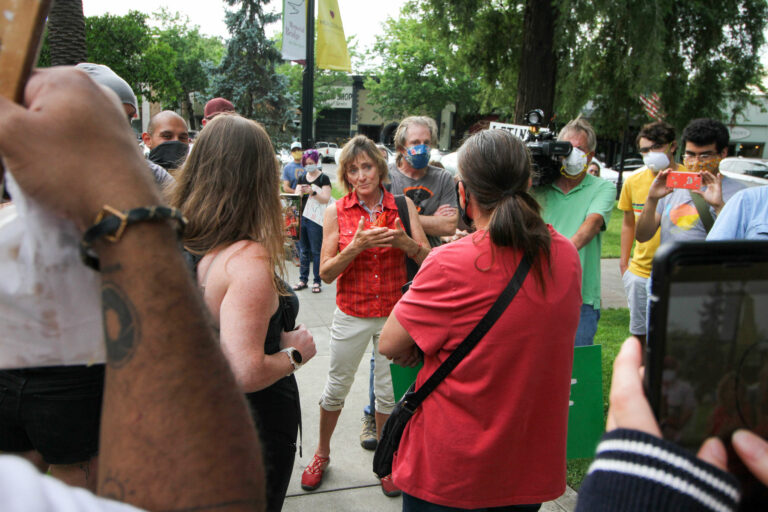
On Wednesday, June 10, mayors and law enforcement officials from nine Sonoma County cities announced a range of planned actions in response to the widespread Black Lives Matter protests. The local officials, in line with many other elected officials across the country, presented a range of reforms.

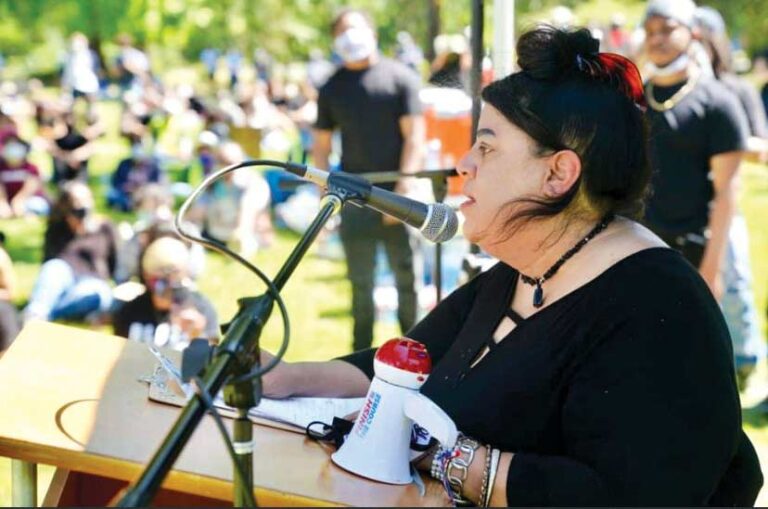
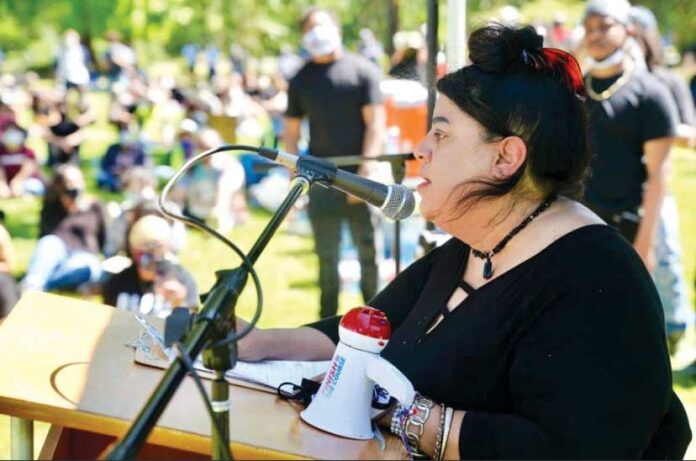
Rubin Scott, director of Santa Rosa’s NAACP chapter, spoke at the press conference. On June 11, he shared a letter he had sent Mayor Schwedhelm on June 6, which called on Santa Rosa to invest in #8toAbolition rather than #8CantWait.

8 Can’t Wait is a project that pushes police to adopt eight policy reforms to reduce police brutality. Launched in response to the killing of George Floyd, 8 Can’t Wait is a project of Campaign Zero, an organization that has been pushing for police reforms since 2015. Campaign Zero claims that these reforms would reduce police killings by 72 percent.

In response to 8 Can’t Wait, a group of police- and prison-abolitionists formed 8 to Abolition, listing eight strategies that seek to replace police and prisons with communities that are “equipped to provide for their own safety and wellbeing.”

Proponents of 8 to Abolition say that Campaign Zero’s claim of a 72-percent reduction in police killing is neither accurate nor enough. In a statement by Los Angeles Community Action Network (LACAN) and Black Lives Matter LA, they write, “#8CantWait offers a relatively easy way for police departments and government officials to appear to embrace the idea of reform without actually changing the structure of policing and without confronting powerful political interests like law and order advocates and police unions.”

Scott’s letter notes, “when we use the terms ‘dismantle and defund’ in no way are we saying there should not be law enforcement or policing agencies or we should not fund these institutions. We are saying that the current legal system as well as other systems governing Black Americans, that are funded by those same Black Americans being denied their civil liberties, need to be dismantled and reinvented.”

Scott calls for many changes, including a stronger community oversight committee which would be active in credentialing law enforcement officers every two years, community housing development for 18-to-24-year-olds, an increase in Parks and Recreation centers, and vocational training for high school students not interested in college.

Oakland-based abolitionist organization Critical Resistance says that more than 50 years of organizing for stronger civilian oversight committees has not resulted in any committees that are actually empowered to make decisions about police actions, and ultimately such committees “entrench policing as a legitimate, reformable system with a ‘community’ mandate.”

Local Reform Efforts

After a Sonoma County Sheriff’s Deputy shot and killed Andy Lopez in southwest Santa Rosa in 2013, activists put pressure on the county and city of Santa Rosa to enact reforms and establish oversight.

In 2015, the Sonoma County Board of Supervisors established the Independent Office of Law Enforcement Review and Outreach (IOLERO), a body meant to review complaints against the Sheriff’s Office among other tasks. IOLERO, which was one of many reforms recommended by the Community And Local Law Enforcement Task Force, a group formed by the county after Lopez’s death, has never been as strong or well-funded as local advocates hoped it would be.

More recently, those advocates, including IOLERO’s former director Jerry Threet, have been pushing to add a ballot measure to the November 2020 ballot that would empower IOLERO to subpoena records from the Sheriff’s Office and lock in IOLERO’s budget at one percent of the Sheriff’s total budget.

Over the past four years, even with IOLERO in place, reform of any kind has been painfully slow, according to activists.

The use of the carotid hold, a procedure in which an officer places a subject’s neck in the crook of their elbow, is one example of the relationship between the Sheriff’s Office and IOLERO. Despite a recommendation from IOLERO Community Advisory Council (CAC), a group of volunteers who spend time researching policies and interacting with the community, the Sheriff’s Office resisted giving up the technique until two weeks ago.

If performed properly, the hold restricts blood flow to the head and the subject passes out. If done incorrectly, the subject can be killed or seriously injured due to a prolonged lack of blood flow or airflow if the officer’s arm slips into an “arm bar” position.

The CAC spent over a year crafting numerous proposed changes to the Sheriff’s use-of-force policies. They formally submitted the policy recommendations last November, just two weeks before a Sheriff’s Deputy attempted to use the hold—along with a Taser and blunt force—on David Ward, a Sonoma County resident.

Ward was pronounced dead at the Petaluma Valley Hospital shortly afterwards. An autopsy released in May concluded that his death was a homicide primarily caused by “Cardiorespiratory Collapse, Blunt Impact Injuries, Neck Restraint and Application of Conducted Energy Device.”

In its response to the CAC’s recommendations last December, the Sheriff’s Office dismissed the need to stop using the hold pending more research.

“In order to truly consider this recommendation, we would need to see data that supports the assumption the carotid restraint and maximum restraint are unreasonably dangerous when applied appropriately,” the Sheriff’s Office wrote of the carotid-hold recommendation.

Then, on the afternoon of Friday, June 5, a note appeared on the Sonoma County Sheriff’s Office’s website. “Effective June 5, 2020 the carotid hold is no longer authorized. Policies and training are being updated accordingly,” a line at the top of the Sheriff’s Policies and Training web page stated.

The Sheriff’s announcement came the same day that Gov. Gavin Newsom ordered the state’s law enforcement training body to stop teaching officers to use the carotid hold.

Oversight efforts in Santa Rosa have run into their own problems. In early 2016, the city hired Bob Aaronson, a Palo Alto attorney, to audit the Santa Rosa Police Department.

Then, in late 2018, after a public disagreement with Aaronson about the scope of his work, the city and Aaronson parted ways. To date, the city has yet to hire another police auditor.

Public Safety Beyond Law Enforcement

Police are often called upon as first responders in non-criminal situations including mental-health crises. Many calls to defund the police look to free up funds to instead support alternative methods of crisis intervention. Some reformists propose strengthened partnerships between police and specialized professionals such as trauma-informed social workers.

San Francisco recently announced that their police department will stop responding to non-criminal calls and will be replaced by trained, unarmed professionals. This concept is not novel—White Bird Clinic in Eugene and Springfield, Oregon have operated Crisis Assistance Helping Out On the Streets (CAHOOTS) since 1989. This non-police, 24-hour mobile crisis intervention service operates through a dispatcher and sends a team of one medic and one crisis worker to provide immediate stabilization to people in need.

Since 2012, Sonoma County has had a Mobile Support Team (MST) whose job is to “provide field-based support to requesting law enforcement officers responding to a behavioral health crisis.” Staff at MST are described as “licensed mental health clinicians, certified substance abuse specialists, post-graduate registered interns, mental health consumers and family members.”

In 2019, MST expanded their police partnerships to reach some areas of West Sonoma County. Their service does not extend north of Windsor.

Unlike CAHOOTS, Sonoma County’s MST operates in close partnership with local police departments. A civilian in need cannot call to request that the MST be dispatched; the police themselves make the assessment that MST’s services would be of use.

During the Healdsburg City Council meeting of June 15, 2020, Healdsburg Police Chief Kevin Burke presented ideas to the community for experimental police reforms that grew out of a recent conversation he had with the Criminology Department at Sonoma State University. Among his proposals, he pushed for hiring a licensed clinical social worker (LSCW) who would work for the Healdsburg Police Department.

While Chief Burke stressed the value that a social worker’s training could add to community policing, he said that he believes such change must happen from within the police department, rather than outside of it.


PG&E pleads guilty in Camp Fire case

By Todd Guild of The Pajaronian

Pacific Gas and Electric Company (PG&E) on Tuesday pleaded guilty to 84 counts of involuntary manslaughter and one count of unlawfully starting a fire.

The rare acknowledgment of corporate culpability brought to an end two-years of litigation that stemmed from the Nov. 8, 2018 blaze, which burned more than 150,000 acres, razed the town of Paradise, destroyed more than 18,000 structures and killed 85 people.

Standing in Butte County Superior Court, PG&E CEO and President Bill Johnson said he was there to “accept responsibility for the fire here that took so many lives and changed these communities forever.”

“I have heard the pain and the anguish of victims as they’ve described the loss they continue to endure, and the wounds that can’t be healed,” he said. “No words from me could ever reduce the magnitude of such devastation or do anything to repair the damage. But I hope that the actions we are taking here today will help bring some measure of peace.”

Nobody from PG&E will face criminal charges or prison time in the case, as no individuals have been charged. But the company agreed to pay a $3.5 million fine, and a half-million dollars to cover the cost of the investigation.

Court filings refer to PG&E’s “longstanding corporate culture of favoring profits over public safety” and its “ongoing failure to comply with its safety obligations.

”The company has also been accused of failure to remove combustible vegetation from power lines, transformers and other equipment, and failing to update its aging infrastructure.

The Camp Fire was not the first time PG&E has found itself in legal hot water for its role in disasters. It was convicted in 2016 for the gas pipeline explosion in San Bruno that killed eight people.

The company has filed for bankruptcy and is in the process of paying $25.5 billion in settlements to cover damages from the Camp Fire and other fires. The details of that case—which includes $13.5 billion for fire victims—will be completed by June 30.

“I wish there were some way to take back what happened or take away the pain of those who’ve suffered,” Johnson said. “But I know there’s not. What I can say is this: First, PG&E will never forget the Camp Fire and all that it took from this region. We remain deeply, deeply sorry for the terrible devastation we have caused.

”Johnson said that PG&E has worked to help the Paradise region recover and rebuild, and said the company is “ working hard” to compensate the victims. He also discussed the lessons he says PG&E learned from the Camp Fire, and outlined new measures such as improved inspection and operational protocols. The company also is “hardening” its energy system, Johnson said, and is bolstering its technology to better predict and detect extreme weather conditions.

“We know we cannot replace all that the fire destroyed,” Johnson said. “We do hope that by pleading guilty and accepting accountability, by compensating victims and supporting rebuilding efforts, and by making significant, lasting changes in the way we operate, we can honor those who were lost and help this community move forward.”

PG&E pleads guilty in Camp Fire case

By Todd Guild of The Pajaronian

Pacific Gas and Electric Company (PG&E) on Tuesday pleaded guilty to 84 counts of involuntary manslaughter and one count of unlawfully starting a fire.

The rare acknowledgment of corporate culpability brought to an end two-years of litigation that stemmed from the Nov. 8, 2018 blaze, which burned more than 150,000 acres, razed the town of Paradise, destroyed more than 18,000 structures and killed 85 people.

Standing in Butte County Superior Court, PG&E CEO and President Bill Johnson said he was there to “accept responsibility for the fire here that took so many lives and changed these communities forever.”

“I have heard the pain and the anguish of victims as they’ve described the loss they continue to endure, and the wounds that can’t be healed,” he said. “No words from me could ever reduce the magnitude of such devastation or do anything to repair the damage. But I hope that the actions we are taking here today will help bring some measure of peace.”

Nobody from PG&E will face criminal charges or prison time in the case, as no individuals have been charged. But the company agreed to pay a $3.5 million fine, and a half-million dollars to cover the cost of the investigation.

Court filings refer to PG&E’s “longstanding corporate culture of favoring profits over public safety” and its “ongoing failure to comply with its safety obligations.

”The company has also been accused of failure to remove combustible vegetation from power lines, transformers and other equipment, and failing to update its aging infrastructure.

The Camp Fire was not the first time PG&E has found itself in legal hot water for its role in disasters. It was convicted in 2016 for the gas pipeline explosion in San Bruno that killed eight people.

The company has filed for bankruptcy and is in the process of paying $25.5 billion in settlements to cover damages from the Camp Fire and other fires. The details of that case—which includes $13.5 billion for fire victims—will be completed by June 30.

“I wish there were some way to take back what happened or take away the pain of those who’ve suffered,” Johnson said. “But I know there’s not. What I can say is this: First, PG&E will never forget the Camp Fire and all that it took from this region. We remain deeply, deeply sorry for the terrible devastation we have caused.

”Johnson said that PG&E has worked to help the Paradise region recover and rebuild, and said the company is “ working hard” to compensate the victims. He also discussed the lessons he says PG&E learned from the Camp Fire, and outlined new measures such as improved inspection and operational protocols. The company also is “hardening” its energy system, Johnson said, and is bolstering its technology to better predict and detect extreme weather conditions.

“We know we cannot replace all that the fire destroyed,” Johnson said. “We do hope that by pleading guilty and accepting accountability, by compensating victims and supporting rebuilding efforts, and by making significant, lasting changes in the way we operate, we can honor those who were lost and help this community move forward.”

Conscious Beat: Kayatta drops debut album on Juneteenth

0

It’s been a roller coaster of a year for Sonoma County educator and hip-hop artist Kayatta.

“The last few months have been life-changing,” she says. “Life has been different than what I’m accustomed to.”

Originally from Oakland, Kayatta has lived in Sonoma County for several years. Last summer, Bohemian and Pacific Sun readers awarded Kayatta the NorBay for “Best Hip-Hop Artist” in the North Bay, and soon after Creative Sonoma awarded her an arts grant to help produce her full-length, debut album.

The album was originally scheduled to come out in March of 2020, but Kayatta faced early setbacks when she lost material in last year’s Guerneville flooding, and again more recently with the statewide, Covid-19 shelter-in-place that took effect in March.

Undaunted, Kayatta spent the last two months finishing the record remotely with her producing partner Shinobi-1, and she is ready to release her debut, Beautiful and Messy, with a live online release-party on June 19; a date which also marks Juneteenth, the oldest nationally-celebrated remembrance of the ending of slavery in the United States.

“I don’t know if the universe was aligning everything up, but with the Black Lives Matter movement happening, I get to drop my album on this day,” she says.

While Kayatta wrote the majority of the album’s 11 tracks well before the pandemic and the recent protests against police brutality, her socially-conscious lyrics are just as relevant today as they were when she wrote them.

“The name of the album changed, the artwork for the album changed, the content has pretty much stayed the same,” she says. “The songs were written a long time ago, so to have these songs be aligned with where we are today, it’s like, OK, maybe we were supposed to drop the album now.”

Musically, the album recalls the beats and melodies groups such as A Tribe Called Quest and female rap artists such as Ms. Lauryn Hill pioneered in the ’90s, and Kayatta also includes some spoken word tracks, adding a poetic aesthetic to the album.

The album’s title, Beautiful and Messy, is inspired by Kayatta’s recent life experiences and a panel discussion she heard on the topic of God’s plans.

“I didn’t even know if I wanted to be there,” she says, of the discussion. “But this lady on the panel started talking about our relationships in life, and she said, ‘God never intended for your journey to be smooth, it’s going to have some complexities to it.’ She said, ‘It’s going to be beautiful and it’s going to be messy.’ And that sounded like my story.”

“My friends will tell you I’ve been doing music a long time and the whole journey to get here has had so many roadblocks,” Kayatta says. “But when you finally get to the core of everything, that’s the beautiful part.”

Beautiful and Messy not only describes Kayatta’s journey, it also perfectly encapsulates many of the feelings surrounding the recent nation-wide protests and renewed Black Lives Matter movement.

“With the Black Lives Matter movement, racism is on full display and it’s ugly,” Kayatta says. “But the beauty is our youth who are up and on the front lines. People are actually listening and they want to educate themselves to really impact change. This is the first time I’ve ever felt hopeful about it, this is the first time I’ve felt that maybe something will change.”

Beautiful and Messy gets its official Internet release on June 19, when Kayatta hosts a live event on her Facebook and Instagram pages. In addition to playing the album, she will give backstories to the songs, discuss June 19’s historical significance and talk about how today’s current events reflect the ongoing progress towards equality.

“This is the first time I’ve had my white friends hit me up and really want to have conversations or say, ‘How are you doing or what can I do?” she says. “The answer is, always educate yourself, but also be willing to have uncomfortable conversations. What happens a lot of times is we just dip out when conversations get heavy, and I do it too as a Black woman, but I think if we find a tolerance to remain present in those conversations, there’s so much value in that.”

“Being a Black person in America, nobody will understand that unless they’re Black; period,” she says. “If you listen to music and you listen to the music that we’ve created over the years, we’ve been saying the same story over and over again, just in different ways. Music is a great vehicle to tell our stories.”

Kayatta hosts the album-release for ‘Beautiful and Messy’ online Friday, June 19, at 8pm on her Facebook and Instagram.

Two Mayors Face Constituents’ Ire After Response to Protests

On June 1, in the early days of the ongoing Black Lives Matter protests, both Mill Valley and Healdsburg held City Council meetings streamed online. At each meeting, the towns’ mayors were asked questions inspired by the Black Lives Matter movement and recent protests against police brutality. 

Mill Valley Mayor Sashi McEntee and Healdsburg Mayor Leah Gold’s answers disappointed and angered residents of both towns, prompting online recall petitions, letters from constituents and protests.    

Tonight, in response to the criticisms, both towns’ governing councils are scheduled to discuss racism and possible police reforms. 

Healdsburg’s City Council meeting begins tonight at 6pm. Information about how to view the meeting is available on page 6 of the meeting agenda. Healdsburg police will give a presentation about the department’s use-of-force policies towards the end of the meeting.

Mill Valley’s City Council meeting starts at 5:30pm online. The council will devote the entire meeting to a “Community Discussion Regarding Black Lives Matter and Development of a City Action Plan to Address Racial Injustice and Inequities in Mill Valley.” Public comment must be received by 4pm.

In Mill Valley, the controversy began when Mayor Sashi McEntee dismissed a question submitted by a constituent wondering, “What is Mill Valley doing to show that Black lives matter?” 

Mayor Sashi McEntee replied, “Okay, thank you very much … . It is a Council policy that we do not take action on issues that are not of immediate local importance, but I do appreciate hearing everyone’s comments.” 

The policy she referred to is California’s Ralph M. Brown Act, which guarantees the public’s right to comment at meetings of local legislative bodies and somewhat limits the council’s responses to the public.

On the same night in Healdsburg, Councilmember Joe Naujokas asked his fellow council members to schedule a discussion about police use of force in Healdsburg and how the elected leaders of city government can lead their community in having difficult conversations about the town’s relationship to police. 

Mayor Leah Gold replied to Naujokas, “My reaction to that is we don’t have that particular problem in Healdsburg, because we have a very good police chief who is on top of these issues and trains his staff in appropriate conflict-resolution methods. To me … it’s a solution looking for a problem …”

After further conversation, the Healdsburg City Council failed to add the topic to an upcoming agenda and moved on. 

Naujokas said he was “absolutely surprised” by fellow councilmembers’ reactions. During the meeting, he told the Council, “I think, if anything, it would be a way for us to highlight the fantastic work that our [Police Department] is doing and to quell any concerns from our public.” 

Many Mill Valley and Healdsburg residents were shocked by their respective mayor’s  responses, hearing both as assertions that their towns don’t have problems with racism. 

In the weeks since the June 1 meetings, criticism of their original statements has continued, despite attempts by both mayors to address the issue at public protests. At the time this article was published, a petition calling for Mayor Gold’s resignation had 1,845 signatures and a petition calling for Mayor McEntee’s resignation had 8,694 signatures. 

Both towns are similar in size and majority white—Mill Valley’s population is approximately 83 percent white and Healdsburg’s is approximately 62 percent white. In Healdsburg, more than one-third of the population is Latinx. In Mill Valley, less than eight percent of the population is Latinx. Both towns have fewer than one percent Black residents.

Studies show that while populations of color in the North Bay are growing, economic inequalities persist.

Between 2010 and 2014, Sonoma County’s total population grew seven percent; however, its population of people of color grew by 46 percent. During the same period, Marin County’s total population grew 4 percent, while the number of people of color grew by 34 percent. 

In 2014, National Equity Atlas created an Equity Profile that looked at economic disparity along racial lines in the Bay Area’s nine counties. This study found that, with racial equity, Latinx Bay Area residents would see their average annual income increase by 131 percent and Black residents would see a 102-percent increase.

In a speech at a June 4 protest in Mill Valley, McEntee acknowledged that she had used a “poor choice of words,”  but reiterated that “we do have a council policy that we don’t take up national issues.”

In an impassioned speech in response to McEntee’s comments caught on video by Lorenzo Morotti of Marin Independent Journal, Mill Valley resident Monica Morant said, “If we continued to follow rules and laws, I would still be sitting at the back of the bus.” 

During Morant’s speech, someone in the crowd called for McEntee to step down. Morant replied, “I’m not calling for resignation, I want action … I want all of us to work on this, [to] look at each other.”

At a June 11 protest in Healdsburg, a crowd of about 250 people gathered by 6:30pm. Chants of “Mayor Gold resign now” reverberated loudly as various Healdsburg residents of color spoke to Gold and the council. Gold said that the people who voted for her were not at the protest and that they still support her.                                 

In preparation for the event, two Latinx Healdsburg residents, Lupe Lopez and Cristal Perez, invited Black and Indigenous people of color living in Healdsburg to share their experiences of racism in writing. Over 90 of these stories of racism were then displayed on notecards in  Healdsburg Plaza’s gazebo for the public to read before and during the June 11 protest.

While 36 of the stories centered around school and childhood experiences, at least 50 of the notecards described experiences that took place outside of school. These experiences ranged from stories of workplace discrimination to discriminatory service at restaurants to housing and healthcare experiences. Eight stories described police encounters in which residents say they were racially profiled by officers and/or the people who called the police on them. 

Gold told the Bohemian, “It makes me feel very sad to read about their experiences, of course. They’re all talking about hurtful things and I think mainly most of them seem to have written about things that happened growing up and as young people in school.”

Lopez and Perez said that, while they don’t know of any recent cases of police use-of-force in Healdsburg, the local police department should be speaking out about this nationwide issue and be taking action to make sure that there’s justice for the lives of all Black people, Indigenous people and other people of color taken at the hands of police. 

“We have to remember that it’s not only about justice for the lives lost, but a fight for change and reform of a system that protects those in uniform rather than those without one,” they said.

Virtual Possibilities: San Francisco Black Film Festival Adapts to Covid-19

0

For more than 20 years, the San Francisco Black Film Festival has been “healing the world one film at a time” with African-American cinema that reinforces positive images and dispels negative stereotypes while showcasing a diverse collection of films from both emerging and established filmmakers.

In 2020, amid the worldwide Covid-19 pandemic, the multicultural festival adopts the theme “Virtually, It’s Possible” to screen its online film program from June 18 through August 2.

“Given our changed world, the San Francisco Black Film Festival has adjusted based on our new reality,” says Kali O’Ray, festival co-director and son of festival-founder Ave Montague. 

“The Coronavirus, although regrettable, has resulted in some positive things as we are cloistered in our homes, young and old,” O’Ray says. “Devouring media together creates family discussions and growth. Workers are breaking out of the ‘brick and mortar’ of going back to work and that is a path for entertainment as well, especially among young people, as I see it.”

The San Francisco Black Film Festival always takes place in conjunction with Juneteenth, the oldest nationally-celebrated commemoration of the ending of slavery in the United States, which occurs annually on June 19.

This year is no different, with SFBFF’s virtual version opening on June 18. This year’s staggered-online film-release schedule features a variety of independent films ranging from drama to comedy that will each be available to stream over a two-week period.  The Festival will also revisit some of the most popular films from its 22-year history. 

“There is that old saying that something is virtually impossible; yet the San Francisco Black Film Festival is ‘Virtually, Possible,’” said Katera Crossley, who co-directs the festival with her husband O’Ray.  

“The San Francisco Black Film Festival is flipping the script during this grave time in America and the world,” Crossley says. “The show must go on despite the worldwide pandemic. We are celebrating 22 years of bringing films from the African Diaspora from around the world to San Francisco to create positive dialogue between people about universal human experiences and as a result giving people a better understanding of each other.”

Films scheduled to screen virtually in this year’s festival include hip-hop musical It’s a Wonderful Plight, which manages to attack the serious issues of racism and systemic oppression in a light-hearted way; mystery-thriller The Birth of Deceit, the feature-film debut from rising director Yaw Agyapong; writer-director Derrick Perry’s dramatic Pink Opaque, which tackles themes of love, family, hardships and life in Los Angeles; the arresting 2015 dark comedy Driving While Black, based on the real-life experiences of writer and lead actor Dominique Purdy; the 2013 biographical drama Nzinga, Queen of Angola, about a 17th-century warrior woman who fights against Portuguese colonizers for the independence of Angola in Central Africa; and many other films both new and old.

When Ave Montague­—an arts publicist and manager and a fashion executive—founded the nonprofit San Francisco Black Film Festival in 1998, she wanted to create a platform for Black filmmakers, screenwriters and actors to present their art. Now run by O’Ray and Crossley, the festival continues to remain an inclusive and multicultural expression of the African-Diaspora experience. As a competitive film festival, SFBFF has screened more than 10,000 films from around the world and continues to seek out emerging filmmakers, screenwriters and actors and celebrate established artists and contributors to the cinematic legacy of African Americans; expanding the notions of Black filmmaking on a global scale.

San Francisco Black Film Festival sponsors include, to date, San Francisco Arts Commission, California Arts Commission, Bill Graham Productions, Mayor London Breed, Key to the City of San Francisco, KPOO, KPFA, San Francisco BayView Newspaper, The Boom Boom Room, New Community Leadership Foundation, Inc., LaHitz Media, Film Bread and Wright Enterprises.

For more information about San Francisco Black Film Festival XXII, visit sfbff.org.

More than 100 curfew violators placed in unsafe holding conditions

0

On the night of June 2, more than 111 people were arrested for curfew violations following a march against police brutality, according to the Sonoma County Sheriff’s Office. 

Earlier that Tuesday evening, approximately 700 people gathered in Roseland to remember Andy Lopez, who was shot and killed by a Sonoma County Sheriff’s deputy in 2013 when he was 13-years-old. The June 2 vigil, honoring what would have been Lopez’s 20th birthday, came amidst daily nationwide protests against police brutality and systemic racism. 

Those arrested and held overnight at the Sonoma County Main Detention Facility included protesters, volunteer medics and bystanders, including people driving home and people watching from the sidewalk in front of their homes. Video revealed that many arresting officers were unmasked, violating the Santa Rosa Police Department’s Covid-19 protocols and the County’s Health Orders. Once transported from the scene of the arrest, adult arrestees were held for eight to 12 hours in conditions they describe as unsafe, unsanitary and inhumane.  

Though the Sheriff’s Office said in a statement to the public that they have “robust hygiene protocols in place to protect everyone from the spread of Covid-19 as much as possible,” those arrested largely dispute that the protocols were followed. The volunteer groups H-PEACE (Health Professionals for Equality and Community Empowerment) and Mask Sonoma say that holding conditions, which included overcrowding in cells and lack of basic sanitation and hygiene, pose significant health risks to arrested individuals and the public in our current pandemic conditions which call for mask-wearing, physical distancing, and hand-hygiene to stem the spread of Covid-19. 

On June 1, the City of Santa Rosa declared a local state of emergency and implemented a curfew June 1 through June 4 from 8pm to 5am, citing incidents of violence, looting and vandalism in the previous days. In a June 1 curfew announcement, Santa Rosa City Manager Sean McGlynn said the curfew was meant to protect the community from those who meant to do harm. Santa Rosa Mayor Tom Schwedhelm called the curfew “a tool to facilitate peaceful protests without the disruption of violent and destructive criminal behavior.” All four arrestees who spoke to the Bohemian said that the June 2 protest remained non-violent.

Around this time, curfews were briefly implemented in cities and counties all over the US., though many were canceled after civil-rights advocates said they violated protesters’ rights to assemble and exercise free speech. The City of Santa Rosa did not lift its curfew early, but did allow it to expire on June 4. 

Members of H-PEACE and Mask Sonoma were arrested. These groups followed the march to provide medical assistance and masks to protesters. Two H-PEACE doctors, who wished to use the pseudonyms Michelle and Rachel, were arrested around 9:40pm. 

Michelle said, “About four male officers took the two of us down a darker street and did not have their body cameras on. I had to ask multiple times for them to turn their body cameras on and even then, some switched them off a few minutes later.” She said that the cameras have a red blinking light when they are recording.

Santa Rosa Police Lieutenant Jeneane Kucker said, “We are not aware of anyone asking officers to turn cameras on.” 

Michelle said the situation scared her.

Kate is a licensed social worker who was also arrested while volunteering with H-PEACE. She said, “I was searched by a male officer. He put his hand in my front pants pocket to check it—the same pocket five times. It felt really invasive.”

Most arrestees were booked into the detention facility after Michelle and Rachel arrived. Michelle and Rachel said that most women arrested appeared to be in their teens and 20s and most were people of color—Latina and black.  

Tess Wilson, 22, was driving with a friend near the protests when she realized that they were walled-in by riot police. Police placed them under arrest. Wilson said her wrists were zip-tied behind her back for at least three hours.

“They redid my zip-ties a few times,” she said. “I had to beg because my circulation was getting cut off. My hands were hurting a lot.”

Two days later, Wilson still felt numbness in both hands. 

Kate said she looked at the wrists of at least 20 women at the jail.

“They had red marks, bruises, cuts from how tight the zip ties were,” she said. “Their hands were still swollen hours later.”

At the detention facility, about 46 women were held, with most kept shoulder-to-shoulder in one holding cell. Ten women were held between two cells on the second floor. Arrestees report that hand sanitizer was not made available to them, which contradicts a protocol described by the Sheriff’s Office. The Sheriff’s Office did not respond to a media request for comment. 

In the main holding area, there were two bathrooms that had two bars of hand soap. Multiple people reported that someone vomited in one bathroom and it was not cleaned for more than five hours.

Rachel said, “There was no trash can, so we had to throw sanitary products on the floor.” 

Michelle added, “Every hour, staff would sign a sheet saying they’d serviced the bathroom, but no effort was actually made.” 

Kate said, “I asked an officer for a Clorox wipe. I said ‘I would like to wipe down the areas people are touching.’ The officer told me, ‘Those are not for you.’”

Miles Sarvis-Wilburn, of Mask Sonoma, said unmasked police officers interfacing with the public has been an ongoing concern in Santa Rosa throughout the Covid-19 epidemic. 

As of June 7, there have been 642 positive Covid-19 cases in Sonoma County, which is approximately 0.12 percent of the population. As of May 25—the last time a public update was provided—there have been nine confirmed Covid-19 cases among employees of the Santa Rosa Police Department—8.1 percent of their staff.

“Covid-19 caseload among SRPD is drastically higher than the general population,” Sarvis-Wilburn said. 

In a statement sent to the Bohemian regarding mask use, Santa Rosa Police Chief Ray Navarro said, “During the night, it came to my attention that some of our SRPD officers were failing to wear their department-issued face coverings … as is required Department protocol and aligns with Sonoma County’s Public Health Order to help stem the spread of Covid-19. As the Chief, I take full responsibility for this lapse in procedure. I have taken immediate action to rectify this.” 

Fourteen juveniles were among those arrested.

Chief Probation Officer David Koch said, “About eight youth were brought to Juvenile Hall on curfew violations. Six of these youth were released that morning or during the day…”

The Bohemian has not spoken to juveniles arrested about their experience at Juvenile Hall. 

In a press release, H-PEACE and Mask Sonoma call on law enforcement to, “initiate outreach for COVID-19 testing, contact tracing, and assessment for isolation and quarantine in individuals who have been exposed to unsafe law enforcement practices, including follow up mental health support.” They also call on an investigation into the detention practices that preceded the events of June 2.  

The release also calls on law enforcement and public officials, “to institutionalize anti-racist practices … . The public needs to know how law enforcement is protecting them in both the overlapping public health crises of the current COVID-19 pandemic and the long-standing epidemic of institutionalized violence against black and brown people.”

By Chelsea Kurnick

Let My People Be Free to Breathe

0

Returning back to school this year—50 years old, an Afro-Latina, a disabled student—I chose to dive into the community headfirst. I did not wish to allow my adversity to define my experience but to influence how I chose to engage with other students, faculty, and staff at Santa Rosa Junior College. I began joining various clubs, meeting students, planning events, and through time, began to understand that there was a real need for black and brown students to be more active, present and supported on campus. I joined various racial-affinity groups, social groups, and more. I ended the first semester with a 4.0 GPA and was appointed Vice President of Clubs of Petaluma.

Once the Pandemic had begun its onslaught of altering my communities and what we knew as normal, I believed nothing could get worse. That’s when the Black Lives Matter movement re-emerged in the wake of the deaths of Breonna Taylor, Tony Mcdade and George Floyd. 

Immediately, the Black Student Union, various community leaders and I began planning a community event that promoted the leadership and presence of black voices and protested against police brutality and injustice. We came up with a series of demands, a program that will ensure Santa Rosa Junior College promotes racial equity and inclusion. 

We will no longer be silent. These are our demands. 

  1. We DEMAND FREE tuition for Black and Indigenous students.
  2. We DEMAND Black Scholarships. 
  3. We DEMAND an Office for Black Student Development starting FALL 2020. 
  4. We DEMAND a more racially-diverse faculty and staff.
  5. We DEMAND the hiring of a Black Counselor, specifically, Dianna L Grayer.
  6. We DEMAND a Black/Ethnic Studies Department be implemented.
  7. We DEMAND Proper Comprehensive Racial Awareness training to all Staff, Faculty and Administration.  
  8. We DEMAND SRJC Create a Strategic Plan that will increase Retention Rates for marginalized students.
  9. We DEMAND the IMMEDIATE Removal of Don Edgar from the Board of Trustees. ANYONE in Leadership, Staff, Faculty or Administration who has been accused of Embellzelment, Bribaries, Discrimination, Bullying, Stigmatizing or Harassing should be removed from their positions IMMEDIATELY.
  10. We DEMAND that Campus Security shows fair and equal treatment regarding events that are hosted by the BSU.
  11. We DEMAND that Summer Classes not have Due Dates or Deadlines.
  12. We DEMAND that Dr. Chong come to our BSU meeting once a semester to keep us posted on the progress of our DEMANDS.  
  13. WE DEMAND THE JOBS OF THE FACULTY, STAFF AND ADMINISTRATORS THAT SUPPORT US NOT BE THREATENED DUE TO THEIR SUPPORT OF BLACK STUDENT UNION STUDENTS.

We don’t want to be pacified. It’s time for a change.
Delashay Carmona Benson is a re-entry college student at Santa Rosa Junior College where she advocates for inclusivity, diversity and equity.

Reps Cosponsor Police-Reform Legislation

0

North Bay Reps. Jared Huffman and Mike Thompson are among dozens of democratic Congressmembers to co-sponsor federal legislation aimed at reforming law-enforcement agencies across the country.

Introduced on Monday, June 8, the Justice in Policing Act of 2020 is the Democrats’ response to the daily protests across the nation.

The list of changes proposed in the legislation includes a countrywide ban on chokeholds, carotid holds and no-knock warrants. The bill would also require state and local law enforcement “to use existing federal funds to ensure the use of police body cameras” and create a National Police Misconduct Registry intended to prevent officers with a history of violence or problematic behavior from transferring to a new department.

All of this sounds good, but it may not match the urgency many people on the street want. Even if the police-reform legislation passes, meaningful law-enforcement agency reform will require ongoing oversight and a change in officers’ mindsets, not just new rules.

Rules, as Americans have witnessed over and over again, can be broken or blatantly ignored when a law-enforcement agency lacks a culture of accountability.

PG&E Plans Move to Oakland

As the Pacific Gas and Electric Company awaits word on whether its bankruptcy exit plan will be approved before June 30, the utility announced plans to move its corporate headquarters from downtown San Francisco to Oakland beginning in 2022.

“Oakland is the perfect fit for us for a host of reasons,” a PG&E executive said in a statement on June 8. “It is a thriving hub of industry and innovation in our state, and we look forward to establishing our headquarters and contributing to life there.”

The bigger issue question still remains: How will PG&E fare once it successfully exits bankruptcy court—an outcome that looks likely in the next few weeks—while the state heads into yet another fire season?

Nobody knows, but adding another round of widespread power shutoffs or wildfires—PG&E-induced or not—to an ongoing pandemic and protests against police brutality could make the next six months even more eventful. 

Our unhelpful advice? Buckle up and buy some extra batteries.

Head West Marketplace supports purveyors in pandemic

The journey for the modern maker from concept to customer is not an easy one, especially for small artisan producers and brands trying to find an audience for their products and services in a crowded online marketplace.

Jimmy Brower was one such creative, a North Oakland retail professional who left the corporate world to pursue his own desert-inspired lifestyle brand, West Perro, in 2016. Through the brand, Brower creates and sells sun hats, jewelry and other items in his online shop. In figuring out how to sustain and survive as a self-employed creative in an expensive Bay Area, Brower knew he had to create a community.

“I would find myself participating in craft shows and markets, and my network broadened,” he says. “All these things that are a benefit in the small business world; but the things I saw that were lacking in these larger fairs and markets was accessibility, affordability and diversity.”

In 2018, Brower founded Head West Marketplace to provide a diverse array of local purveyors a pop-up platform with which to share and sell their products and services in a physical space akin to a farmers’ market, only this one features art and crafts instead of fruits and vegetables.

“I wanted to build something that was affordable for new or emerging artists, or small businesses, or makers, or shop owners,” Brower says. “And I wanted to make it accessible to people in their own community, their own neighborhood.”

The first few months of Head West Marketplace in 2018 happened 10 blocks from Brower’s house, at Bay Street Shopping Center in Emeryville. He and the artisan crafters and makers who participated in those early markets saw immediate results.

“People were coming up to me that had not been exposed to small business in the form of sole entrepreneurs just working out of their households,” he says. “There were a lot of conversations happening about the value of time and materials and ultimately the value of products and services when it’s coming from a human being versus a corporation.”

While the pop-up space in Emeryville could accommodate 20 booths of local purveyors, Head West Marketplace quickly grew beyond that capacity and expanded its market at different venues, moving between Hangar One Distillery in Alameda and the Temescal District on Telegraph Avenue in North Oakland.

“I started to see doors open for all shapes and sizes of makers in the Bay Area,” Brower says. “These individuals needed an outlet from out behind their computer screen to physically connect with people, whether it be their already existing customer base, their followers on social media or just their family and friends to test out their ideas and creations. “

Brower also found that customers were coming to these marketplaces from the North Bay, the South Bay and the far East Bay. In 2019, Head West Marketplace doubled from two venues to four, adding pop-up markets at 1717 Fourth Street in Berkeley and at the Barlow in Sebastopol.

While Brower is still the one-man operation behind Head West, he acknowledges he does not do it alone, and he says he’s blessed to work with partners at these community-minded venues to create space for the makers and creators.

“It’s a passion,” he says. “It’s a passion for seeing people’s dreams grow into physical realities.”

All of this rests, in some way, in Brower’s childhood, growing up in a small town in Illinois, with a mother who worked graveyards shifts at a hospital, a father who worked with his hands as a welder and a stepfather who would come home covered in soot from his job in a coal mine.

“Being inspired by that type of blue-collar hard work helped me to infuse that into what I’m doing today,” he says.

Today looks very different from the 2020 that Brower envisioned for Head West Marketplace, which was poised to hold an outdoor market nearly every weekend at one of its four venues beginning in March and running through the holidays.

“I led with this mentality of, ‘2020 is the year to see things clearly,’” he laughs. “I started hearing those things being echoed, that this was THE year of things happening. And things are happening, absolutely, important things are happening. But if I put myself in the silo of small business and those stay-at-home makers and crafters and designers, it’s been very difficult.”

Head West did host its first market of the year on March 7 at the Barlow Center in Sebastopol.

“I was elated,” Brower says, of the event that drew 3,000 people. “There was so much success, so much optimism and so much positivity with that bellwether marketplace.”

Less than a week later, most of the Bay Area issued a stay-at-home order to stop the spread of Covid-19. Brower was disheartened to have to cancel his Head West markets, ultimately through June.

Yet, Brower says he’s also seen uplifting news in that time. He’s networked with other like-minded market organizers up and down the coast, inspiring him to continue to support makers and purveyors with online resources and exposure.

To that end, Head West Marketplace has assembled a comprehensive resource guide for Bay Area small businesses dealing with the Covid-19 fallout. These resources include grant and loan opportunities, and Brower’s informed opinion on options for staying afloat during these dire economic times.

“I’m one of those business-minded people that says loans are for growth, not for crisis, and there were a lot of predatory lenders trying to capitalize on panicked individuals,” he says. “I built the online resources in the mindset that it is about making sure you survive after this moment, what that looks like in terms of personal finance and income, and what it means for your business revenue.”

In addition to providing resources for business owners, Head West is also sharing a list of Bay Area–and-beyond makers and designers who have pivoted to creating customizable and artistic face coverings during the ongoing pandemic.

Beyond supporting the shop-local scene, recent events in the U.S. have prompted Brower to join the growing chorus of “Black Lives Matter,” and when Head West returns to public events, Brower is making commitments to support Black makers and businesses, highlighting many planned actions listed on the Head West website such as providing no-cost booth-space scholarships at every marketplace for Black-identified participants.

Brower is also assembling a resource and support directory for Black empowerment in the Bay Area on Head West’s site, with contact information for dozens of organizations including the local NAACP chapter, defense funds, lawyers’ guilds and more.

“I see myself on this rollercoaster—I don’t know how I got on it, but I look around and I see everyone I know sitting on it with me, we’re all experiencing the same thing but we’re all having different emotions because it’s affecting us on an individual level,” Brower says. “We don’t know when it’s going to end, but when it does end we are going to get off the ride together, as one.”

headwestmarketplace.com

Rethinking Public Safety As Protests Continue

Suddenly, defunding law enforcement has become a regular part of the public conversation, just ahead of meetings in which many governing bodies will review proposed budgets for the fiscal year, which runs July 1 to June 30 throughout California.

PG&E pleads guilty in Camp Fire case

The rare acknowledgment of corporate culpability brought to an end two-years of litigation that stemmed from the Nov. 8, 2018 blaze, which burned more than 150,000 acres, razed the town of Paradise.

PG&E pleads guilty in Camp Fire case

The rare acknowledgment of corporate culpability brought to an end two-years of litigation that stemmed from the Nov. 8, 2018 blaze, which burned more than 150,000 acres, razed the town of Paradise.

Conscious Beat: Kayatta drops debut album on Juneteenth

It’s been a roller coaster of a year for Sonoma County educator and hip-hop artist Kayatta. “The last few months have been life-changing,” she says. “Life has been different than what I’m accustomed to.” Originally from Oakland, Kayatta has lived in Sonoma County for several years. Last summer, Bohemian and Pacific Sun readers awarded Kayatta the NorBay for “Best Hip-Hop Artist”...

Two Mayors Face Constituents’ Ire After Response to Protests

On June 1, in the early days of the ongoing Black Lives Matter protests, both Mill Valley and Healdsburg held City Council meetings streamed online. At each meeting, the towns’ mayors were asked questions inspired by the Black Lives Matter movement and recent protests against police brutality.  Mill Valley Mayor Sashi McEntee and Healdsburg Mayor Leah Gold’s answers disappointed and...

Virtual Possibilities: San Francisco Black Film Festival Adapts to Covid-19

For more than 20 years, the San Francisco Black Film Festival has been “healing the world one film at a time” with African-American cinema that reinforces positive images and dispels negative stereotypes while showcasing a diverse collection of films from both emerging and established filmmakers. In 2020, amid the worldwide Covid-19 pandemic, the multicultural festival adopts the theme “Virtually, It’s...

More than 100 curfew violators placed in unsafe holding conditions

On the night of June 2, more than 111 people were arrested for curfew violations following a march against police brutality, according to the Sonoma County Sheriff’s Office.  Earlier that Tuesday evening, approximately 700 people gathered in Roseland to remember Andy Lopez, who was shot and killed by a Sonoma County Sheriff’s deputy in 2013 when he was 13-years-old. The...

Let My People Be Free to Breathe

Returning back to school this year—50 years old, an Afro-Latina, a disabled student—I chose to dive into the community headfirst. I did not wish to allow my adversity to define my experience but to influence how I chose to engage with other students, faculty, and staff at Santa Rosa Junior College. I began joining various clubs, meeting students, planning...

Reps Cosponsor Police-Reform Legislation

North Bay Reps. Jared Huffman and Mike Thompson are among dozens of democratic Congressmembers to co-sponsor federal legislation aimed at reforming law-enforcement agencies across the country. Introduced on Monday, June 8, the Justice in Policing Act of 2020 is the Democrats’ response to the daily protests across the nation. The list of changes proposed in the legislation includes a countrywide ban...

Head West Marketplace supports purveyors in pandemic

The journey for the modern maker from concept to customer is not an easy one, especially for small artisan producers and brands trying to find an audience for their products and services in a crowded online marketplace. Jimmy Brower was one such creative, a North Oakland retail professional who left the corporate world to pursue his own desert-inspired lifestyle brand,...
3,002FansLike
3,850FollowersFollow