Dropped

Because nothing “new” has come to light except the country’s excessive amount of police brutality (“Dismissed: District Attorney drops charges against Graton Couple,” News, June 3). This case was phony from the very beginning. Also, Press Democrat’s original article heavily sided with the police report, which was falsified. The DA and Sheriffs should be sued. They need to euthanize Vader because that dog is a liability. They need to press charges on its handler because he was either massively incompetent or another vicious liability.

The top police-dog trainer reviewed the footage and explained that the officer never gave the heel command and instead pulled on the dog’s harness which tells the dog to bite more aggressively. They never had reason to believe he was the one being identified in the report of a gun-toting individual. They showed up to his house out of harassment. That’s why this whole case fell apart on them. They got the wrong guy and then brutalized him. Luckily someone got it all on video. Now they drop all their charges because they knew they were wrong the whole time. Shame on Jill Ravitch. Shame on Sonoma County Sheriffs. Shame on Press Democrat.

They should all be sued.

J. Nunez

Via bohemian.com

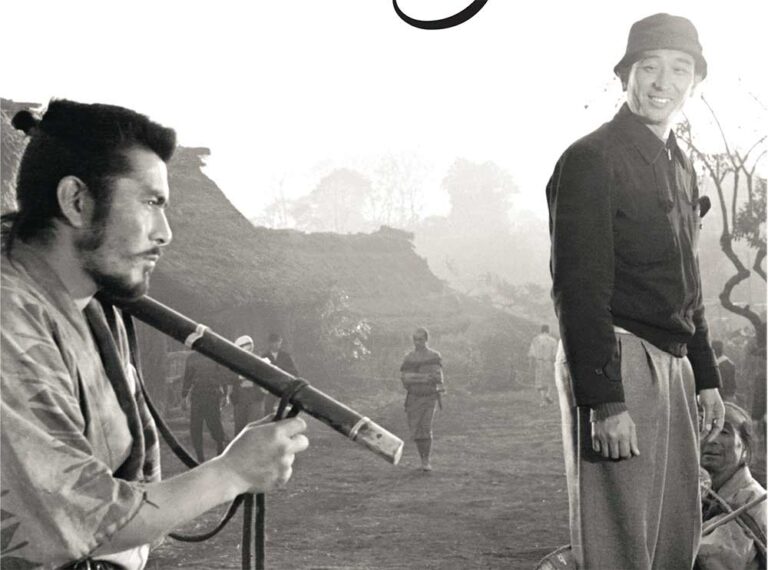
An introduction to Japanese cinema

0

Coming on the heels of Asian/Pacific American Heritage Month, here’s our primer for movie-crazy, pop-cultural adventurers looking for seldom-visited territories to explore: Japan is ready for its closeup. Japanese cinema has a rich and rewarding history, but one that never seems to get the same attention eager American film buffs have always lavished on the Europeans. A trip to the real-life Land of the Rising Sun is out of reach while we’re in the throes of this pandemic, but thanks to streaming and other home-video options, we can cross the Pacific and immerse ourselves in, say, the intrigues of Tokugawa Shogunate, anytime we want.

Without delving into a comprehensive discussion of such a panoramic subject, here’s a bite-sized introduction to a few filmmakers and their movies, most of them available for streaming and all of them indispensable for anyone interested in this truly world-class national film industry. Names are listed Japanese-style, with family names first.

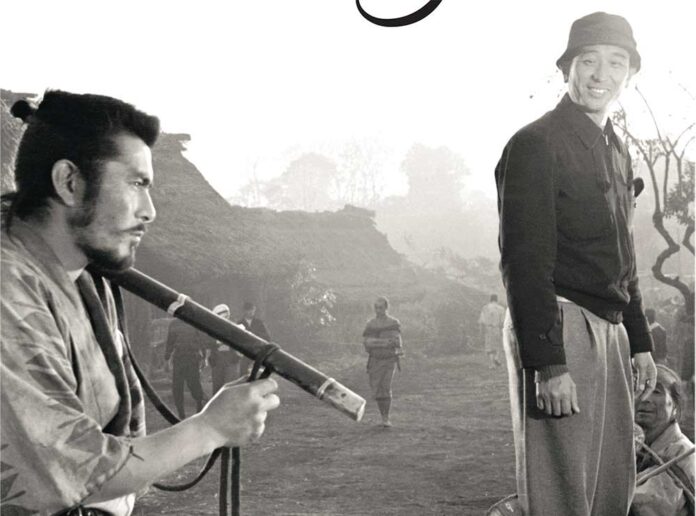
Kurosawa Akira: Arguably Japan’s most renowned filmmaker, Kurosawa reached for universal themes and found international audiences with: Seven Samurai (one of the greatest movies ever made); Ikiru; Rashomon; Throne of Blood (a feudal-era version of Macbeth, with three grotesque witches and the raging power lust in actor Mifune Toshirô’s eyes); The Hidden Fortress (a major influence on Star Wars); Sanjuro; Yojimbo; and the King Lear-in-feudal-Japan costumed epic, Ran. For a number of reasons, perhaps including his height—the filmmaker was almost six feet tall—Kurosawa stood out from his Japanese movie-biz contemporaries. Critics in his home country sometimes clucked disapprovingly about his choice of subjects—the Shakespeare adaptations, Seven Samurai’s tribute to Aeschylus’ Seven Against Thebes, etc., his popularity in the West and the “un-Japanese” point of view in many of his projects. He once described Seven Samurai as being as rich as a buttered steak topped with broiled eels. Kurosawa’s Dersu Uzala—a 1975 Soviet-Japanese co-production with Mosfilm—is of special interest because its thrilling story of the friendship between a native trapper/guide and a visiting surveyor in the Siberian wilderness is presented in Russian.

Ozu Yasujirô: Considered by many to be the most quintessentially “Japanese” of the classical directors. His spare visual style and carefully constructed scenarios tell the stories of ordinary people dealing with the ordinary heartaches of life, with extraordinary grace. But don’t be fooled by Ozu’s reputation for “austerity.” His emotion-packed family dramas are a feast of characterization and repressed sensuality lurking just beneath the surface. For example: A Story of Floating Weeds; Tokyo Story; Late Spring; Early Summer; Tokyo Twilight; and Equinox Flower. Ozu is notorious for his habit of placing his camera, in indoor scenes, at the eye level of a person kneeling on a tatami mat. Hara Setsuko, one of Ozu’s most frequent leading ladies (her fond nickname was “The Eternal Virgin”), has one of the most radiant smiles in existence, even when portraying a compromised character.

Mizoguchi Kenji: A master stylist enthralled by the stories of women, whose low status in traditional Japanese society makes them vulnerable to injustice and mistreatment. Some of the saddest films you’ll ever see: Sansho the Bailiff, aka Sansho Dayu (the heartbreaking tale of an unfortunate family’s interrupted journey); Ugetsu Monogatari (a dreamlike ghost story from ancient Nippon); The Life of Oharu (a gorgeous weepie starring the lead actress of Sansho, Tanaka Kinuyo); Utamaro and His Five Women; Miss Oyu (also with the long-suffering Tanaka); A Geisha; and A Story from Chikamatsu (aka The Crucified Lovers). Mizoguchi’s compositions are as thrillingly composed as a ukiyo e masterpiece.

Writer-director Kurosawa Kiyoshi is no relation to Kurosawa Akira, but shares the older director’s affinity for depicting characters confronting moral and ethical dilemmas. His elegantly paced contemporary projects range from outright horror to eerie relationships to soulful character-studies of modern urbanites in distress: Cure; Serpent’s Path; Séance (an extra-creepy remake of Séance on a Wet Afternoon); the internet chiller Pulse; Doppelganger; and Tokyo Sonata, the 2008 story of a middle-class family’s downward spiral after the father loses his job.

Kore-Eda Hirokazu: “The New Ozu”? Kore-Eda’s closely observed dramas have a strong social consciousness, none more so than Nobody Knows, the 2004 story of a family of school-age Tokyo children abandoned by their mother. Also recommended: Shoplifters; After the Storm; Our Little Sister; Like Father, Like Son; Hana; Maborosi; and Air Doll, the tale of a lonely man who falls in love with his inflatable sex doll.

Suzuki Seijun: His jazzed-up, frantic, gaudy, sexy gangster-and-spy flicks of the 1950s–1990s made him a hipster art-house fav in the U.S. Dig these shiny entertainments: Branded to Kill; Youth of the Beast; Gate of Flesh; Tokyo Drifter; and the inimitably titled Detective Bureau 2-3: Go to Hell Bastards! Some of Suzuki’s most distinctive movies feature actor Shishido Jo, notorious for having tissue from his butt cheeks grafted onto his face, in an attempt to give him a more “Western” appearance.

Imamura Shôhei: Sardonic social and political commentary—with more than a touch of grim humor and sexuality—adorn this director’s hyperactive array of films from 1950–2000. The standouts: The Insect Woman; Pigs and Battleships; The Ballad of Narayama (Imamura’s adaptation of a story by Fukazawa Shichirô, first filmed in 1958 by director Kinoshita Keisuke); Black Rain (a moving protest against nuclear warfare); Vengeance Is Mine; The Pornographers; and Profound Desires of the Gods.

Honda Ishirô: Best known for creating the original Godzilla (Japanese title: Gojira, from 1954), Honda’s filmography is packed with loads of audience-pleasing sci-fi and horror spectacles, including: Mothra vs. Godzilla (1964, pick hit from the long-running kaiju giant-monster franchise); The Mysterians (1957); 1959’s The H-man (another atomic-age mishap); Destroy All Monsters (1968); and Matango (1963), the fantastic saga of a group of shipwrecked men and women battling a killer fungus on a spooky island—American tagline: Attack of the Killer Mushrooms.

Twisted genre excitement with a sadistic streak is the trademark of cult figure director Miike Takashi. One of his most unforgettable is Audition (1999), in which a selfish businessman tries to hoodwink a succession of prospective would-be “brides” and ends up paying the price. Also in Miike’s immense, bizarre filmography: irreverent cowboy actioner Sukiyaki Western Django; the enormously influential Dead or Alive; Ichi the killer; Blade of the Immortal (piles of corpses ad absurdam); and Over Your Dead Body.

For rip-roaring, costumed sword-fighting action, try: director Inagaki Hiroshi’s 1954-56 Samurai trilogy (Musashi Miyamoto; Duel at Ichijoji Temple; and Duel at Ganryu Island). Also fine: The Sword of Doom (1965) by director Okamoto Kihachi, with actor Nakadai Tatsuya’s amazing freakout bloodbath in the climactic scene. Further genre-action fun, from underworld intrigue to youth-market ultra-violence: anything by jack-of-all-trades Fukasaku Kinji, especially Yakuza Graveyard. Fukasaku’s Battle Royale movies, in which teenage contestants kill each other on a tropical island, outraged audiences and spun off a host of imitators.

Also recommended are the works of Oshima Nagisa (his intense sexual melodrama In the Realm of the Senses created a sensation in 1976); Naruse Mikio (the urban prostitute drama When A Woman Ascends the Stairs); and Shindo Kaneto (Onibaba, a ghost story about a predatory mother and daughter living in a marshland shack). Ichikawa Kon, director of acclaimed sports documentary Tokyo Olympiad, ranged over a variety of genres: family relationship dramas like The Makioka Sisters; the samurai adventure 47 Ronin (a remake of Mizoguchi’s 1941 samurai pic); and Ichikawa’s harrowing World War II nightmares, Fires on the Plain and The Burmese Harp. Kobayashi Masaki’s powerful three-part The Human Condition strikes a similar chord in tracing the ordeal of an anti-war Imperial Army soldier (played by Nakadai Tatsuya) stationed in Manchuria. Kobayashi’s trilogy clocks in at nearly 10 hours total running time.

Likewise on the bellicose side of the slate are the graphic tough-guy antics of actor-filmmaker “Beat Takeshi” Kitano (Boiling Point; Fireworks), and the comparatively benign swordplay of mega-popular actor Katsu Shintarō (“Kats-Shin”), who portrayed the blind masseur/gambler Zatoichi, defender of cute little kids and threatened women, in some 26 movies.

Mishima: A Life In Four Chapters (1985) is that rarity of rarities, an intelligent Japanese-language film by an American director, Paul Schrader. It’s a heavily stylized dramatization (starring actor Ogata Ken) of the life of controversial novelist-actor-militarist Mishima Yukio, who committed seppuku after unsuccessfully attempting a 1970 coup d’état in Tokyo. Before coming to his bloody end the real-life Mishima wrote and/or acted in a lengthy roster of art films and campy extravaganzas, including Black Lizard (1968) and Black Rose (1969), both of which starred “gender illusionist” Miwa Akihiro, and both of which were helmed by the above-mentioned Fukasaku Kinji.

Lastly, an easy choice from among the ocean of Japanese anime films is the oeuvre of the creative genius Miyazaki Hayao, guiding light of Studio Ghibli, who gave us the animated masterpieces My Neighbor Totoro; Princess Mononoke; Spirited Away; Howl’s Moving Castle; and Ponyo.

Many (but not all) of the above titles are available from various home video streaming services. Check JustWatch.com.

Enough is Enough

0

I have asked myself many times this week, when will enough be enough? How many times do we have to see a black man killed in front of us by a police officer for us to say enough is enough?

It is not enough to not believe the stereotypes, to not tell that racist joke, to be nice to people of color. I can insert many lies I have told myself over the years here. I am guilty myself of thinking that I am doing enough, while black people are suffering everyday. I am ashamed of myself for being complacent for far too long. I can no longer sit on the sidelines and not actively take part in tearing apart a system that does not work for everyone. Society does not work unless it works for everyone in that society.

I tell myself I’m doing the best I can, but am I? I can do better; we all can. I liken it to trimming trees. We need to cut off the dead limbs and the branches that are sucking energy from the healthy part of the tree. To be stronger, grow taller and bear more fruit, the useless parts need to be cleared away.

I would like to say that it is time that we listen to the black people in our lives, but that time has long passed. Yes, we still need to listen, but the time now is for action. We have been told, and we have known for hundreds of years, that this is not working. Recognizing the problem is not enough. Taking steps to solve the problem is a good start, but also not enough. It is time to have conversations with the people we love about what we are doing to make things better every day. It is time to be in the trenches instead of standing aside thinking things will be better when the dust settles. It is time to fight, and to continue fighting, until there is some resolute change.

It is time to do more than just enough.

Deborah Unger lives in Graton.

Top Cop’s Kerfuffle

Down on the corner and out there in the streets they’re calling it “Ravitch’s kerfuffle.” Jill Ravitch, the Sonoma County DA, mocked citizens when they protested the Georgia slaying of African-American, Ahmaud Arbery.

“I seek to do justice in the work I do, not by marching,” Ravitch boasted.

Fifth District Supervisor Lynda Hopkins replied, “I worked, and I marched.”

Hopkins’ sentiments were widely echoed.

Over the past two weeks, hordes of citizens like Hopkins have worked and protested the death of George Floyd and marched against police brutality. It’s the American way.

Defense lawyer Omar Figueroa cranked up his sarcastic and said, “Jill is hard at work ignoring environmental crimes and police brutality. Time to retire. I’ll pay for the cake.”

Still, Figueroa allows that Ravitch was a “great trial lawyer” who did good when she created The Family Justice Center. He isn’t thrilled about her stance on cannabis, though her office has been clearing nearly 3,000 cannabis-related convictions.

As the county’s “top cop,” and nearing the end of her 10th year in office, Ravitch is less popular than ever. Courthouse buzz says she won’t run for reelection, though when I called Ravitch and popped the question, she wouldn’t answer.

Lawyer and longtime Sonoma County “police watchdog,” Jerry Threet, suggests that Ravitch’s record has been mixed and that she might have gone after white-collar and environmental crimes more vigorously.

“Usually the violators get a slap on the wrist,” Threet says. But he’s quick to add that as a young woman Ravitch didn’t have an easy time “stepping into the old boys’ network that ran the criminal justice system in the county.”

Ravitch is Sonoma County’s first woman DA. Unlike young, feisty DAs around the country, she has not gone out of her way to redress inequalities in the criminal justice system based on class and race. She didn’t lobby for the legalization of cannabis or take part in the movement to reform California’s marijuana laws. Some DAs did.

Threet says that Ravitch’s story is “complicated.” She brought criminal assault charges against a police officer, but the jury declined to find him guilty.

Veteran defense lawyer Chris Andrian says, “The cultural divide in the county makes it hard to convict cops.” He adds, “Sometimes I kicked the DA’s butt and sometimes I had my butt kicked.”

When Ravitch retires, the cannabis industry won’t shed tears. Neither will friends and family members of Andy Lopez, the 13-year-old shot and killed by deputy Erick Gelhaus on October 23, 2013, whose ghost still haunts Santa Rosa’s streets.

Jonah Raskin is the author of “Marijuanaland: Dispatches from an American War.”

New Moon: Marin musician goes solo on EP

0

Like many people in Marin County, teacher and musician Colin Schlitt has been stuck at home for more than two months.

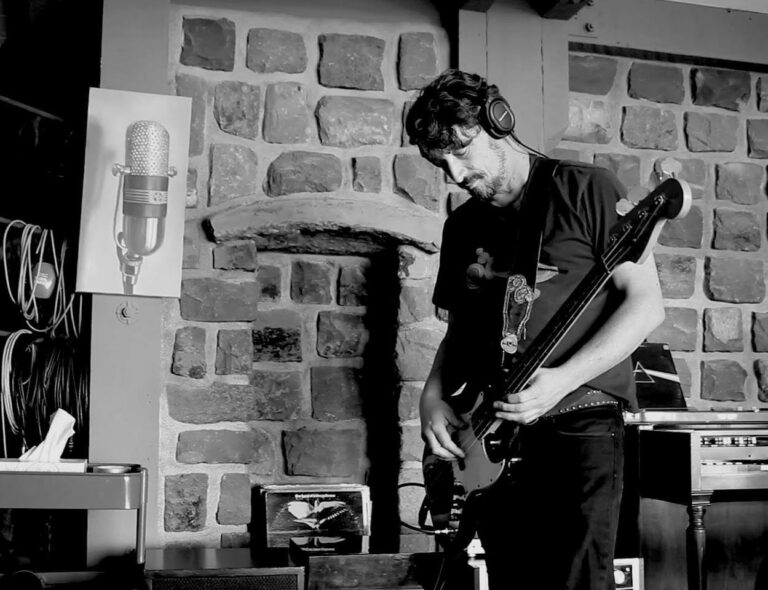
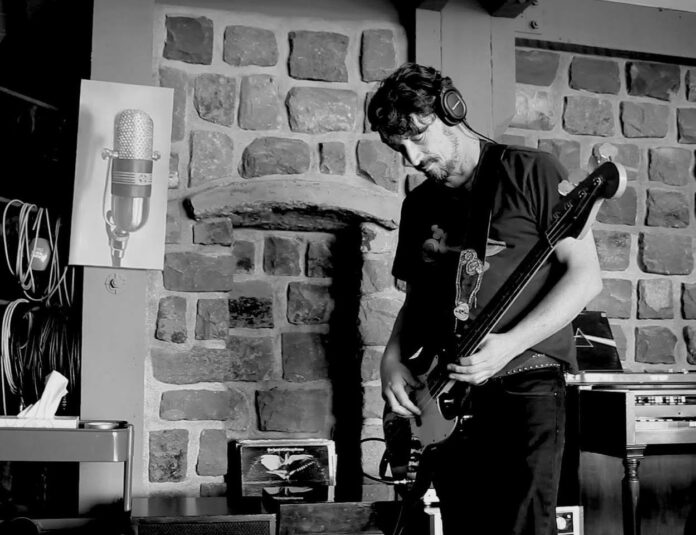
The longtime Point Reyes Station resident is best known musically in Marin as the bassist and occasional vocalist for eclectic alternative-pop ensemble El Radio Fantastique. Now, Schlitt turns up the reverb with his solo project Peppermint Moon, which released a digital EP, A Million Suns, in late April.

The new EP follows Peppermint Moon’s 2019 debut album, Symphony of Sympathy, and the five tracks on A Million Suns find Schlitt crafting psychedelic dream pop that walks the line between the Beatles and early Radiohead, with forlorn vocals akin to Wilco’s Jeff Tweedy and melodic hooks that would make Beck jealous.

Schlitt grew up in Point Reyes Station after his family moved there from New York. His musical education began early.

“I’ve always been interested in music,” Schlitt says. “I started tinkling on the piano as soon as I was tall enough to reach the keys.”

He also discovered his parents’ record collection at a young age, playing their copy of the Beatles’ Revolver until he wore out the vinyl.

“I was so fascinated with those sounds,” he says. “That is one of my earliest memories.”

After reluctantly taking piano lessons and learning guitar, Schlitt found his instrument of choice in the electric bass when he was 16 years old.

“I feel like the bass is the essence of every song, like every song can get boiled down to the bass musically,” Schlitt says.

Schlitt’s bass influences include Paul McCartney, John Entwistle of The Who, Motown-legend James Jamerson and Bruce Thomas, who is best known as the bass player with Elvis Costello & the Attractions.

After high school, Schlitt moved to Los Angeles to play music, though he moved back to Point Reyes Station more than a decade ago to raise his daughter with his partner. 

Once back in Marin, Schlitt hooked up with songwriter and bandleader Giovanni Di Morente and joined Di Morente’s bombastic El Radio Fantastique.

“When I joined the band, (Di Morente) asked me if I had any songs, and I played some songs for him,” Schlitt says. “He was so encouraging that I started to develop that more. This side project Peppermint Moon would not exist without his encouragement.”

Schlitt’s songwriting process employs a lyrical trick that he learned from Di Morente.

“You come up with a melody first, and instead of coming up with lyrics, you sing gibberish with a lot of vowels,” Schlitt says. “As you do that over and over, subconsciously you start to fill in words here and there, and it’s amazing how the meaning of the songs develop themselves in this subconscious way.”

For this project, Schlitt played every instrument himself, including drum tracks performed on a synthesizer, and he assembled up to 24 individual musical tracks for each song. The entire record was recorded in Schlitt’s Point Reyes house, where he turned his bedroom into a makeshift studio.

“I love being in the band and I love collaborating with people, but it’s also really satisfying doing it myself in its own way,” he says.

At first, A Million Suns was simply going to be a single, but the shelter-in-place orders gave Schlitt plenty of time to write more songs, and he turned the single into an EP.

“This project has made a big difference keeping me sane and busy,” Schlitt says.

In addition to this solo EP, Schlitt can be heard on El Radio Fantastique’s new tracks that will be released digitally over the summer. The first released single, “London’s Fatal,” is up now on El Radio Fantastique’s Bandcamp page. 

“We had these songs we were just finishing up mixing when the pandemic hit,” Schlitt says. “As a band, El Radio Fantastique is waiting for this to play out. Thankfully, we had this stuff recorded and ready to go.”

Peppermint Moon’s ‘A Million Suns’ EP is available online now at peppermintmoon.bandcamp.com.

Why Review Theatre Now?

What is the point of reviewing theatre?

If you had asked me that question 90 days ago, my answer would be to provide potential audience members some information with which they could make informed decisions on which of the numerous North Bay productions they might choose to spend their discretionary income.

If you had asked me that question 60 days ago, it would be to let potential audience members know about how local theatre companies and artists were trying to stay connected with their patrons via new technology and how that technology worked in comparison to live, in-person performances.

But now?

It’s a question I’ve been wrestling with after “attending” the latest live streaming productions of two companies with North Bay connections – the Zoom Theatre production of Anna Ziegler’s Actually and the Left Edge Theatre production of Small Mouth Sounds.

The events of the past few weeks have weighed as heavily on me as anyone, and the questions being raised nationally about the safety and disenfranchisement of people of color, equal opportunity and fairness are being echoed in the local artistic community, as they should in every micro-community.

Artists of color, sick of seeing the platitudes of inclusiveness being regurgitated once again, are rightfully demanding change after too many years of hearing “your idea is great, but it’s just not right for our audience.”

With that dialogue on-going, do I really want my contribution to it be a discussion of the quality of acting and costuming in a particular production? The difficulties of doing a two-person scene with actors 1,000 miles apart? Bandwidth, screen size and buffering?

Not really.

I believe in the art of theatre. I believe in its power to inform, educate, and entertain. I believe that the North Bay deserves a vibrant theatre community and while I support all theatres’ efforts to stay afloat, the question must now be asked “to what purpose?” It’s a question that companies must now answer with actions, not words.

But words are a start, as long as they are the right words – words of understanding, words of recognition, words of inclusiveness – words that are followed by concrete actions. As much as I’d like to think I have addressed the issues of diversity in casting and material through my reviews, I will put more thought into what my contribution to the discussion can and should be now.

So I’m going to step back from critiquing for a time as theatres do what they must to survive and chart a course of action. I will continue to report on local theatre and through that reporting support and promote those companies that truly embrace inclusiveness (and yes, I recognize there are some that already do) and challenge those that don’t.

I will also challenge the audience to support those companies that are truly welcoming of their presence beyond the price of their admission and for artists to work with companies that value their perspective and acknowledge their artists’ vital role in the commerce of theatre. I will encourage companies to do serious outreach to underserved communities (and, yes, I recognize there are some who do that already, too) and to help facilitate that relationship in any way that I can.

Laurence Olivier once said that he believed “that in a great city, or even in a small city or a village, a great theatre is the outward and visible sign of an inward and probable culture.”

With what we are going through as a society right now, what will North Bay theatre ultimately project?

Join the Conversation With These Timely Online Discussions

It seems that everywhere one looks in America today, there is unrest.

Police brutality has been on full display for over a week, with videos, photos and reports of peaceful protesters being met with batons and tear gas from police forces across the country. Those reports include Santa Rosa—where an unknown law-enforcement officer reportedly shot a plastic grenade at a protester less than 15 feet away on Sunday, May 31, fracturing the protester’s jaw, splitting his lip and knocking out four teeth—as well as a young man who was shot and killed by Vallejo police early on Tuesday, June 2.

Covid-19 had already created a tense situation before this week’s nationwide protests against police, having kept people isolated since March and causing massive spikes in unemployment as businesses across the Bay Area closed their doors due to the pandemic.

Add all of that to a country that has already endured three years of unprecedented presidential lying and social division from a former reality-TV star, and it’s a no-brainer that Americans’ mental stresses are at never-before-seen levels.

This week, several organizations are taking to the web to help those dealing with mental, social and health problems through online lectures, conversations and discussions that are sure to go a long way in opening up meaningful dialogue and affecting social change that benefits us all.

Today, Friday June 5, the Mental Health Association of San Francisco hosts a virtual event, “Real Talk: A Discussion About Police Brutality and Racism,” at 5pm via Zoom.

MHASF originally planned to facilitate a discussion with mental-health activist and writer Leah Harris on Friday, but due to current circumstances, they are instead facilitating this new discussion with the hosts of its ongoing “People of Color Support Group,” Dewonna Howard and CW Johnson. The support group regularly meets to discuss issues, coping strategies and resources relevant to people of color in the local community.

“This will be a safe space for anyone and everyone—especially our Black community members—to speak up, vent and talk through their feelings, thoughts and emotions surrounding the suffering and destruction taking place in our country,” wrote MHASF in an email sent out June 4.

Also today, June 5, the Bay Area Book Festival is rearranging its schedule of online events to present a timely discussion, “The Beautiful Witness We Bear,” at 7pm as part of the festival’s #UNBOUND virtual program.

The thought-provoking conversation will feature two acclaimed poets, Pulitzer Prize–winner Jericho Brown (The Tradition) and National Book Award–winner Nikky Finney (Love Child’s Hotbed of Occasional Poetry). Twenty years ago, Brown was Finney’s student, and while much has changed since those days, their mutual dedication to bearing witness to hard truths through art remains ever-present.

In this conversation, the poets will share their own responses to the murders of George Floyd and other Black Americans, and they will discuss the protests against police brutality and the power of poetry to capture these human experiences. The conversation will be moderated by Ismail Muhammad, reviews editor for The Believer, board member at the National Book Critics Circle and Program Committee member at the Bay Area Book Festival.

Tomorrow, June 6, Book Passage hosts an enlightening conversation on women and politics with New York Times reporter and author Jennifer Steinhauer and New York Times Pentagon correspondent Helene Cooper, presented online at 4pm.

Steinhauer’s latest work, The Firsts, begins at the November 2018 midterms, in which the greatest number of women in history was elected to Congress. The book then chronicles the first-year experiences of those women, detailing their transitions from running campaigns to their daily work of governance.

Looking ahead, Point Reyes nonprofit group Black Mountain Circle hosts a Zoom Virtual event on mental health and well-being featuring Florence Williams, journalist and the author of The Nature Fix. The event, happening on Thursday, June 11 at noon, will make the connection between spending time in nature and our health, especially in the wake of a two-month stay-at-home order that’s kept many people in isolation. Now that some parks and beaches are reopening, Williams will discuss the role nature plays in making us happier, healthier and more creative.

Anna O’Malley and Donna Faure will join Williams on June 11 for this virtual discussion. O’Malley is executive director of Natura Institute for Ecology and Medicine in West Marin, and Faure is the executive director of Point Reyes National Seashore Association. The event is co-presented by Point Reyes National Seashore Association, Mesa Refuge, Natura Institute for Ecology and Medicine, and Point Reyes Books.

More North Bay Summer Camps Are Going Online

Summer has started for thousands of students in the North Bay, but many families are struggling to figure out how to spend the season, as the usual array of kids’ camps and outings is largely canceled due to the ongoing Covid-19 pandemic.

Last month, several Sonoma County arts and education organizations such as the Alexander Valley Film Society, Luther Burbank Center for the Arts and Transcendence Theatre Company announced their plans for offering virtual summer arts camps in lieu of in-person programs.

Now, many other North Bay groups are jumping in the digital pool to provide their own virtual art experiences for kids in Marin, Sonoma and Napa County.

In Mill Valley, the Marin Theatre Company is renowned not only for their stage productions, but for their commitment to community engagement. That includes the company’s Drama Conservatory, which provides classes, camps, workshops and performance opportunities for Bay Area children and teens. Approximately 8,5000 students participate in the company’s programs each year, and while the MTC’s doors closed in March due to Covid-19, they continued to engage with young actors and playwrights remotely in online classes through the Spring.

Now, MTC is introducing a new concept, Summer Camp in a Box, which was created as a way to bring summer camp activities directly to younger students so they can participate from the safety of home. The format is literally a box of theatrical supplies that can be picked up or dropped off. Boxes range from $50-$75, and scholarships are available.

Each box is themed and targeted at Kindergarteners-through fifth graders, and each box includes instructions and materials needed to complete drama activities, arts and crafts, games, recipes and more.

Themes range from “Living Literature,” which lets young ones act out classic kids books like The Magic School Bus, The Very Hungry Caterpillar or Dr. Seuss stories, to boxes based on Disney movies like The Secret Life of Pets and Frozen that let kids run wild with their imagination.

In addition to the Summer Camps in a Box for the young ones, theater kids in middle and high school can sign up for summer camps conducted virtually through Zoom, with an emphasis on acting and improvisation. All virtual camps for tween and teens are $100 and, again, scholarships are available. Register for MTC’s summer camps and boxes at Marintheatre.org.

Healdsburg Center for the Arts is one of many nonprofit arts hubs that are temporarily shut during the stay-at-home orders related to the Covid-19 pandemic. The Center also cancelled many fundraising events in the wake of the pandemic, including the beloved Healdsburg Earth Festival, the Healdsburg Art Festival and a number of popular art classes for adults and children.

“The past ten weeks have given us an opportunity to reflect on the benefits a community art center provides and we’ve had the opportunity to re-think about the future of the organization”, said Diana Jameson, Healdsburg Center for the Arts Board Member, in a statement. “We have discovered there is great interest and enthusiasm in the community for Healdsburg Center for the Arts to continue its creative endeavors, even during this public health crisis.”

To that end, the center is now offering online Bookmaking Summer Camps through a partnership with Book Arts Roadshow, co-founded by award-winning artist and former HCA board member C.K. Itamura. The camps are run over Zoom and offer the opportunity to explore the art and craft of making books while at home. The online sessions run select dates, June 27 to July 26, with sessions for ages 5–7, 8–12, 13–18, and even adults.

Bookmaking materials for the online sessions are provided by a grant from the Bill Graham Foundation. Packages of bookmaking materials will be mailed to registered participants ahead of the workshops.

“An online Bookmaking Summer Camp series for adults is included,” Itamura said in a statement. “Because bookmaking can be stress-free and fun and we’re pretty certain most adults can use a dose of that right about now.”

In addition to the Bookmaking Camp, local artist Jean Warren reformatted her popular Watercolor & Journaling workshop to make use of Zoom. Warren will guide students through watercolor painting lessons via video and email at a to-be-determined date. Register for camps and get more information at Healdsburgcenterforthearts.org.

When most people think “summer camp,” they think of the great outdoors, and usually the North Bay is a haven for kids to backpack, hike and explore in natural sites like the Laguna de Santa Rosa.

This summer, the Laguna de Santa Rosa Foundation knows that gathering, even in nature, is problematic in the face of a pandemic, so the group is inviting kids to join the Laguna Explorers @ Home program to explore the wonder of nature in their own backyards.

Aimed at kids ages 6–11, Laguna Explorers @ Home includes at-home activities that engage the senses, ignite curiosity and increase environmental literacy. The activities are designed for children to do on their own without much need for parent’s interference. The program also incorporates online meetings and circle time for discussion, play, and sharing with other children and Laguna camp staff.

Environmental explorations will run July 6–10 and July 13–17. Each Monday, explorers will pick up a pack at the Laguna Environmental Center, the pack comes with the materials needed for the week, including custom field journals, nature craft supplies, activity instructions, naturalist tools, game cards and more.

A Parent Pack will also be provided with instructions, website links and supplementary materials including “rewards” for participation that parents can give their child each day. Get more details and register for Laguna Explorers @ Home at Lagunafoundation.org.

Now in its 15th year of operation, the Napa School of Music has provided thousands of lessons to families in Napa, Solano and Sonoma Counties, with approximately 400 students taking lessons every week from 16 top-notch teachers. In addition to private and group lessons, the school engages budding musicians in Music Camps, which are going virtual this year.

Beginning June 8–12, and running several subsequent weeks through August, the Napa School of Music’s camp schedule is packed with small-group sessions in guitar, ukulele, music recording and other classes that are designed for all ages and all skill levels, with instrument rentals available.

Beginner guitar, bass guitar and ukulele virtual camps will start aspiring musicians on the right foot with instructions in fundamentals and exposure to a repertoire of songs they can play with minimal skill.

Advanced virtual camps, designed for older tweens and teens, take the basic concepts of guitar, bass and ukulele to another level with new strumming concepts, advanced arrangements of popular melodies to learn and more. Other virtual camps include Musical Theater Camp and Songwriting Camp. Get details and sign up at Napaschoolofmusic.com.

New Exhibit Marks a First for Point Reyes Artist

Veteran artist and educator Anna B Francis has lived in Point Reyes Station for more than a decade, though there are still some neighbors who didn’t know she was an acclaimed watercolor and oil painter until they saw her work hanging at the gallery at Toby’s Feed Barn earlier this month.

“I’ve been in three shows since I came out here (in 2008), but this is the first time I’ve exhibited this whole body of work in California,” Francis says. “Since I really haven’t exhibited out here much, there are people I’ve known over the years who didn’t even know I did this sort of thing.”

On display for in-person viewing, “The Art of Anna B Francis” is the artist’s first-ever retrospective exhibit and features more than 60 works spanning 40 years of her career in art and education. Portraits of flowers, people and more hang on the wall at Toby’s during the essential store’s open hours, and the show will remain up until June 30.

Francis is a lifelong artist, who discovered the talent and the passion as early as kindergarten. An East Coast native, she received her Master of Fine Arts Degree from Syracuse University and her Bachelors Degree from University of Kentucky. She also attended the Art Students League, the School of Visual Arts and Parsons School of Design while living in New York City between 1979 and 1982.

In 1983, Francis entered the educational world after publishing her children’s picture book, Pleasant Dreams.

“The idea of teaching came about when the book was in the process of coming out,” she says. “I wanted to teach children’s picture book illustration. I was also interested in teaching watercolor because I am self-taught.”

She first taught at the Silvermine Arts Center in Connecticut, where she led classes in drawing and children’s picture book illustration. Over a 24-year teaching career, Francis instructed over 2,500 students; teaching drawing and watercolor at Longwood Gardens for 15 years, teaching oil painting as an adjunct professor at Villanova University, and offering classes and workshops at several other institutions.

In her own artwork, Francis is a master of color. She draws her portraits of people with realism in mind, while her floral portraits take much more artistic license.

“In the people-portraits I focus on accuracy and recognizable likeness, my work on those portraits are close to life-size,” she says.

All of her people-portraits were drawn from live models, except for two pieces in the show. One is a dog portrait, and the other is a recreation of a baseball card of then-Mets player Darryl Strawberry.

“I was commissioned to do that by one of my teachers in my Masters Degree program, Murray Tinkelman,” Francis says. “Murray was putting together a show called ‘The Artist and the Baseball Card.’ He gave me a couple of baseball cards of Darryl Strawberry. I did some drawings, and then I saw him on TV and said, ‘these cards don’t look anything like him.’”

Living outside of New York City at the time, Francis drove into the city to rent VHS tape of “Let’s Go Mets,” the team’s official theme song, and paused the tape on Strawberry to get a more accurate look, despite the static lines on the VHS freeze-frame.

That painting traveled around the country for many years on exhibition, and in the spirit of baseball cards, Francis traded the piece to Tinkelman, a famous sci-fi and fantasy illustrator, in exchange for one of his drawings. The Baseball card piece in the show at Toby’s is a recreation of that original artwork.

For her floral art, Francis is big on color. She’s actually a color expert, having developed her own color wheel while teaching at Longwood Gardens in Pennsylvania, and she has taught color theory. Like her people portraits, many of the floral portraits are also very large pieces, with the largest being over 6 feet tall and 4 feet wide.

“I actually wrote an article for The Artist’s Magazine on how to paint large watercolors,” she says. “They titled it ‘How to Paint Large Watercolors with Ease,’ which isn’t really true—but I wanted people to know how to do it.”

Francis’ preferred floral subject is the Amaryllis, a flower that boasts large bulbs on top of leafless stems. Francis paints her flowers with saturated watercolors, giving them a lush spectrum of color.

“I liked Amaryllis because they were easy to grow in the winter, and at the time I was living in New York, and because they would change like a live model,” she says. “They just seem to have a lot of personality to me.”

Francis has a series of Amaryllis portraits she calls “Conversations,” in which she paints the flowers as if they are in various stages of interaction with each other or the viewer. Many of those pieces are part of the retrospective exhibit.

The show also features other artifacts, such as reproductions of her children’s book.

The retrospective was meant to be up in April, though Marin County’s shelter-in-place orders in March delayed the exhibit until now.

“People are very serious about sheltering-in-place, and of course that’s good,” she says. “But, Point Reyes is a very artistic and creative community, so the show has been a huge hit here locally. People have gone two or three times because they can go and see some art, and it’s been a wonderful personal experience for me to see people happy about it; that was the real major purpose of it.”

“The Art of Anna B Francis” is on display now through June 30 at Toby’s Feed Barn, 11250 Hwy One, Point Reyes Station. Current hours are Mon–Sat; 9am–5pm, closed Sundays. 415.663.1223.

Cars honk in front of supervisors’ homes

0

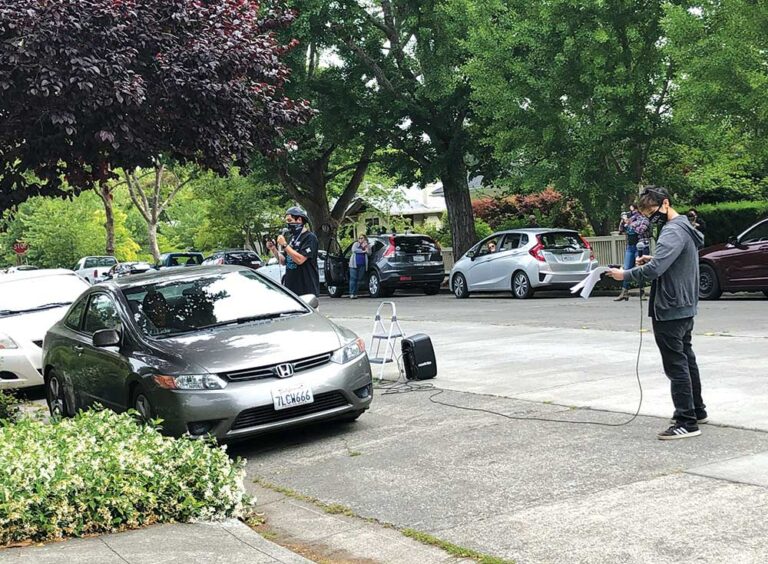
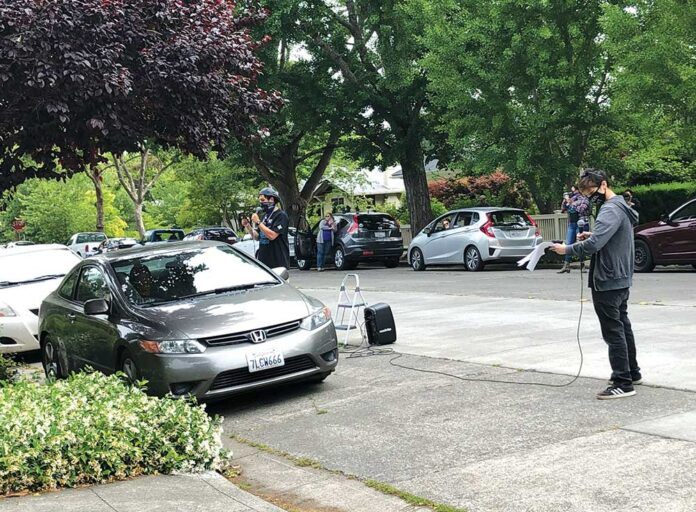
Shortly after 8am on Monday, June 1, a caravan of approximately 50 cars unleashed a volley of honks on a peaceful, tree-lined block of McDonald Avenue in Santa Rosa.

The protesters, led by the North Bay Organizing Project (NBOP) as part of Sonoma County United In Crisis, called on District 3 Supervisor Shirlee Zane and District 4 Supervisor David Rabbitt to support stronger eviction protections for the duration of the Covid-19 crisis. 

Two caravans—one in Santa Rosa in front of Zane’s home and the other in Petaluma in front of Rabbitt’s home—descended at the same time, with participants livestreaming on Facebook.

The supervisors passed the county’s current moratorium in late March with a promise to reconsider the issue at a June 2 meeting. Zane and Rabbitt were selected because NBOP felt the two are most likely to oppose changes to the current moratorium.

On Tuesday, June 2, the supervisors pushed their discussion about the moratorium out to June 23. The moratorium will remain in effect, unchanged, until the supervisors consider it.

NBOP argues that the current moratorium leaves thousands of county residents at risk of eviction if they cannot pay off accrued rent debt after the moratorium expires, 90 days after the Covid-19 pandemic is declared over.

The organizers of the Monday-morning protest called on the supervisors to extend the moratorium on Covid-19-related evictions to one year after the crisis and expand the moratorium to ban all evictions, not just those directly tied to Covid-19. They also called on the supervisors to ban late fees and rent increases, and to remove a requirement in the current ordinance requiring tenants to provide documentation proving a loss of income.

Sarah Casmith and Rio Molina, NBOP housing organizers, addressed Zane through a portable speaker after the honking stopped.

Zane, standing in front of her house, told the protesters, “I’m on your side.” 

“There should be no evictions during a pandemic …” Zane said. “We have to extend the moratorium. We cannot afford to have one more homeless person …”

Asked whether she and the other supervisors would support extending the moratorium for a year or longer, Zane said, “I don’t want to answer a question I don’t know [the answer to] at this point, but I will tell you that it needs to be extended at this point.”

Zane, who was first elected to the Board of Supervisors in 2008, lost a reelection bid in March to former Santa Rosa Mayor Chris Coursey. Zane will leave office in January 2021.

In January, during Zane’s race against Coursey, the National Association of Realtors contributed $156,000 to an independent expenditure committee supporting Zane’s candidacy. By law, independent committees are not allowed to coordinate strategies with the candidates they support, but Zane’s critics say the contribution indicates that Zane’s sympathies lie with landlords and developers, not renters.

Landlord-advocacy groups have argued that, if tenants do not pay rent, landlords, including mom-and-pops, will go out of business. Proposals that aim to solve the problem are playing out at all levels of government.

In April, Rep. Ilhan Omar introduced legislation that would cover landlord and mortgage holders’ missed rent payments if they promise to follow certain rules. More recently, the California Apartment Association, an industry group, has endorsed Senate Bill 1410, proposed state legislation that would set up a program to cover some landlords’ costs. It remains unclear how much funding the relief program proposed in SB 1410 would receive.

During her conversation with Casmith on Monday, Zane attempted to redirect from the eviction moratorium, saying that she has been an advocate for affordable housing during her time as a supervisor.

“I spent my whole career fighting for affordable housing and homelessness,” Zane told the protesters. “You guys should go talk to all of the white, middle-class NIMBYs that put their thumb on the Chanate project that would have brought 700 units of affordable housing… That’s why we’ve got more Latinos dying … because we have too many people living in a house and they get infected—it’s horrible. You’ve got to think about who your real enemy is. As long as white, entitled NIMBYs who think they shouldn’t have any apartments in their neighborhood …” 

Zane was referring to the Chanate Property, a county-owned property in Santa Rosa.

“Right now this is about evictions and people staying safe in their homes during a pandemic,” Casmith responded.

In a 2018 lawsuit, the Friends of Chanate argued that the county had not followed environmental-planning rules. In a ruling, a judge agreed with their reasoning and effectively halted the sale of the property.

A proposal by Chanate Community Development Partners, LLC called for up to 800 units with 20 percent of them designated for very-low-income households, according to a June 20, 2017 staff report presented to the Board of Supervisors.

Dropped

Because nothing “new” has come to light except the country’s excessive amount of police brutality (“Dismissed: District Attorney drops charges against Graton Couple,” News, June 3). This case was phony from the very beginning. Also, Press Democrat’s original article heavily sided with the police report, which was falsified. The DA and Sheriffs should be sued. They need to euthanize...

An introduction to Japanese cinema

Coming on the heels of Asian/Pacific American Heritage Month, here’s our primer for movie-crazy, pop-cultural adventurers looking for seldom-visited territories to explore: Japan is ready for its closeup. Japanese cinema has a rich and rewarding history, but one that never seems to get the same attention eager American film buffs have always lavished on the Europeans. A trip to...

Enough is Enough

I have asked myself many times this week, when will enough be enough? How many times do we have to see a black man killed in front of us by a police officer for us to say enough is enough? It is not enough to not believe the stereotypes, to not tell that racist joke, to be nice to people...

Top Cop’s Kerfuffle

Down on the corner and out there in the streets they’re calling it “Ravitch’s kerfuffle.” Jill Ravitch, the Sonoma County DA, mocked citizens when they protested the Georgia slaying of African-American, Ahmaud Arbery. “I seek to do justice in the work I do, not by marching,” Ravitch boasted. Fifth District Supervisor Lynda Hopkins replied, “I worked, and I marched.” Hopkins’ sentiments were...

New Moon: Marin musician goes solo on EP

Like many people in Marin County, teacher and musician Colin Schlitt has been stuck at home for more than two months. The longtime Point Reyes Station resident is best known musically in Marin as the bassist and occasional vocalist for eclectic alternative-pop ensemble El Radio Fantastique. Now, Schlitt turns up the reverb with his solo project Peppermint Moon, which released...

Why Review Theatre Now?

What is the point of reviewing theatre? If you had asked me that question 90 days ago, my answer would be to provide potential audience members some information with which they could make informed decisions on which of the numerous North Bay productions they might choose to spend their discretionary income. If you had asked me that question 60 days ago,...

Join the Conversation With These Timely Online Discussions

It seems that everywhere one looks in America today, there is unrest.Police brutality has been on full display for over a week, with videos, photos and reports of peaceful protesters being met with batons and tear gas from police forces across the country. Those reports include Santa Rosa—where an unknown law-enforcement officer reportedly shot a plastic grenade at a...

More North Bay Summer Camps Are Going Online

Summer has started for thousands of students in the North Bay, but many families are struggling to figure out how to spend the season, as the usual array of kids’ camps and outings is largely canceled due to the ongoing Covid-19 pandemic.Last month, several Sonoma County arts and education organizations such as the Alexander Valley Film Society, Luther Burbank...

New Exhibit Marks a First for Point Reyes Artist

Veteran artist and educator Anna B Francis has lived in Point Reyes Station for more than a decade, though there are still some neighbors who didn’t know she was an acclaimed watercolor and oil painter until they saw her work hanging at the gallery at Toby’s Feed Barn earlier this month. “I’ve been in three shows since I came out...

Cars honk in front of supervisors’ homes

Shortly after 8am on Monday, June 1, a caravan of approximately 50 cars unleashed a volley of honks on a peaceful, tree-lined block of McDonald Avenue in Santa Rosa. The protesters, led by the North Bay Organizing Project (NBOP) as part of Sonoma County United In Crisis, called on District 3 Supervisor Shirlee Zane and District 4 Supervisor David Rabbitt...
3,002FansLike
3,850FollowersFollow