Since launching in 2022, Painted Bins has diverted nine tons of Marin food waste away from landfills, sparing the atmosphere from harmful methane emissions that contribute to rapid climate change.
Tossing food waste into the appropriate receptacle seems so simple, yet it took Kathy Huber, director of Painted Bins, to develop a program that brings special bins to public spaces and encourages people to use them.
“Nine tons is pretty significant when no bins had been in some of those parks and public places,” Huber said. “And that is something when I think we’ve helped place 25 bins in Marin.”
The organic material collected from the bins is composted and transformed into nutrient rich soil, benefiting the Earth. Otherwise, it goes straight into the landfill.
Dire consequences result from sending food waste to the dump. According to the U.S. Environmental Protection Agency, wasted food represents 24% of the garbage in our landfills and causes 58% of landfill methane emissions. This greenhouse gas drives global warming, causing glaciers to melt, rising sea levels, extreme weather, depletion of wildlife habitats and more.
Zero Waste Marin, a government agency representing all the county’s municipalities, conducted a study last year to determine what materials were going into the landfill. More than 36% of what is sent to the county landfill could have been composted, a Zero Waste Marin representative told the Pacific Sun.
Painted Bins, a project of the nonprofit Sustainable Marin, brings together a variety of Marin stakeholders to try to achieve composting goals set by the state. While local governments, residents, trash haulers and schools play key roles, Marin children are the stars of the program.
“Young people are going to inherit the Earth,” said Huber. “They’re the ones that can make a difference with what they’re learning now.”
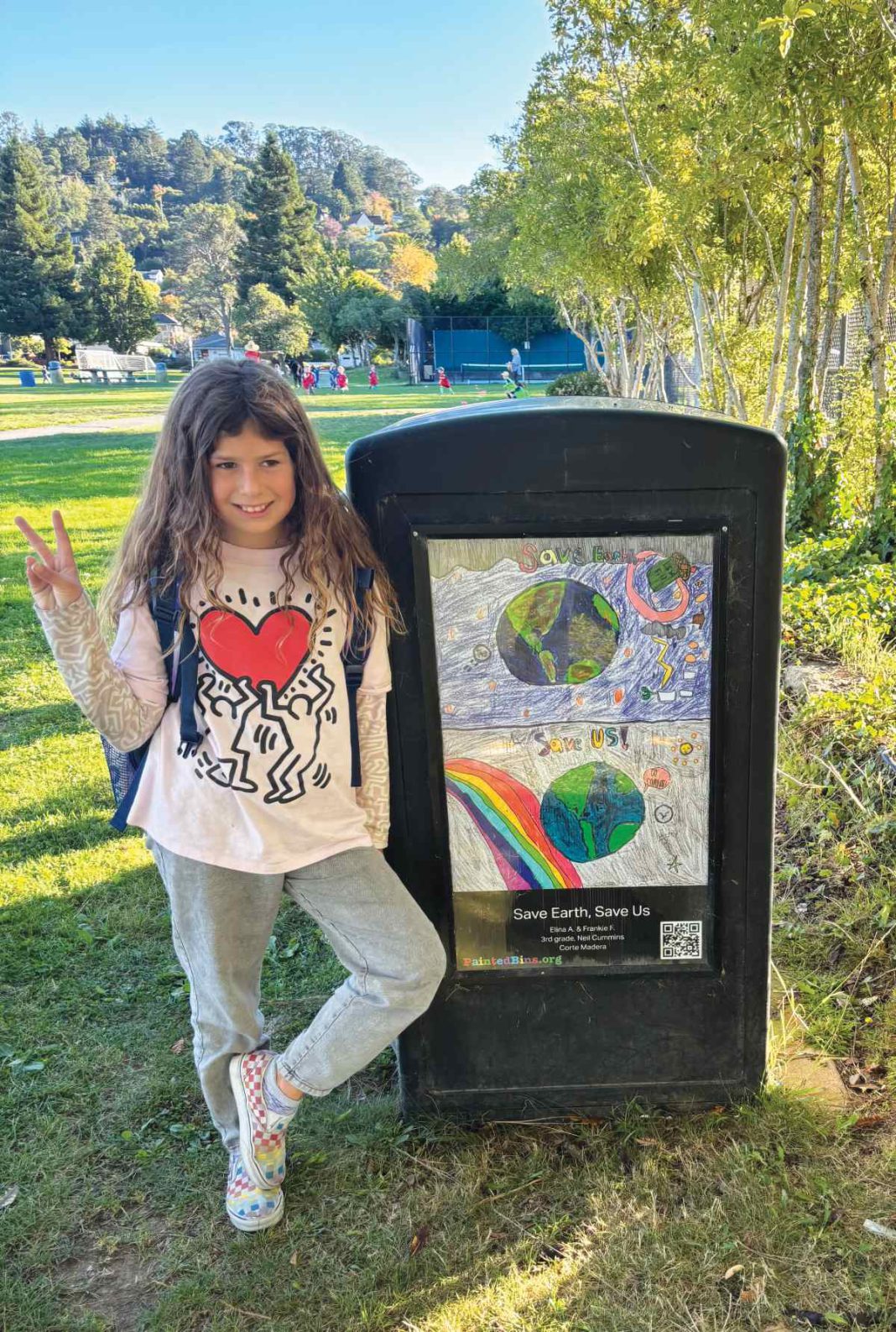
Instructors from Painted Bins work with 24 Marin elementary and middle schools to provide environmental education to 2,600 students. The children then create posters addressing the concepts.
“Once those posters are done, we have a local show with all the art on display,” Huber said. “We invite the students to come and speak, and we invite the community.”
Judges select the posters that will decorate the food waste bins and draw attention to them in public spaces. The art is changed annually.
The children’s posters and public presentations help teach community members the importance of recycling, especially food composting, something that many adults didn’t grow up doing. Change comes about gradually, Huber says, comparing it to the slow adoption of seat belts, a decades-long process.
Huber also stirs up support from local municipalities, requesting that they purchase special food waste receptacles for public areas and pay the hauling fees. Corte Madera kicked off the program and now has bins in Town Park, Menke Park and Skunk Hollow.
In Tiburon, bins show up all over town, from downtown to parks to parking lots. Sausalito uses the bins at their popular Jazz and Blues by the Bay events. Belvedere, Mill Valley and Larkspur have also joined the program. Huber and her team are on a mission to onboard every city and town.
“But the most important thing we’re doing is empowering youth to become environmental stewards,” Huber said.
Later this month, the students will show off their knowledge and artwork at the Painted Bins flagship fundraiser, Trash Bash. The evening begins with an interactive reception, where the children will host themed stations and explain to guests how proper waste management improves the ecosystems of the world and local communities.
Trash Bash includes dinner, an auction and more, from 5:30-8:30pm, on Thursday, April 23, at the Mill Valley Community Center. For tickets and information, visit paintedbins.org.