By Paul Rosenberg
Every year since 1976, Project Censored has performed an invaluable service — shedding light on the most significant news that’s somehow not fit to print. While journalists everyday work hard to expose injustices, they work within a system where some injustices are so deeply baked in that stories exposing them are rarely told and even more rarely expanded upon to give them their proper due.
That’s where Project Censored comes in.
“The primary purpose of Project Censored is to explore and publicize the extent of news censorship in our society by locating stories about significant issues of which the public should be aware, but is not, for a variety of reasons,” wrote its founder Carl Jensen on its 20th anniversary.
Thus, the list of censored stories that’s the centerpiece of its annual book, State of the Free Press | 2021 doesn’t just help us to see individual stories we might otherwise have missed. It helps us see patterns — patterns of censorship, of stories suppressed and patterns of how those stories fit together.
The stories listed below are only part of what Project Censored does, however. State of the Free Press | 2021 has chapters devoted to other forms of obfuscation that help keep censored stories obscured. So, if the Top 10 stories summarized below leave you hungry for more, Project Censored has all that and more waiting for you in State of the Free Press | 2021.
1. Missing and Murdered Indigenous Women and Girls
“In June 2019 the Canadian National Inquiry into Missing and Murdered Indigenous Women and Girls released its final report, which received widespread news coverage in the United States,” Project Censored notes.“U.S. corporate news outlets have provided nearly nothing in the way of reporting on missing and murdered Indigenous women in the United States.”
That’s despite a problem of similar dimensions, and complexity, along with the election of the first two Native American congresswomen, Deb Holland and Sharice Davids, who, Ms. Magazine reported, “are supporting two bills that would address the federal government’s failure to track and respond to violence against indigenous women [and] are supported by a mass movement in the U.S. and Canada raising an alarm about missing and murdered indigenous women and girls (MMIWG).”
Four in five Native women experience violence at some time in their lives, according to a 2016 survey by the National Institute of Justice, cited in an August 2019 Think Progress report.
“About nine in 10 Native American rape or sexual-assault victims had assailants who were white or Black,” according to a 1999 Justice Department report.
“Although the number of Native Americans murdered or missing in 2016 exceeded 3,000 — roughly the number of people who died during the Sept. 11, 2001 terror attack — the Justice Department’s missing persons database logged only 116 cases that year,” Think Progress noted. “The sheer scale of the violence against Native women and the abysmal failure by the government to adequately address it, explains why the issue was given such prominence during this week’s presidential candidates’ forum in Sioux City — the first to focus entirely on Native American issues.”
But even that didn’t grab media attention.
There are multiple complicating factors in reporting, tracking, investigating and prosecuting, which were explored in coverage by The Guardian and Yes! Magazine, as well as Ms. and Think Progress.
“Campaigners, including the Sovereign Bodies Institute, the Brave Heart Society, and the Urban Indian Health Institute, identify aspects of systemic racism — including the indelible legacies of settler colonialism, issues with law enforcement, a lack of reliable and comprehensive data, and flawed policymaking — as deep-rooted sources of the crisis,” Project Censored summed up. “As YES! Magazine reported, tribal communities in the United States often lack jurisdiction to respond to crimes.”
This was partially remedied in the 2013 reauthorization of the Violence Against Women Act, known as VAWA, but “it left sex trafficking and other forms of sexual violence outside tribal jurisdiction, YES! Magazine reported.”
The House voted to expand tribal jurisdiction in such cases in its 2019 VAWA reauthorization, but, Ms. reported, “The bill is now languishing in the Senate, where Republicans have so far blocked a vote.”
Another facet of the problem explored by Yes! is the connection between the extractive fossil fuel industry and violence against Native women. The Canadian report “showed a strong link between extraction zones on the missing and murdered women crisis in Canada,” Yes! noted. “It specifically cited rotational shift work, sexual harassment in the workplace, substance abuse, economic insecurity, and a largely transient workforce as contributing to increased violence against Native women in communities near fossil fuel infrastructure.”
“It creates this culture of using and abuse,” said Annita Lucchesi, executive director of the Sovereign Bodies Institute. “If you can use and abuse the water and land, you can use and abuse the people around you too.”
Project Censored concluded, “As a result of limited news coverage, the United States is far from a national reckoning on its crisis of missing and murdered Indigenous women and girls.”
2. Monsanto “Intelligence Center” Targeted Journalists and Activists
In its fight to avoid liability for causing cancer, the agricultural giant Monsanto (now owned by Bayer) created an “intelligence fusion center” to “monitor and discredit” journalists and activists, Sam Levin reported for The Guardian in August 2019.
“More than 18,000 people have filed suit against Monsanto, alleging that exposure to Roundup [weedkiller] caused non-Hodgkin lymphoma, and that Monsanto covered up the risks by manipulating scientific data and silencing critics,” the Hill summarized. “The company has lost three high-profile cases in the past year, and Bayer is reportedly offering $8 billion to settle all outstanding claims.”
“Monsanto adopted a multi-pronged strategy to target Carey Gillam, a Reuters journalist who investigated the company’s weedkiller,” The Guardian reported.
The Guardian’s report was based on internal documents (primarily from 2015 to 2017) released during trial. They showed that “Monsanto planned a series of ‘actions’ to attack a book authored by Gillam prior to its release, including writing ‘talking points’ for ‘third parties’ to criticize the book and directing ‘industry and farmer customers’ on how to post negative reviews.”
In addition, Monsanto paid Google to skew search results promoting criticism of Gilliam’s work on Monsanto, and they discussed strategies for pressuring Reuters with the goal of getting her reassigned. The company “had a ‘Carey Gillam Book’ spreadsheet, with more than 20 actions dedicated to opposing her book before its publication.” They also “wrote a lengthy report about singer Neil Young’s anti-Monsanto advocacy, monitoring his impact on social media, and at one point considering ‘legal action.’”
The entire pool of journalists covering the third trial was also targeted in a covert influence operation, Paul Thacker reported for The Huffington Post. A purported “freelancer for the BBC” schmoozed other reporters, trying to steer them toward writing stories critical of the plaintiffs suing Monsanto. Their curiosity aroused, they discovered that “her LinkedIn account said she worked for FTI Consulting, a global business advisory firm that Monsanto and Bayer, Monsanto’s parent company, had engaged for consulting,” and she subsequently went into a digital disappearing act.

“FTI staff have previously attempted to obtain information under the guise of journalism,” Thacker added. “In January, two FTI consultants working for Western Wire — a ‘news and analysis’ website backed by the oil and gas trade group Western Energy Alliance — attempted to question an attorney who represents communities suing Exxon over climate change.”
Nor was FTI alone.
“Monsanto has also previously employed shadowy networks of consultants, PR firms, and front groups to spy on and influence reporters,” Thacker wrote. “And all of it appears to be part of a pattern at the company of using a variety of tactics to intimidate, mislead and discredit journalists and critics.”
“Monsanto officials were repeatedly worried about the release of documents on their financial relationships with scientists that could support the allegations they were ‘covering up unflattering research,” The Guardian noted.
At the same time, they tried to attack critics as “anti-science.”
“The internal communications add fuel to the ongoing claims in court that Monsanto has ‘bullied’ critics and scientists and worked to conceal the dangers of glyphosate, the world’s most widely used herbicide,” it summed up.
“Monsanto’s campaign to monitor and discredit journalists and other critics has received almost no corporate news coverage,” Project Censored notes.
A rare exception was a June 2019, ABC News report which nonetheless “consistently emphasized the perspective of Monsanto and Bayer.”
3. U.S. Military — A Massive, Hidden Contributor to Climate Crisis
It’s said that an army travels on its stomach, but the Army itself has said, “Fuel is the ‘blood of the military,’” as quoted in a study, Hidden carbon costs of the ‘everywhere war by Oliver Belcher, Patrick Bigger, Ben Neimark, and Cara Kennelly, who subsequently summarized their findings for The Conversation in June 2019.
The U.S. military is “one of the largest polluters in history, consuming more liquid fuels and emitting more climate-changing gases than most medium-sized countries,” they wrote.
If it were a country, it would rank as “the 47th largest emitter of greenhouse gases in the world.”
Studies of greenhouse gas emissions usually focus on civilian use, but the US military has a larger carbon footprint than any civilian corporation in the world.
“The U.S. military’s climate policy remains fundamentally contradictory,” their study notes.
Things will only get worse.
“There is no shortage of evidence that the climate is on the brink of irreversible tipping points,” the study notes. “Once past those tipping points, the impacts of climate change will continue to be more intense, prolonged, and widespread, giving cover to even more extensive U.S. military interventions.”
Understanding the military’s climate impact requires a systems approach.
“We argue that to account for the U.S. military as a major climate actor, one must understand the logistical supply chain that makes its acquisition and consumption of hydrocarbon-based fuels possible,” the study states. “We show several ‘path dependencies’—warfighting paradigms, weapons systems, bureaucratic requirements, and waste—that are put in place by military supply chains and undergird a heavy reliance on carbon-based fuels by the U.S. military for years to come.”
Data for their study was difficult to get.
“A loophole in the 1997 Kyoto Protocol exempted the United States from reporting military emissions,” Project Censored explains. “Although the Paris Accord closed this loophole, Neimark, Belcher, and Bigger noted that, ‘with the Trump administration due to withdraw from the accord in 2020, this gap . . . will return.’” They only obtained fuel purchase data through multiple Freedom of Information Act requests.
Finally, by way of conclusions, Project Censored stated:
Noting that “action on climate change demands shuttering vast sections of the military machine,” Neimark, Belcher, and Bigger recommended that “money spent procuring and distributing fuel across the US empire” be reinvested as “a peace dividend, helping to fund a Green New Deal in whatever form it might take.”
Not surprisingly the report had received “little to no corporate news coverage” as of May 2020, beyond scattered republication their Conversation piece.
4. Congressional Investments and Conflicts of Interest
Exposition, political corruption and conflicts of interest are age-old staples of journalism. So, it’s notable that two of the most glaring, far-reaching examples of congressional conflicts of interest in the Trump era have been virtually ignored by corporate media: Republican’s support for the 2017 Tax Cuts and Jobs Act, and bipartisan failure to act on catastrophic climate change.
“The cuts likely saved members of Congress hundreds of thousands of dollars in taxes collectively, while the corporate tax cut hiked the value of their holdings,” Peter Cary of the Center for Public Integrity reported for Vox in January 2020.
It was sold as a middle-class tax cut that would benefit everyone.
“Promises that the tax act would boost investment have not panned out,” he noted. “Corporate investment is now at lower levels than before the act passed, according to the Commerce Department.”
Once again, ‘trickle down tax cuts’ didn’t trickle down.
“The tax law’s centerpiece is its record cut in the corporate tax rate, from 35 percent to 21 percent,” Cary wrote. “At the time of its passage, most of the bill’s Republican supporters said the cut would result in higher wages, factory expansions, and more jobs. Instead, it was mainly exploited by corporations, which bought back stock and raised dividends.”
Buybacks exceeded $1 trillion for the first time ever, the year after the cuts were passed, and dividends topped a record $1.3 trillion high.
The benefits to Congressional Republicans were enormous.
“The 10 richest Republicans in Congress in 2017 who voted for the tax bill held more than $731 million in assets, almost two-thirds of which were in stocks, bonds, mutual funds, and other instruments,” which benefitted handsomely as a result of their votes that “doled out nearly $150 billion in corporate tax savings in 2018 alone,” Cary noted. “All but one of the 47 Republicans who sat on the three key committees overseeing the drafting of the tax bill own stocks and stock mutual funds.
“Democrats also stood to gain from the tax bill, though not one voted for it,” he wrote. “All but 12 Republicans voted for the tax bill.”
Two special features deserve notice. First is a newly created 20% deduction for income from ‘pass-through’ businesses, or smaller, single-owner corporations.
“At least 22 of the 47 members of the House and Senate tax-writing committees have investments in pass-through businesses,” Project Censored noted.
Second was a provision allowing real estate companies with relatively few employees — like the Trump organization — to take a 20 percent deduction usually reserved for larger businesses with sizable payrolls.
“Out of the 47 Republicans responsible for drafting the bill, at least 29 held real estate interests at the time of its passage,” Project Censored pointed out.
As to the second major conflict, “Members of the U.S. Senate are heavily invested in the fossil fuel companies that drive the current climate crisis, creating a conflict between those senators’ financial interests as investors and their responsibilities as elected representatives,” Project Censored wrote.
“Twenty-nine U.S. senators and their spouses own between $3.5 million and $13.9 million worth of stock in companies that extract, transport, or burn fossil fuels, or provide services to fossil fuel companies,” Donald Shaw reported for Sludge in September 2019.
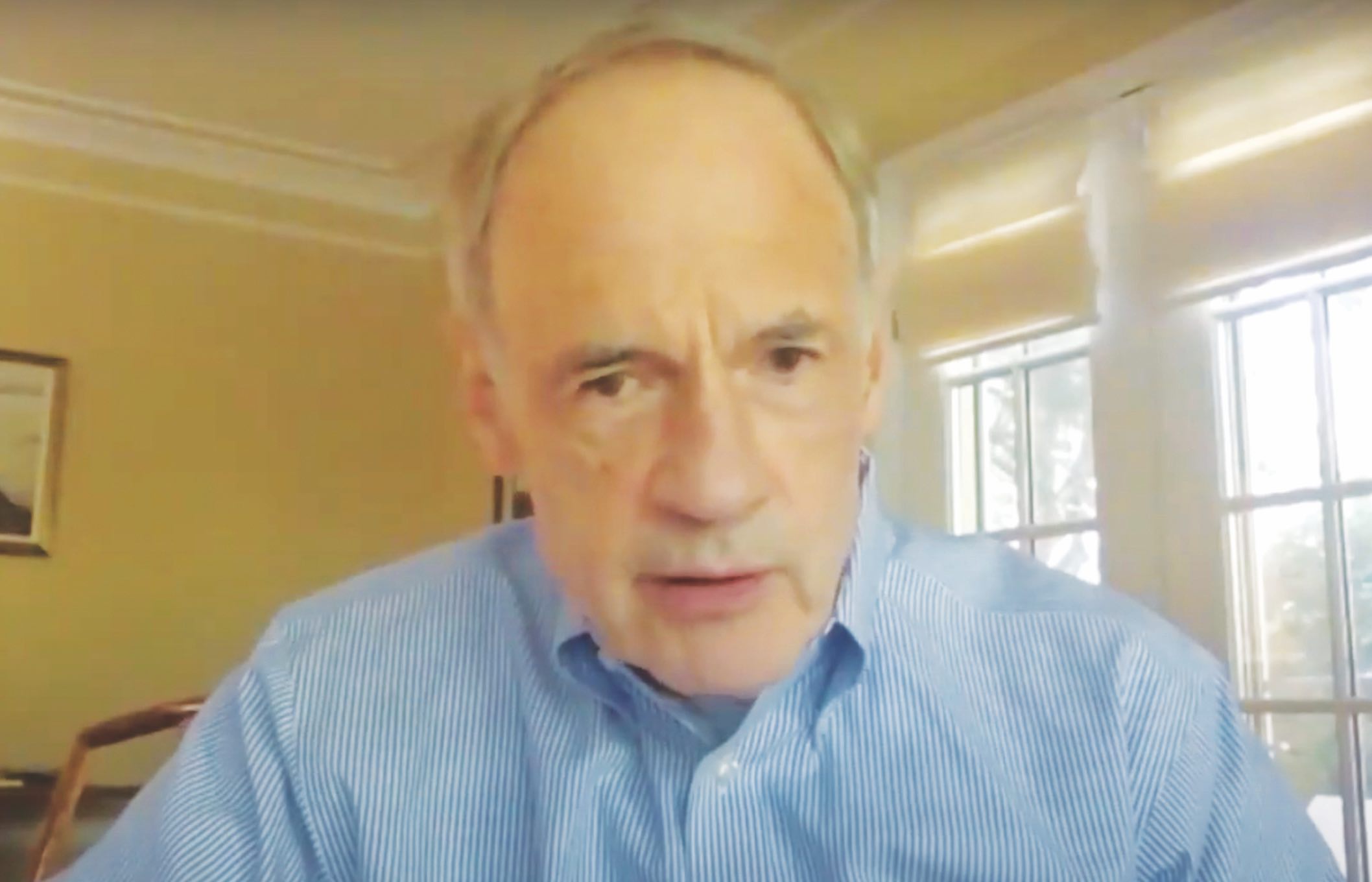
While unsurprising on the Republican side, this also includes two key Democrats. Sen. Tom Carper, of Delaware, is the top Democrat on the Environment and Public Works Committee. He has “up to $310,000 invested in more than a dozen oil, gas, and utility companies, as well as mutual funds with holdings in the fossil fuel industry,” Shaw reported.
But his record is not nearly as questionable as Sen. Joe Manchin, of West Virginia, the ranking member of the Senate Energy and Natural Resources Committee, who “owns between $1 million and $5 million worth of non-public stock in a family coal business, Enersystems,” and reported earning “between $100,001 and $1 million” in reported dividends and interest in 2018, plus $470,000 in ‘ordinary business income,” Shaw reported.
His support for the industry was significant:
Manchin was the only Democrat to vote against an amendment to protect the Arctic National Wildlife Refuge from oil drilling in 2017, and he was one of just three Democrats to vote against an amendment to phase out taxpayer subsidies for coal, oil, and gas producers in 2016. Manchin has also voted to approve construction of the Keystone XL oil pipeline, expedite the approval process for natural gas pipelines, and override an Obama administration rule requiring coal companies to protect groundwater from toxic coal mining waste.
While there has been critical coverage of 2017 tax cuts, this has not included coverage of lawmakers personal profiting, Project Censored noted.
“In addition, despite the significant conflicts of interest exposed by Donald Shaw’s reporting for Sludge, the alarming facts about U.S. senators’ massive investments in the fossil fuel industry appear to have gone completely unreported in the corporate press.”
5. Inequality Kills: Gap between Richest and Poorest Americans Largest in 50 Years
“In public health, decades of research are coming to a consensus: Inequality kills,” DePaul University sociologist Fernando De Maio wrote for Truthout in December 2019.
Even before COVID-19, his research added fine-grained evidence of broad trends highlighted in three prominent governmental reports: the gap between rich and poor Americans had grown larger than ever in half a century, according to the U.S. Census Bureau’s 2019 annual survey, with dramatic evidence of its lethal impact: people in the poorest quintile die at twice the rate as those in the richest quintile, according to a report by the Congressional General Accounting Office. And, this is partly because job-related deaths are increasingly rooted in the physical and psychological toll of low-wage work, as opposed to on-the-job accidents, as documented by the United Nations’ International Labor Organization.
All these conditions were made worse by COVID-19, but they could have been seen before the pandemic struck — if only the information hadn’t been censored by the corporate media, as Project Censored noted:
As of May 2020, Project Censored has not been able to identify any corporate news coverage on the GAO or Census Bureau reports on inequality and premature mortality, or on the ILO report about work-related illnesses, accidents, and deaths that take place when workers are off-duty.
The August 2019 GAO report was based on health and retirement surveys conducted by the Social Security Administration in 1992 and 2014, looking at those between 51 and 61 years old in 1992, and dividing them into five wealth quintiles.
“[T]he GAO found that nearly half of those (48 percent) in the poorest quintile died before 2014, when they would have been between 73 and 83 years old. Of the wealthiest quintile, only a quarter (26 percent) died,” explained Patrick Martin, writing for the World Socialists Website
Death rates increased for each quintile as the level of wealth declined.
It’s at the level of cities and communities “that the most striking links between inequality and health can be detected,” De Maio wrote. “At the city level, life expectancy varies from a low of 71.4 years in Gary, Indiana, to a high of 84.7 in Newton, Massachusetts — a gap of more than 13 years.”
And at the community level, “In Chicago, there is a nine-year gap between the life expectancy for Black and white people. This gap amounts to more than 3,000 ‘excess deaths’” among black Chicagoans, due to “heart disease, cancer, stroke, diabetes and kidney disease. All of these are conditions that an equitable health care system would address,” he concluded.
“The poorest Americans are also more likely than their rich counterparts to face illness or premature death due to the inherent dangers of low-wage work,” Project Censored noted.
“In 2019, you no longer have to hang from scaffolding to risk your life on the job,” María José Carmona wrote for Inequality.org. “Precariousness, stress, and overwork can also make you sick, and even kill you, at a much higher rate than accidents.”
She reported on an ILO story that found that less than 14 percent of the 7500 people who die “due to unsafe and unhealthy working conditions every day” die from workplace accidents.
The greatest risk comes from “increasing pressure, precarious contracts, and working hours incompatible with life, which, bit by bit, continue to feed the invisible accident rate that does not appear in the news,” Carmona wrote. “The most vulnerable workers are those employed on a temporary or casual basis, those subcontracted through agencies and the false self-employed. ILO data shows the rate of accidents for these employees to be much higher than for any others.”
As of May 2020, Project Censored has not been able to identify any corporate news coverage on the GAO or Census Bureau reports on inequality and premature mortality, or on the ILO report about work-related illnesses, accidents, and deaths that take place when workers are off-duty.
6. Shadow Network of Conservative Outlets Emerges to Exploit Faith in Local News
In late October 2019, Carol Thompson reported in the Lansing State Journal that, “Dozens of websites branded as local news outlets launched throughout Michigan this fall … promising local news but also offering political messaging.” The websites’ ‘About us’ sections “say they are published by Metric Media LLC, a company that aims to fill the ‘growing void in local and community news after years of steady disinvestment in local reporting by legacy media.’” Thompson wrote, but it soon emerged that they weren’t filling that void with locally-generated news, and the 40 or so sites Thompson found in Michigan were just the tip of the iceberg.
A follow-up investigation by The Michigan Daily reported that “Just this past week, additional statewide networks of these websites have sprung up in Montana and Iowa,” which was followed by a December 2019 report by the Columbia Journalism Review, revealing a network of 450 websites run by five corporate organizations in twelve states that “mimic the appearance and output of traditional news organizations” in order to “manipulate public opinion by exploiting faith in local media.”
All were associated with conservative businessman Brian Timpone.
“In 2012, Timpone’s company Journatic, an outlet known for its low-cost automated story generation, which became known as ‘pink slime journalism,’ attracted national attention and outrage for faking bylines and quotes, and for plagiarism,” CJR’s Priyanjana Bengani reported. Journatic was later rebranded as Locality Labs, whose content ran on the Metric Media websites.
“The different websites are nearly indistinguishable, sharing identical stories and using regional titles,” Michigan Daily reported. “The only articles with named authors contain politically skewed content. The rest of the articles on the sites are primarily composed of press releases from local organizations and articles written by the Local Labs News Service.”
“Despite the different organization and network names, it is evident these sites are connected,” Bengani wrote. “Other than simply sharing network metadata as described above, they also share bylines (including ‘Metric Media News Service’ and ‘Local Labs News Service’ for templated stories), servers, layouts, and templates.”
Using a suite of investigative tools, CJR was able to identify at least 189 sites in 10 states run by Metric Media — all created in 2019 — along with 179 run by Franklin Archer (with Timpone’s brother Michael as CEO).
“We tapped into the RSS feeds of these 189 Metric Media sites,” over a period of two weeks, Bengani wrote, “and found over fifteen thousand unique stories had been published (over fifty thousand when aggregated across the sites), but only about a hundred titles had the bylines of human reporters.” That’s well below 1% with a byline—much less being local. “The rest cited automated services or press releases.”
Although The New York Times did publish an article in October 2019 that credited the Lansing State Journal with breaking the story about pseudo-local news organizations, Project Censored notes that, “Corporate coverage has been lacking…. The Columbia Journalism Review’s piece expands on the breadth and scope of previous coverage, but its findings do not appear to have been reported by any of the major establishment news outlets.”
7. Underreporting of Missing and Victimized Black Women and Girls
Black women and girls go missing in the United States at a higher rate than that of their white counterparts. And, that very fact goes missing, too.
“A 2010 study about the media coverage of missing children in the United States discovered that only 20% of reported stories focused on missing Black children despite it corresponding to 33 % of the overall missing children cases,” Carma Henry reported for the Westside Gazette in February 2019.
But it’s only getting worse.
“A 2015 study discussed in the William & Mary Journal of Race, Gender, and Social Justice found that the disparity listed in the 2010 study between the reportage and the reality of missing Black children had increased substantially,” Project Censored noted: 35% of missing children cases vs. just 7% of media stories.
That discussion appeared in a paper that made two other pertinent points. First, that Black criminal perpetrators are over-represented in the media, while Black victims are underrepresented, and second, that “because racial minorities are identified as criminals more often than not, non-minorities develop limited empathy toward racial minorities who are often perceived as offenders.”
Non-minorities in the media are obviously not exempt.
“Media coverage is often vital in missing person cases because it raises community awareness and can drive funding and search efforts that support finding those missing persons,” Project Censored noted.
While there is some coverage from small independent sources, “this gap in coverage of missing Black women and girls has gone widely underreported,” Project Censored noted.
It cited two exceptions (one from ABC News, another from CNN).
“But, broadly, US corporate media are not willing to discuss their own shortcomings or to acknowledge the responsibilities they neglect by failing to provide coverage on the search for missing and victimized Black women and girls.”
8. The Public Banking Revolution
The year 2019 marked the 100th anniversary of the USA’s first publicly-owned state bank, the Bank of North Dakota (BND), and in October, California Gov. Gavin Newsom signed the Public Banking Act, authorizing up to 10 similar such banks to be created by California’s city and county governments. In response, the cities of San Francisco and Los Angeles both announced plans to do so. It was the culmination of a decade-long effort that began in the wake of the Great Recession that’s also been taken up in nearly two dozen other states. Beyond the benefits North Dakota has reaped in the past, such banks could have greatly assisted in responding to COVID-19’s economic devastation, and could yet help fund a just transition to a decarbonized future, along the lines of a Green New Deal.
Yet, despite California’s agenda-setting reputation, Project Censored notes that, “No major corporate media outlets appear to have devoted recent coverage to this important and timely topic.”
“The Bank of North Dakota was founded in 1919 in response to a farmers’ revolt against out-of-state banks that were foreclosing unfairly on their farms,” Ellen Brown, founder of the Public Banking Institute wrote for Common Dreams. “Since then it has evolved into a $7.4 billion bank that is reported to be even more profitable than JPMorgan Chase and Goldman Sachs, although its mandate is not actually to make a profit but simply to serve the interests of local North Dakota communities.”
“The state of North Dakota has six times as many financial institutions per capita as the rest of the country and it’s because they have the Bank of North Dakota,” Sushil Jacob, an attorney who works with the California Public Banking Alliance told The Guardian. “When the great recession hit, the Bank of North Dakota stepped in and provided loans and allowed local banks to thrive.”
As a result, “North Dakota was the only state that escaped the credit crisis,” Brown told Ananya Garg, reporting for Yes! magazine. “It never went in the red, [had] the lowest unemployment rate in the country, the lowest foreclosure rate at that time.”
In short, “From efforts to divest public employee pension funds from the fossil fuel industry and private prisons, to funding the proposed Green New Deal, and counteracting the massive, rapid shutdown of the economy caused by the COVID-19 pandemic, public banking has never seemed more relevant,” Project Censored wrote.
It’s a time-tested practical solution the corporate media refuses to discuss.
9. Rising Risks of Nuclear Power Due to Climate Change
As early as 2003, 30 nuclear units were either shut down or reduced power output during a deadly European summer heatwave in Europe.
But almost two decades later, the corporate media has yet to grasp that “Nuclear power plants are unprepared for climate change,” as Project Censored notes. “Rising sea levels and warmer waters will impact power plants’ infrastructure, posing increased risks of nuclear disasters, according to reports from the Natural Resources Defense Council (NRDC) and Truthout from September 2019,” they explain. Yet, “Tracking back to 2013, corporate news media have only sporadically addressed the potential for climate change to impact nuclear power plants.”
Sea level rise — combined with storm surges — represents the most serious threat. That was the focus of a 2018 report by John Vidal from Ensia, a solutions-focused media outlet, which found that “at least 100 U.S., European and Asian nuclear power stations built just a few meters above sea level could be threatened by serious flooding caused by accelerating sea-level rise and more frequent storm surges.”
“Nuclear stations are on the front line of climate change impacts both figuratively and quite literally,” leading climate scientist Michael Mann told Vidal. “We are likely profoundly underestimating climate change risk and damages in coastal areas.”
10. Revive Journalism with a Stimulus Package and Public Option
In late March, Congress passed and President Trump signed a $2.2 trillion coronavirus rescue package, including direct payments of $1,200 per adult and more than $500 billion for large corporations. Before passage, Craig Aaron, the president of Free Press, argued that a stimulus package for journalism was also urgently needed. “In the face of this pandemic, the public needs good, economically secure journalists more than ever,” separating fact from fiction, and holding politicians and powerful institutions accountable,” Aaron wrote in the Columbia Journalism Review.
Aaron’s organization, Free Press, placed journalism’s needs at $5 billion in immediate emergency funds, “less than half of one percent of a trillion-dollar recovery package” and asked that “Congress put a foundation in place to help sustain journalism over the long term.”
Arguing that a “resilient and community-centered media system” is necessary to get through the pandemic, Aaron concluded, “Now is the time to act. We need significant public investments in all corners of the economy, and journalism is no exception.”
In an article in Jacobin, Media scholar Victor Pickard advanced a more robust proposal, for $30 billion annually (less than 1.4% of the coronavirus stimulus package, Project Censored noted).
“While corporate news outlets have reported the ongoing demise of newspapers and especially local news sources, they have rarely covered proposals such as Aaron’s and Pickard’s to revitalize journalism through public funding,” Project Censored wrote.
Paul Rosenberg is an activist turned journalist who has written for the Christian Science Monitor, the Los Angeles Times, the Denver Post, Al Jazeera English, Salon.com, and numerous other periodicals. He has also written more than 300 book reviews. He has worked as an editor at Random Lengths News since 2002.