
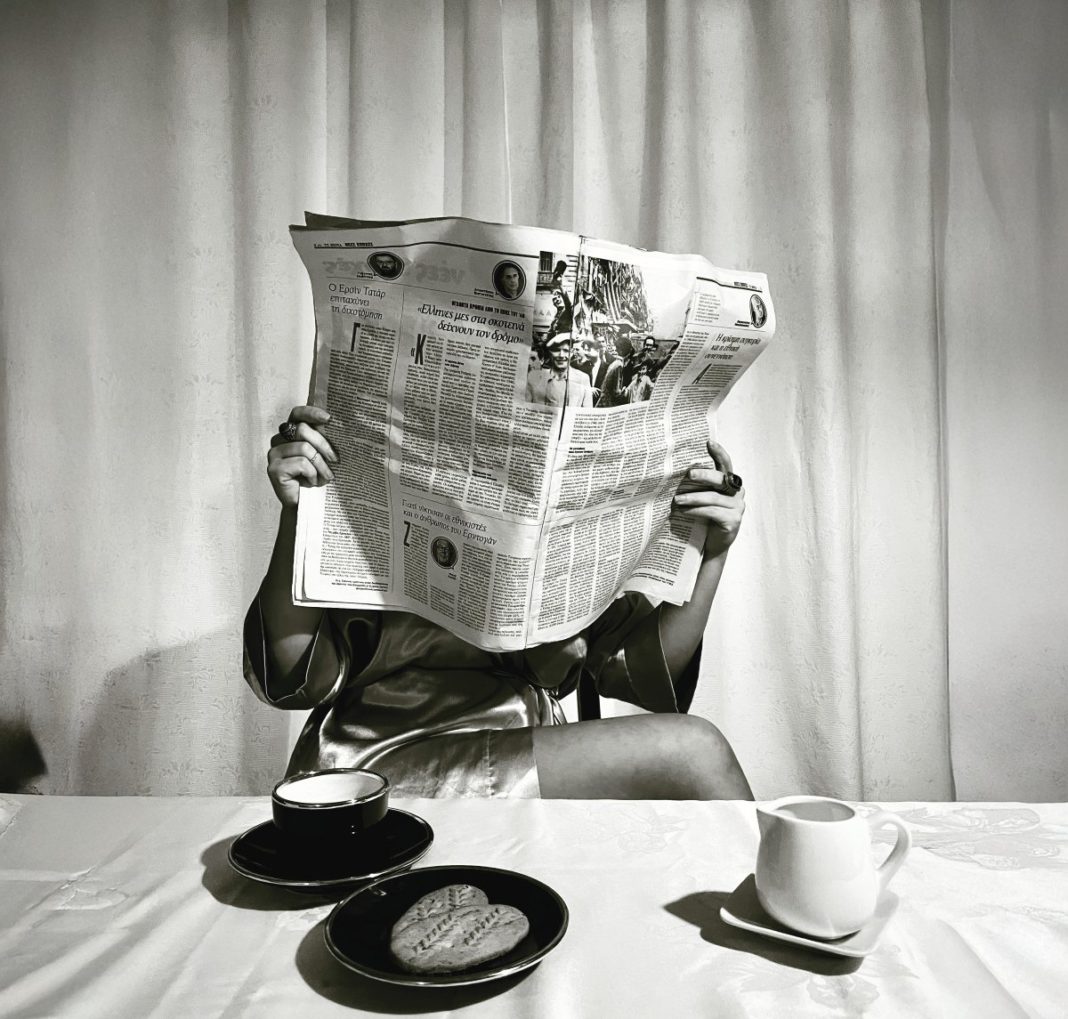
In the media game, AI is eating our lunch. “I think we might reach 90% of online content generated by AI by 2025,” said Nina Schick, an adviser and AI thought leader, in a recent Yahoo Finance Live appearance. “I believe that the majority of digital content is going to start to be produced by AI.”
Well, now it’s 2026, and Schick is probably right.
Which brings us to an old, half-forgotten term that suddenly feels timely again: Parajournalism. The word comes courtesy of Dwight Macdonald, who, opining in the New York Review of Books in 1965, described it as a “bastard form, having it both ways, exploiting the factual authority of journalism and the atmospheric license of fiction.”
To which I reply—channeling the surrealist Man Ray in Midnight in Paris—“Exactly correct—you inhabit two worlds—so far I see nothing strange.”
There’s no point in re-litigating a 60-year-old press club brawl. But in an era of fake news, alternative facts and the accelerating prevalence of generative AI in what we read, the individual experience—on the ground, in the moment or at the bar—is more necessary than ever. Not as a replacement for facts, but as a reminder that facts do not arrange themselves into meaning without a human consciousness doing the work.
This hybrid practice eventually became better known as New Journalism, and its celebrated practitioners—Tom Wolfe, Hunter S. Thompson, Joan Didion, Gay Talese, among them—made a persuasive case that voice, presence and subjectivity weren’t bugs but features.
And this was nothing new—not then, not now. Subjective reportage goes back at least as far as Mark Twain, if not the Gospels. The Rashomon-esque tension between truth and fact is ancient. But what felt novel in the 1960s and ’70s feels necessary again now. As Sari Azout writes in her essay, The End of Productivity, “AI can produce infinite amounts of content; quantity is its game. Quality, intention, taste, originality, vision—that’s where we come in.” Voice and individual creativity, she argues, will be the new currency of success.
Agreed. And journalism is where this distinction may matter most. As AI flattens language into competent sameness, what rises in value is the writer’s lived experience—not just where we were and what happened, but why we care.
Critics have argued that New Journalism is what happened when journalism got high on its own supply and started talking about itself. It favors narrative, attitude and texture over the fantasy of pure objectivity—a Zen-like pursuit that’s admirable but impossible, subject as we are to subjectivity. Precisely the point, and why it’s salient today. AI doesn’t have subjectivity. It has no personal experience, no capacity to be there. It doesn’t have fingerprints or singular folds in its brain. It can seem like it’s everywhere at once when, in fact, it’s nowhere.
It’s not you or me. Sure, it can produce a credible simulacrum of my voice and style. (Basic tenet: Why use a five-cent word when one can expense a 50-cent word to the publisher?) But pastiche does not perception make.
Which is how I’ve come to propose my own modest contribution to the journalism lexicon: Nu Journalism—it’s like nü metal, but without the pretentious umlaut. New boss, same as the old boss, but with contemporary branding to differentiate the era.
In a landscape flooded with machine-made content, the human voice matters more. We can’t compete with AI on speed or scale, but we can compete on meaning. And that’s a game we humans are still very much equipped to win. Do this right, and writing in the first person might keep us from writing as the last person.
Daedalus Howell sends arts and media newsletters from dhowell.com.








Brilliant