Craft Cartoons

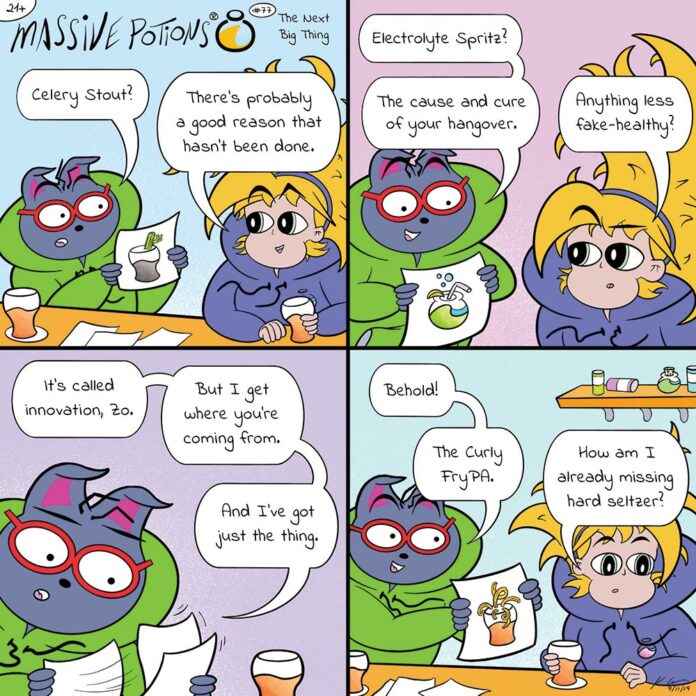
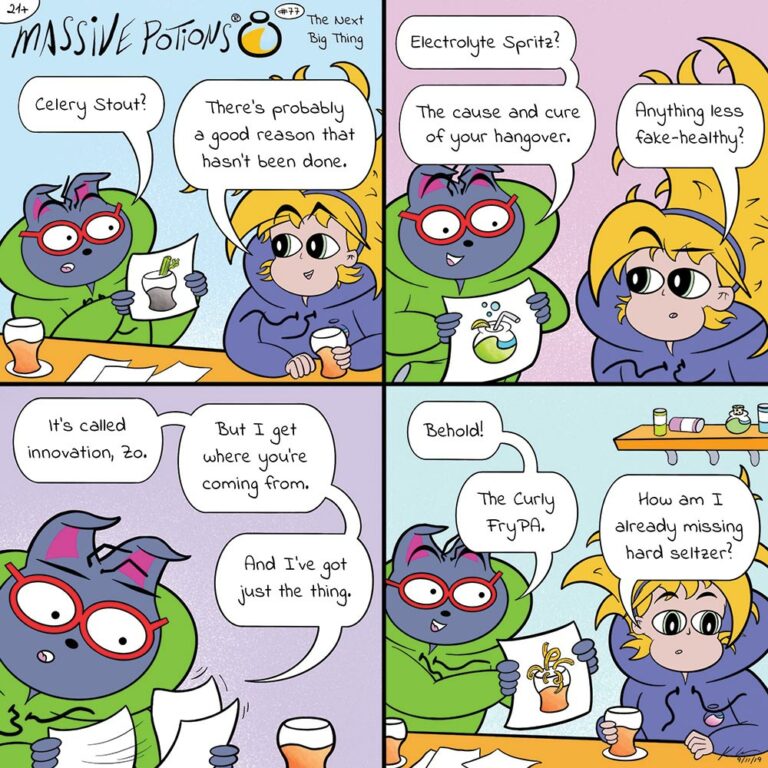
Ken Weaver knows a thing or two about craft beer in the North Bay, as well he should; he wrote the book on it in 2012. Weaver’s The Northern California Craft Beer Guide featured his exhaustive reporting paired with his wife-and-photographer Anneliese Schmidt’s images. Since writing the definitive who’s who of the region’s breweries and crafters putting beer on the map in wine country, Weaver keeps up with the craft beer scene in a new way, producing a webcomic, Massive Potions, each week for over a year, in which Weaver’s fictional post-apocalyptic brewery features a cartoon cat and other denizens who satirize craft beer clichés and poke fun at industry trends, like this summer’s hard seltzer craze.

“I got into beer more as a consumer at least a dozen years ago,” says Weaver, who earned a master’s degree in physics at Cornell University and an MFA in creative writing from the University of Maryland. “I had gotten involved in RateBeer.com back in DC, and that gave me the lay of the land. I got involved in the craft beer scene for fun, then I was writing on the side and it all came together.”

Weaver moved out to the North Bay with his wife, who had family in Marin, and the couple settled in Petaluma. In hindsight, Weaver says his Northern California Craft Beer Guide came about randomly after years of beer blogging and a timely conversation with publisher Chris Gruener of Petaluma-based Cameron + Company.

“That was a great opportunity for my wife and I both to settle into the scene,” says Weaver. “As someone new to Northern California, it was a great way to explore and become immersed in what was going on out here.”

In the intervening years, the craft beer scene in Sonoma, Napa and Marin County continued to expand. There is increasing competition to have the greatest and latest available on tap and to go, and long-running craft brewery staples like Marin Brewing Company, Moylan’s and Iron Springs, along with Pint Size taproom and HopMonk Tavern, are now in company and in competition with new breweries, taprooms and locations such as Stateroom, Beer Craft, Adobe Creek Brewing, Indian Valley Brewing, Pond Farm Brewing, Tam Commons, Inverness Park Taproom, MV Beerworks and others.

“The thought of re-doing the Beer Guide at this point feels overwhelming,” says Weaver. “There’s breweries everywhere, it’s a much more matured and developed scene; and this was a relatively mature and developed scene seven years ago. It’s gotten even more so.”

Weaver also says that the continued development of the local scene means that breweries are becoming more localized and specialized to their neighborhoods. “They’re serving their local geographic area, their footprint is modest and they are working on close relationships that are much more sustainable long-term,” he says. “The growth is stable, but there’s more competition and people are having to settle for smaller niches than they originally expected.”

While another Beer Guide isn’t in the works, Weaver has been plenty busy keeping his eye on the scene and offering his takes via Massive Potions.

“I’d been kicking this concept around for a while,” says Weaver of the webcomic. “I had been trying to find my feet going down the path of writing fiction.”

The concept of and characters in Massive Potions went through several literary forms, from novel to graphic novel to four-panel webcomic once Weaver started drawing the characters on his digital device. “It felt like the right gear for what I was doing,” he says. “Adding the graphic component, a light switch flicked on, it made sense. I could get a feel for this world.”

The two focal figures of Massive Potions, the big-haired Zo and the glasses-wearing cat Whalefeather, are the heart of the brewing operation. They hang out with characters like the brewery’s easy-going and only customer Pete, the bartending cow Dennis and other interlopers like the recently arrived White Claw, who expels the virtues of hard seltzer upon the IPA enthusiasts to little avail.

Though there are blueprints for a book coming in the next year, the best way to read Massive Potions is to find the series online.

“It’s fun making fun of these things, but the nice thing about the comic is that it’s not just one voice,” he says. “Having these characters gives me the opportunity to have different opinions, different angles and concepts; it’s more fun to explore how different people are thinking about this stuff.”

massivepotions.com.

Horoscope

ARIES (March 21-April 19): We’re in the equinoctial season. During this pregnant pause, the sun seems to hover directly over the equator; the lengths of night and day are equal. For all of us, but especially for you, it’s a favorable phase to conjure and cultivate more sweet symmetry, calming balance and healing harmony. In that spirit, I encourage you to temporarily suspend any rough, tough approaches you might have in regard to those themes. Resist the temptation to slam two opposites together simply to see what happens. Avoid engaging in the pseudo-fun of purging by day and bingeing by night. And don’t you dare get swept up in hating what you love or loving what you hate.

TAURUS (April 20-May 20): “I tell you what freedom is to me: no fear.” So said singer and activist Nina Simone. But it’s doubtful there ever came a time when she reached the perfect embodiment of that idyllic state. How can any of us empty out our anxiety so completely as to be utterly emancipated? It’s not possible. That’s the bad news, Taurus. The good news is that in the coming weeks you will have the potential to be as unafraid as you have ever been. For best results, try to ensure that love is your primary motivation in everything you do and say and think.

GEMINI (May 21-June 20): Some things don’t change much. The beautiful marine animal species known as the pearly nautilus, which lives in the South Pacific, is mostly the same as it was 150 million years ago. Then there’s Fuggerei, a walled enclave within the German city of Augsburg. The rent is cheap, about one U.S. dollar per year, and that fee hasn’t increased in almost 500 years. While I am in awe of these bastions of stability, and wish we had more such symbolic anchors, I advise you to head in a different direction. During the coming weeks, you’ll be wise to be a maestro of mutability, a connoisseur of transformation, an adept of novelty.

CANCER (June 21-July 22): Granny Smith apples are widely available. But before 1868, the tart, crispy, juicy fruit never existed on planet Earth. Around that time, an Australian mother of eight named Maria Ann Smith threw the cores of French crab apples out her window while she was cooking. The seeds were fertilized by the pollen from a different, unknown variety of apple, and a new type was born: Granny Smith. I foresee the possibility of a metaphorically comparable event in your future: a lucky accident that enables you to weave together two interesting threads into a fascinating third thread.

LEO (July 23-Aug. 22): “Every masterpiece is just dirt and ash put together in some perfect way,” writes storyteller Chuck Palahniuk, who has completed several novelistic masterpieces. According to my analysis of the astrological omens, you Leos have assembled much of the dirt and ash necessary to create your next masterpiece, and are now ready to move on to the next phase. And what is that phase? Identifying the help and support you’ll need for the rest of the process.

VIRGO (Aug. 23-Sept. 22): In 1959, scandal erupted among Americans who loved to eat peanut butter. Studies revealed that manufacturers had added so much hydrogenated vegetable oil and glycerin to their product that only 75 percent of it could truly be called peanut butter. So began a long legal process to restore high standards. Finally, there was a new law specifying that no company could sell a product called “peanut butter” unless it contained at least 90 percent peanuts. I hope this fight for purity inspires you to conduct a metaphorically comparable campaign. It’s time to ensure that all the important resources and influences in your life are at peak intensity and efficiency. Say NO to dilution and adulteration.

LIBRA (Sept. 23-Oct. 22): In 1936, the City of Cleveland, Ohio staged the Great Lakes Exposition, a 135-acre fair with thrill rides, art galleries, gardens and sideshows. One of its fun features was *The Golden Book of Cleveland*, a 2.5-ton, 6,000-page text the size of a mattress. After the expo closed down, the “biggest book in the world” went missing. If it still exists today, no one knows where it is. I’m going to speculate that there’s a metaphorical version of *The Golden Book of Cleveland* in your life. You, too, have lost track of a major Something that would seem hard to misplace. Here’s the good news: If you intensify your search now, I bet you’ll find it before the end of 2019.

SCORPIO (Oct. 23-Nov. 21): In 1990, the New Zealand government appointed educator, magician, and comedian Ian Brackenbury Channell to be the official Wizard of New Zealand. His jobs include protecting the government, blessing new enterprises, casting out evil spirits, upsetting fanatics and cheering people up. The coming weeks will be an excellent time to find your personal equivalents of an inspirational force like that. There’s really no need to scrimp. According to my reading of the cosmic energies, you have license to be extravagant in getting what you need to thrive.

SAGITTARIUS (Nov. 22-Dec. 21): “Do silly things,” advised playwright Anton Chekhov. “Foolishness is a great deal more vital and healthy than our straining and striving after a meaningful life.” I think that’s a perspective worth adopting now and then. Most of us go through phases when we take things too seriously and too personally and too literally. Bouts of fun absurdity can be healing agents for that affliction. But now is NOT one of those times for you, in my opinion. Just the reverse is true, in fact. I encourage you to cultivate majestic moods and seek out awe-inspiring experiences and induce sublime perspectives. Your serious and noble quest for a meaningful life can be especially rewarding in the coming weeks.

CAPRICORN (Dec. 22-Jan. 19): Before comedian Jack Benny died in 1974, he arranged to have a florist deliver a single red rose to his wife every day for the rest of her life. She lived another nine years, and received more than 3,000 of these gifts. Even though you’ll be around on this earth for a long time, I think the coming weeks would be an excellent time to establish a comparable custom: a commitment to providing regular blessings to a person or persons for whom you care deeply. This bold decision would be in alignment with astrological omens, which suggest that you can generate substantial benefits for yourself by being creative with your generosity.

AQUARIUS (Jan. 20-Feb. 18): Actress and author Ruby Dee formulated an unusual prayer. “God,” she wrote, “make me so uncomfortable that I will do the very thing I fear.” As you might imagine, she was a brave activist who risked her reputation and career working for the Civil Rights Movement and other idealistic causes. I think her exceptional request to a Higher Power makes good sense for you right now. You’re in a phase when you can generate practical blessings by doing the very things that intimidate you or make you nervous. And maybe the best way to motivate and mobilize yourself is by getting at least a bit flustered or unsettled.

PISCES (Feb. 19-March 20): Syndicated cartoon strip Calvin and Hobbes appeared for 10ten years in 2,400 newspapers in 50 countries. It wielded a sizable cultural influence. For example, in 1992, six-year-old Calvin decided “The Big Bang” was a boring term for how the universe began, and instead proposed we call it the “Horrendous Space Kablooie.” A number of real scientists subsequently adopted Calvin’s innovation, and it has been invoked playfully but seriously in university courses and textbooks. In that spirit, I encourage you to give fun new names to anything and everything you feel like spicing up. You now have substantial power to reshape and revamp the components of your world. It’s Identify-Shifting Time.

Fenn’s Way

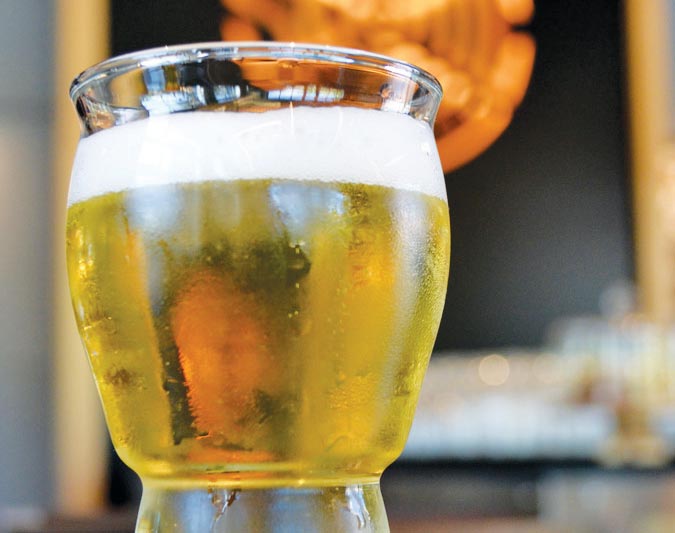
Forgive me for thinking there wasn’t much “there, there” in Novato’s craft beer scene, especially compared to its northern neighbors in Sonoma County, until I heard about some recent nanobrewery and taproom openings.

Venturing south of the border, I figure Beercraft is a good place to start an exploration of Marin County’s craft beer scene. It’s the southern outpost of a bottle shop and taproom that first opened in Rohnert Park in 2014 and is run by brothers JT Fenn and Matt Fenn. It’s already a bit more popular than its sibling, I’m told.

“I’ve never been in here when it’s only three people,” a regular remarks about this early afternoon’s light crowd. The taproom feels more neighborhood deli than bar, with its simple setup of cold case, counter and bright seating area with windows looking out on Redwood Avenue.

Non-beer drinkers are welcome, and will find cider on tap, plus French natural wine in a bottle. There’s always that person who says, “I only drink Coors,” says today’s bartender, Paul Hass; so Beercraft usually has a pilsner-style beer on tap to satisfy their palate.

Alas, Novato’s small brewing startups can’t fill out the 14-keg tap list on a regular basis. The one local selection today is Adobe Creek Brewing’s single hop Terp Sauce: Vic Secret, a crushed pink grapefruit of a hazy IPA, rind and all, maybe a little earthy orchard dust—I’m not saying I don’t love it! Sample 5-ounce pours are $4, and 12-ounce or full pints $7–$8.

Beercraft’s niche is in nabbing the newest releases—often one-shot brews—from California for the tap list, and from across the nation, in cans. Fenn told me previously how he might have only minutes, in today’s overheated craft beer market, to mull over carrying a distributor’s limited release.

I like a maltier style of IPA, but could spend an hour surveying the refrigerated IPA cans, which offer more artwork than info on the label. So I put the bartender’s expertise to work. Hass directs me to Surly Brewing Company’s Furious IPA, out of Minneapolis. Never heard of ’em, but the red-hued IPA, at only 6.7 percent alcohol by volume (ABV), is just what I ordered.

Among some more esoteric whisky-barrel aged stouts and quads, I spot an old favorite, Dragon’s Milk, from Michigan’s New Holland Brewing, now available in six-packs. But I pick up just one bottle—at 11 percent ABV, it’ll get me there.

Beercraft, 7388 Redwood Blvd., Novato. Open Mon–Thurs 1–8pm; Fri–Sat 1–9pm; Sun 1–5pm. 415.895.5402.

Old Reliable

I’ve never understood the concept of a “guilty pleasure.” It’s a way of expressing one’s tastes while simultaneously apologizing for them. Taste is inherently subjective, so why let other people make you feel bad about yours? If your idea of fine art is a black-light poster, I say embrace it! If you have a thing for celebrity gossip, own it! If your favorite song is “Don’t Stop Believing,” don’t apologize for it. Play it louder.

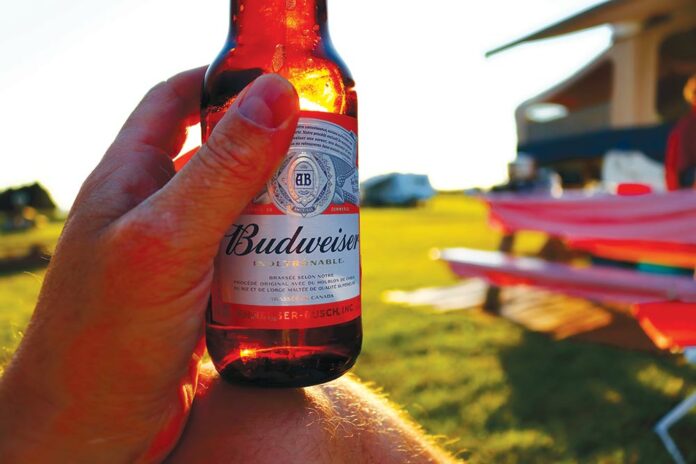
So let me assure you that there’s no guilty pleasure involved when I say I like Budweiser. No hipster irony, either—Bud is not some sort of fermented, beechwood-aged proxy for a vintage Gulf gas station jacket, at least not for me (and I should know, because I happen to own a vintage Gulf gas station jacket). When I say I like Bud, it’s because I like Bud, sincerely and enthusiastically.

Yes, I know Budweiser is essentially a factory product. Yes, I know Bud’s corporate parent, InBev, is an evil leviathan. And yes, I know Bud is the default choice of lunkheads everywhere. Is Bud as good as my favorite beer, Samuel Smith Oatmeal Stout? No, of course not—but that’s a treat for special occasions. Bud is my everyday beer, and I vastly prefer it over most microbrews and craft beers.

Why? For starters, I tend to dislike bitter flavors. This means most hoppy beers, which comprise a disproportionate share of the craft market, are off-limits for me. Obviously, Bud doesn’t present this problem, as its hops quotient is notoriously mild.

Moreover, there are certain products—and beer is one of them—that I prefer to feel like I’m buying from adults, from grown-ups. When I see craft beers with cringe-inducing, pun-driven names any self-respecting person would be embarrassed to say out loud, like Hoptical Illusion and Baby Got Bock, and with label designs that lean heavily on cartoons and other pop-cultural totems, it all feels like kids playing dress-up. Save that stuff for the candy aisle. Say what you want about Bud, its brand presentation has generally stayed pretty classic, timeless and non-generational.

And that’s as it should be, because beer should be for everyone. So many of the craft beers feel like they’re trying to weed out the squares and/or the olds. Imagine your father shopping for beer and seeing a six-pack of Hoptimus Prime or Citra Ass Down—would he get the joke? Even if he did, he might reasonably conclude that this product was intended for someone else.

Beer should aim to unite, not to divide, which is another reason I like Bud. I like it the same way I like the Rolling Stones, or baseball, or Goodfellas, or a burger with fries—solid, mass-appeal products that make me feel connected to the rest of humanity, or at least America. In this era of increasingly fragmented, hyper-niche-driven subcultures (several of which I happily partake in), it’s nice to have something that makes me feel like I’m going wide instead of narrow.

Also: Most stores and bars carry it, it’s reasonably priced, it goes down easy, and the 5.0 percent ABV gives just the right buzz. So yeah, I like Bud. I’m drinking one right now, in fact. Unapologetically? Guilty as charged.

Paul Lukas is a staff writer at Sports Illustrated. He also runs the Uni Watch Blog, among lots of other projects.

Do I Know You?

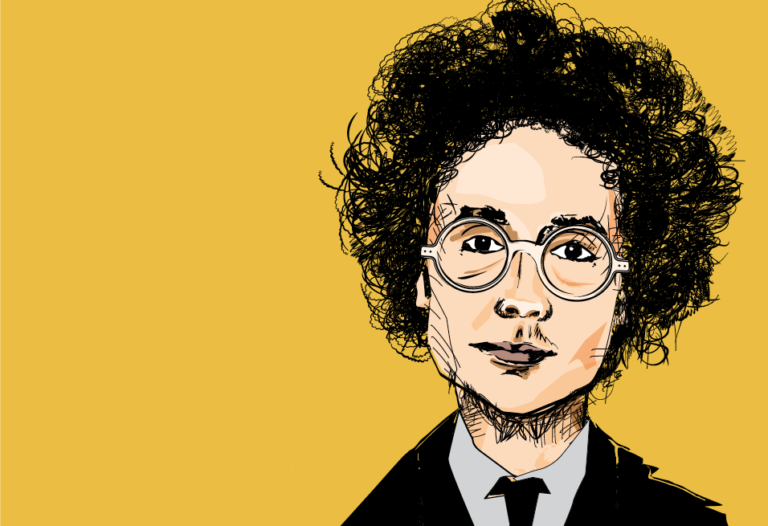
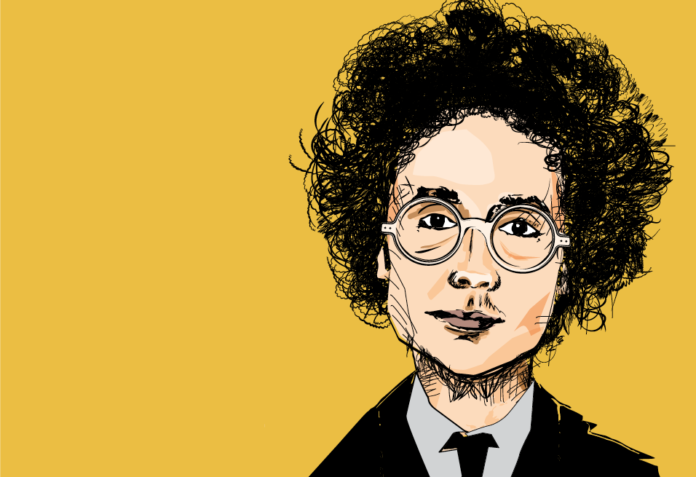
Malcolm Gladwell is a complete stranger to me. Sure, I’ve read a few of his past books—The Tipping Point, Outliers, Blink and his latest, Talking to Strangers—and listened to most of the four seasons of his podcast Revisionist History. We recently talked over the phone and had a very enlightening conversation about his work. Most of the gatekeepers in the modern media world would now consider me eminently qualified to write a profile of Malcolm Gladwell.

Gladwell himself, however, would not. Because the truth is, I don’t really know him at all. I can tell you what point he argued in which episode of his podcast. I can definitely remember when I most emphatically agreed or disagreed with his conclusions. I can also do an impression of his voice that makes my co-workers crack up.

None of that equips me to profile Gladwell as a person; all I’m really qualified to do is profile his ideas. Unfortunately, journalists often feel that’s not enough. They want to believe they understand something deeper about their subjects, which can lead to overreach.

“I’ve always had a baseline skepticism about journalistic profiles,” Gladwell tells me. “I always feel they’re overly ambitious. The idea that you can sit down with a stranger and come to a reckoning of who they are, and what motivates them, in a short period of time is just nonsense. It’s just not true.”

Gladwell isn’t singling out journalists here. The conceptual through-line of his new Talking to Strangers: What We Should Know About People We Don’t Know is that we’re all downright terrible at reading people we don’t know—gleaning their true feelings, motives or intentions.

“Journalists are not immune from the mistakes that all of us make, and maybe we ought to be a lot more cautious,” Gladwell says. “I think the best journalists do that. The best work, the most successful profiles, are modest in their aspirations. They aim to focus on a very specific part of the person being profiled, as opposed to a global assessment.”

Misreading and Writing

Throughout his new book, Gladwell lays out example after example of instances where the misreading of strangers resulted in historically catastrophic consequences. The chapter on Jerry Sandusky and the sex-abuse scandal at Penn State includes a couple of examples of profiles that the writers would probably like to take back, including one from the Philadelphia Inquirer that lays it on thick about a pre-disgraced Sandusky’s “ennobling” qualities. But even here, Gladwell’s point is not to shame the writers. On the contrary, the Sandusky section of the book attempts to build a complex case for why the people around Sandusky didn’t understand what was going on at the time. He argues that the fallout from the case led to misinformed scapegoating, including of Joe Paterno.

“I think Joe Paterno was treated abominably. It was completely wrong to blame him,” Gladwell says. “Having read hundreds of pages of the court transcripts, I don’t think a plausible case could be made that Joe Paterno had any inkling whatsoever of Jerry Sandusky’s activities. He did exactly what he was supposed to do—he notified his superiors immediately and turned the matter over to them. That is what he was supposed to do. I’m quite sympathetic to some of the Penn State people who feel that case was mishandled.”

The Sandusky chapter is perhaps the toughest to analyze, and the easiest to criticize, partially because it’s a very limited discussion of a sprawling topic. Entire books could be written about who knew what, and when, in the Penn State story—and, of course, they have. The titles of these books alone make their vastly different conclusions apparent: Game Over: Jerry Sandusky, Penn State and the Culture of Silence will never be confused for The Most Hated Man in America: Jerry Sandusky and the Rush to Judgment. The latter goes even further than Gladwell, arguing that Sandusky may very well be innocent, and that the same “repressed memory therapy” that spurred the fraudulent “Satanic Panic” in the 1980s played a huge role in the case—but he takes 400 pages to explore this argument, compared to Gladwell’s 35-page chapter.

Campus Conundrum

The Penn State case is far from the only controversial topic Gladwell takes on in Talking With Strangers. In a chapter called “Transparency Case Study: The Fraternity Party,” he uses the 2015 case in which Stanford University student Brock Turner was convicted of three counts of felony sexual assault to examine the problem of alcohol abuse on college campuses.

This would be a dicey proposition by any measure: Turner’s assault of Chanel Miller (who was known at the time as “Emily Doe”; she revealed her real name earlier this month) made national headlines when Santa Clara County judge Aaron Persky ignored prosecutors’ recommendation of a six-year sentence and gave Turner six months in county jail (he ended up serving three) plus three years probation.

Perksy’s assertion that Turner’s lack of a criminal record and his upstanding character warranted a reduced sentence led to the judge’s 2018 recall. The case led to changes in California state law about the definition of rape and the mandatory minimum-sentencing for sexual assault of an unconscious or intoxicated person.

“The People vs. Brock Turner is a case about alcohol,” Gladwell writes. He then proceeds to walk a very fine line in defining what his argument is about (a salient point about a lack of education for young people concerning the dangers of blackout drinking) and what it is not (a denial of the seriousness of Turner’s crime).

Gladwell knows that with both the Sandusky and Turner cases, he’s venturing into territory that’s difficult to write—but also difficult to read.

“I have, after 30 years, an enormous amount of faith in my readers. I know who my readers are, and I know my readers read things carefully. Those chapters both require careful reading,” he says. “I am not blaming the victim in the Brock Turner case. I am making an argument about how we prevent these kinds of things in the future. That’s a subtle point, but I think people who listen to my podcast or read my books are totally fine with subtle points.”

Indeed, fans of Revisionist History will be familiar with other times Gladwell took on topics other writers might consider taboo; for instance, the Brown v. Board of Education episode “Miss Buchanan’s Period Of Adjustment” (possibly the best episode he’s produced), in which he attempted to lay out the problems black teachers faced in the wake of the landmark desegregation ruling, without undermining the importance of the decision itself.

Gladwell says he’s not so much drawn to controversial topics as he feels he should be taking them on at this point in his career.

“I would say that I feel I have an obligation to write about those kinds of things because I can. I’m now in a position—having been a journalist for a long time, and having established a reputation for myself and having a readership—to have the freedom to write about those things. I can take the blow,” he says.

“Sure, people will get upset, but it’s fine. I mean, I can handle that. A 25-year-old journalist starting out would be taking a real risk for their career if they were to approach some of these topics. I think when you’re an established journalist, you have an obligation to go where others can’t or don’t want to.”

‘History’ Lessons

The material Gladwell takes on in Talking to Strangers is not the only parallel to his podcast: The whole book is laid out like an episode of Revisionist History, or perhaps a whole season packed into one book. It starts out with one character—Sandra Bland, an African-American woman from Chicago who was the victim of a bizarre and frankly terrifying traffic stop by a white cop in Houston in 2015—and then threads through other stories before returning to Bland’s story and a fierce indictment of the policing system responsible for it. This is a classic setup for a Revisionist History episode—the aforementioned Brown v. Board of Education episode employed the same structure. And Talking to Strangers is so thoroughly character-driven that it, too, seems the result of a lesson Gladwell learned doing the podcast. Though Revisionist History is perhaps most famous for episodes like 2016’s “Blame Game,” which smashed popular misconceptions about the “unintended acceleration” recalls of Toyota vehicles in 2009, 2010 and 2011, I’ve always found the best episodes to be the ones solidly built around characters first, and Gladwell’s trademark data-analysis second.

The author says it’s no accident his latest book is so reminiscent of the podcast, and that Revisionist History has had a “profound impact” on the way he writes books.

“The podcast has been the dominant thing in my life now for four years,” Gladwell says, “and it’s the thing I’m most excited about. It’s been a way to kind of—not re-invent, that’s too strong a word, but learn a whole new skill, and think about storytelling in a whole new way. It absolutely influenced Talking to Strangers.”

The most definitive sign of that influence is the fact that instead of the traditional audiobook, in which he reads the text, he actually created—well, basically a podcast. It includes the audio from his interviews for the book, as well as archival tape that he discusses in the book, and music. And he’s more excited about it than the print version.

“It’s like a six-hour episode of Revisionist History,” he says. “This is an emotional book, and I feel like in some ways the audio book is better than the print book, because you get more. You hear Sandra Bland at the beginning talking about ‘my beautiful kings and queens,’ and she stays with you. And at the end, the whole thing, about the cop and the deposition, [State Trooper Brian] Encinia explaining himself, I have that tape. So you hear him, and it becomes really, really visceral and real.

“And then you’re hearing this Janelle Monae song; she wrote a song about all the police shootings where she names all the victims. So it’s a whole overwhelming experience when you listen to it. I really encourage people to experience the book that way.”

‘Blink’ Again

Gladwell cites a number of examples in his new book about how misplaced confidence in our ability to read other people resulted in disastrous consequences. He discusses Neville Chamberlain’s famous failure to judge Adolf Hitler’s intentions, leading him to foolishly return from Munich waving a piece of paper Hitler had signed, and promising “peace in our time.” He examines how the CIA went for years believing they had faithful spies throughout Cuba, only to discover that every single one of them was a double agent working for Fidel Castro. He explains how truly astonishing the con job Bernie Madoff pulled on his victims really was—all because he managed to create a false aura of sincerity and good intentions. On the flipside, in one of the best chapters for explaining our inability to read the people around us, Gladwell deconstructs how Amanda Knox was convicted of murder not because she was guilty, but because she unintentionally acted guilty.

If all of this talk about perception and the length of time it takes to accurately parse information sounds a lot like Gladwell’s 2005 book Blink, that’s because it is. In fact, Talking to Strangers came out of Gladwell’s belief that Blink, a book about snap judgement, had been widely misunderstood and misinterpreted in the media.

Blink was a fascinating and frustrating experience for me,” he says. “Because Blink was really a cautionary tale about our first impressions. It was a story that began with all the ways they work, and then the latter half of the book was about all the ways that we’re misled by our intuition. That didn’t quite come across.

“So this book first of all zeroes in on a particular kind of first impression, which is the relationship with a stranger. But I really wanted to squarely address what can go wrong, and the consequences of that—just as David and Goliath grew out of Outliers, this book grows out of Blink. With a lot of my books, I write it once, then I sit with it, then I come back and tackle the issue again.”

Ultimately, Talking to Strangers looks at the problem of how we misunderstand strangers from both a macro and micro perspective. It suggests the need for reform in our institutions— policing, the justice system and military-intelligence interrogation policies (the section on the biological reasons for the ineffectiveness of torture is a stunner)—and argues that action is needed to bring the systems of society in line with how our brains really work. But on another, individual level, it also suggests that the “default to truth” principle most of us use in everyday dealings with each other isn’t such a bad thing—even if it can be wrong. The alternative, he suggests, can be much worse.

“Let’s make sure that our institutions and practices conform to who we are,” says Gladwell. “But let’s accept ourselves for who we are, and stop pretending otherwise. We should stop beating ourselves up over our fundamental tendency to trust each other, and instead intelligently adapt to it.”

Malcolm Gladwell appears on Sunday, Sep 22, at Angelico Hall, Dominican University of California, 20 Olive Ave., San Rafael. 1pm. $40. 415.927.0960.

FlashBacks

0

50 Years Ago

A couple of years back, when sit-ins were all the rage in San Francisco and Mario Savio was holding forth in Berkeley, a favorite phrase was “participatory democracy.” The phrase was dismissed by many people as just so much rhetoric. They were dead wrong. It is a good bet that when the history of the 1960s is written, the idea, if not the phrase, of participatory democracy will be the most significant development of the decade.. —Editorial, 9/17/69

40 Years Ago

The reclusive [George] Lucas and his wife, Marcia, caught by Darth Vader and his press corps in the narrow halls of Civic Center, reluctantly answered a few questions… Lucas is a small, slight man with a beard beginning to grow gray, a man who doesn’t grant interviews, a man whose films are being edited in small nooks and crannies in San Anselmo and San Rafael.

—Joanne Willams, 9/14/79

20 Years Ago

William Cenkner was five months into a 16-month term at “The Ranch,” the minimum security section of San Quentin. He was due to be released in April. Do the time? Nope. He escaped (actually just walked away), was picked up in Bakersfield and now faces three to five more years. —Steve McNamara, 9/15/99

Hero & Zero

Hero

Tax forms are daunting and many people miss out on earned credits and deductions because they can’t afford professional tax preparation. The Marin AARP Tax-Aide program comes to the rescue by providing free income tax services for seniors and low-to-moderate income taxpayers.

Want to make a difference in your community and be a part of the rewarding program that assisted more than 2,000 Marin residents this past tax season? Volunteer. Tax preparation training for 2020 starts soon and you don’t need any experience. To learn more email ma**********@***il.com or go to aarpfoundation.org/taxaide to sign up to volunteer.

Zero

Big weekend in Mill Valley crime: An Uber passenger assaulted his driver, a teen was stabbed over a cellphone and a man passed out in his car with a gun.

Sunday morning brought the police out in full force to deal with an armed man who stayed holed up in his car for hours. First, the Uber passenger punched his driver in the face, causing moderate injuries. The police showed up shortly thereafter. Minutes later, officers responded to a call from a 15-year-old boy. He’d been stabbed and his cellphone stolen.

Both victims described a similar perpetrator. Police identified a suspect and made contact with his family. The next morning, John Santiago Rosales, 18, of Mill Valley, turned himself in and was arrested for battery with injury, robbery and assault with a deadly weapon.

The crime trifecta concluded when the driver of a dark Mercedes hit a parked car and parked near an Arco station overnight. At dawn, an officer found the driver passed out with a gun on the passenger seat. Officers from four agencies stood by while the driver remained unresponsive. A drone was deployed. Three hours later, the driver exited his vehicle. Garrett McGraff, 35, of Santa Rosa, was arrested for being a felon in possession of a firearm and ammunition, possession of suspected heroin and possession of suspected ecstasy.

Email: ni***************@***oo.com

Hero & Zero

Hero

Tax forms are daunting and many people miss out on earned credits and deductions because they can’t afford professional tax preparation. The Marin AARP Tax-Aide program comes to the rescue by providing free income tax services for seniors and low-to-moderate income taxpayers.

Want to make a difference in your community and be a part of the rewarding program that assisted more than 2,000 Marin residents this past tax season? Volunteer. Tax preparation training for 2020 starts soon and you don’t need any experience. To learn more email ma**********@***il.com or go to aarpfoundation.org/taxaide to sign up to volunteer.

Zero

Big weekend in Mill Valley crime: An Uber passenger assaulted his driver, a teen was stabbed over a cellphone and a man passed out in his car with a gun.

Sunday morning brought the police out in full force to deal with an armed man who stayed holed up in his car for hours. First, the Uber passenger punched his driver in the face, causing moderate injuries. The police showed up shortly thereafter. Minutes later, officers responded to a call from a 15-year-old boy. He’d been stabbed and his cellphone stolen.

Both victims described a similar perpetrator. Police identified a suspect and made contact with his family. The next morning, John Santiago Rosales, 18, of Mill Valley, turned himself in and was arrested for battery with injury, robbery and assault with a deadly weapon.

The crime trifecta concluded when the driver of a dark Mercedes hit a parked car and parked near an Arco station overnight. At dawn, an officer found the driver passed out with a gun on the passenger seat. Officers from four agencies stood by while the driver remained unresponsive. A drone was deployed. Three hours later, the driver exited his vehicle. Garrett McGraff, 35, of Santa Rosa, was arrested for being a felon in possession of a firearm and ammunition, possession of suspected heroin and possession of suspected ecstasy.

Email: ni***************@***oo.com

G Whiz

The article by Chris Rooney (“Divisive Data,” Sep. 11) suggested that Russia, through “RT America,” was trying to sow division in the U.S. by casting doubts about the safety of 5G technology. Besides getting several paragraphs in the text, you chose to add a subtitle that featured “reports of health risks associated with 5G linked to Russians.”

It may just be my aging memory, but in my five years or so of following RT on a more-than-daily basis I cannot recall ever reading a negative article about 5G. In fact, since the U.S. has been trying to ban sales of Huawei’s 5G technology internationally, and given Russia’s general support of all things Chinese, RT tends to have articles slanted in favor of 5G.

I use the RT android app on my cell phone and look at it several times a day, finding it a refreshing antidote to the spin of sites such as The Guardian, NPR and Democracy Now. As far as their coverage of the U.S. goes, they seem to favor Republicans more than Democrats, I think not because of a plan to sow dissent but because they tend to favor what they think of as

“traditional Western values.” I sometimes find that annoying, but, since my news otherwise comes from Democracy Now and other KPFA programs, as well as NPR and Bill Maher, I like to hear the “other side” also, and I very much enjoy their great coverage of international news, which gets short shrift in most American news.

Fred Wolters

Guerneville

I was amused by the Chris Rooney article on 5G. He correctly cites that the 10,000-plus studies, including the gold-standard, $30 million, tax-dollar-funded NTP study done recently, apparently aren’t good enough in the eyes of the FDA, FCC or many courts, though it’s curious that the richest cities like Hillsborough, Belvedere, Los Altos, etc., seem to be able to sidestep Uncle Sham’s plans for more and more wireless coverage. Apparently, we’re in a race with the Chinese.. . .

Tom Thedoor

Via Bohemian.com

Nouveau Name

0

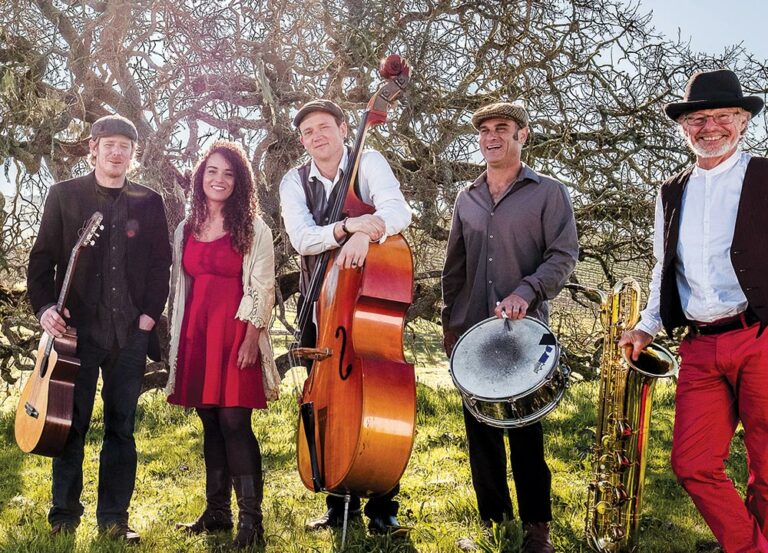
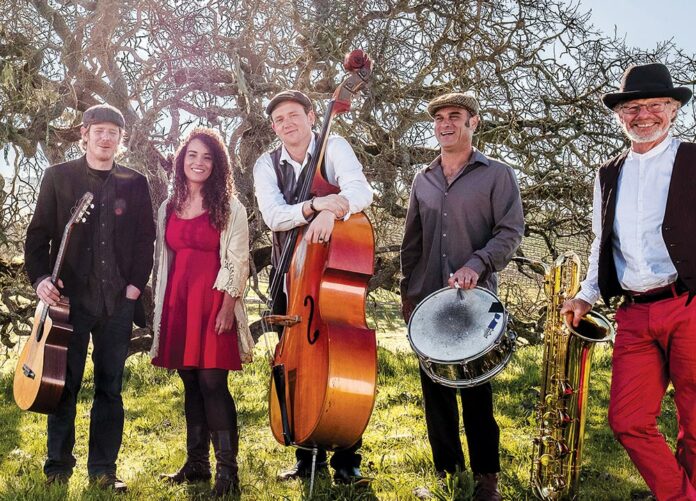
North Bay native and vocalist Stella Heath specializes in evoking bygone eras of music, both in her role as the titular singer of the Billie Holiday Project and as the bandleader for long-running Gypsy-jazz group French Oak, who are about to formally change their name to Bandjango Collectif upon the release of their new album by the same name.

French Oak got its start in 2014, when Heath moved back to her hometown of Petaluma after living and working in New York for a decade. “I contacted (guitarist) Gabriel Pirard to start a jazz band,” says Heath. “I actually had the idea to name the band Bandjango in the beginning, but we wanted to target wineries and venues like that so we thought of French Oak. But, now we’ve grown out of that and want to go back to the original that I liked.”

After releasing a debut album in 2016 as a trio, French Oak also grew in size, and now includes Heath, Pirard and James Inciardi on tenor, baritone and soprano saxophone; Skyler Stover on standup bass; and Jamie Foster on drums and percussion. After recording their sophomore album—Bandjango Collectif—over the course of the last year, the group decided the album’s release this fall would be the best time to transition to the new band name. This month, the group plays their final shows as French Oak on Sept. 20 at Redwood Café in Cotati and on Sept. 27 at Red Poppy Art House in San Francisco, before Bandjango Collectif makes its official debut on Oct. 2 at Blue Note Jazz Club in Napa.

While the name is changing, the music remains the same, French chanteuse–inspired sound.

“I’ve loved Edith Piaf ever since I was a kid,” Heath says. “I also loved Louis Armstrong, and as I started to discover jazz I was introduced to this whole genre of Gypsy-jazz made famous by Django Reinhardt.”

While Reinhardt’s French-jazz guitar inspired the band’s sound, Heath notes they’ve added more languages and musical styles to incorporate Spanish and American jazz as well. There are also a slew of international pop tunes mixed into the group’s repertoire, offering both classic and contemporary styles of music in their live shows. “I want everybody to be welcome at our shows,” says Heath. “It’s a very comfortable vibe and a celebratory atmosphere.”

French Oak (soon to be re-named Bandjango Collectif) plays Friday, Sept. 20, at Redwood Cafe, 8240 Old Redwood Hwy, Cotati. 8pm. $10. 707.795.7868.

Craft Cartoons

Ken Weaver knows a thing or two about craft beer in the North Bay, as well he should; he wrote the book on it in 2012. Weaver’s The Northern California Craft Beer Guide featured his exhaustive reporting paired with his wife-and-photographer Anneliese Schmidt’s images. Since writing the definitive who’s who of the region’s breweries and crafters putting beer on...

Horoscope

ARIES (March 21-April 19): We’re in the equinoctial season. During this pregnant pause, the sun seems to hover directly over the equator; the lengths of night and day are equal. For all of us, but especially for you, it’s a favorable phase to conjure and cultivate more sweet symmetry, calming balance and healing harmony. In that spirit, I encourage...

Fenn’s Way

Forgive me for thinking there wasn’t much “there, there” in Novato’s craft beer scene, especially compared to its northern neighbors in Sonoma County, until I heard about some recent nanobrewery and taproom openings. Venturing south of the border, I figure Beercraft is a good place to start an exploration of Marin County’s craft beer scene. It’s the southern outpost of...

Old Reliable

I’ve never understood the concept of a “guilty pleasure.” It’s a way of expressing one’s tastes while simultaneously apologizing for them. Taste is inherently subjective, so why let other people make you feel bad about yours? If your idea of fine art is a black-light poster, I say embrace it! If you have a thing for celebrity gossip, own...

Do I Know You?

Malcolm Gladwell is a complete stranger to me. Sure, I’ve read a few of his past books—The Tipping Point, Outliers, Blink and his latest, Talking to Strangers—and listened to most of the four seasons of his podcast Revisionist History. We recently talked over the phone and had a very enlightening conversation about his work. Most of the gatekeepers in...

FlashBacks

50 Years Ago A couple of years back, when sit-ins were all the rage in San Francisco and Mario Savio was holding forth in Berkeley, a favorite phrase was “participatory democracy.” The phrase was dismissed by many people as just so much rhetoric. They were dead wrong. It is a good bet that when the history of the 1960s is...

Hero & Zero

Hero Tax forms are daunting and many people miss out on earned credits and deductions because they can't afford professional tax preparation. The Marin AARP Tax-Aide program comes to the rescue by providing free income tax services for seniors and low-to-moderate income taxpayers. Want to make a difference in your community and be a part of the rewarding program that assisted...

Hero & Zero

Hero Tax forms are daunting and many people miss out on earned credits and deductions because they can't afford professional tax preparation. The Marin AARP Tax-Aide program comes to the rescue by providing free income tax services for seniors and low-to-moderate income taxpayers. Want to make a difference in your community and be a part of the rewarding program that assisted...

G Whiz

The article by Chris Rooney (“Divisive Data,” Sep. 11) suggested that Russia, through “RT America,” was trying to sow division in the U.S. by casting doubts about the safety of 5G technology. Besides getting several paragraphs in the text, you chose to add a subtitle that featured “reports of health risks associated with 5G linked to Russians.” It may just...

Nouveau Name

North Bay native and vocalist Stella Heath specializes in evoking bygone eras of music, both in her role as the titular singer of the Billie Holiday Project and as the bandleader for long-running Gypsy-jazz group French Oak, who are about to formally change their name to Bandjango Collectif upon the release of their new album by the same name. French...
3,002FansLike
3,850FollowersFollow