Fall is the time when a theater company’s fancy turns lightly to thoughts of a new season. Announcements are made, rehearsals are scheduled and the sound of buzzing returns to auditoriums as audiences enter and take their seats in support of live performance.
After being dark for a year-and-a-half, California’s June “reopening” gave theater artists hope that the hunger they felt to return to the stage would be fed by fall. Companies moved forward and scheduled their season openers. All looked promising until the Delta variant reared its ugly head.
As new Health Orders emerged, companies once more found themselves asking, “Should we cancel? Postpone? Move forward?” Throughout the Bay Area, the answer to all those questions has been, “Yes.”
Marin Theatre Company issued a press release on Aug. 11 trumpeting their Sept. 9 season opening with the West Coast premiere of the Obie Award-winning The Sound Inside. Eight days later they issued another press release announcing the postponement of MTC’s opening till Nov. 18, and a change in the opening show to the final installment of the Lauren Gunderson and Margot Melcon Christmas at Pemberley trilogy. The Sound Inside is postponed until May 2022.
This is all a way of informing the public that anything that follows regarding live theater this fall could change at any minute and several times.
Theaters moving forward have implemented stricter Covid protocols—audience members must show proof of vaccination, masks must be worn at all times indoors, concession sales have been moved outside or cancelled altogether, to name a few—and most require all members of their company—staff, crew and performers—to be fully vaccinated.
Yet with all that, a large question mark continues to hover over the theater community. Will the shows go on? Will audiences show up?
If they do, here’s a sampling of their possible options:
In Marin, the Novato Theater Company has scheduled four weekends of “variety” entertainment, starting in September, featuring open-mic nights for performers of all ages, comedy and a play reading. They’ll follow that up in late October with a full production of Oscar Wilde’s The Importance of Being Earnest.
September will also bring the Ross Valley Players production of David Lindsay-Abaire’s uproarious comedy Ripcord, a show last seen locally in a very successful production at Petaluma’s Cinnabar Theater just before the pandemic hit. RVP’s Barn Theatre will then host the Mountain Play production of Lerner and Loewe’s Camelot in November.
In mid-September, the Marin Shakespeare Company will present a new, pandemic-inspired version of Sarah Shourd’s play The BOX. It’s an immersive, socially distanced experience about resistance and survival in solitary confinement in a U.S prison, with each person in the audience seated in their own square of a grid at San Rafael’s Forest Meadows Amphitheatre.
In Sonoma County, the aforementioned Cinnabar Theater in Petaluma opens with Cry It Out, a dark-hued comedy about motherhood, female friendship, economic status and class.
The Spreckels Performing Arts Center in Rohnert Park will open with the pandemic-delayed production of David Templeton’s new sci-fi play Galatea. The set has been sitting on the Spreckels black box stage since the show shut down three days prior to its opening last year.
Award-winning drag performer Michael Phillis takes his “Patty from HR” character out of San Francisco’s Oasis Club and brings her to Sebastopol’s Main Stage West for A Zoom with a View, Patty’s/Michael’s response to the current state of America.
Santa Rosa’s 6th Street Playhouse follows up their currently running Love, Loss, and What I Wore with a main-stage production in mid-September of Murder for Two. It’s a musical murder mystery performed entirely by a cast of two.
Left Edge Theatre will open their season with a couple of one-acts. Lauren Gunderson’s two-hander I and You is paired with Beautiful Monsters, an avant-garde performance piece written by Kelly Gray.
Sonoma’s Rotary Stage transforms into a decaying Hollywood mansion situated on Sunset Boulevard. The Sonoma Arts Live production of the Andrew Lloyd Webber musical is scheduled to open in late September.
San Francisco-based performer Dan Hoyle brings his long-running solo show Border People to the Cloverdale Performing Arts Center for a single night in September. The Beard of Avon, a farcical look at Shakespeare, will follow it in October.
The current drought won’t prevent Disney’s The Little Mermaid from splashing around Napa next month. Lucky Penny Productions has scheduled the family musical for a three-week run.
Check each theater company’s website for the latest on dates, times, ticket prices and possible postponements or cancellations.
Until this week, the only thing Rodney Dangerfield and I had in common was a penchant for one-liners and general anxiety about our respectability. Then we both went “back to school.” His experience was fictional—apart from the cameo by a real-life Kurt Vonnegut—and arrived in the local cineplex as the movie Back to School. My back-to-school experience was a protracted year-long Zoom odyssey as I finished a couple of semester’s worth of units at virtualized San Francisco State University.
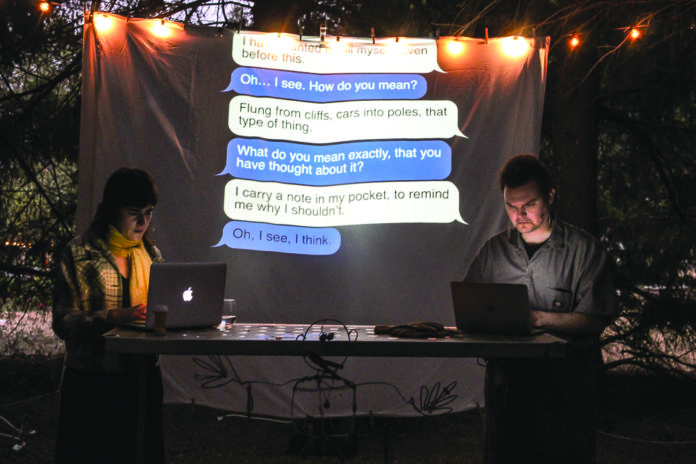
What does this say about the relative merits of having a college degree in my industry? I’m not sure, though I think it speaks volumes about how we learn to write, which is and always has been by doing. Which SF State was fairly rigorous about—my last semester, which ended a couple of weeks ago, required me to write a children’s book, a research paper on a public relations campaign and a feature-length screenplay, all within the span of six weeks. This occurred, of course, while producing the newspapers and magazines required by my day job—not to mention a handful of writing-related side hustles. Tens of thousands of words poured out of my fingers into this laptop, and from my thumbs into my phone, where I do a fair amount of composition these days. So, if my columns sometimes read as prolonged texts, now you know why.
To say the output nearly killed me would be overly dramatic. Anyone who thinks writing is a hardship in any way is doing it wrong. It’s one of the most privileged gigs a dropout can have. The work did, however, temporarily turn me into a word-addled crank, from which I’m still recovering, glass by glass.
I never graduated from anything, unless we pretend that eighth grade promotion is meaningful to anyone but eighth graders. Sometime in the late ’80s, I left high school via the California Proficiency Exam, which I passed twice—once for myself and once for a dyslexic friend, for whom the testers would not allot extra time. This was during the Golden Age of fake IDs. That said, I think I did “technically” graduate from high school—it’s a cesspool of semantics into which I won’t wade. I was quite proud of being a “dropout,” which I boldly stated on my bios until a publicist for a project I was on asked if I could supply a version that was less, ahem, “punk rock.”
Now my bio reads, “Daedalus Howell has a bachelor’s degree in English with an emphasis in Creative Writing that only took 27 years to finish.”
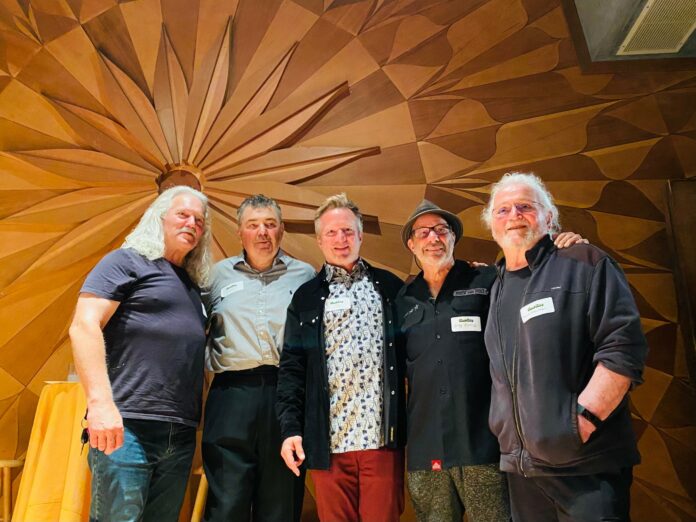
The heart of rock and roll may soon begin beating again at the Record Plant in Sausalito. The historic recording studio opened its doors in 1972, and before it closed in 2008, it produced some of the best-selling albums of all time, including Santana’s Supernatural and Fleetwood Mac’s Rumours.
From the outside, the redwood-clad building at 2200 Bridgeway in Marinship looks unassuming. Most people pass by without realizing that Metallica, Tom Petty & the Heartbreakers, Van Morrison, the Grateful Dead and many other legendary musicians recorded under its roof.
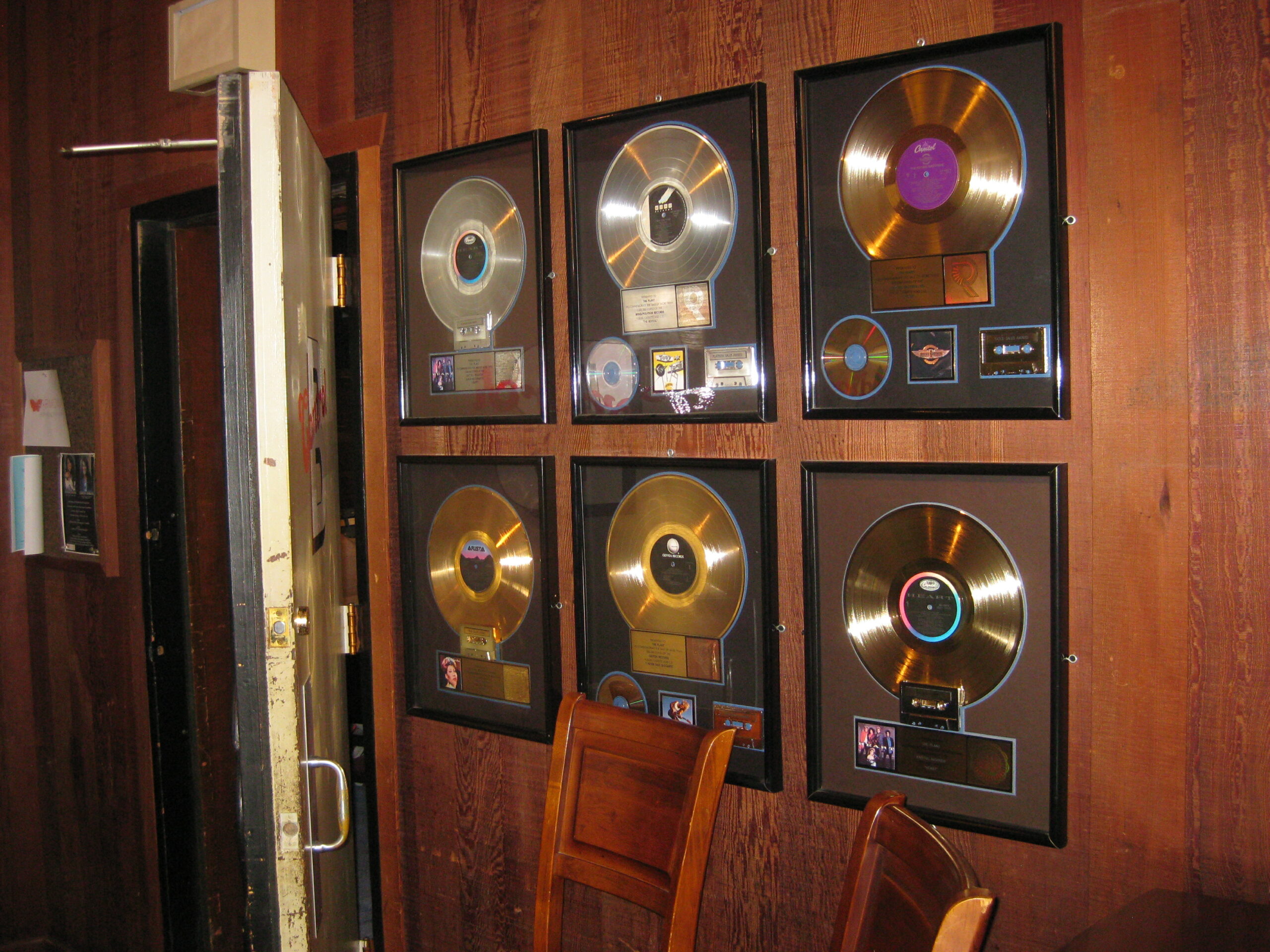
Gold and platinum records still hang on its walls. Invitations, silk-screened onto pieces of redwood, to the Record Plant’s Halloween Masquerade Ball Studio Opening in 1972 are also prominently displayed. Those unique invitations inspired John Lennon and Yoko Ono to attend the party dressed as trees.
The Record Plant sat vacant for years; however, Grammy-winning producer Ken Caillat never stopped thinking about the studios where he produced Rumours, which won Album of the Year at the 1977 Grammy Awards. Caillat worked with Frank Pollifrone, a film financier, for several years to purchase the recording studio.
“Frank and I have been in escrow on and off to buy that building since 2016,” Caillat said. “My idea was to save this building from possibly burning down or being sold and turned into a brewery or something like that. So many great records were done there. It’s a magical place.”
For Caillat and Pollifrone, the third time’s the charm. After two deals fell apart, in 2017 and 2018, the pair successfully closed on the building in March 2020. Unfortunately, within days, Governor Gavin Newsom issued the stay-at-home order due to the Covid-19 pandemic.
“On March 3, 2020, we were toasting in Studio A,” Pollifrone said. “Then we had to shut down. Biggest bummer ever. We finally do it, and this happens. But we have a great group of investors, a kick-ass team believing in this project and helping us monetize it.”
The project has about 15 investors, according to investor Jim Rees, a real estate businessman from Los Gatos. While they all share the common goal of restoring the studios, they also plan to turn a profit.
“It definitely starts with passion, and the desire to preserve a historic landmark,” Rees said. “The building is an icon. It looks a little rundown on the outside, but it’s a real time capsule on the inside. We’re going to reopen it, reestablish it and reinvent it.”
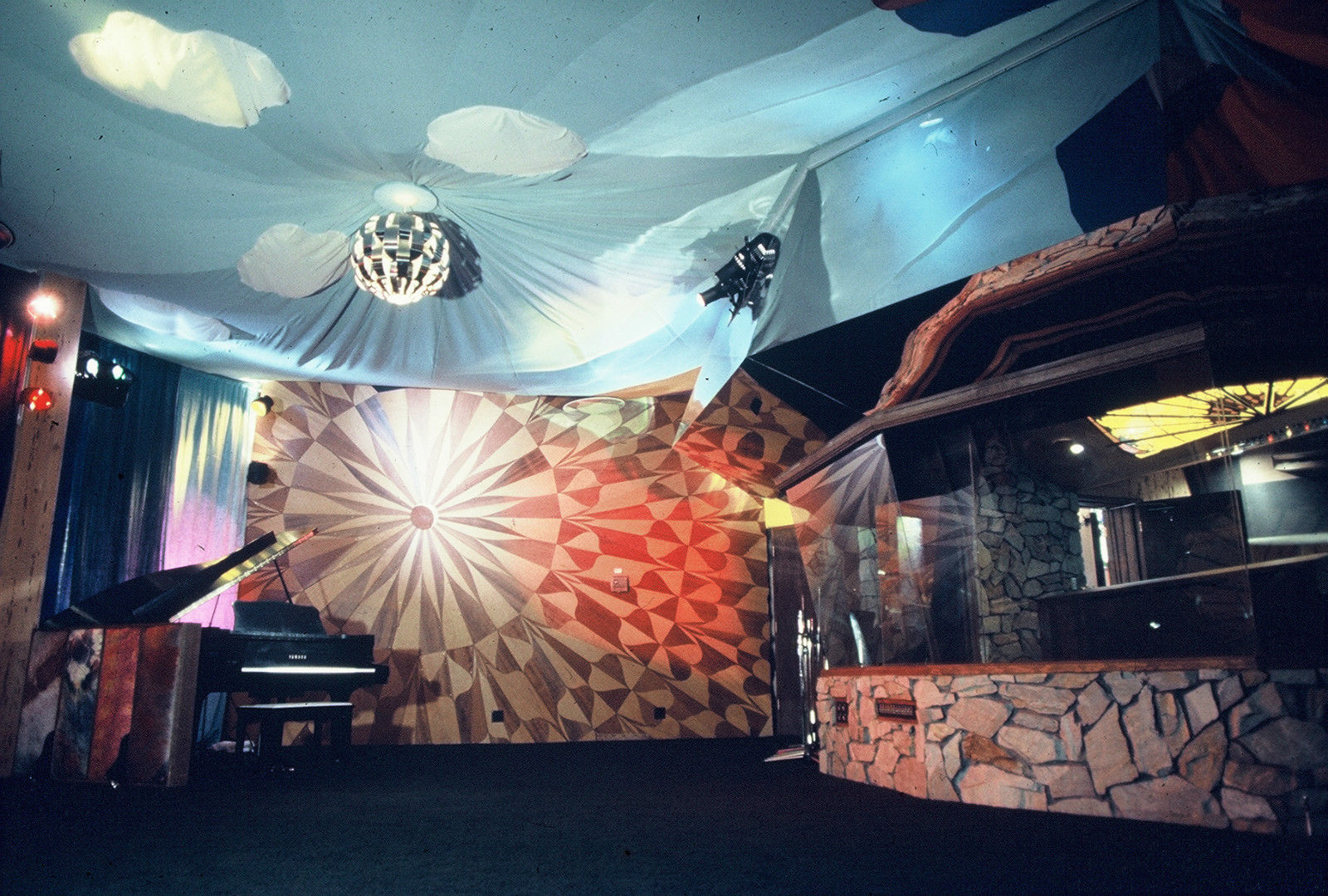
The first order of business was changing the name of the recording studio, which has now been dubbed the Record Factory. The name may sound familiar, as it was once the moniker of a defunct Bay Area-based chain of record stores. Next up, refurbishing the psychedelic studios and bringing them back to their former glory.
Grammy-winning producer/engineer Jim Gaines at the Record Plant. Courtesy of the Record Factory.
“It is such an iconic building and location,” Caillat said. “I believe a lot more famous records are going to be made there. A lot more Michael Jacksons will be discovered. Just put it back to the way it was. It will be a museum, have an ode to the great technology and all the artists who were there before. I also want it to be a beacon for the creative people of Northern California.”
In addition to preserving the analog 24-track equipment that still resides in the Record Factory, the new owners want to showcase state-of-the-art equipment. When Fantasy Studios in Berkeley, another renowned recording studio, closed in 2018, the Record Factory purchased their recording equipment.
Once the new Record Factory opens, they’ll provide a variety of offerings for musical artists, the local community and fans. The collaborators define it as part full-service recording studio, part music education program for children and part museum experience.
Caillat, as he does with his company ArtistMax, will work with industry professionals, such as vocal coaches and choreographers, to teach up-and-coming musical artists how to be comfortable and entertaining on stage. It takes time to produce great talent and music, according to Caillat.
“I had almost a year to record Rumours,” Caillat said. “With today’s budgets, people have maybe two weeks to record. Nobody’s that smart to be able to do a great record that quickly. We want to help young musicians, give them extra studio time, so they can take their time and make the record right.”
Rees harkens back to the ’70s, when the Record Plant teamed up with a San Francisco rock radio station to create “Live at the Record Plant.” The show was recorded at the Record Plant in front of a live studio audience and broadcast on KSAN.
“In the ’70s, a radio station had limited geography,” Rees said. “With the internet, we can provide a live experience all across the world. We hope to share the Record Factory through live streaming and recording, podcasts and radio shows.”
Educational programs for children from the community are an important component of the Record Factory for Pollifrone, who says he wants to bring in kids from Marin City to teach them about music. Rees sees experiential events for children, ranging from music lessons to hands-on music production and recording.
The Record Factory investors hope tours of the funky studios will bring in tourists and cash. Fans can stand in the groovily decorated rooms where magic was made. Sports, by Huey Lewis and the News; Songs in the Key of Life, by Stevie Wonder; For You, Prince’s debut album; and Who’s Zoomin’ Who, by Aretha Franklin, were all recorded there.
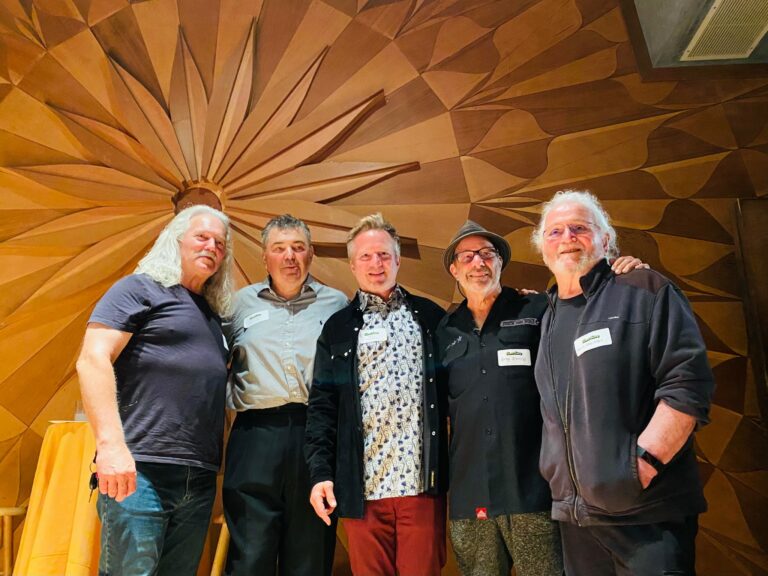
Johnny Colla, a Marinite, was the saxophonist for several celebrated bands, including Sly and the Family Stone and Huey Lewis and the News. He worked at the Record Plant more times than he can remember over the years.
One of Colla’s favorite memories is when Huey Lewis & the News worked on “The Heart of Rock and Roll” from Sports. They wanted a genuine car horn in the song and tooted three different horns to determine which sounded best.
“My ’68 Camaro, one I forgot and our sound man’s ’72 Mercury station wagon,” Colla said. “We decided on the Mercury. Got a bunch of mikes out there in the alley outside the Plant. Three hours for set up. Five to 10 minutes at the most to get ‘honk, honk’ for ‘The Heart of Rock and Roll.’”
Stories abound from the heyday of the Record Plant. The new owners of the Record Factory hope to create lasting memories and lasting music, too.
“The Record Plant is hallowed ground,” Colla said. “A sacred place in Sausalito.”
Rarely does a play’s title capture the complete essence of a script better than Nora and Delia Ephron’s Love, Loss, and What I Wore. The Ephron sisters’ adaptation of the 1995 book of the same name by Ilene Beckerman is Santa Rosa’s 6th Street Playhouse’s season opener and runs live, on stage through August 29.
The Ephrons, whose best-known collaboration is the Tom Hanks-Meg Ryan film You’ve Got Mail, enhanced Beckerman’s book with personal recollections as well as stories from friends that touched on the life experiences unique to women and the fashion connections to them.
Five stools and five music stands greet you upon entering the theatre. Two projection screens and a single chandelier adorn the back of the stage. Those screens will soon be filled with renderings of the different clothes talked about by the five performers who take the stage – Gillian Eichenberger, Elaine Jennings, Karen Pinomaki, Brittany Nicole Sims, and Jill Wagoner. Sims and Wagoner will be replaced by Heather Gibeson and Daniela Innocenti Beem for the show’s closing weekend.
The performers relate, via monologues or short scenes, recollections triggered by clothing that range from amusingly sweet to poignantly sad to boisterously hilarious. While Wagoner’s diatribe on the purse was the highlight of the evening, all five Libby Oberlin-directed performers had moments that entertained or emotionally resonated with the audience.
The opening night performance ran two hours and ten minutes inclusive of a twenty-minute intermission. While pacing might improve somewhat over the run, the show would play better as a 90-minute one act.
Covid protocols in place included the need for audience members to provide proof of vaccination and to wear a mask the entire time they were in the building, which they did. Individuals feeling the need for a “mask break” were encouraged to enjoy their intermission purchases outside of the theatre. A pre-show announcement noted that the entire cast, crew, and staff of the Playhouse were fully vaccinated.
The cast wore face shields that affected the quality of the amplified sound, but it’s a trade-off I’m willing to accept in these times. An erratic speaker in the area in which I originally sat was more of a distraction.
Love, Loss, and What I Wore is a rare theatrical opportunity for women to commiserate and rejoice over shared experiences and for men to perhaps gain some insight into those experiences.
‘Love, Loss, and What I Wore’ runs live through August 29 on the Monroe Stage at 6th Street Playhouse. 52 W. 6th Street, Santa Rosa. Fri. & Sat., 7:30pm; Sat. & Sun., 2pm. $18-$29. Also available for streaming. 707.523.4185. 6thstreeetplayhouse.com
Things aren’t always what they seem. Take the desert, for instance. Some people—most, perhaps—see it as ugly, barren and dangerous. But to me it is a place of intense beauty, adventure and freedom.
And so, where many people opt for annual vacations at “safe” luxury resorts or beach cabañas, I take my two weeks in the desert every year. Or, in the wasteland, as I call it. Because where I go is so far out there that it is way beyond the pale of civilization.
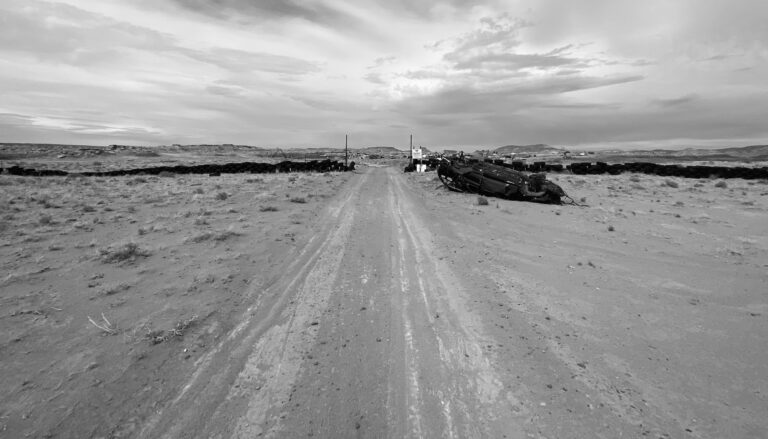
It’s a little over 80 degrees out, and at 6,000 feet in Arizona’s shadeless Painted Desert, the sun blazes down like a nuclear bomb at the white-hot moment of detonation. I’m melting inside my clothes. A slight figure in well-used work garb sits on a tractor ahead of me, slowly churning up the dust. Dozens upon dozens of tires lay all around in the sand. Slowly, the tractor scours out a shallow pit between them, pushing the sand into a pile at one end. I swing into action, piling the tires in tiers around the edge of the pit. Then the tractor begins scooping up sand and dumping it into the tires, filling the columns. I assist the process, shoveling the overflow back into the columns.
An hour later, I signal the tractor pilot, Richard Kozac. He turns off the engine and saunters over. Kozac, the caretaker of this desert place, lives a few miles down the road with his horses. He is a colorful character, as stand-up a man as I’ve ever met. At this moment, he may as well be made of desert dust. I hand him a cold beer and some cash, both of which he contemplates for several seconds. Then he nods, smiles, and cracks the beer. We stand there in the bright heat, drinking and gazing at the tire bunker we’ve built, and I’m pleased that my tribe, the cannibal biker gang Machine Army, finally has permanent headquarters.
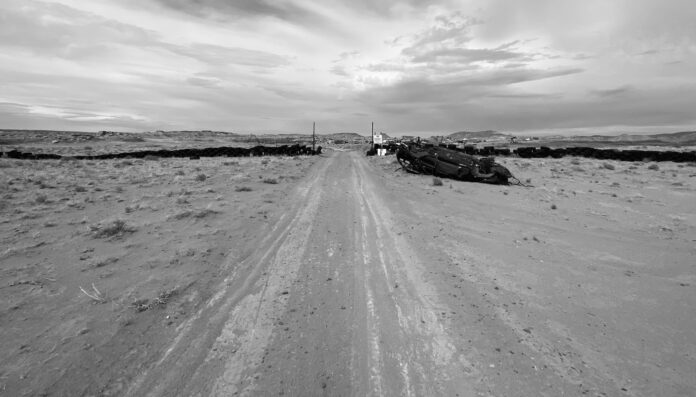
COMMAND POST Tires, pallets and dirt are the free building blocks of the post-apocalyptic world. (Photo by Mark Fernquest)
We may as well be on the moon, Kozac and I. Or, more apropo, the set of a Mad Max movie. Wire fences, scrap-wood structures and walls made of tires and mud and stacked railroad ties cover the barren sand, which stretches out to all sides. Vehicles lie around the shanty town—my own outlaw Honda 70 dirt bike, a rusty ’77 Monte Carlo on oversized off-road tires and random, burned-out car bodies. I’m 16 hours from my home in Sebastopol, and this is my favorite place in the world.
Welcome to Uranium Springs—the town that doesn’t exist. My tribe and I have been coming here for years now. The freedom is unparalleled, as are the wind, the heat and the dust. There’s no other experience like it.
Uranium Springs is an artistic convergence. It draws a certain type of person. To get here is a feat in and of itself. Only those “mobile enough to scavenge, brutal enough to pillage,” as we say, even contemplate coming. Are we hobbyists, a cult, a club, a sect? The answer is not that simple. We are an amalgam of artists, creatives, cosplayers, engineers, survivalists, loners, drinkers and “preenactors” who all like the post-apocalyptic genre. I’m not one for “scenes,” but a strong sense of brotherhood binds this group together.
My interest in towns that don’t exist began in 1988—the summer I hitchhiked to Alaska from UC Santa Cruz. I spent the month of July in a tiny fishing town, working in a cannery and living in a scrapwood shack in “the Cove,” a village of sorts, where all the seasonal workers lived. Trails, tents and odd structures filled the forest; about 90 people lived in various camps.
Six years later I happened upon the desert, while camping in Joshua Tree National Park’s highly magical and surreal topography. The barren landscape caught my Bay Area-raised self unawares, creeping up on me like a thief in the night. During the next 15 years, I traveled there over 25 times. In Joshua Tree I had beautiful dreams and visions, so much so that I call it my cathedral. If spiritual “power spots” exist, surely it is mine.
Then came the wasteland.
I rediscovered my Mad Max roots while attending a post-apocalyptic event called Wasteland Weekend in the Mojave Desert in 2011, and followed the breadcrumbs to Uranium Springs, driving there in 2013 to attend my first on-site event with about 60 attendees camped in an empty meadow. In the years since, the event has grown to about 400 people, and the meadow has transformed into a hard-scrabble junktown.
Uranium Springs is an event space, but this year the official event—or “Detonation,” usually held over Memorial Day weekend—has been delayed until October, due to Covid. So, I’m instead attending a long “build weekend.”
What, exactly, is a build weekend? The owner of Uranium Springs, Rev’rend Lawless, of Tucson, is a most interesting man. By his decree, every post-apocalyptic tribe that attends Detonation may stake a claim to a 50-by-50-foot patch of ground on site, and build—within certain generous parameters—a permanent, post-apocalyptic-themed camp. As long as said tribe members attend Detonation every year and pay a modest fee which helps cover site maintenance, they can keep their claim. Year by year, the camps become more and more elaborate.
Except for Machine Army’s. Our members live so far away—from Maryland to California—that merely attending is the most we’ve ever been able to accomplish. Until now. Finally, no event—just time to work on our camp.
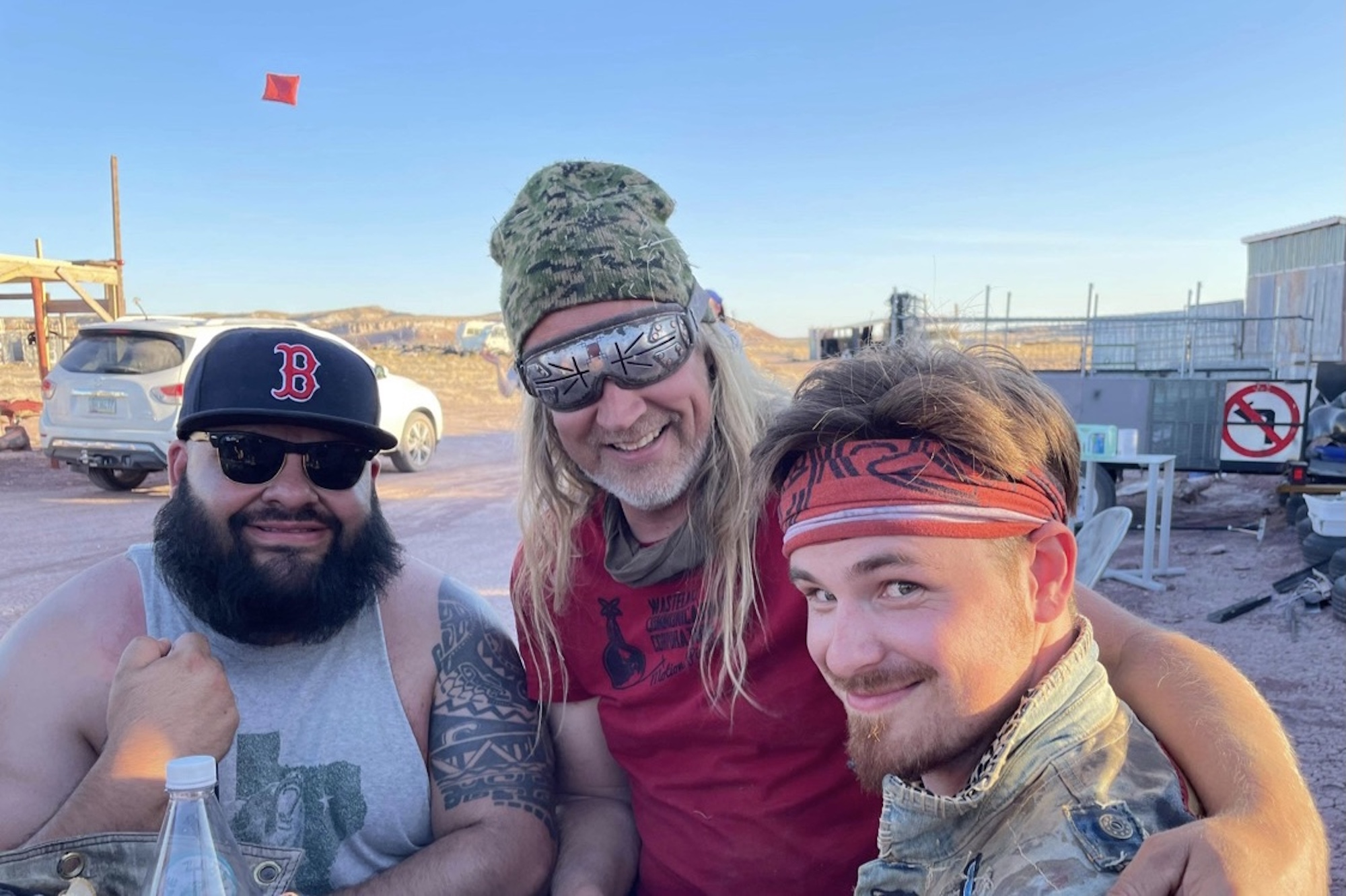
It’s a slow week. My Texan tribemates—Dr. Freight Train, Krash ’n’ Burn and Rocket—show up, along with 50 or so various other people. Without a mandatory costume-wearing requirement or throngs of partiers beckoning from surrounding camps, my tribemates and I work on the bunker, which turns into a spontaneous artistic endeavor. We add more tires to the walls, then find metal poles we stashed in the bushes years ago and drive them into the dirt inside the tire stacks. Then I find some abandoned pallets, and we drop them over the metal posts and shore them up with scrap wood and decking screws, to form a breezy palisade on top of the tires.
OLD SCHOOL The author chills outside Machine Army’s new deep-desert command bunker with tribe members Dr. Freight Train (left) and Krash ‘n’ Burn (right). (Photo by Sara Cate)
We discuss plans for our next build weekend. We need to set posts for a roof, but the clay beneath us is very dense. However, our neighbors, the Kult of Kazmodaa, dug multiple 3-foot-deep post holes by hand, so we have our work set out for us.
Out here we are impossibly far from the American Dream. But the American Dream was never my dream. Suburbia was never my home. By my estimation, America peaked about the time I was born, in 1968, when we put the first man on the moon. This circus has been a slow-motion riot ever since, swirling slowly down the drain. While I spend years scratching out an ever-more-meaningless existence on America’s dying streets, I dream of this, the wasteland—a freer life with community, adventure and actual value.
We have a new neighbor, Haylar Garcia—or “Mad Mex”—who hails from Denver. A screenwriter/film director/social media engineer in the real world, he single handedly built a movie-worthy camp called the Aftermath Theater—replete with a school bus projector room, an outdoor movie screen and a “make-out” car in the faux parking lot—on the plot adjacent ours.
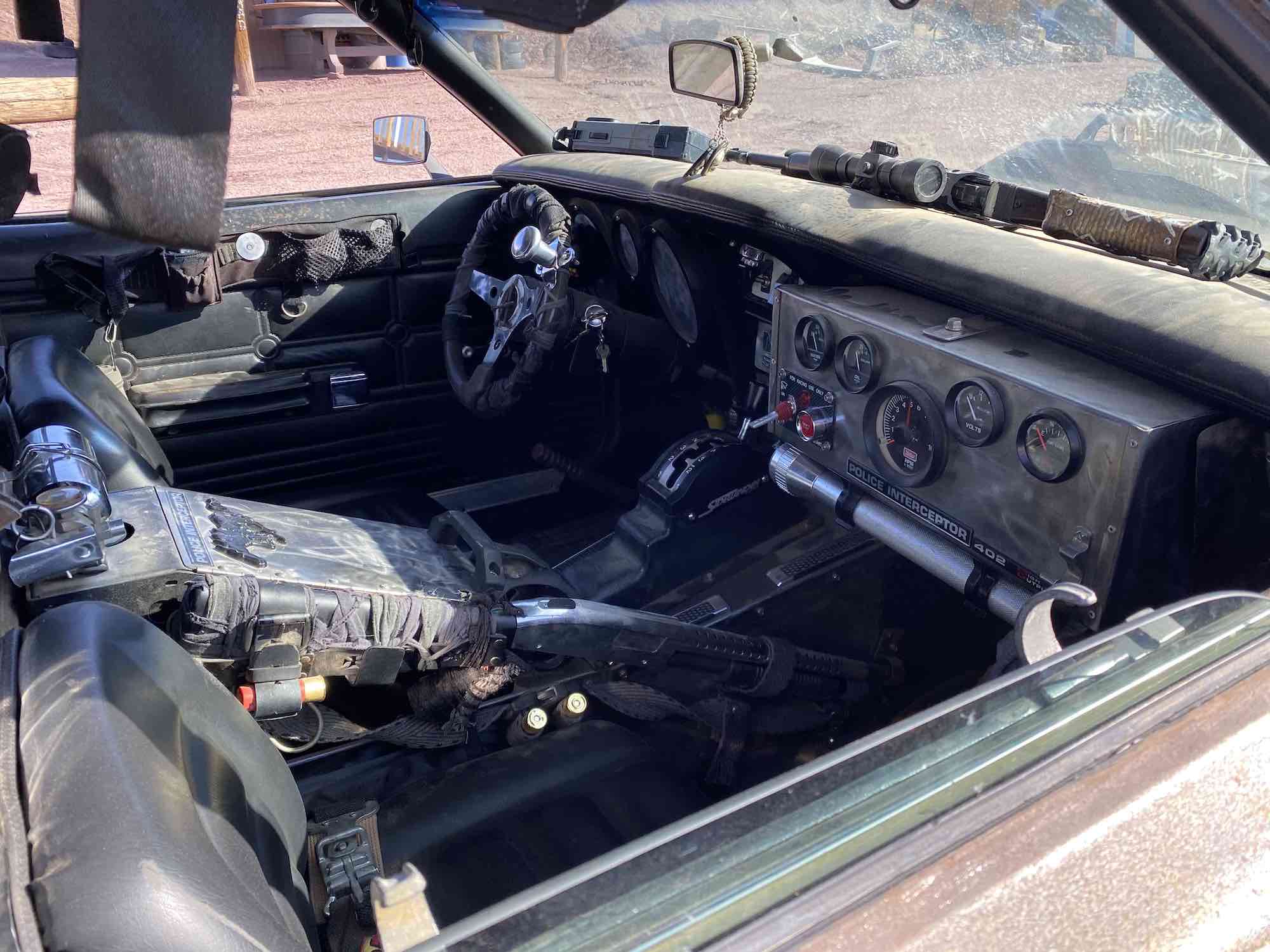
The setup is stellar, but it is his outrageously post-apocalyptic car that steals my heart. The Interceptor Drag Special is a ’73 Mustang Grande which he took down to bare metal before widening the wheel wells, installing a roll cage and adding a positraction rear differential. He replaced the stock 351 with a 402 big block Chevy with a wet nitrous tunnel ram and two hollie carbs, then wasted the exterior and interior in the name of the apocalypse. It may be his pride and joy, but it makes me very, very happy. “I’ll never be able to open the nitrous,” he tells me. “The engine will blow through the hood!” But if he’s driving at 90 miles an hour down the Fury Road when nitrous is needed, will he have anything left to lose?
ROAD WARRIOR The wasted-out interior of Mad Mex’s nitro-injected, high-speed Interceptor. (Photo by Mark Fernquest)
“After doing Wasteland Weekend for three years straight, I began to get the itch to be able to contribute to a PA [post-apocalyptic] community in a more meaningful way,” Garcia says. “Wasteland is an amazing event, but what Rev’rend Lawless, the EOD [End of Days, the group responsible for on-site events] staff and tribes and the Uranium Springs community at large have built is something very different and alluring to artists who want to express themselves through apocalyptic themes more than once a year. The people are incredible, the builds are permanent and there are opportunities for participating in build weekends throughout the year, which really gives you a chance to create something lasting. I found—and still find—that irresistible.”
What inspired the Aftermath Theater in particular? “Well, being a filmmaker, I loved the idea of having a visual attraction in the apocalypse; truly it was inspired by A Boy and His Dog, where people seem to mill in and out of the broken theater space, watching scraps of anything left over from the Old World,” he says. “So, after getting my idea and basic blueprint cleared for a spot at Uranium Springs by the powers that be, I started to come out for every build weekend I could. It’s been a lot of work in some very challenging conditions, from 100+ degrees to waking up shivering and finding it had snowed overnight out of nowhere. It took me about 9 trips, which averaged from 9 days to 22 days at a time, to get the drive[-in] into a working state.”
One must be careful out here in the wasteland. The sun sears down mercilessly through the rarified atmosphere. It burns electrolytes and it burns skin. Countless weeks spent out here collectively caused permanent sun damage on my neck. What can I do, but wear the discoloration like a badge of honor? Radiation is what made Uranium Springs great.
But the winters are harsh, too. So harsh that homesteaders move to this region and leave within months, unable to withstand the intense cold, the high winds or the deep mud that leaves them stranded for days on end.
Another neighbor, Annelise Williamson, 49, hails from Santa Fe. After five years, she has yet to acquire a wasteland name. A silversmith for the past 30-plus years, she recently transitioned into costuming in the film industry. She and her partner, Haydn Ford, have attended Detonation for five years. Their tribe, the LZRDF***S, has a wonderfully deep-desert, Western vibe to it. Williamson and I perform a wasteland trade, in which I barter some of my customized leather wasteland pouches for a set of her handmade, film industry-grade metal wasteland “sand” goggles. They are one the highest quality items I have ever owned. Her work is showcased via @annelisewilliamsonmakes on Instagram.
In the evenings we hit up a pot-luck at the Turbulence camp, or walk or drive over to the Wreck Room, a lounge on the far edge of town where the proprietors, McAwful and Auntie Virus, wine and dine the entire encampment to the tune of “Pipes” and other attending musicians.
One evening, buzzing off a few beers, I take off on my Outlaw 70 for a twilight ride. A quarter-mile down the track I hit a corner too fast, slide, hit the underbrush and go down. It’s a pitch-perfect crash, choreographed to perfection, almost a gentle roll. First my leg hits the dirt, then my hips and ribs, then, as if an afterthought, my head. Boink! I lay there in the shrubbery, staring at the sky, wondering if I’m OK. Of course I am. I’m cautious, and I’m at Uranium Springs, where crashing on my toy-like kid’s dirt bike is part of the novelty.
And yet, the next morning I have a black eye, my hip is bruised and several of my ribs are out of alignment. While pulling on my shirt, I feel an odd, grinding movement in my chest. It feels weird, like a bruise, but doesn’t hurt. Now I belong to the wasteland.
SUICIDE MACHINES Rev’rend Lawless (left) and Mad Mex pose with their highly customized wasteland vehicles. (Photo by Mark Fernquest)
All is good. The long weekend ends, I say goodbye to my wasteland friends, and we scatter to the four corners of the Old World. Sixteen hours later, I’m back in Sebastopol. Ten days after that, my bruises heal. But the wasteland stays with me. Haylar Garcia’s last words resonate in my ears: “I find Uranium Springs inspiring every time I go there. And I cannot wait for Detonation 6.5, which is coming up on us fast this October. I encourage anyone who loves PA [the post-apocalyptic genre] to get a ticket, it’s unlike anything else in the country.”
A couple of months ago we learned that the Sebastopol Living Peace Wall committee is planning to honor Rep. Barbara Lee as a “peacemaker” Sept. 11, along with three local activists. But wait a minute, we thought, she has a terrible record when it comes to supporting peace and justice for Palestinians.
For example, in 2016, when Lee was on the Democratic Party platform committee, she rejected a rather mild amendment, put forward by Bernie Sanders, to end the Israeli occupation of the Palestinian territories and the construction of illegal settlements there, and to aid in rebuilding Gaza. She also refuses to co-sign a bill by Rep. Betty McCollum, which would prevent Israel from using the $3.8 billion in U.S. military aid it receives annually, for the military detention of Palestinian children, for the seizure and destruction of Palestinian property, forcible transfer of Palestinians in the West Bank and illegal annexation of Palestinian territory.
Thirty members of the House have signed on as co-sponsors, including Rep. Jared Huffman—but not Barbara Lee.
And most recently, as chair of a House appropriations sub-committee, she shepherded a bill which continues to give Israel its annual military aid with no conditions. The bill also provides $225 million in aid for Palestinians, but with conditions so egregious that it would prevent them from acting on their own behalf in the United Nations and the International Criminal Court.
It is unlikely that the Sebastopol Living Peace Wall committee had any knowledge of Lee’s position on Palestine/Israel—at least until we met with the Wall’s director and sent letters to him and his board members.
But that is just the point. For more than 70 years Americans, including our elected officials, have been led to believe that supporting Israel, and ignoring the Palestinians, was the right thing to do. But in the past year, three human rights organizations have crafted reports calling Israel an apartheid state.
So, Barbara Lee, and others who are Progressive Except for Palestine (PEP), isn’t it time to reexamine your unconditional support of Israel, and step out onto the side of justice for all?
Lois Pearlman is a member of the Ad Hoc Committee to Call Out PEP’s.
The views expressed in Open Mic do not necessarily reflect the views of the Pacific Sun or its staff.
So many cultures revere their elders; they are held in the highest regard, protected and cared for by society. I value our elected officials who take this same approach. Leaders like our District Attorney Jill Ravitch, who has consistently proven her passion for protecting seniors by prosecuting those despicable people who abuse them. She even opened the Family Justice Center of County County so that seniors who have been victimized have a safe and supportive place to go to get all of the vital services they need to not only get justice, but start to heal. Contrast that with a local developer whose company left frail, vulnerable seniors to die as the Tubbs fire roared toward their assisted living facility … and then was so angry that our DA held him accountable that he is trying to recall her. To me there is only one choice in this recall election. Please join me in voting no on this revenge recall.
Marcie Call
Santa Rosa
Chronic War
I strongly oppose the United States’ chronic involvement in wars all over the world. The use of violence and wars have definitely failed to bring any semblance of lasting peace and happiness to the human race. So if we Americans sincerely want to become a positive force in international relations, our nation must search for more sane and humane alternatives to fighting and killing as our way of resolving conflicts and disagreements with other nations. The United States government argues that other nations or groups of people are doing wrong things and so must be stopped with force. Yet our government’s use of military invasions only convinces those other nations that they must practice even greater violence to protect themselves from us. It must be obvious that saving humankind from the constant suffering and hell of future wars requires something better and more intelligent than fighting with other nations to see who can practice the greatest violence.
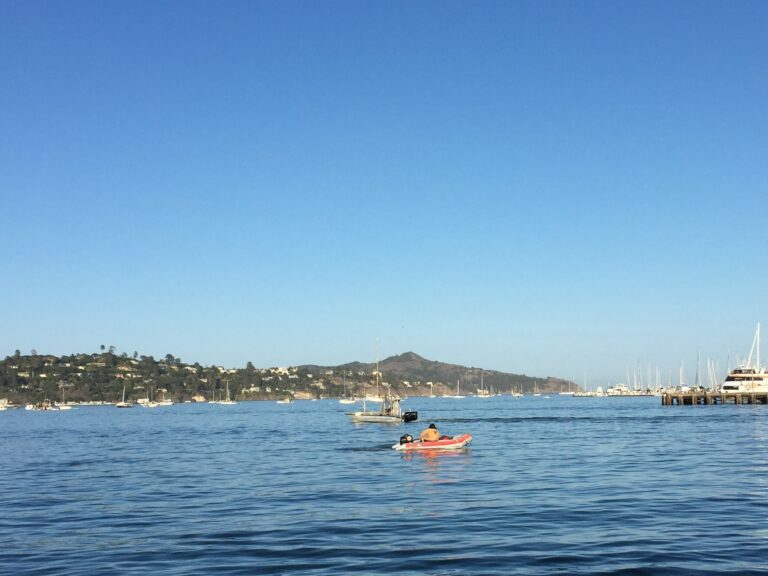
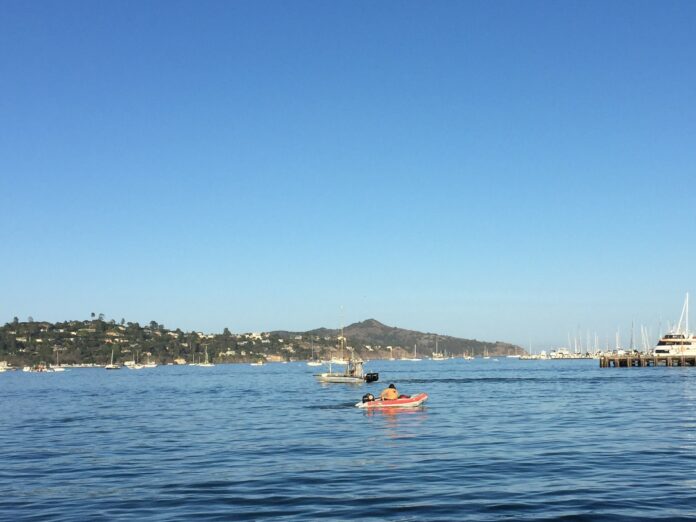
Richardson Bay will soon look different. A new agreement between two agencies tasked with protecting the Bay will remove the anchored-out boats that have occupied the waters for decades. If things go according to plan, about 86 people will lose their homes and their unconventional lifestyles in the next few years.
Rather than become embroiled in costly and risky litigation, the RBRA board of directors voted unanimously to rid the Bay of all the vessels by Oct. 15, 2026.
Any anchored-out boats that arrived in Richardson Bay after an August 2019 census must be removed by Oct. 15, 2023. Those that were on the anchorage prior to the census may stay the additional three years.
Applicable law allows boats to drop anchor in Richardson Bay for 72 hours, unless granted permission to stay longer. For years, the regulation was largely ignored, until the state auditor released a report in 2019, which concluded the BCDC failed to perform key responsibilities and allowed ongoing harm to the Bay. The report referred to, among other issues, vessels anchored illegally in Richardson Bay. The BCDC then began to pressure the RBRA and the City of Sausalito, which left the RBRA in 2017, to step up enforcement of the 72-hour law.
In mid-2020, the RBRA adopted a transition plan, which included seizing unoccupied vessels, and occasionally occupied vessels. The seized boats are crushed at the Army Corps of Engineers’ facility in Sausalito. Although the RBRA whittled down the number of boats on the estuary from 200 in July 2019 to 86 today, the agency apparently wasn’t moving fast enough for the BCDC.
“The BCDC communicated that they feel they have waited long enough for a resolution of a situation out on the water which has been around for a long time, and they are out of patience,” RBRA board president and Marin County Supervisor Stephanie Moulton-Peters said.
The agreement also requires the RBRA to set a boundary for an eelgrass protection zone and restore damaged eelgrass within that area. The BCDC claims that anchors destroy the indigenous eelgrass, subaquatic vegetation, which some fish and birds rely on for food and habitat.
The fate of the 86 mariners living on Richardson Bay is addressed in the agreement. The RBRA will continue its efforts to connect the mariners with social workers who can assist them in finding housing in marinas or on land after they are removed from the Bay.
To help achieve the lofty housing goal, the BCDC has agreed to consider proposals to increase the percentage, at least temporarily, of affordable marina slips available for liveaboard boats. Ten percent of marina slips are currently allocated for liveaboards. The BCDC is considering increasing the limit to 15%, RBRA harbormaster Curtis Havel said.
Both the RBRA and the mariners recognize that trust between the two groups has become a thorny issue. While the RBRA repeatedly says it only seizes and crushes unoccupied boats, the anchor-outs and their supporters cry foul.
The mariners point to a list of people whose occupied boats have been seized and destroyed, including Robyn Kelly, who is currently suing the RBRA for illegally seizing and crushing her power boat. In January, Havel seized Jeremy “Jack” Casimir’s sailboat while Casimir was at the grocery store. Although Havel admits he knew Casimir was living on the vessel, he said the boat wasn’t safe and called it “marine debris.”
Anchor-outs also accuse the RBRA of targeting certain mariners, especially women and those with mental health issues.
The troubled relationships became more complicated when documents garnered from a public records request earlier this year revealed that social service agencies working to help the mariners find housing were exchanging information about them with the RBRA, Sausalito Police Department and Marin County Sheriff’s Office.
Another bone of contention is whether the RBRA has jurisdiction over Richardson Bay. The anchor-out community insists Richardson Bay is a federal anchorage and the RBRA’s enforcement is unlawful.
Havel disagrees.The federal government designated Richardson Bay a “special anchorage” when it began drawing up nautical charts. It simply indicates that a boat doesn’t need to turn on an anchor light. It’s not a federally regulated anchorage, Havel said.
In fact, the United States Coast Guard regulations, section 110.126a, says that mariners anchoring in the Richardson Bay special anchorage should consult the applicable ordinances of the RBRA and the County of Marin.
No matter which entities rule the anchorage, there is still the paramount problem of placing 86 people, many with limited resources, into housing. Marina slips can be paid for with housing vouchers from the federal government, according to Moulton-Peters. The RBRA has some funding available to help mariners make minor repairs to their vessels to make them seaworthy, a requirement to berth in a marina. The agency will seek additional grant funding and possibly private donations.
In the meantime, the conflict between the mariners and the RBRA continues. On Monday evening, as Havel patrolled the anchorage, two skiffs manned by anchor-outs trailed behind him. With the late hour and the high tide, they were concerned that Havel might attempt to seize a boat.
Perhaps the mariners can rest easy until Oct. 15, 2023, the first tick mark on the boat-removal timeline.
“Our primary focus of enforcement right now and for the foreseeable future is to limit new boats to staying 72 hours,” Moulton-Peters said. “We want to keep from adding any more permanent residents on the water. Curtis will not post [notice to remove a boat] boats when people are living in the [homeless] encampment. And boats that are occupied by people going to the grocery store or doing whatever they’re doing will also not be posted.”
Anchor-out Arthur Bruce is not convinced. He says the RBRA has been singing that refrain since he arrived on the anchorage six years ago.
“The RBRA and BCDC are accountable for the atrocities they’re hypocritically thrusting upon the most vulnerable citizens,” Bruce said. “It’s unjust, it’s immoral, it’s un-American, it’s illegal, it’s unconscionable.”
Few, if any, individuals like to hear the words “I told you so.” This seems to be as true for people who live in the North Bay as in any other part of the world.
Humans, as a species, like to believe we’re infallible, and scoff at what passes for wisdom in hindsight. The trick, if you can call it that, is to be as honest as can be in the present moment, but not so honest that people turn away and won’t listen. The truth hurts. These reflections are sparked by a recent article in The New York Times, the newspaper that has told the truth about the North Bay more often than any other publication, except the one you are now reading.
The article describes the devastation in vineyards and wineries in what ought to be called “Fire Country,” a place—like many others—where citizens try to deny climate change. I recently received a Facebook post from a dear friend who boasted about the bounty of her organic vegetable garden, and its connection to “Mother Earth,” and insisted that all was right with the world. I wonder how much longer she and others like her can avoid the reality of the fires that have swept across our hills and valleys and wrecked vineyards, wineries and homes, to say nothing of the droughts that make it increasingly difficult to grow grapes and vegetables.
When I complained to a friend, who raises chickens and who gives me eggs, that North Bay citizens are often Pollyannas who sit on their hands and hope for the best, he replied, “I’m spreading hope like chicken manure in the garden.”
I’ll take the manure any day. But spare me the hope that helps no one and I promise not to tell you “I told you so.”
Recently, the City of San Rafael approved fee hikes for the public library, parks and recreation, and child care services. It’s been 10 years since the citywide fee schedule has been updated. The City hired MGT Consulting to assess the fees, comparing fees with similar communities. Not mentioned in the assessment was the seven-year agreement between the City and Terrapin Crossroads to lease Beach Park, a publicly owned, three-quarter-acre waterfront site adjacent to Terrapin, which is up for renewal in September. The lease could be renewed, or the park could revert back to the public.
Terrapin Crossroads has turned this public property into a successful family-friendly concert venue serving food and beverages. It now appears to be an important and profitable part of the operation. In the initiating lease, Terrapin was to pay the City $15,000 a year in rent which would be offset by any improvements made by Terrapin. Terrapin holds many events at Beach Park, and it seems likely that Terrapin could net $15,000 with a couple of events. During any lease renewal meeting, might it be wise for the City to propose a profit-sharing arrangement with Terrapin? Also, the terms of the lease called for the installation, within 60 days, of an ADA-compliant public access dock. This has not been done.
To date, no dedicated park public restrooms have been built. If the park is ever to revert to public use, the promised dock and additionally some permanent ADA compliant restrooms are necessary. Since Beach Park has become integral to the business of Terrapin, I believe the current or a future city council would be loathe to wrest it back for the public. However, going forward, an equitable—say 50/50—profit-sharing arrangement is worth exploring in any new lease agreement. Any money from such an agreement could be used for the maintenance of other city parks. Since Terrapin is located in the Canal area, maybe profits could benefit the local community.
J.S. Danielson
San Rafael
The Kindness of Strangers
I had to take my dog to her vet on Center Boulevard in Fairfax. I turned into the parking area at the end of her building to turn around so that I could park in front of the vet clinic. I turned right out of the driveway and, rather than going into the traffic, I made a sharp right turn, hoping to slide into a parking space. I couldn’t see the funny, curved structure jutting out into the street, and got stuck on it. A crowd of men quickly appeared, suggestions were made, various things tried but they couldn’t move my car. A man with a truck offered to tow me out. Another man got into the driver’s seat and they skillfully moved my car and parked it for me, then came into the vet clinic to tell me that all was well. I didn’t get any names, nor did I get to say, “Thank you” to most of them. I hope some of them see my letter.
I also hope that the public works department in Fairfax sees this and removes this weird fixture. I was told that people get stuck on it all the time.
Fall is the time when a theater company’s fancy turns lightly to thoughts of a new season. Announcements are made, rehearsals are scheduled and the sound of buzzing returns to auditoriums as audiences enter and take their seats in support of live performance.
After being dark for a year-and-a-half, California’s June “reopening” gave theater artists hope that the hunger they...
Until this week, the only thing Rodney Dangerfield and I had in common was a penchant for one-liners and general anxiety about our respectability. Then we both went “back to school.” His experience was fictional—apart from the cameo by a real-life Kurt Vonnegut—and arrived in the local cineplex as the movie Back to School. My back-to-school experience was a...
Rarely does a play’s title capture the complete essence of a script better than Nora and Delia Ephron’s Love, Loss, and What I Wore. The Ephron sisters’ adaptation of the 1995 book of the same name by Ilene Beckerman is Santa Rosa’s 6th Street Playhouse’s season opener and runs live, on stage through August 29.
The Ephrons, whose best-known collaboration...
Things aren’t always what they seem. Take the desert, for instance. Some people—most, perhaps—see it as ugly, barren and dangerous. But to me it is a place of intense beauty, adventure and freedom.
And so, where many people opt for annual vacations at “safe” luxury resorts or beach cabañas, I take my two weeks in the desert every year. Or,...
A couple of months ago we learned that the Sebastopol Living Peace Wall committee is planning to honor Rep. Barbara Lee as a “peacemaker” Sept. 11, along with three local activists. But wait a minute, we thought, she has a terrible record when it comes to supporting peace and justice for Palestinians.
For example, in 2016, when Lee was on...
Respect Elders
So many cultures revere their elders; they are held in the highest regard, protected and cared for by society. I value our elected officials who take this same approach. Leaders like our District Attorney Jill Ravitch, who has consistently proven her passion for protecting seniors by prosecuting those despicable people who abuse them. She even opened the Family...
Few, if any, individuals like to hear the words “I told you so.” This seems to be as true for people who live in the North Bay as in any other part of the world.
Humans, as a species, like to believe we’re infallible, and scoff at what passes for wisdom in hindsight. The trick, if you can call it...
Fee Hikes Rankle
Recently, the City of San Rafael approved fee hikes for the public library, parks and recreation, and child care services. It’s been 10 years since the citywide fee schedule has been updated. The City hired MGT Consulting to assess the fees, comparing fees with similar communities. Not mentioned in the assessment was the seven-year agreement between the...